

Afternoon Arrival in Xian: A Practical Guide to Smooth Airport Transfer
Landing in Xi'an on an afternoon flight felt like stepping into a postcard—ancient city walls peeking through the haze, the buzz of a place where 3,000 years of history collide with modern life. But as I rolled my suitcase off the plane, my first thought wasn’t about terracotta warriors or Muslim Quarter street food—it was: How do I get from this airport to my hotel without wasting time or getting ripped off?
Afternoon arrivals (roughly 1 PM to 6 PM) can be tricky. Traffic is thicker than morning flights, airport crowds are building, and if you’re like me—you’ve just endured a long-haul flight, your back is stiff, and you just want to dump your bags and start exploring—last thing you want is a transfer headache. So, after testing three different options (and one near-disaster), here’s a no-BS guide to navigating Xi’an Airport Transfer like a pro.
First Things First: Know Your Airport
Xi’an Xianyang International Airport (XIY) has two terminals: T1 (mostly domestic, budget airlines) and T3 (international, most domestic carriers, including big ones like China Eastern and Air China). Before you even land, check your flight’s terminal on your boarding pass or airline app. If you land at T1 and head to T3 by mistake (or vice versa), you’ll waste 20 minutes on a free shuttle bus—annoying when you’re tired.
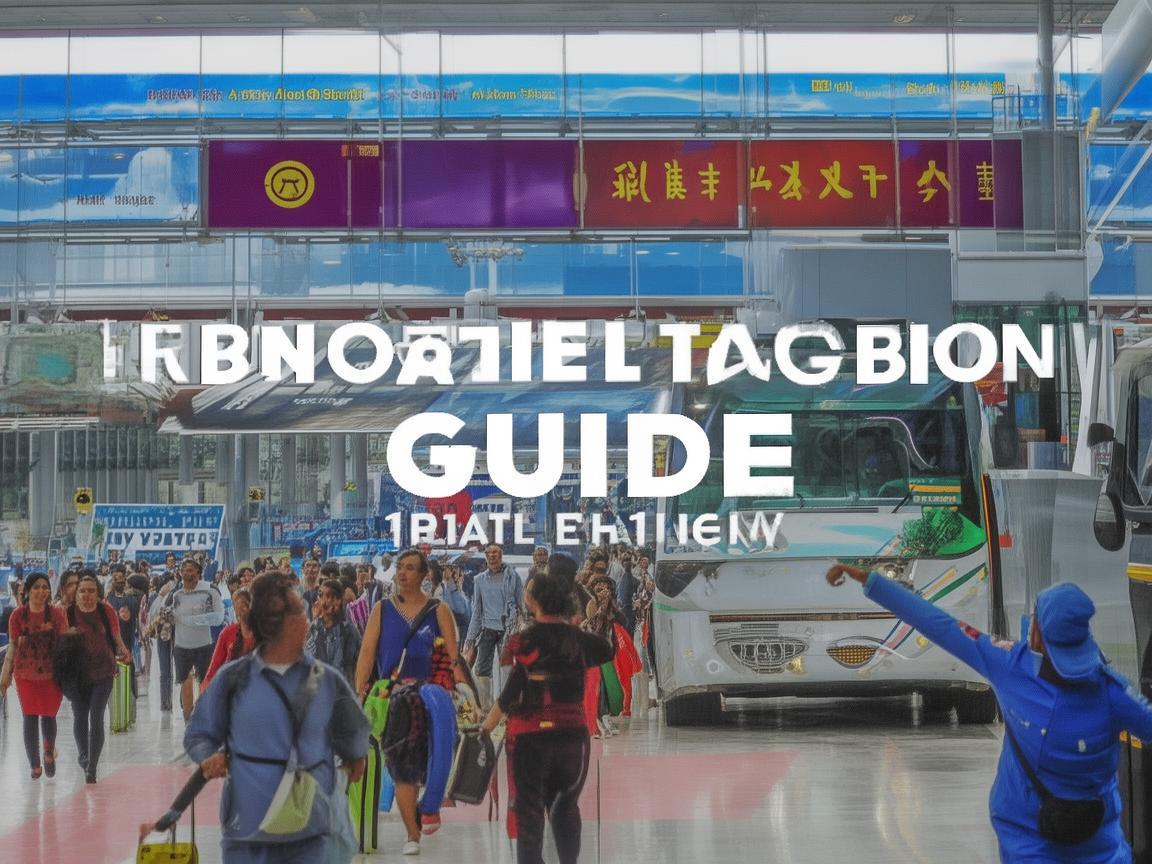
Afternoon Arrival in Xian: A Practical Guide to Smooth Airport Transfer
Option 1: Subway: The Budget-Friendly Workhorse
Best for: Solo travelers, backpackers, or anyone not drowning in luggage.
Cost: ~¥5–¥8 (yes, really—cheaper than a coffee).
Time: 45–60 minutes (depending on your hotel).
How to do it:
From T3: Follow the “地铁” (Subway) signs to the underground station. You can’t miss it—it’s bright, clean, and signs are in English and Chinese. Buy a ticket at the machines (they accept cash and mobile payment via Alipay/WeChat—just scan the QR code at the machine). Your destination? For most downtown hotels (near Bell Tower, Muslim Quarter, or South Gate), you want Line 14 (purple line) to Beikezhao (北客站), then transfer to Line 2 (red line) toward Weiyanglu (未央路) or Zhonglou (钟楼).
From T1: Take the free shuttle bus to T3 (it runs every 10–15 minutes, 5-minute ride), then follow the subway steps above.
Why it’s great for afternoons: The subway is reliable. Unlike roads, it doesn’t care about rush hour traffic. I took it at 4 PM on a weekday, and while it was busy (peak commute), it was still faster than a car. Plus, you get a slice of local life—watching commuters, hearing vendors sell snacks, and feeling like you’re actually in Xi’an, not just passing through.
Watch out for: Luggage. If you have a huge suitcase or a backpack the size of a small human, navigating stairs and crowded cars is a pain. T3 has elevators, but they’re often packed. Pro tip: Roll your suitcase behind you, not beside you—locals are in a hurry, and “luggage ballet” in a packed subway car is not fun.
Option 2: Airport Shuttle Bus: The Tourist-Friendly Choice
Best for: Groups, travelers with heavy luggage, or anyone staying near major hotels/tourist spots.
Cost: ¥25–¥30 (fixed price, no haggling).
Time: 60–90 minutes (traffic-dependent).
How to do it:
After baggage claim, follow the “机场大巴” (Airport Shuttle Bus) signs. There are multiple routes, so check the route map carefully—this is key. The most useful for tourists are:
- Route 1 (T3 → Muslim Quarter/Bell Tower): Stops at Zhonglou (钟楼, Bell Tower) and Huimin Jie (回民街, Muslim Quarter). Perfect if your hotel is in the Old City. Departs every 15–20 minutes, 4 PM–10 PM.
- Route 5 (T3 → High-tech Zone): For hotels near Gaoxin Qu (高新区). Departs every 30 minutes.
- Route 6 (T3 → Railway Station): If you’re connecting to a train, this drops you at Xi’an Railway Station.
From T1: Take the free shuttle to T3, then find the shuttle bus station.
Why it’s great for afternoons: It drops you right where you need to be—no subway transfers, no hauling luggage up stairs. I took Route 1 at 5 PM, and even with traffic, it was smooth. The bus was clean, the driver spoke enough English to announce stops, and I met a couple from Canada who’d used the same bus to get to their hotel near the Muslim Quarter—win-win.
Watch out for: Misreading the route map. I almost got on Route 2 (heading to a suburb) because I glanced at the wrong sign. Slow down, check the destination names, and if you’re unsure, ask a staff member—they’re used to confused tourists and will point you the right way.
Option 3: Taxi/Ride-Hailing: The Convenient but Risky Option
Best for: Families with kids, travelers in a hurry, or anyone who values comfort over cost.
Cost: ¥80–¥150 (varies by traffic, time, and destination).
Time: 40–90 minutes (traffic is the wild card).
How to do it:
Taxis: At T3, go to the official taxi stand (follow the “出租车” signs). Do NOT accept rides from drivers who approach you in the baggage claim area—these are unlicensed and will overcharge. At the stand, a staff member will give you a slip with your destination and fixed price (for trips within 15 km). For longer distances, insist on the meter.
Ride-Hailing (Didi): China’s version of Uber. If you have a Chinese phone number, open the Didi app (available on WeChat or as a standalone app), enter your destination, and choose “舒适型” (Comfort) or “商务型” (Business) for better cars. If you don’t have a Chinese number, you can still use it—just link your international credit card. Pro tip: At T3, Didi has a designated pickup zone (follow the “网约车” signs); don’t wait outside, where unlicensed drivers might lurk.
Why it’s great for afternoons: If you’re exhausted, nothing beats sinking into a car with AC and no transfers. I took a Didi from T3 to my hotel near the South Gate at 3 PM—traffic was light, cost ¥85, and the driver even helped me with my suitcase.
Watch out for: Scammers and traffic. For taxis, always insist on the meter or the official fixed-price slip—some drivers “forget” to turn it on. For Didi, check the license plate before getting in (the app shows it). And traffic: Xi’an’s afternoon rush hour (5 PM–7 PM) turns highways into parking lots. I once waited 90 minutes for a taxi during rush hour—lesson learned: avoid 5–7 PM if you can.
Option 4: Private Transfer: The Luxury (and Pricey) Choice
Best for: Luxury travelers, large groups, or anyone with zero tolerance for hassle.
Cost: ¥200–¥500 (depending on vehicle size and company).
Time: 30–60 minutes (traffic-dependent).
How to do it: Book in advance via apps like “Hello Transfer” or your hotel’s concierge. Most services meet you at the arrival gate with a name sign, help with luggage, and drive you directly to your hotel.
Why it’s great for afternoons: Zero stress. I did this for my parents when they visited—they’re seniors, and carrying bags through the airport was hard. The driver waited for them at the gate, drove them straight to their hotel, and even called ahead to let the front desk know they were coming.
Watch out for: Overpaying. Some companies charge hidden fees (like “waiting time” if your flight is delayed). Always ask for a detailed quote upfront, including any extra charges.
My Afternoon Arrival Story (and the Mistake I Made)
On my first afternoon in Xi’an, I landed at 4 PM, tired but excited. I decided to take a taxi—big mistake. I ignored the “official taxi stand” signs and took a guy who approached me in baggage claim, saying “cheap ride, no meter.” Halfway to my hotel, he “got lost” and tried to charge me ¥200 (should’ve been ¥80). I argued, paid ¥150 to get out, and spent 20 minutes rebooking a Didi. Lesson learned: always use official channels.
My second afternoon arrival? Much smarter. I took the airport shuttle bus (Route 1) to the Bell Tower, then walked 5 minutes to my hotel. Cost ¥25, no stress, and I got to see the Bell Tower lit up as the sun set—way better than staring at traffic.
Final Tips for Afternoon Arrivals
- Book in advance if you can: If you’re arriving during peak season (April–October, or holidays), pre-book a private transfer or Didi to avoid long waits.
- Download offline maps: Google Maps works in Xi’an, but sometimes it’s slow. Download a map of Xi’an on your phone (via Maps.me or Baidu Maps) just in case.
- Carry cash: While most places take mobile payment, shuttle buses and some taxis prefer cash (small bills, like ¥10 or ¥20).
- Avoid rush hour (5–7 PM): If you can, time your arrival before 5 PM or after 7 PM to skip traffic. If not, subway or shuttle bus is your best bet.
Xi’an is magical—don’t let a stressful transfer ruin the start of your trip. Whether you’re budget-conscious, in a hurry, or just want to relax, there’s a transfer option that fits. My advice? For most afternoon arrivals, the airport shuttle bus or subway is the sweet spot—cheap, reliable, and a great way to dive into the city’s vibe. Safe travels, and enjoy the jianbing (savory crepe) when you get there!
Xi’an Airport Transfer Service
Private English-speaking driver service in Xi’an operated directly by Bruce Zhang. 24/7 airport pickup and hotel transfer for foreign travelers.
Helpful for Your Trip in Xi’an
From Xian Airport to Your Airbnb: A Travelers Practical Guide
2026-08-29Xi'an Airport & Station Transfer — Your Easy Way Into Chang'an
2026-08-16Just landed in Xi'an? Don't stress — let's get you sorted 🏮
2026-08-15Xi'an Airport Transfer Pricing
2026-08-14Xi'an Car Rental / Airport & Station Transfer / Private Tour Charter
2026-08-14Seamless Airport Transfers in Xi’an: A Traveler’s Guide to Stress-Free Rides
2026-08-14Traveling to Xi’an: A Practical Guide for Airport Pickup, Transportation & Planning
2026-08-14Smooth Landings in Xi’an: A Traveler’s Guide to Airport Transfer Customer Support
2026-08-13Seamless Travel in Xian: My Experience with Reliable Airport Pickup Service
2026-08-12Airport Transfer in Xi’an: No Hidden Fees, Just Smooth Travel
2026-08-11