

Landing in Xi’an: A First-Timer’s Guide to Smooth Airport Arrival & Essential Travel Apps
My flight to Xi’an touched down at 8:30 PM, and as the plane bumped onto the tarmac, I could already feel the excitement bubbling up. Xi’an—home of the Terracotta Army, ancient city walls, and biangbiang noodles—had been on my bucket list for years. But as a first-time visitor to China, I’ll admit, I was a little nervous: What if I got lost at the airport? How would I communicate? Could I actually figure out the public transport at 10 PM? Spoiler: It all went smoothly, and that’s largely thanks to a little prep work (and some trusty travel apps). If you’re heading to Xi’an soon, let me walk you through exactly how to land, navigate, and settle in—no stress, just adventure.
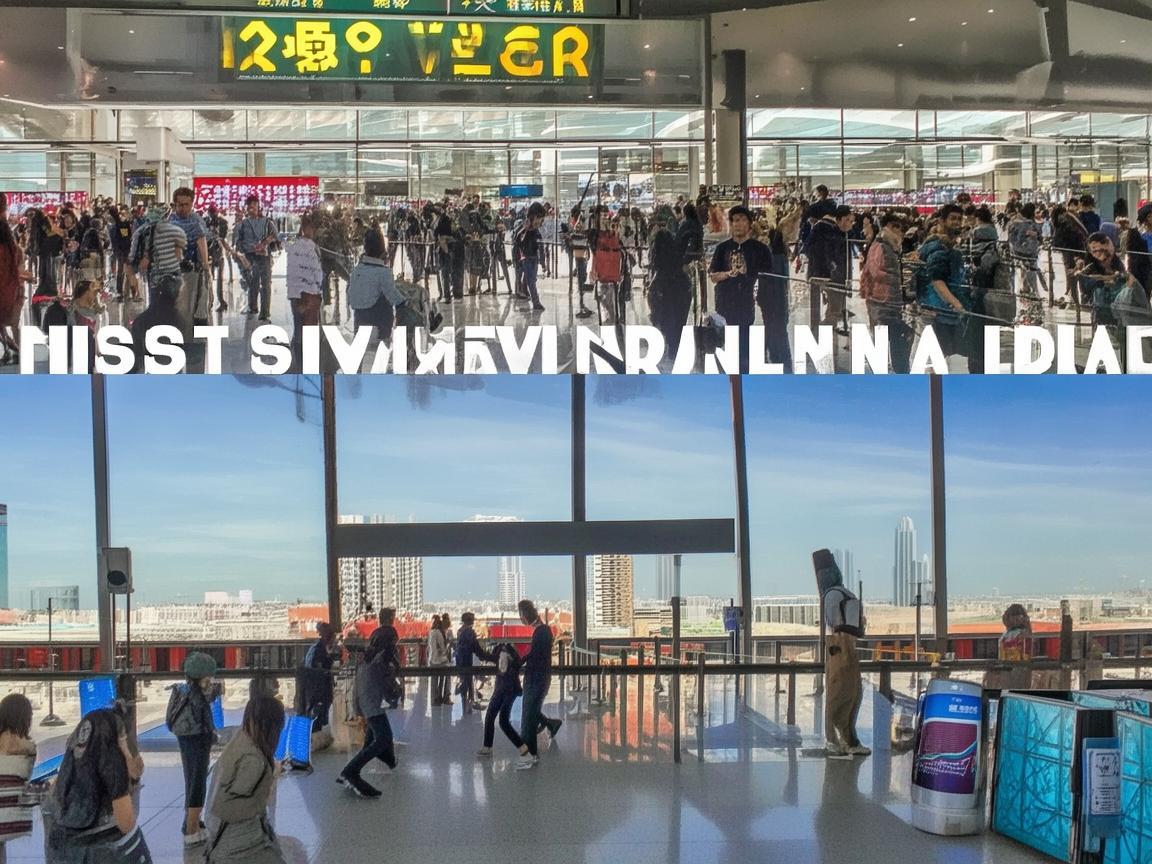
Landing in Xi’an: A First-Timer’s Guide to Smooth Airport Arrival & Essential Travel Apps
Part 1: Surviving Xi’an Airport Arrival (Step-by-Step)
Xi’an Xianyang International Airport (XIY) is about 45 km from the city center, but don’t let the distance intimidate you. Here’s what to expect from the moment you land:
Step 1: Get Through Immigration & Baggage Claim
If you’re an international visitor, you’ll head to immigration first. The lines move quickly if you have your visa ready (double-check it’s in your passport before you fly!). After that, follow the signs for “Baggage Claim”—they’re in both English and Chinese, so you can’t miss them. Airport staff are also happy to point you in the right direction if you look lost.
Step 2: Find the Airport Transit Hub (This is Key!)
Once you have your bags, the next stop is the “Transportation Center,” located right outside the arrival halls (again, clear signs in English). Here, you’ll find all your options for getting into the city: metro, airport buses, taxis, and ride-hailing. Pro tip: Avoid random people approaching you with “taxi” offers—stick to official counters or apps.
Step 3: Choose Your Transport to the City
Let’s break down your options, because the “best” one depends on your budget, time of arrival, and how much luggage you have:
-
Metro: Cheapest & Most Efficient (If You’re Traveling Light)
The Airport Metro Line (called “Airport Intercity Railway”) is a lifesaver. It connects directly to Xi’an North Railway Station (a major hub for trains to other cities) and then joins Metro Line 2, which takes you to the city center (e.g., Bell Tower, Muslim Quarter).- Cost: ~¥8–12 (depending on where you get off).
- Time: ~40–60 minutes to the city center.
- How to Buy Tickets: Go to the ticket machines in the transit center—they have English options. You can pay with cash or Alipay/WeChat (more on those apps later!). If you’re staying near the Bell Tower, get off at “Bell Tower Station” (Line 2).
- Bonus: The metro runs until 10:30 PM, so if your flight lands late (like mine did), this is still an option.
-
Airport Bus: Budget-Friendly & Convenient for Groups
There are 5 airport bus lines, but the most useful for tourists are:- Line 5: Goes to Xi’an Railway Station (near the city center and Muslim Quarter). Fare: ¥25.
- Line 603: Goes to the “High-tech Zone” (popular with business travelers, but some hotels are here). Fare: ¥25.
- When to Take It: If you have a lot of luggage or arrive after metro hours (after 10:30 PM), buses run until 11:30 PM. Look for the bus stops outside the transit center—staff will help you find the right line.
-
Taxi/Ride-Hailing: Quick but Pricier
- Official Taxis: Go to the taxi stand in the transit center. The ride to the city center (e.g., Bell Tower) costs ~¥100–120, and it takes ~45–60 minutes (traffic depending). Always ask the driver to use the meter—some might try to negotiate a fixed price, which is often overcharged.
- Ride-Hailing Apps (Didi): This is what I ended up using, and it was a game-changer. More on this in the “Travel Apps” section, but basically, it’s like Uber for China. You can book a ride in English, see the price upfront, and pay via the app. No haggling, no worrying about language barriers.
Step 4: Arrive at Your Hotel & Breathe
By the time I got to my hotel near the Bell Tower (around 10:30 PM), I was exhausted but relieved. The front desk staff spoke a little English, and they helped me check in quickly. If your hotel doesn’t have English speakers, don’t panic—just use a translation app (more on that later!) to show them your booking confirmation.
Part 2: The Travel Apps That Saved My Trip
Here’s the truth: I could have navigated Xi’an without these apps, but it would have been 10x more stressful. These are the ones I used every single day, and they made the difference between “frustrated tourist” and “confident explorer.”
Didi (China’s “Uber”)—Your Ride-Hailing Lifeline
If you’re used to Uber or Lyft, Didi will feel familiar. It’s the most popular ride-hailing app in China, and it’s essential for getting around Xi’an (especially if you don’t speak Chinese).
- Why It’s Useful:
- You can book a ride in English (just switch the language to “English” in the app).
- You see the fare upfront—no surprises.
- It’s cheaper than taxis (I paid ~¥60 for a ride from the airport to my hotel, vs. ¥100 for a taxi).
- How to Use It:
- Download Didi from the App Store or Google Play (you’ll need a Chinese phone number to sign up—ask your hotel to help, or use a virtual number service like SMS Activate).
- Enter your pickup location (the app uses GPS, so it’s easy) and destination.
- Choose your ride type: “Didi Express” (cheapest, shared ride) or “Didi Premium” (private car, like Uber Black).
- Confirm the booking, and your driver will arrive in 5–10 minutes.
- Pro Tip: If you’re at a busy spot (like the Muslim Quarter), it’s faster to book a ride a few minutes before you’re ready to leave—drivers can take a while to find you in crowded areas.
Amap (Gaode Maps)—Your Navigation Guru
Google Maps doesn’t work well in China, so Amap (高德地图) is the next best thing. It’s like Google Maps on steroids—more detailed, with real-time traffic updates, and even bus/metro schedules.
- Why It’s Useful:
- It has English maps of Xi’an, so you can find restaurants, attractions, and your hotel with ease.
- It shows real-time metro delays and bus arrival times (a lifesaver during rush hour!).
- You can save locations (“Bell Tower,” “Muslim Quarter”) to access them offline (download the map for “Xi’an” before you leave your hotel).
- How to Use It:
- Download Amap from the App Store (it’s free).
- Switch the language to English (tap the “Me” icon, then “Settings,” then “Language”).
- Search for a place (e.g., “Terracotta Army”), and tap “Navigate” for step-by-step directions.
- Pro Tip: If you’re walking, use Amap’s “Walk” mode—it even shows you which side of the street your destination is on (no more circling the block!).
Baidu Translate (or iFlyPlus)—Your Language Bridge
Let’s be real: most people in Xi’an’s tourist areas speak a little English, but if you venture off the beaten path, you’ll need help communicating. Baidu Translate is the best app for this—it translates text, voice, and even images (like restaurant menus!).
- Why It’s Useful:
- Text Translation: Type in a phrase (e.g., “How much is this?”), and it’ll translate to Chinese (and vice versa).
- Voice Translation: Hold down the button and speak—great for ordering food or asking for directions.
- Image Translation: Take a photo of a menu, sign, or map, and it’ll overlay the English translation. I used this constantly to figure out what to eat (no more pointing at random dishes!).
- How to Use It:
- Download Baidu Translate (free).
- Switch to “English” in the settings.
- For offline translation, download the “Chinese (Simplified)” language pack before you go (so you can use it without Wi-Fi).
- Pro Tip: Learn a few basic phrases in Chinese—locals love it when you try! “Nǐ hǎo” (hello), “Xièxiè” (thank you), and “Duōshao qián?” (how much?) go a long way.
Dianping (大众点评)—Your Food & Activity Bible
Dianping is like Yelp or TripAdvisor, but better for China. It has reviews of restaurants, attractions, and even hotels—all from locals and tourists.
- Why It’s Useful:
- It’s the best way to find authentic Xi’an food (not just tourist traps). I found a biangbiang noodle shop with a 4.8-star rating and lines around the block—so good!
- You can filter by “English reviews” if you’re not confident in Chinese.
- It often has coupons for restaurants and attractions (I saved ¥20 on a ticket to the Shaanxi History Museum).
- How to Use It:
- Download Dianping (free).
- Switch to English (tap the “Me” icon, then “Settings,” then “Language”).
- Search for “Xi’an food” or “Terracotta Army,” and look for places with high ratings and lots of reviews.
- Pro Tip: If a restaurant has a “Dianping Recommended” sign (a red sticker with a “DP” logo), it’s a safe bet—locals trust it!
Alipay & WeChat pay—Your Payment Powerhouses
China is a cashless society—almost everyone uses Alipay or WeChat Pay. Even street vendors and small shops take these apps, so you don’t need to carry much cash.
- Why They’re Useful:
- You can pay for everything: metro rides, bus tickets, food, souvenirs, even entrance fees to attractions.
- No need to exchange currency (though it’s good to have a little cash for emergencies).
- How to Set Them Up:
- Alipay: Link it to your international credit/debit card (go to “My” → “Wallet” → “Add Bank Card”).
- WeChat Pay: Go to “Me” → “Wallet” → “Payment Methods” → “Add Bank Card.”
- Pro Tip: If you don’t have a Chinese bank account, you can still use these apps—just link your foreign card. For metro rides, you can add a “Metro Card” to Alipay (tap “Transport” → “Metro Card” → “Add”) and scan the QR code at the gate—no more buying tickets!
Final Thoughts: You’ve Got This!
By the time I left Xi’an, I felt like a local—thanks to a smooth airport arrival and these travel apps. The key is to download them before you go (so you can set them up without Wi-Fi stress) and test them out at your hotel. Trust me, once you use Didi to get to dinner, Amap to find the best roujiamo (Chinese hamburger), and Baidu Translate to order it, you’ll feel unstoppable.
Xi’an is a city where ancient history meets modern life, and with these tools, you can focus on what matters: exploring the Terracotta Army, walking the city walls at sunset, and eating way too much biangbiang noodles. Safe travels, and enjoy every bite (and every step)!
Xi’an Airport Transfer Service
Private English-speaking driver service in Xi’an operated directly by Bruce Zhang. 24/7 airport pickup and hotel transfer for foreign travelers.
Helpful for Your Trip in Xi’an
Xian Airport Arrival Bus Tips: A First-Timers Honest Guide
2026-09-09First 24 Hours in Xian: A Travelers Survival Guide
2026-09-09Landing in Xi’an: An International Traveler’s Step-by-Step Guide to Navigating the Airport
2026-09-07Xian Airport Arrival: A Travelers Guide to Payment & Getting Settled
2026-08-28Getting from Xi’an Airport to Train Stations: A Traveler’s Practical Guide
2026-08-28Xian Airport Arrival During Chinese New Year: My Practical First-Timers Guide
2026-08-13From Xian Airport to Your Hostel: A Travelers Practical Guide
2026-08-10Xi’an Airport Arrival: A Sign Board Pickup Guide for Travelers
2026-08-08Xi’an Arrival Airport Support: A Practical Guide for First-Time Visitors
2026-08-07Xi’an Travel Tips: A First-Timer’s Guide to Smooth Airport Arrival & Hotel Pickup
2026-08-06