

Transiting Through Xi’an Airport: A First-Timer’s Practical Guide
Stepping off the plane at Xi’an Xianyang International Airport (XIY), I felt a mix of excitement and slight overwhelm—excited to explore this ancient capital, but a little nervous about transiting through a Chinese airport for the first time. I’d heard stories about confusing layouts, language barriers, and tight connections, but after figuring it out, I realized: with a clear plan, transiting here is totally manageable. Let me walk you through it step by step, like a friend showing you the ropes.
First Things First: Know Your Airport Layout
Xi’an has two main terminals: T3 (the new, massive one) and T2 (smaller, mostly for domestic flights). If you’re flying internationally (e.g., from Southeast Asia, Europe, or the Middle East), you’ll almost certainly land at T3—this is where most international and long-haul domestic flights operate. T2 handles shorter domestic routes, like from Beijing or Shanghai.
Transiting Through Xi’an Airport: A First-Timer’s Practical Guide
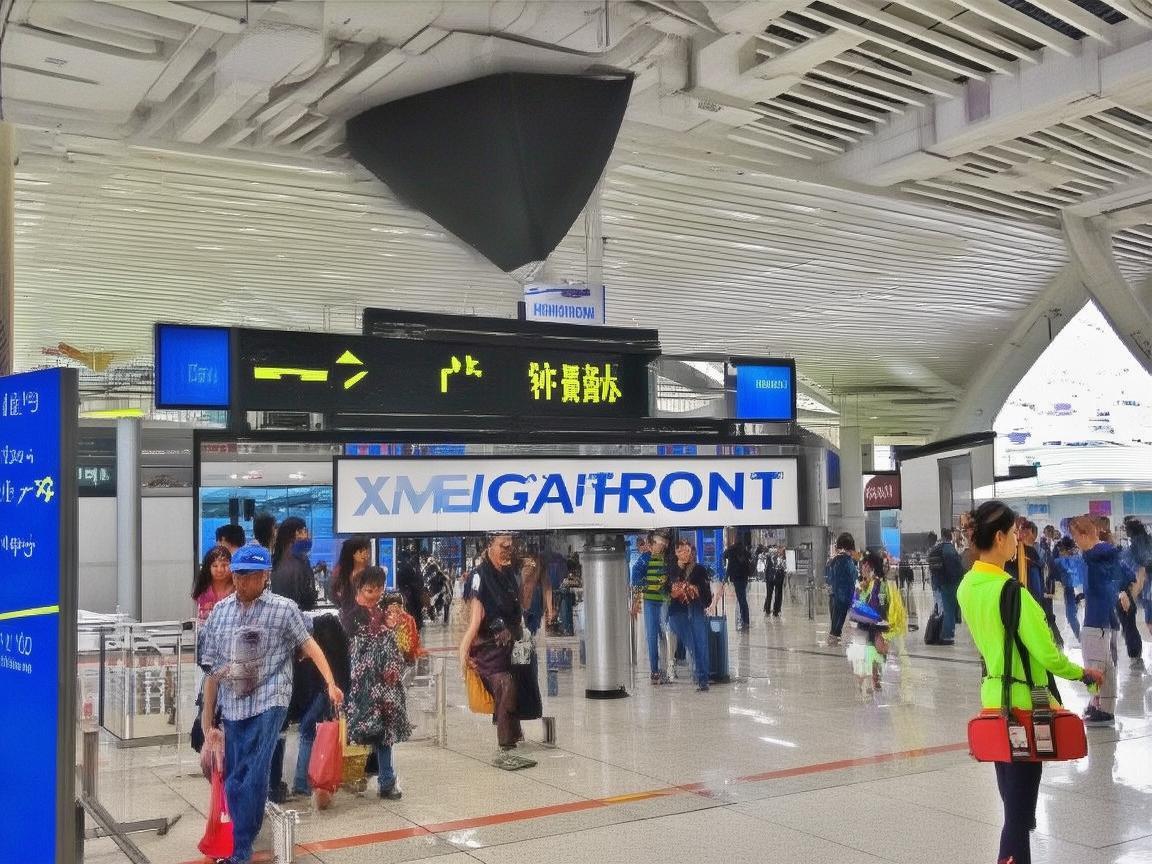
How to tell which terminal you’re in? Look at the signs above the baggage claim or arrival gates—they’re in both Chinese and English. If you’re unsure, ask a staff member (they wear blue uniforms) or check your flight itinerary; it’ll always list the terminal.
Pro tip: T3 is HUGE. Once you exit the aircraft, follow the signs for “Transfers” or “Connections”—don’t wander off toward “Baggage Claim” unless you need to pick up luggage (more on that later). The transfer area is well-marked, but if you get turned around, just stop and look up: the ceiling has giant arrows, and there are info desks every 50 meters or so.
Baggage: To Check or Not to Check?
This depends on whether your next flight is connecting (same airline/alliance through ticket) or separate (booked as two different trips).
- Connecting flights (same ticket): If you booked a single ticket from, say, Paris to Xi’an to Chengdu, your luggage should be tagged all the way to Chengdu. You won’t need to collect it in Xi’an—just follow the “Transfer” signs straight to security. Easy!
- Separate tickets: If you booked two flights (e.g., Bangkok to Xi’an, then Xi’an to Xi’an’s city airport for a domestic flight), you’ll need to pick up your luggage in Xi’an, go through immigration (if coming from abroad), then re-check it for your next flight.
Where to find baggage claim? In T3, it’s on the first floor (Level 1). Look for your flight number on the screens—each carousel is labeled clearly. If your bag doesn’t show up, head to the “Lost & Found” desk near Carousel 12; they speak English and can help track it.
I learned the hard way: My first time, I didn’t realize my connecting flight was a through-ticket, so I wandered to baggage claim for 10 minutes before a staff member gently redirected me. Oops! Always double-check your ticket—it’ll say “Baggage Through to Final Destination” if you’re good to go.
Immigration & Customs: For International Transit Passengers
If you’re transiting from an international flight to another international flight (e.g., Tokyo to Xi’an to Dubai), you might not need to go through immigration—this is called “airside transit.” But if your first flight is international and your second is domestic (e.g., London to Xi’an to Beijing), you will need to clear immigration.
How to tell? Look at the signs after you get off the plane: “Transfer Without Immigration” or “Transfer With Immigration.” If you’re unsure, ask the airline staff—they’ll point you the right way.
- Airside transit (no immigration): You’ll stay in the international transit area, which has restaurants, shops, and even a lounge. No need to worry about visas—just follow the signs.
- With immigration: If you’re entering China (even for a short layover), you’ll need a visa unless you’re from a visa-exempt country (e.g., Thailand, Singapore, or the US for transit under 24 hours—check your eligibility!). Have your passport, visa (if needed), and onward boarding pass ready. The immigration officers are efficient—just smile, hand them your docs, and they’ll stamp you in.
Customs: If you’re entering China, you’ll go through customs after immigration. If you’re bringing in more than ¥10,000 in cash, or restricted items (like fresh fruit, meat, or too many cigarettes), declare them. Otherwise, just walk through the green “Nothing to Declare” channel.
Security: Quick & Painless
After immigration (or if you’re transiting airside), you’ll go through security again. It’s similar to other countries: laptops and liquids (under 100ml) need to be taken out of your bag, coats go in a bin. The staff are used to tourists, so if you forget, they’ll just point and smile—no need to stress.
Pro tip: Keep your boarding pass handy—you’ll need it to show security and to get to your gate.
Finding Your Gate: T3’s Maze Made Easy
T3 has three levels:
- Level 1: Arrivals, baggage claim, transfers.
- Level 2: Domestic departures, shops, restaurants.
- Level 3: International departures, lounges.
Once you’re through security, follow the signs for your flight’s gate number (e.g., “Gate A12” or “Gate B25”). T3’s gates are split into two sections: A (left side) and B (right side). If your gate is in A, don’t wander to B—you’ll walk for 20 minutes! There are airport shuttles (small electric cars) if you’re running late, but they’re usually only for elderly passengers or those with mobility issues.
Hungry or need to shop? Level 2 has a food court with everything from KFC to local snacks (try the roujiamo—Chinese sandwich!). Level 3 has more upscale options, plus duty-free shops if you’re stocking up on gifts.
Transit Services: Lounges, WiFi, and More
If you have a long layover (3+ hours), the airport lounges are a lifesaver. The Plaza Premium Lounge (near Gate A18) is great for showers, free food, and quiet work spaces—you can pay at the door or use lounge passes if your credit card includes them.
WiFi: The airport has free WiFi! Connect to “Airport-Free-WiFi,” enter your phone number, and you’ll get a verification code (it works with foreign numbers). Speed is decent enough for scrolling social media or checking emails.
Currency exchange: If you need Chinese Yuan (RMB), there are exchange counters on Level 1 (arrivals) and Level 2/3 (departures). Rates are okay—better than at the airport, but if you’re in a hurry, it works. For ATMs, Bank of China and ICBC machines are everywhere—they accept foreign cards and dispense RMB.
Charging: Every gate has power outlets under the seats, and there are also charging stations near the lounges. Bring a universal adapter—China uses Type A/C plugs.
Getting to the City (If You Have Time to Explore)
If your layover is 6+ hours, why not pop into Xi’an? The airport is only 45 minutes from downtown, and it’s easy to get there.
- Subway (Metro Line 14): The cheapest option! From T3, follow the signs for “Metro” (it’s in the basement). Line 14 takes you straight to North Railway Station (北客站) in 30 minutes, fare ¥6. From there, you can transfer to Line 2 to reach the city center (Bell Tower, Muslim Quarter). Trains run every 5-10 minutes, 6 AM–11 PM.
- Airport Shuttle Buses: More convenient if you have luggage. There are buses to major spots: Line “机场大巴5号线” goes to the Bell Tower (fare ¥25, 1 hour), and Line “机场大巴3号线” goes to Xi’an Railway Station (fare ¥25, 1 hour). Buses leave every 15–20 minutes from Level 1, Exit 7.
- Taxi/Ride-Hailing: Taxis are available at Level 1, Exit 5. To the city center (Bell Tower), it’s ¥150–200 (fixed fare, no meter). For ride-hailing (Didi, China’s Uber), download the app before you leave home (it requires a Chinese phone number to register, but you can ask a staff member to help).
Warning: If you’re leaving the airport, allow at least 3 hours between flights—getting back through security can take time, and delays happen!
Common Hiccups & How to Fix Them
- Lost your boarding pass? Go to the airline’s service desk (near the gates)—they can reprint it in 2 minutes.
- Language barrier? Download Google Translate (it works offline in China) or use the app “Pin Yin” for speaking Chinese. Most airport staff speak basic English, and younger people are happy to help.
- Flight delayed? Check the flight info screens (they update in real-time) or ask at the airline desk. If your delay is over 4 hours, you can get a meal voucher from the airline—just show them your ticket.
Final Tips for a Smooth Transit
- Wear comfy shoes: T3 is massive, and you’ll do a lot of walking.
- Keep essentials handy: Passport, visa, boarding pass, phone, charger—put them in a small bag you can carry easily.
- Respect local customs: Queuing is expected, and don’t cut in line. If you’re eating in the food court, clean up after yourself (there are trash cans everywhere).
Transiting through Xi’an Airport might seem daunting at first, but it’s actually well-organized and tourist-friendly. The key is to stay calm, follow the signs, and don’t be afraid to ask for help. Within an hour of landing, I was sipping tea in a lounge, planning my trip to the Terracotta Army. You’ve got this—happy travels!
Xi’an Airport Transfer Service
Private English-speaking driver service in Xi’an operated directly by Bruce Zhang. 24/7 airport pickup and hotel transfer for foreign travelers.
Helpful for Your Trip in Xi’an
Xian Airport Arrival Bus Tips: A First-Timers Honest Guide
2026-09-09First 24 Hours in Xian: A Travelers Survival Guide
2026-09-09Landing in Xi’an: An International Traveler’s Step-by-Step Guide to Navigating the Airport
2026-09-07Xian Airport Arrival: A Travelers Guide to Payment & Getting Settled
2026-08-28Getting from Xi’an Airport to Train Stations: A Traveler’s Practical Guide
2026-08-28Xian Airport Arrival During Chinese New Year: My Practical First-Timers Guide
2026-08-13From Xian Airport to Your Hostel: A Travelers Practical Guide
2026-08-10Xi’an Airport Arrival: A Sign Board Pickup Guide for Travelers
2026-08-08Xi’an Arrival Airport Support: A Practical Guide for First-Time Visitors
2026-08-07Xi’an Travel Tips: A First-Timer’s Guide to Smooth Airport Arrival & Hotel Pickup
2026-08-06