

Xi’an Airport Arrival: A First-Timer’s Guide to Local Maps & Getting Around
Landing in Xi’an felt like stepping into a history book come to life—but as a first-time visitor, I’ll admit, I was a little overwhelmed. The airport, Xi’an Xianyang International Airport (XIY), is modern and efficient, but once I cleared customs, the real question hit: How do I actually get into the city, and how will I not get lost once I’m there? Cue the local map—my unsung hero for the next five days. If you’re planning a trip to Xi’an, let me walk you through exactly how to use the airport arrival process, snag a local map, and turn “I’m lost” into “I’ve got this.”
Step 1: Surviving the Airport (And Finding That Map!)
First things first: Xi’an Xianyang Airport has two terminals, Terminal 3 (T3) and Terminal 2 (T2). Most international flights land at T3, while domestic ones split between T2 and T3. I flew in from Singapore, so T3 was my starting point. After grabbing my luggage, I followed the signs for “Arrival” and “Ground Transportation”—and that’s where the magic began.
Xi’an Airport Arrival: A First-Timer’s Guide to Local Maps & Getting Around
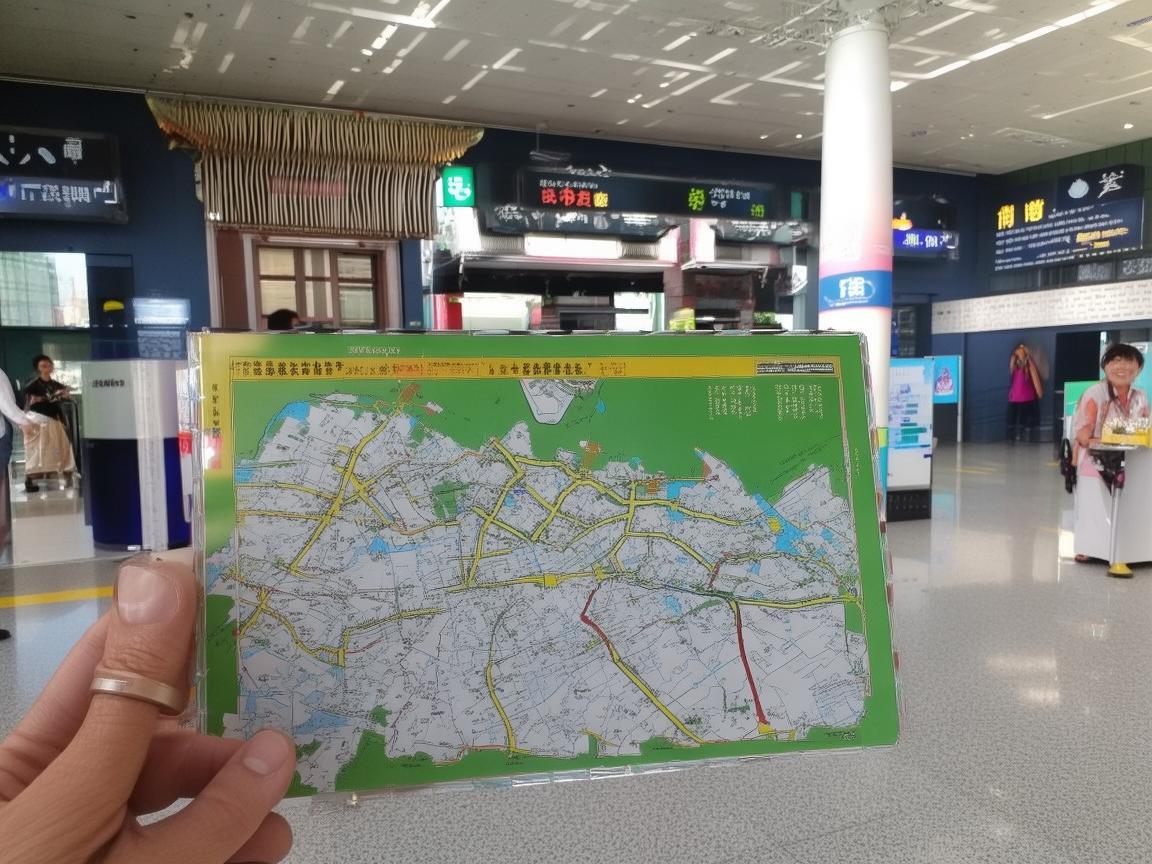
Right outside the baggage claim, before you even step outside, there’s a Tourism Information Desk (look for the blue-and-white sign with a “i” on it). This is your first stop for a local map. The staff here speak basic English and are incredibly helpful. I asked for a “city map with tourist sites and transportation,” and they handed me a foldable paper map (free!) that had everything: subway lines, bus stops, major attractions (Terracotta Army, Big Wild Goose Pagoda, Muslim Quarter), and even a list of常用 phrases (common phrases) like “Where is the subway station?” and “How much is this?”
Pro tip: If you’re staying at a hotel, call them ahead of time and ask if they can send a driver or email you a map. My hotel did both—they picked me up at the airport (for a small fee, cheaper than a taxi) and sent a digital map with their location marked in red. Having two maps (paper + digital) was a lifesaver.
Step 2: Choosing Your Ride from the Airport
Once you have your map, it’s time to decide how to get into the city. Here are your options, ranked from “best for first-timers” to “if you’re feeling brave”:
Option 1: Airport Express Train (Subway Line 14) – Top Pick
This is my #1 recommendation. It’s cheap, fast, and drops you right in the city center. Here’s how:
- Where to catch it: From T3, follow signs for “Metro” (you’ll take a free shuttle bus from the terminal to the train station—it’s 5 minutes, clearly marked). From T2, it’s a short walk to the metro station.
- Cost: 8 RMB (about $1.10) one way.
- Route: Line 14 goes straight to North Railway Station (Beizhan), where you can transfer to Line 2 (the main north-south line that hits all key spots: Bell Tower, Muslim Quarter, Big Wild Goose Pagoda).
- Time: 30-40 minutes to the city center.
- Why it’s great: No language barrier (ticket machines have English), no traffic (subway never gets stuck in Xi’an’s infamous rush hour), and the map you picked? It has Line 14 and transfer points marked in bright red.
Option 2: Airport Bus – Budget-Friendly
If you’re on a tight budget, the bus is a solid choice. There are several lines, but the most useful for tourists is:
- Bus Line 5 (Airport → Xi’an Railway Station): Runs 6:00 AM-10:00 PM, every 10-15 minutes. Cost: 25 RMB ($3.50). Drops you at Xi’an Railway Station, which is a 10-minute walk from the Bell Tower (city center).
- Bus Line 603 (Airport → Tang Paradise): If your hotel is near the south side (e.g., near Big Wild Goose Pagoda or Tang Paradise), this one’s for you. Cost: 25 RMB.
- Where to catch it: Outside T2/T3, follow “Airport Bus” signs—there are dedicated bus stops with clear route maps.
Downside: Buses can get stuck in traffic, so allow extra time (up to 1 hour) during rush hour (7-9 AM, 5-7 PM).
Option 3: Taxi/Ride-Hailing – Convenient but Pricy
Taxis are available outside both terminals. Look for the official taxi stand—do not accept rides from people who approach you inside the airport (they’re unlicensed and will overcharge).
- Cost: ~50-80 RMB ($7-11) to the city center (Bell Tower area). Always ask the driver to use the meter (“dajia” in Chinese).
- Ride-hailing: Download Didi (China’s Uber) before you go. It’s cheaper than taxis and lets you input your hotel’s address in English. Just note: some drivers at the airport may refuse Didi rides (they prefer cash fares), so have a backup plan.
I took the train on my way in—smooth, air-conditioned, and I used my map to trace the route from the airport to my hotel near the Bell Tower. By the time I got off, I already felt like a local (or at least, a local-in-training).
Step 3: Using Your Local Map Like a Pro
Here’s the thing about Xi’an’s local maps: they’re not just paper—they’re your key to understanding the city. Here’s how to decode them:
Master the Subway Lines First
The map will highlight Line 2 in bold (it’s the “tourist line”). It runs from North Railway Station (Beizhan) to Weiyu Road (south side), with stops at:
- Bell Tower (Zhonglou): The heart of the city. Walk 5 minutes to Muslim Quarter, 10 minutes to the Drum Tower.
- Big Wild Goose Pagoda (Dayan Ta): Home to the Shaanxi History Museum and Tang Paradise.
- Small Wild Goose Pagoda (Xiao Yan Ta): Quieter, great for photos.
- Muslim Quarter (Huimin Jie): Exit at “Bell Tower” and walk north—you’ll smell the lamb skewers before you see them.
Pro tip: Buy a subway card (“Yikatong”) at any station. It’s 19 RMB deposit (refundable) and lets you tap in/out—no need to buy tickets every time.
Bus Routes for Off-the-Beaten-Path Spots
Some attractions aren’t on the subway, like the Terracotta Army. The map will show bus stops near your hotel—look for “游5路” (Bus Line 5 Tourist Route) or “游9路” (Bus Line 9 Tourist Route). These are dedicated tourist buses that go directly to the Terracotta Army from the East Bus Station (Dong Zhan) or Railway Station.
- Cost: 7 RMB ($1).
- Time: 1 hour (traffic depending).
- Tip: Ask your hotel or check the map for the nearest “Tourist Bus Stop”—signs are in English and Chinese.
Landmarks as Your North Star
Xi’an’s old city is a rectangle, surrounded by a wall. The Bell Tower is at the exact center. If you ever get lost, just look for the Bell Tower (it’s a golden-roofed pagoda visible from miles away) and orient yourself. My map had a “You Are Here” dot at the Bell Tower, so I could always trace my way back.
Food Markets and “Hidden Gems”
The best part of the map? It marks food spots! I found a tiny noodle shop near the Muslim Quarter (marked with a little bowl icon) that served youpian (noodles with lamb) for 12 RMB. The map also listed “night markets” (like the one near the South Gate)—perfect for evening snacks.
Step 4: My “Oops, I Got Lost” Moment (And How the Map Saved Me)
Three days into my trip, I decided to explore the area around the City Wall. I got off at the “Yongning Gate” stop (South Gate) and decided to walk west. Big mistake—I turned the wrong corner and ended up in a residential neighborhood, no English signs in sight. Panicked? A little. But then I pulled out my paper map, found the South Gate, and traced my route back. Ten minutes later, I was back on track, munching on a roujiamo (Chinese hamburger) from a street vendor the map had flagged as “local favorite.”
Moral of the story: Even with Google Maps, a paper local map is your safety net. It doesn’t need Wi-Fi, and it won’t die when your phone’s at 1%.
Final Tips for a Stress-Free Trip
- Download offline maps: Use Google Maps (yes, it works in Xi’an!) or Maps.me and download the Xi’an map. But still carry the paper one—combinations win.
- Learn basic phrases: “Nǐ hǎo” (hello), “Xièxiè” (thank you), “Duōshao qián?” (how much?). Locals appreciate the effort!
- Stay near the Bell Tower: If it’s your first time, stay in the Bell Tower/Muslim Quarter area. It’s central, walkable to most attractions, and full of hostels/hotels.
- Don’t skip the wall: Rent a bike and ride the top of the City Wall—it’s 14 km, and you’ll get stunning views of the old city and modern skyline.
Xi’an is a city where ancient history bumps into modern life, and having a local map in your hand (or pocket) makes that magic accessible. From the airport to the Terracotta Army, from Muslim Street night markets to the City Wall bike path, my map was my constant companion. It didn’t just show me where to go—it helped me feel the city, one street, one snack, one “oops, I turned right instead of left” at a time.
So if you’re heading to Xi’an, land with a plan, grab that map, and get ready to explore. Trust me—you’ve got this.
Xi’an Airport Transfer Service
Private English-speaking driver service in Xi’an operated directly by Bruce Zhang. 24/7 airport pickup and hotel transfer for foreign travelers.
Helpful for Your Trip in Xi’an
Xian Airport Arrival Bus Tips: A First-Timers Honest Guide
2026-09-09First 24 Hours in Xian: A Travelers Survival Guide
2026-09-09Landing in Xi’an: An International Traveler’s Step-by-Step Guide to Navigating the Airport
2026-09-07Xian Airport Arrival: A Travelers Guide to Payment & Getting Settled
2026-08-28Getting from Xi’an Airport to Train Stations: A Traveler’s Practical Guide
2026-08-28Xian Airport Arrival During Chinese New Year: My Practical First-Timers Guide
2026-08-13From Xian Airport to Your Hostel: A Travelers Practical Guide
2026-08-10Xi’an Airport Arrival: A Sign Board Pickup Guide for Travelers
2026-08-08Xi’an Arrival Airport Support: A Practical Guide for First-Time Visitors
2026-08-07Xi’an Travel Tips: A First-Timer’s Guide to Smooth Airport Arrival & Hotel Pickup
2026-08-06