

Xian Airport Arrival: A Travelers Guide to Navigating the Map
Landing in Xi’an after a 12-hour flight, I was tired but buzzing with excitement—finally, I’d get to see the Terracotta Army, walk the city walls, and stuff myself with roujiamo (Chinese burgers). But first, I had to get from Xi’an Xianyang International Airport (XIY) to my hotel in the city center. As someone who hates feeling lost in new places, I’d done a little homework, and the one thing that saved me? The airport’s arrival map. Seriously, this thing is a game-changer. Let me break down exactly how to use it, step by step, so you can skip the stress and start your adventure ASAP.
First Things First: Which Terminal Are You At?
Xi’an has two main terminals: T2 (domestic) and T3 (international + some domestic). If you’re flying in from within China (like Beijing or Shanghai), you’ll likely land at T2. If you’re coming from abroad (Seoul, Bangkok, Dubai) or on a long-haul domestic flight (like Guangzhou), it’s probably T3. Don’t worry—terminals are connected by a free shuttle bus, but if you’re like me and just want to get out fast, double-check your ticket before landing so you know where to go.
Step 1: Deplaning and Following “Arrivals” Signs
Once you get off the plane, look for the bright green “Arrivals” signs—they’re everywhere, from the jet bridge to the escalators. Just follow the flow; you’ll pass through a quick security check (they’ll scan your boarding pass again) and then head to baggage claim. Here’s where the map comes in handy.
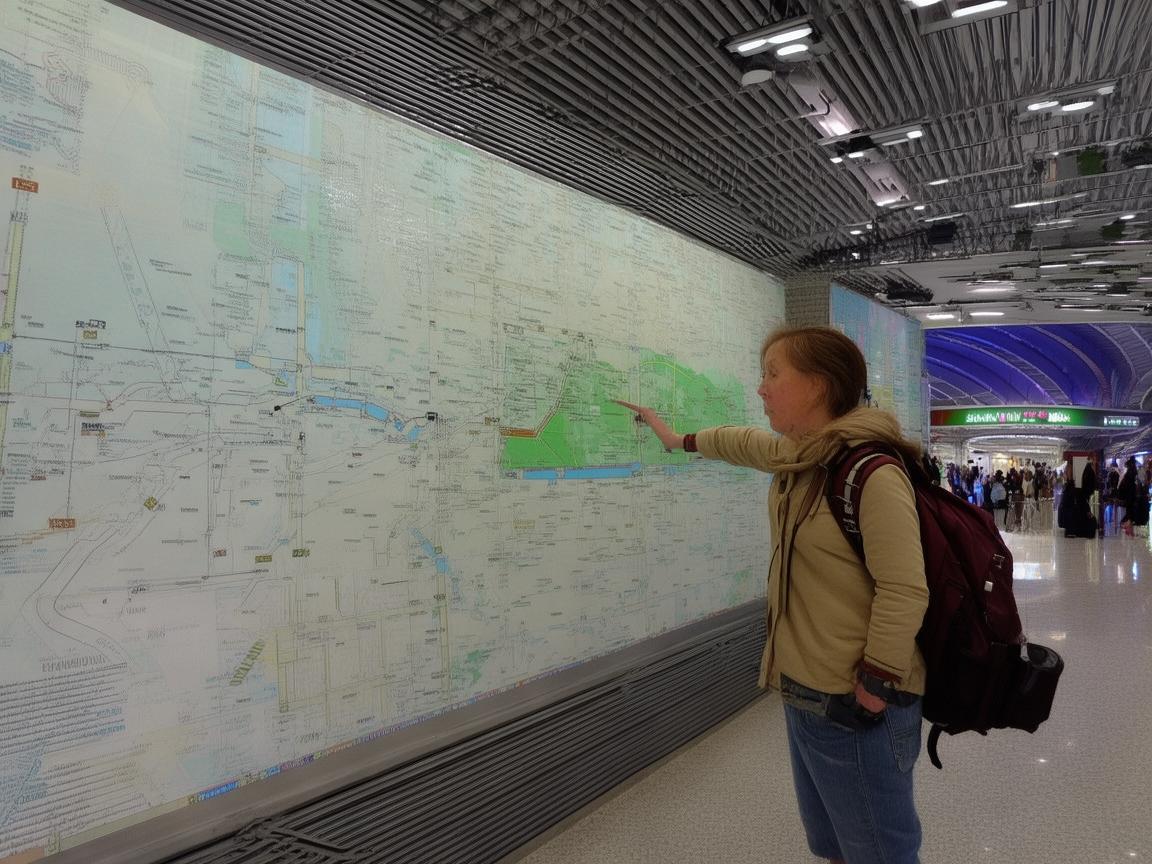
Xian Airport Arrival: A Travelers Guide to Navigating the Map
Step 2: Finding Your Baggage Belt—The Map Is Your Best Friend
Before you even reach baggage claim, stop and look at the wall-mounted arrival maps (they’re also on screens near the exits). These maps are color-coded: red for domestic flights, blue for international. For domestic arrivals (T2), the map will list all airlines (Air China, China Eastern, etc.) and their corresponding baggage belts—e.g., “China Southern: Belt 5-8.” For international (T3), it’s similar but with extra sections for customs (more on that later).
When I landed at T2 from Shanghai, my airline was China Eastern, so I scanned the map, found “China Eastern: Belts 1-4,” and walked straight to Belt 3—no wandering, no asking strangers. Pro tip: If you’re unsure, ask a flight attendant or staff member before you deplane—they’ll often tell you the belt number as you exit the plane.
Step 3: Customs (If You’re International)
If you’re flying in from another country, after grabbing your bags, you’ll head to customs. The arrival map clearly marks “Customs” with a little passport icon. There are two lines: “Nothing to Declare” (green) and “Goods to Declare” (red). Unless you’re bringing in over $5,000 in cash, fresh meat, or more than 200 cigarettes, take the green lane—it’s faster. I had a suitcase full of snacks and souvenirs, but nothing restricted, so I was through in 5 minutes.
Step 4: Welcome to the Arrival Hall—Now, Let’s Get You to the City!
Once you’re past customs (or baggage claim, for domestic), you’ll hit the main arrival hall. This is where the map really shines—it’s a big, clear layout of all your transport options: metro, taxi, airport bus, and ride-hailing. Let’s break down each one, with map references.
Option 1: Metro (Cheapest & Most Convenient for Most Travelers)
If you’re staying near the city center (like near the Bell Tower, Muslim Quarter, or South Street), the metro is your best bet. Here’s how the map guides you:
- Location: Look for the purple “Metro” sign on the arrival map—it’s usually on the left side of the hall (T2) or lower level (T3). Follow the signs down to the metro station.
- Tickets: There are ticket machines with English options. Just enter your destination (e.g., “Bell Tower Station”) and pay by cash or Alipay/WeChat. A ticket to the city center costs around ¥5-7.
- Lines: From T2, you’ll take Metro Line 14 (direct to the city center). From T3, it’s the same line—super easy. The ride to Bell Tower takes about 40 minutes, and it’s air-conditioned, clean, and avoids traffic.
My experience: I took the metro from T3, and the map showed exactly which exit to take (Exit A) to get to the ticket machines. No confusion at all—just follow the purple signs!
Option 2: Taxi (Easy but Prone to Scams—Use the Map to Spot Official Stands)
Taxis are convenient if you’re with lots of luggage or staying late at night. But never accept rides from people who approach you in the hall—those are unofficial (and overpriced). Here’s how the map helps:
- Location: The arrival map marks “Taxi Stand” with a yellow car icon. In T2, it’s on the right side of the hall; in T3, it’s outside on the ground level. Follow the signs—don’t listen to anyone yelling “Taxi! Taxi!”
- Fares: Taxis use meters. From the airport to the city center (e.g., Bell Tower), it should cost ¥100-150, depending on traffic. The map even lists a “Estimated Fare” section—mine said ¥120-140, which matched my ride.
- Payment: Most taxis take cash (have small bills—¥10, ¥20) or Alipay/WeChat. If the driver tries to negotiate a flat fee before you get in, say no and find another one—they’re required to use the meter.
My tip: The map shows where the official taxi queue is—stick to that, and you’ll be fine. I once ignored a “helper” who tried to drag me to a private car; instead, I followed the map to the stand, and the driver was friendly and honest.
Option 3: Airport Bus (Budget-Friendly for Specific Areas)
If you’re staying near a train station (like Xi’an North Railway Station) or want to avoid metro crowds, the airport bus is a solid choice. The map lists all bus lines with their routes and stops:
- Location: Look for “Airport Bus” signs on the map—usually near the taxi stand but in a separate area. In T2, it’s on the left side; in T3, it’s outside Exit 8.
- Lines & Fares: There are 5+ lines, but the most useful for tourists are:
- Line 5: Goes to Xi’an Railway Station (¥25, 1 hour, every 30 minutes).
- Line 603: Goes to Gaoxin (Tech) District (¥25, 50 minutes).
- Line机场大巴 (Airport Express): Goes to the city center (near Bell Tower, ¥25, 45 minutes).
- Tickets: Buy tickets at the counter inside the bus area—cash only. The staff speak basic English, so just show them your hotel address or destination.
My experience: I took Line 5 to the train station to meet a friend, and the map showed exactly which bus stop to wait at—no guessing games. The ride was smooth, and the driver even announced stops in English.
Option 4: Ride-Hailing (Didi, Like Uber—But Only If You Speak Chinese)
If you’re comfortable with apps, Didi (China’s Uber) is an option—but only if you have a Chinese phone number or can type in Chinese. Here’s why the map still helps:
- Pickup Spot: The map marks “Ride-Hailing Pickup” with a car icon. In T2, it’s near the taxi stand; in T3, it’s outside Exit 7.
- How to Use: Open Didi, enter your destination (in Chinese—e.g., “钟楼” for Bell Tower), and request a car. Drivers will pick you up at the designated spot.
- Warning: If you don’t speak Chinese, drivers might struggle to find you, and prices can surge during peak hours. Stick to metro or taxi if you’re not confident.
Step 5: Last-Minute Essentials (The Map Has You Covered)
Before you leave the arrival hall, the map also shows useful spots:
- Currency Exchange: Look for the “Currency Exchange” sign (usually near the exit). Rates are decent—better than exchanging abroad, but not as good as in the city. I exchanged $100 for ¥700, which was enough for a few days.
- ATMs: There are Bank of China and ICBC ATMs everywhere—they accept international cards (Visa, Mastercard).
- Restrooms: Marked with “WC” icons—clean and free, just bring your own toilet paper (some stalls don’t supply it).
- Tourist Information: Look for the “i” sign—staff speak English and can give you maps, recommend hotels, or answer questions.
My Honest Take: Why the Arrival Map Is a Lifesaver
I’ll admit, I’m usually the person who wanders around airports like a lost puppy, but Xi’an’s arrival map changed that. It’s clear, color-coded, and has every detail you need—from baggage belts to metro exits. I landed at 10 PM, grabbed my bags in 10 minutes, took the metro to my hotel by 11 PM, and was eating jianbing on the street by 11:30. No stress, no confusion.
If there’s one tip I can give you, it’s this: Stop and look at the map as soon as you land. It’s your roadmap to a smooth start in Xi’an. The rest of the city—ancient walls, street food, history—will take care of itself. Now go explore, and don’t forget to try the lamb Paomo (bread soup)—it’s life-changing.
Safe travels, and enjoy Xi’an! 🚇✈️
Xi’an Airport Transfer Service
Private English-speaking driver service in Xi’an operated directly by Bruce Zhang. 24/7 airport pickup and hotel transfer for foreign travelers.
Helpful for Your Trip in Xi’an
Xian Airport Arrival Bus Tips: A First-Timers Honest Guide
2026-09-09First 24 Hours in Xian: A Travelers Survival Guide
2026-09-09Landing in Xi’an: An International Traveler’s Step-by-Step Guide to Navigating the Airport
2026-09-07Xian Airport Arrival: A Travelers Guide to Payment & Getting Settled
2026-08-28Getting from Xi’an Airport to Train Stations: A Traveler’s Practical Guide
2026-08-28Xian Airport Arrival During Chinese New Year: My Practical First-Timers Guide
2026-08-13From Xian Airport to Your Hostel: A Travelers Practical Guide
2026-08-10Xi’an Airport Arrival: A Sign Board Pickup Guide for Travelers
2026-08-08Xi’an Arrival Airport Support: A Practical Guide for First-Time Visitors
2026-08-07Xi’an Travel Tips: A First-Timer’s Guide to Smooth Airport Arrival & Hotel Pickup
2026-08-06