

Xi’an Airport Arrival: A Traveler’s Step-by-Step Guide
Landing at Xi’an Xianyang International Airport (XIY) for the first time felt a bit overwhelming—exciting, but with that “I-have-no-clue-what’s-next” nerves. If you’re reading this, chances are you’re in the same boat. Don’t worry! After a week exploring Xi’an—from the Terracotta Warriors to the Muslim Quarter—I’ve put together this no-fluff guide to help you breeze through arrival, avoid common pitfalls, and get to your hotel stress-free. Let’s dive in.
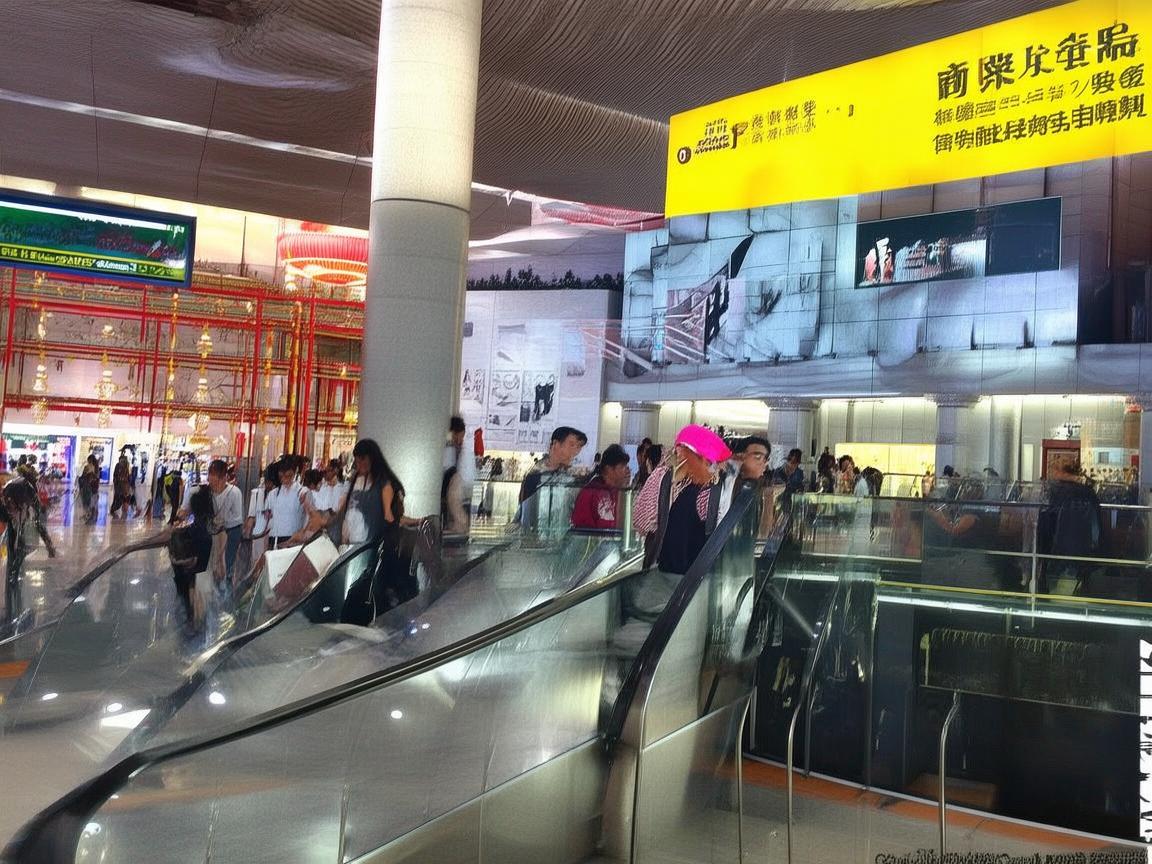
Xi’an Airport Arrival: A Traveler’s Step-by-Step Guide
Step 1: Get Off the Plane & Find Baggage Claim
First things first: once the plane lands, follow the crowd signs for “Arrivals” or “到达” (dá dào, Chinese for “arrival”). You’ll walk a short corridor, go through passport control (if international), and then head to baggage claim.
Pro tip for international travelers: Xi’an has two main terminals—T3 (mostly international and domestic flights) and T2 (mostly domestic). Double-check your ticket to know which terminal you’re in; signs are in English and Chinese, so it’s hard to miss. If you’re flying domestic, you’ll skip passport control and go straight to baggage claim.
For baggage claim: look at the electronic boards above the carousels—they list flight numbers and corresponding carousel numbers. My flight from Shanghai landed at Carousel 5, and it took about 20 minutes for my bag to appear (don’t panic if it’s not there immediately—sometimes luggage takes a while to unload). If your bag is missing, head to the “Lost & Found” office (失物招领处, shī wù zhāo l�ng chù) near the baggage claim; they speak English and will help you file a report.
Step 2: Clear Immigration (International Travelers Only)
If you’re coming from abroad, this is your next stop. Before getting in line, make sure you have:
- Your passport (valid for at least 6 months)
- China visa (or visa-free eligibility, check if your country qualifies)
- Health declaration form (if required—sometimes you’ll fill this out online via the “Customs Declaration” WeChat mini-program before arrival)
The immigration officers are efficient but serious. Smile, hand them your documents, and they’ll stamp your passport. No small talk needed—just be polite. Once stamped, you’re officially in China!
Step 3: Exchange Money & Get a SIM Card (Optional but Useful)
After baggage claim, you’ll enter the arrivals hall. Here, you’ll see banks, ATMs, and SIM card stalls.
Money exchange:
- Avoid exchanging money at the airport if you can—rates are worse than in the city. But if you need cash for a taxi or bus, the Bank of China or Industrial and Commercial Bank (ICBC) stalls in the arrivals hall are reliable.
- I exchanged $100 USD and got around 720 RMB (rates fluctuate, so check the current rate beforehand). They accept cash and credit cards, but cash is faster.
- ATMs: If you have a Visa/Mastercard, ATMs from major banks (ICBC, China Construction Bank) are available. They dispense RMB, and fees vary by your bank—mine charged $5 per transaction, so I took out more at once to minimize fees.
SIM card:
- Xi’an’s tourist areas have decent Wi-Fi, but having a SIM card for navigation (Google Maps works with a Chinese SIM!) and calling your hotel is a lifesaver.
- I bought a China Mobile SIM card at the airport for 50 RMB (~$7) with 10GB of data valid for 7 days. You’ll need your passport to register—just hand it to the staff, and they’ll set it up in 5 minutes.
- Alternative: Rent a portable Wi-Fi device at the airport (counter near the exit), but SIM cards are cheaper and more convenient.
Step 4: Choose Your Transport to the City
This is the most crucial part—getting from the airport to your hotel. Xi’an offers several options, each with pros and cons. Here’s what I tried (and what I’d recommend):
Option 1: Metro (Cheapest & Most Efficient)
Best for: Budget travelers, light luggage, avoiding traffic.
Cost: 5-8 RMB (~$0.70-$1.10) depending on your destination.
Time: 40-60 minutes (no traffic!).
How to:
- From T3: Follow the “地铁” (dì tiě, “Metro”) signs—there’s a direct entrance in the arrivals hall. From T2: It’s a 5-minute walk to T3 (follow the signs).
- Buy a ticket at the automatic machines (they accept cash and Alipay/WeChat, but cash is easier for tourists). Select your destination (e.g., “Bell Tower” for downtown) or pay the base fare (5 RMB for most city stops).
- Take Metro Line 14 (purple line) to North Railway Station (北客站, Běi Kè Zhàn), then transfer to Line 2 (red line) to get to downtown areas like Bell Tower or Muslim Quarter.
- Luggage tip: Metro Line 14 has elevators and luggage-friendly carts, but it gets crowded during rush hours (7-9 AM, 5-7 PM). If you have huge suitcases, skip this during peak times.
Option 2: Airport Bus (Convenient & Cheap)
Best for: Travelers with medium luggage, going to specific districts.
Cost: 20-30 RMB (~$3-$4).
Time: 50-70 minutes (depends on traffic).
How to:
- Bus stops are outside both T2 and T3 arrivals halls—look for signs like “机场大巴” (jī chǎng dà bā, “Airport Bus”).
- There are several routes:
- Line 5: Goes to Bell Tower (downtown) via High-tech Zone. Stops at major hotels like Hilton, Sheraton.
- Line 1: Goes to Railway Station (good if your hotel is near there).
- Line 2: Goes to Xi’an North Railway Station (high-speed rail hub).
- Buy tickets at the counter (cash only) or from the bus attendant. Buses leave every 30 minutes, from 6:30 AM to 10:30 PM.
- Pro tip: Tell the bus attendant your hotel name—they’ll let you know where to get off. The driver also shouts stops in Chinese, so have your destination written in Chinese (e.g., “钟楼” for Bell Tower) to show locals if needed.
Option 3: Taxi/Ride-Hailing (Most Convenient but Pricier)
Best for: Travelers with heavy luggage, late arrivals, or groups.
Cost: 150-250 RMB (~$22-$35) depending on traffic and destination.
Time: 40-90 minutes (traffic can be brutal, especially 7-9 AM/5-7 PM).
How to:
- Official taxis: Go to the designated taxi queue outside arrivals (look for “出租车” taxi signs). Wait in line—don’t accept rides from drivers who approach you inside the terminal (they might overcharge).
-
When you get in, the driver should start the meter (“打表,” dǎ biǎo). If they refuse, find another taxi.
-
Have your hotel address in Chinese: e.g., “西安市碑林区钟楼南路1号” (for Bell Tower area). Show it to the driver—they’ll plug it into their GPS.
- Ride-hailing (Didi): If you have a Chinese SIM card, use Didi (China’s Uber). It’s cheaper than taxis and you can see the fare upfront. Download the app, register with your phone number, and add a payment method (Alipay/WeChat Pay). Select “Premium” or “Comfort” cars for more space.
- Warning: Avoid unlicensed “black taxis”—they’re common outside T2 and will overcharge. Stick to official taxis or Didi.
Option 4: Hotel Shuttle (Most Hassle-Free)
Best for: Travelers staying at mid/high-end hotels (e.g., Sheraton, Marriott, Intercontinental).
Cost: Usually free (confirm with your hotel when booking).
Time: 40-60 minutes.
How to:
- Contact your hotel in advance to arrange a pickup. They’ll send a driver with a sign with your name at the arrivals exit.
- Tip: If your hotel offers this, take it! No need to haggle with taxis or navigate the metro—especially after a long flight.
Step 5: Final Checks & Getting to Your Hotel
Once you’re on your chosen transport, relax! Here are last-minute tips:
- Save important contacts: Your hotel’s address (in Chinese and English), emergency numbers (110 for police, 120 for ambulance), and the airport’s info line (029-88796666).
- Navigation: Use Google Maps (works with a Chinese SIM) or Amap (高德地图, Gaode Map, popular in China) to track your route. If taking a taxi, follow the driver’s path on your phone to avoid detours.
- Tipping: Tipping is not customary in China—waiters, drivers, and hotel staff don’t expect it. A simple “谢谢” (xiè xie, “thank you”) is enough.
My Personal Experience & What I Wish I’d Known
I landed at 10 PM, tired and hungry, and initially panicked when I saw the long taxi line. But then I remembered the airport bus—Line 5 was still running, and it dropped me at a stop 5 minutes from my hotel for just 25 RMB. The bus attendant even helped me with my suitcase!
One mistake I made: not downloading Google Maps offline. My first day in the Muslim Quarter, I got lost because the Wi-Fi was spotty. Now I always download offline maps of my destination— lifesaver!
Also, Xi’an’s airport is well-signposted in English, but learning a few basic phrases helps:
- “谢谢” (xiè xie) = Thank you
- “多少钱?” (duō shao qián?) = How much?
- “麻烦您” (má fan nín) = Excuse me/Thank you for your help
Final Thoughts
Xi’an Airport arrival is smoother than you might think—just stay calm, follow the signs, and pick the transport that fits your budget and luggage. Once you’re in the city, the magic begins: the smell of roujiamo (Chinese hamburgers) on the streets, the sight of the Terracotta Warriors at sunrise, the buzz of the Muslim Quarter at night… but that’s a story for another guide.
Safe travels, and enjoy Xi’an—this city will steal your heart! ?
Xi’an Airport Transfer Service
Private English-speaking driver service in Xi’an operated directly by Bruce Zhang. 24/7 airport pickup and hotel transfer for foreign travelers.
Helpful for Your Trip in Xi’an
Landing in Xi’an: A First-Time Visitor’s Guide to Airport Arrival and Greeter Services
2026-07-27Luggage Lost at Xi’an Airport? A Traveler’s Survival Guide to Getting It Back
2026-07-27Xi’an Travel Tips: From Airport Arrival to Smooth Didi Rides
2026-07-27Landing in Xi’an: A Traveler’s Guide to Smooth Airport Arrival Support
2026-07-26Wheelchair-Friendly Arrival in Xi’an: A First-Timer’s Practical Guide
2026-07-26Xi’an Airport Arrival: A First-Timer’s Confidence Guide
2026-07-26XiAn Airport Arrival Tips for Foreign Travelers: A First-Timers Practical Guide
2026-07-26Finding Your Pickup Sign at Xi’an Airport: A Traveler’s Practical Guide
2026-07-25Getting from Xi’an Airport to the City: A Tourist’s Practical Guide
2026-07-24Landing in Xi’an: My Smooth Airport Arrival with a Greeter—A Traveler’s Practical Guide
2026-07-24