

Xian Airport Exit Guide: A Travelers Step-by-Step Walkthrough
Landing in Xi'an for the first time? I remember stepping off the plane at Xi'an Xianyang International Airport (XIY) feeling excited but a little lost—between the signs, the crowds, and the need to get to my hotel ASAP, I wished I’d had a clear, no-fluff guide back then. So, let me break down exactly how to exit the airport smoothly, from grabbing your bags to hopping on the right transport. This is what I learned (and a few mistakes I made!) to help you skip the stress and start exploring faster.
First Things First: Confirm Your Terminal
Xi'an Xianyang Airport has two main terminals: T2 (Domestic) and T3 (Domestic + International). Before you even land, check your ticket—domestic flights usually use T2 or T3, while international flights (and some domestic ones, like those from Beijing/Shanghai) land at T3. When you deplane, follow the signs for “Arrivals” (国内到达/国际到达, “Domestic Arrivals”/“International Arrivals”). Don’t worry: the terminals are well-marked, and if you mix them up, shuttle buses run between T2 and T3 every 10–15 minutes (free, just follow the “Terminal Shuttle” signs).
Step 1: Grab Your Luggage
Once you’re in the arrivals hall, the first stop is baggage claim. Look for the monitors displaying your flight number—they’ll show which carousel your bags are on. For domestic flights, carousels are usually on the 1st floor of T2 or T3; international flights are on the 2nd floor of T3 (follow “行李提取,” “Baggage Claim”).
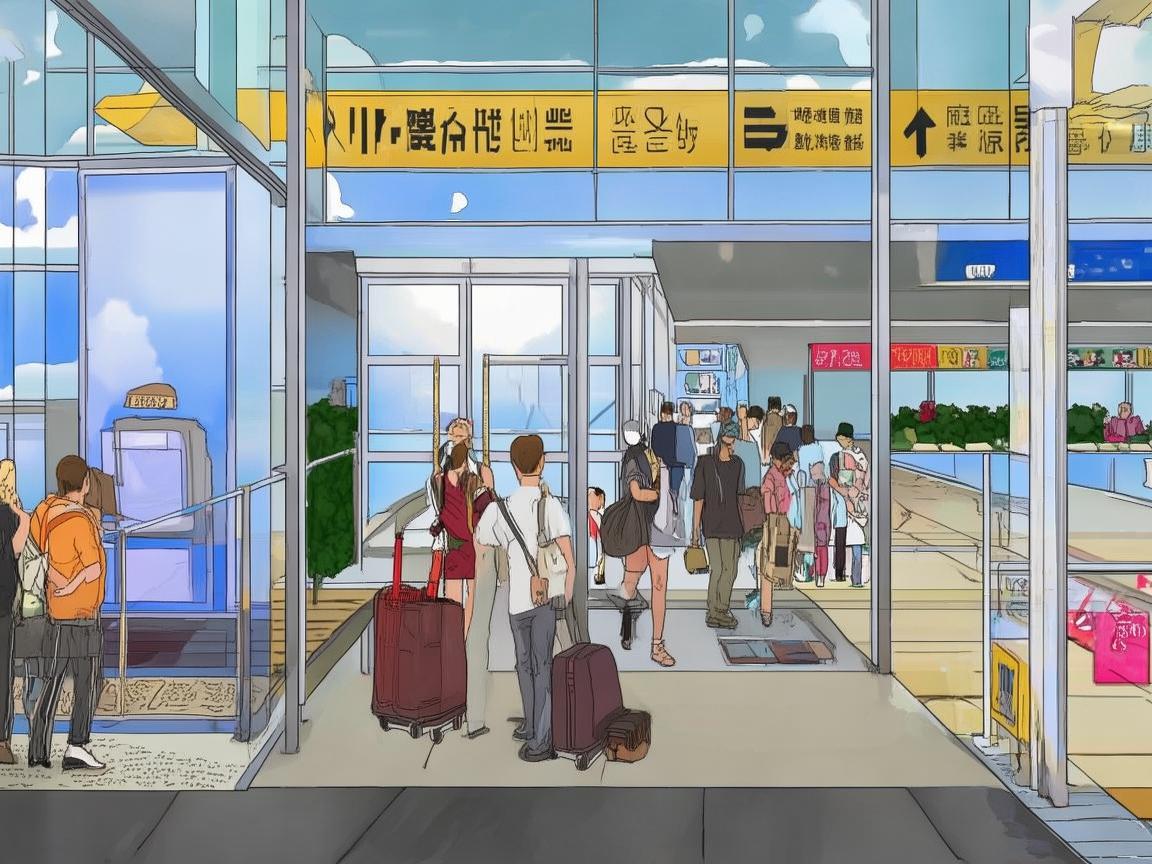
Xian Airport Exit Guide: A Travelers Step-by-Step Walkthrough
Pro tip: If your bag doesn’t show up, head straight to the “Lost and Found” office (失物招领处). In T2, it’s near Carousel 4; in T3, it’s on the 2nd floor, next to the international baggage claim. They speak basic English, and you’ll need your flight number and baggage claim tag.
Step 2: Exchange Money (If You Need To)
Xi’an uses Chinese Yuan (CNY, or RMB). While many hotels, restaurants, and shops take Alipay/WeChat pay, it’s smart to get some cash for small vendors, street food, or taxis. There are currency exchange counters right in the arrivals halls:
- T2: Near Exit 3, opposite the baggage claim.
- T3: On the 1st floor (domestic side) and 2nd floor (international side).
Rates are decent—better than at airports in some other countries—but not as good as downtown banks. I’d exchange just ¥200–¥500 to start, then hit a Bank of China or ICBC branch in the city for better rates (they’re everywhere, like near the Bell Tower or Muslim Quarter).
ATMs are also plentiful: look for “银联” (UnionPay) machines, which accept most international cards (Visa, Mastercard, etc.). They’re near the exits and currency counters—just make sure your bank doesn’t charge foreign transaction fees!
Step 3: Choose Your Transport: Here’s Your Cheat Sheet
This is the part that stressed me out most—so many options! Let’s break it down by cost, convenience, and who it’s best for.
Option 1: Metro (Cheapest & Most Convenient for City Center)
If you’re staying near the Bell Tower, Muslim Quarter, or South Gate, the metro is a lifesaver. It’s cheap, fast, and avoids traffic jams.
- Which line? Take Metro Line 14 (the airport line). It connects directly to the city center:
- From T2: Follow signs for “地铁” (Metro) or “Line 14”—you’ll have to walk a few minutes to the T2 metro station (shuttle buses from the terminal to the metro station run every 5 mins if you’re lazy).
- From T3: The metro station is inside T3, on the B1 floor (follow “地铁” signs—super easy).
- Where to get off? The key stops are:
- Beikezhan (North Railway Station): If you’re catching a train to other cities (like Luoyang or Chengdu).
- Bell Tower (Zhonglou): Perfect for the Muslim Quarter, Bell Tower, and downtown hotels.
- South Gate (Nanmen): Close to the City Wall and Shaanxi History Museum.
- Cost: ¥6–¥10, depending on how far you go (from T3 to Bell Tower is ¥8).
- Payment: Use Alipay/WeChat Pay (search for “西安地铁” and add a “电子地铁卡,” “e-metro card”) or buy a physical card at the metro station’s vending machine (insert cash—coins work, but bills are easier). The machines have English options!
- Hours: 6:00 AM–11:00 PM. Trains run every 8–10 mins during the day, every 15–20 mins at night.
My mistake the first time: I tried to pay with cash at the gate—nope, you need to tap in at the vending machines or use your phone. Download Alipay/WeChat before you land (you can link a foreign credit card).
Option 2: Airport Shuttle Bus (Best for Budget Travelers & Direct Routes)
If your hotel isn’t near a metro stop, or you’re traveling with heavy luggage, the shuttle bus is a solid middle-ground—cheaper than taxis, more direct than metro + walking.
- Key routes: There are 6 lines, but the most useful for tourists are:
- Line 5 (“Xi’an Line”): Goes to Bell Tower (终点站: 钟楼). Stops at T2, T3, and major hotels like Hilton, Sheraton. Fare: ¥25.
- Line 1 (“Xi’an North Railway Station Line”): Goes to North Railway Station (终点站: 火车站). Fare: ¥25.
- Line 6 (“High-speed Rail Line”): Goes to Xi’an North High-speed Railway Station (终点站: 北客站). Fare: ¥25.
- Where to catch it: Look for “机场大巴” (Airport Shuttle Bus) signs outside arrivals—T2 has stops at Exit 3 and Exit 7; T3 has stops at Exit 5 and Exit 9.
- Hours: 6:30 AM–10:30 PM (last buses around 10:00 PM). Buses leave every 20–30 mins.
Pro tip: Tell the driver your hotel name—they’ll drop you at the nearest stop. If you’re unsure, take Line 5 to Bell Tower—you can grab a taxi from there for short distances.
Option 3: Taxi/Ride-Hailing (Most Convenient for Late Nights or Groups)
Taxis are easy but pricier; ride-hailing (like Didi, China’s Uber) is cheaper and avoids scams.
-
Taxis:
- Where to wait: Go to the official taxi rank (look for “出租车” signs and uniformed drivers). T2 has ranks at Exit 5 and Exit 9; T3 has ranks at Exit 2 and Exit 10.
- Fare: ¥1.3–¥1.5 per km (plus ¥1 fuel surcharge). From T3 to Bell Tower: expect ¥80–¥100 (40–50 mins). From T2 to Bell Tower: ¥70–¥90.
- Red flags: Never take a taxi that “offers” you a ride inside the terminal (they’re unlicensed). Insist on using the meter—if the driver refuses, find another one.
-
Didi (Ride-Hailing):
- Must-have: Download the Didi app (it’s like Uber) and link a payment method (foreign credit cards work). Set your language to English in the app settings.
- How to use: When you exit, find the “Didi Pick-up” spot (marked with signs—T2 has one near Exit 3; T3 has one near Exit 8). Open the app, enter your destination, and choose “Didi Express” or “Didi Premier” (for nicer cars).
- Cost: Cheaper than taxis! From T3 to Bell Tower: ¥60–¥80 (no fuel surcharge).
- Bonus: Didi shows the driver’s name, car model, and license plate—safer and less chance of scams.
My first time: I took a taxi from T3 to my hotel near the Muslim Quarter. The driver tried to charge me ¥150 until I pointed at the meter. Lesson learned: always use the meter or Didi!
Option 4: Private Car (Best for Luxury/Groups)
If you’re traveling with family or want a hassle-free ride, book a private car in advance. Many hotels offer this service (ask when you book), or you can use apps like “HelloCar” or “Shouqi.”
- Cost: ¥200–¥300 from T3 to downtown (depends on the car type).
- Perk: The driver waits for you with a name sign at the exit—no hunting for transport.
Step 4: Final Checks Before You Leave the Airport
Once you’ve got your transport sorted, do a quick “exit checklist”:
- Do you have your passport? (Keep it handy—you’ll need it for hotel check-ins).
- Do you have small bills? (For taxis, street food, or metro if your phone dies).
- Do you have your hotel’s address in Chinese? (Show it to your driver if they don’t speak English—Google Translate the address and save it offline).
- Did you leave anything behind? (Double-check the charging ports, seating areas—phones and chargers are the most common lost items!).
Bonus: Tips for a Smooth Start
- Language: Most airport staff speak basic English, but it’s helpful to learn a few phrases: “你好” (hello), “谢谢” (thank you), “地铁在哪里?” (Where is the metro?).
- Wi-Fi: The airport has free Wi-Fi—connect to “XIY-Free-WiFi” and register with your phone number.
- Sim Cards: If you need a local sim, China Mobile/Unicom/Telecom have counters in arrivals (T2: near Exit 1; T3: near Exit 10). A 30-day tourist plan with 10GB data costs ~¥100.
Final Thought
Xi’an is an incredible city—think terracotta warriors, Muslim Street street food, and ancient city walls. Getting from the airport to the city center doesn’t have to be scary. Just follow this guide: confirm your terminal, grab your bags, pick your transport (metro for budget, Didi for convenience), and you’ll be slurping down lamb burgers in the Muslim Quarter in no time. Safe travels, and enjoy Xi’an!
Xi’an Airport Transfer Service
Private English-speaking driver service in Xi’an operated directly by Bruce Zhang. 24/7 airport pickup and hotel transfer for foreign travelers.
Helpful for Your Trip in Xi’an
Xian Airport Arrival Bus Tips: A First-Timers Honest Guide
2026-09-09First 24 Hours in Xian: A Travelers Survival Guide
2026-09-09Landing in Xi’an: An International Traveler’s Step-by-Step Guide to Navigating the Airport
2026-09-07Xian Airport Arrival: A Travelers Guide to Payment & Getting Settled
2026-08-28Getting from Xi’an Airport to Train Stations: A Traveler’s Practical Guide
2026-08-28Xian Airport Arrival During Chinese New Year: My Practical First-Timers Guide
2026-08-13From Xian Airport to Your Hostel: A Travelers Practical Guide
2026-08-10Xi’an Airport Arrival: A Sign Board Pickup Guide for Travelers
2026-08-08Xi’an Arrival Airport Support: A Practical Guide for First-Time Visitors
2026-08-07Xi’an Travel Tips: A First-Timer’s Guide to Smooth Airport Arrival & Hotel Pickup
2026-08-06