

Xi’an Holiday Travel: A Practical Guide from Airport Arrival to Exploring the Ancient City
Landing at Xi’an Xianyang International Airport felt like stepping into a storybook—one where ancient dynasties meet modern China. As a first-time visitor, I was both excited and a little nervous: How would I get from the airport to the city? What should I prioritize in my short holiday? After a week of exploring, I’ve learned a lot, and I’m here to share the practical tips that turned my trip from stressful to seamless. Whether you’re a history buff, a foodie, or just looking to soak in Chinese culture, this guide will help you make the most of your Xi’an holiday—starting from the moment you land.
Part 1: Airport Arrival & Getting to the City
Xi’an Xianyang International Airport (XIY) is about 45 kilometers northwest of the city center. Don’t panic: there are three reliable, budget-friendly ways to get to your hotel, and I tried all three to compare.
Option 1: Metro (My Top Pick for Convenience)
The Airport Metro Line (Line 14) is the fastest way to reach the city, especially if you’re staying near major attractions like the Bell Tower, Muslim Quarter, or Big Wild Goose Pagoda. Here’s how it works:
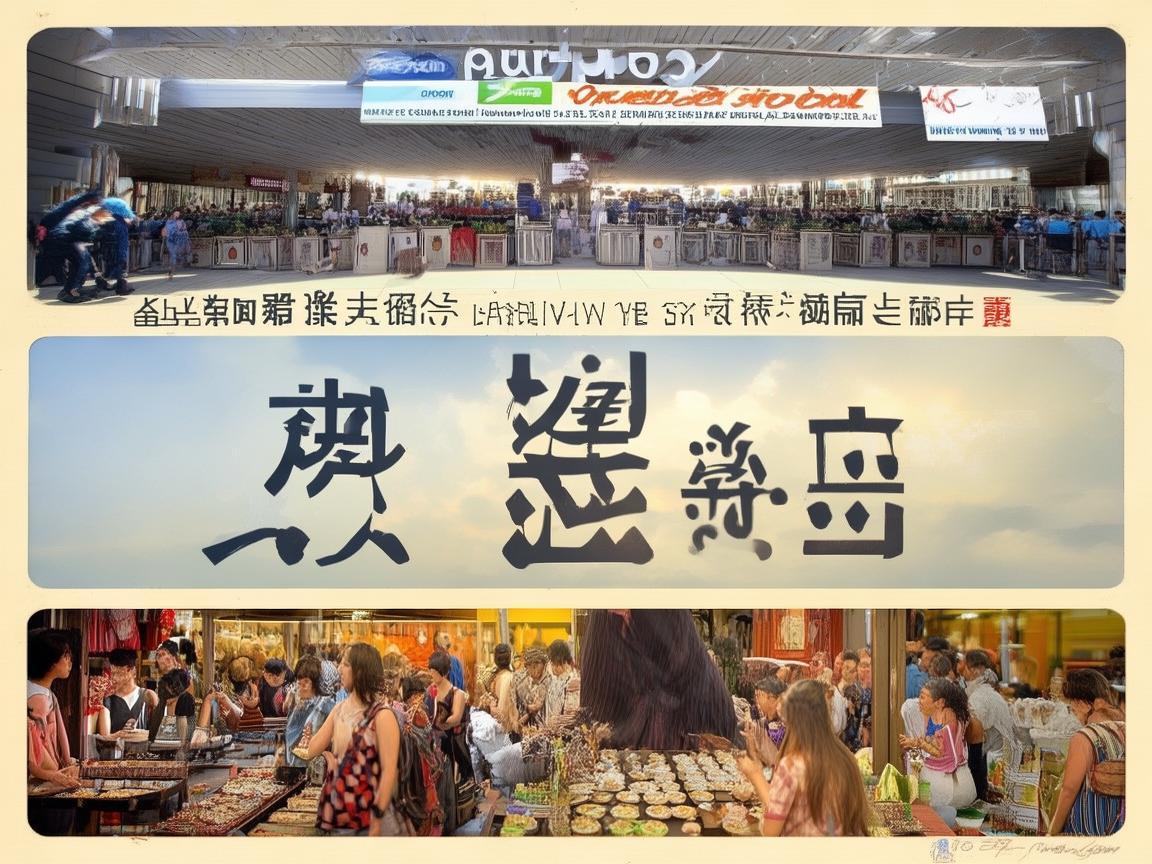
Xi’an Holiday Travel: A Practical Guide from Airport Arrival to Exploring the Ancient City
- Where to find it: Follow the “Metro” signs from the airport’s Terminal 2 or 3 (Terminals 1 and 2 are connected by a free shuttle bus). The metro station is right at the airport.
- Cost: 6 RMB to North Railway Station (the last stop), and 8 RMB to Bell Tower (a central hub).
- Time: About 1 hour to reach the city center. Trains run every 10–15 minutes from 6:00 AM to 11:00 PM.
- Pro tip: If you’re carrying heavy luggage, the metro has elevators and luggage carts, but mind the crowds during rush hours (7–9 AM, 5–7 PM). I arrived at 10 AM and had a smooth ride to my hotel near Bell Tower.
Option 2: Airport Shuttle Bus (Great for Budget Travelers)
If you prefer a direct drop-off near your hotel, the shuttle bus is a solid choice. There are multiple routes, but Route 1 is the most popular:
- Route: Goes from the airport to Bell Tower, then to East Gate, and finally to North Railway Station.
- Cost: 25 RMB per person.
- Time: 45–60 minutes, depending on traffic.
- Where to buy tickets: Look for the shuttle bus counter in the arrival hall of your terminal.
- Pro tip: Announce your hotel to the driver when boarding—they’ll let you know the closest stop. I took this on my way back to the airport and it was hassle-free.
Option 3: Taxi or Ride-Hailing (For Comfort, But Beware)
Taxis and ride-hailing apps (like Didi, China’s Uber) are convenient but pricier. Here’s what to know:
- Taxi: The official taxi stand is outside the arrival hall. Expect to pay 150–200 RMB to the city center (depending on traffic). Always insist on the meter—some drivers may try to negotiate a higher fare, especially late at night.
- Didi: Download the app (it’s in English) and set up a payment method (Alipay or WeChat Pay). Book a “Premier” car for more comfort; fares are similar to taxis but often more reliable. I used Didi at 6 AM when the metro wasn’t running yet, and it cost 180 RMB to my hotel.
Bottom line: For most travelers, the metro is the best balance of cost, speed, and ease. If you’re with family or have lots of luggage, the shuttle bus is a close second. Avoid unlicensed “black taxis” that approach you inside the airport—they’ll overcharge.
Part 2: Where to Stay: Location is Key
Xi’an is a big city, but staying in the right area will save you hours of travel time. For a short holiday, I recommend these two neighborhoods:
Option 1: Bell Tower / Muslim Quarter (Best for First-Timers)
This is the heart of Xi’an, within walking distance of top attractions: the Bell Tower, Drum Tower, Muslim Quarter, and Muslim Street. You’ll also find endless restaurants, shops, and hotels here.
- Pros: Central, easy to navigate, and lively at night. I stayed at a budget hotel (200 RMB/night) just 5 minutes from the Bell Tower, and I could walk to dinner every night.
- Cons: It can be noisy, especially on weekends. If you prefer quiet, ask for a room facing the inner courtyard.
Option 2: South Gate (Near the City Wall)
A bit quieter than the Bell Tower area but still super convenient. The South Gate is the main entrance to the Xi’an City Wall, and there are plenty of hotels, from budget to luxury.
- Pros: Great if you want to start your day with a morning walk on the city wall. Many hotels here offer “wall view” rooms, which are Instagram-worthy.
- Cons: A 10–15 minute metro ride to the Muslim Quarter, so not as central for food shopping.
Pro tip: Book your hotel 1–2 months in advance, especially during peak season (April–May, September–October). Prices go up, and good locations sell out fast.
Part 3: Must-See Attractions: Prioritize Like a Local
Xi’an is famous for its Terracotta Army and ancient city walls, but there’s so much more. With just 5 days, I focused on these highlights—here’s how to do them efficiently.
Terracotta Army (兵马俑) – Don’t Miss, But Go Early!
This is Xi’an’s crown jewel, and for good reason: over 8,000 life-sized terracotta soldiers, each with unique faces, buried with China’s first emperor, Qin Shi Huang.
- How to get there: Take Metro Line 9 to “Huaqing Palace Station,” then switch to Tourist Bus 5 (306路). This bus is official, cheap (5 RMB), and takes you straight to the entrance. Avoid “private” buses at the metro station—they’re overpriced.
- Cost: 120 RMB (peak season), includes entry to all three pits and the exhibition hall.
- Time: Spend at least 3 hours. Pit 1 is the most impressive (the main army), but Pit 2 and 3 have chariots and smaller units.
- Pro tip: Arrive by 8 AM to beat the crowds. I went at 9 AM and it was already packed with tour groups. Hire a guide at the entrance (100–150 RMB for a group) to learn the stories behind the pits—otherwise, you’ll just see clay soldiers!
Xi’an City Wall (西安城墙) – Walk or Bike, Your Choice
This 14-kilometer wall encloses the old city and is one of the best-preserved ancient walls in China. Walking the entire thing takes 3–4 hours, but biking is more fun (and faster).
- How to get there: Metro Line 2 to “South Gate Station” (永宁门). This is the most popular entrance—rent bikes here (45 RMB for 3 hours, or 80 RMB for all day).
- Cost: 54 RMB for entry, plus bike rental.
- Best time: Late afternoon (4–6 PM). You’ll catch the sunset over the city and see the wall lit up at night. I biked 2 hours (from South Gate to East Gate) and stopped for tea at a tower halfway—perfect break!
- Pro tip: If you don’t want to bike, take an electric cart (80 RMB per person) for a full loop. It’s pricey but saves your legs.
Muslim Quarter (回民街) – Eat, Shop, and Soak in Culture
This isn’t just a street—it’s a neighborhood of narrow alleys filled with mosques, street food, and souvenir shops. Come here with an empty stomach!
- How to get there: Metro Line 2 to “Bell Tower Station,” then walk 5 minutes north.
- Must-try foods:
- Roujiamo (肉夹馍): Xi’an’s “hamburger.” Crispy bread stuffed with slow-cooked pork (or beef). I ate at “Laomao Jirou” (老毛肉夹馍)—locals line up here, and it’s worth it (15 RMB).
- Paomo (泡馍): Break bread into a bowl, then add lamb soup and noodles. “Sunji Paomo” (孙记泡馍) is famous, but you have to “break your own馍” (馍 = bread)—it’s part of the experience!
- Liangpi (凉皮): Cold noodles with chili oil, garlic, and cucumber. Try “Qinzhen Liangpi” (秦镇凉皮) for the authentic version (10 RMB).
- Biangbiang Noodles (biangbiang面): Wide, chewy noodles with spicy sauce. The name has 57 strokes—ask the vendor to write it for you!
- Pro tip: The main street (Muslim Street) is touristy—turn onto the side alleys for cheaper, better food. Also, visit the Great Mosque (20 RMB) right in the quarter—it’s a peaceful oasis with Chinese-Islamic architecture.
Big Wild Goose Pagoda (大雁塔) – Evening Magic
Built in the 7th century to hold Buddhist scriptures brought from India, this pagoda is a symbol of Xi’an. The best part? The musical fountain show at night.
- How to get there: Metro Line 3 to “Big Wild Goose Pagoda Station.”
- Cost: 50 RMB to enter the pagoda (climb for city views), or free to walk around the square.
- Fountain show: Free, held at 21:00 (summer) and 19:00 (winter). Arrive 30 minutes early to get a good spot. The lights and music are spectacular—definitely a highlight of my trip.
Part 4: Food Beyond the Tourist Spots
Xi’an is a food paradise, but some of the best meals are off the main streets. Here are my local favorites:
For Breakfast: Yang Rou Paomo (羊肉泡馍)
Skip the hotel breakfast and head to “Tongxiangxi Paomo” (同祥西泡馍) near the Muslim Quarter. Order the “yang rou paomo” (lamb version)—you’ll get a bowl of bread, a small pot of soup, and a plate of lamb. Break the bread into tiny pieces (the smaller, the better), let it soak in the soup, then add the lamb and noodles. It’s hearty, flavorful, and the perfect start to a day of sightseeing.
For Lunch: Biangbiang Noodles
Walk 10 minutes from the Muslim Quarter to “Zhang Biangbiang Mian” (张biangbiang面). The noodles are hand-pulled and super wide, served with a spicy, garlicky sauce. Add extra chili if you like it hot (I did!). It’s cheap (15 RMB) and filling—perfect for lunch.
For Dinner: Qishan Pork Noodles (岐山臊子面)
Located in the “Food Street” near South Gate, “Laozhang Qishan Mian” (老张岐山面) serves authentic Shaanxi-style noodles. The “saozi” (pork sauce) is slow-cooked with spices, and the noodles are thin and chewy. Order the “double meat” version (25 RMB)—you won’t regret it.
Pro tip: Carry hand sanitizer—street food stalls don’t always have soap, and you’ll be eating with your hands a lot! Also, most places accept WeChat Pay or Alipay, but it’s good to have some cash for small vendors.
Part 5: Practical Tips to Avoid Stress
- Best time to visit: Spring (March–May) or autumn (September–November). The weather is mild, and the city is less crowded than in summer. Avoid July–August (hot and humid) or Chinese holidays (e.g., National Day in October) when prices skyrocket.
- Language: Most young people in Xi’an speak some English, but older locals may not. Download a translation app (like Google Translate or iFlyTranslate) and learn a few phrases: “Nǐ hǎo” (hello), “Xièxie” (thank you), and “Duōshao qián?” (how much?).
- Transportation: The metro is your best friend for getting around. It’s clean, cheap, and covers all major attractions. Taxis are cheap for short distances (start the meter at 3 RMB), but always confirm the fare before getting in.
- What to pack: Comfortable shoes (you’ll walk a lot!), a hat and sunscreen (summer), a light jacket (autumn/spring), and a power bank (you’ll be taking lots of photos!).
Final Thoughts
Xi’an is a city where the past and present collide in the best way possible. From the moment I landed at the airport to my last bite of roujiamo, I felt welcomed and inspired. By planning ahead—choosing the right transport, staying in a central location, and prioritizing key attractions—I was able to relax and enjoy every moment. Whether you’re marveling at the Terracotta Army, biking the city wall, or getting lost in the Muslim Quarter, Xi’an will leave you with memories (and a full stomach) that last a lifetime. So pack your bags, bring your appetite, and get ready to explore—this ancient city won’t disappoint!
Xi’an Airport Transfer Service
Private English-speaking driver service in Xi’an operated directly by Bruce Zhang. 24/7 airport pickup and hotel transfer for foreign travelers.
Helpful for Your Trip in Xi’an
Xi’An Airport Arrival: How to Find Your Driver Without Stress
2026-07-29Xian Airport Layover Survival Guide: Making the Most of Your Wait
2026-07-29Xian Airport Customs: A Travelers Practical Guide
2026-07-29Xian Arrival Car Service: How I Made My First Trip to Xian a Stress-Free Start
2026-07-29Navigating Xi’an Airport: A First-Timer’s Guide to Arrival and Chinese Signs
2026-07-29Getting from Xi’an Airport to Downtown: A First-Timer’s Guide to the Airport Shuttle Stop
2026-07-29Xian Airport Arrival Tips: A First-Timers No-Stress Guide
2026-07-28Xi’an Arrival: Airport Access & Getting Around Made Easy
2026-07-28XiAn Airport Pickup: A Travelers Guide to Seamless Arrival
2026-07-28Landing in Xi’an: A Traveler’s Guide to Smooth Airport Arrival & Private Transport
2026-07-28