

Beyond the Terracotta Warriors: A First-Timer’s Heritage Experience in Xi’an
If you’re like me, you think of Xi’an and immediately picture the Terracotta Warriors—those solemn, ancient clay soldiers standing guard for 2,000 years. But after a week wandering this city, I learned that Xi’an’s heritage is so much more than a single UNESCO site. It’s a living story, layered in city walls, steaming bowls of noodles, and the whispers of old Silk Road caravans. As a first-time visitor, I wanted more than just a checklist; I craved an experience that felt real, like I was walking through history, not just past it. So here’s my practical, no-fluff guide to diving deep into Xi’an’s heritage—without the tourist traps.
Before You Go: Prep Like a Local
Xi’an’s heritage is best enjoyed when you’re not rushing. Skip the “3 cities in 5 days” tours—this city deserves at least 4–5 days.
Beyond the Terracotta Warriors: A First-Timer’s Heritage Experience in Xi’an
Best Time to Visit: Spring (April–May) or autumn (September–October). Summers are scorching (40°C/104°F), and winters can be freezing, but fewer crowds mean cheaper prices if you don’t mind bundling up.
Getting Around: The metro is your best friend. It’s clean, cheap (¥2–7 per ride), and connects major sites like the Terracotta Warriors, train station, and city center. Taxis are cheap too, but always use Didi (China’s Uber)—hailers might overcharge.
Must-Have Apps:
- WeChat Pay/Alipay: For everything—from street food to museum tickets. Link your international card beforehand.
- Didi: For hassle-free taxis.
- WeChat Mini-Programs: Many attractions (like Shaanxi History Museum) use these for ticketing—search for the attraction’s name + “预约” (booking).
Packing Tip: Comfortable shoes! You’ll walk a lot—on cobblestone streets, city walls, and museum floors. A reusable water bottle too; tap water isn’t drinkable, but refill stations are common.
Day 1: The Heart of the Old City—City Walls & Muslim Quarter
Start your heritage journey where Xi’an began: the Ancient City Wall. Built in the Ming Dynasty (14th century), it’s one of the best-preserved city walls in China. Don’t just walk it—bike it. Rent a bike (¥30/hour) and cycle the full 14km loop. The top is wide and flat, with views of the city inside (traditional courtyards, the Bell Tower) and outside (modern skyscrapers). Pro tip: Go early (8–9 AM) to avoid crowds and heat. The morning sun lights up the wall’s red bricks, and you’ll hear locals practicing tai chi or singing in the parks below.
After the wall, head to the Muslim Quarter (Huimin Street). But here’s the thing: most tourists rush straight to the main street, which is packed with overprised kebabs. Turn left before the main entrance, onto a narrower lane called Beiyuanmen. That’s where the real heritage lives.
In Beiyuanmen, you’ll find:
- Giant Stele Forest Museum (碑林): A hidden gem! It’s a courtyard filled with 1,000-year-old stone tablets inscribed with Chinese calligraphy, poetry, and imperial edicts. Go on a weekday—weekends are chaotic. (Entry: ¥75, open 8:30 AM–5:30 PM).
- Muslim Snacks: Skip the main street’s “tourist traps” and try roujiamo (Chinese hamburger)—pork or beef stuffed in a crispy, sesame-seed bun. My favorite? “老米家大雨泡馍” (Lao Mi’s Big Rain Pao Mo) on Beiyuanmen. It’s a local institution: tear bread into a bowl, add slow-cooked lamb broth, and top with garlic and chili. Pair it with liangpi (cold noodles)—spicy, tangy, and perfect for a hot day.
End the day at the Great Mosque (大清真寺). Yes, a mosque in China! Built in the 8th century, it blends Chinese and Islamic architecture—red gates, pavilions, and a peaceful courtyard. It’s free (as of 2023) and open until 8 PM. Visit at sunset; the light on the wooden archways is magical.
Day 2: Terracotta Warriors—Do It Right
Everyone knows the Terracotta Warriors, but most visitors miss the real story. Here’s how to see them without the chaos:
Go Early. Like, 8 AM Early. The gates open at 8:30 AM, but if you’re there by 8, you’ll beat 90% of the tour buses. Buy tickets online (¥120) via the official “秦始皇陵博物院” (Terracotta Army Museum) WeChat Mini-Program—no lines!
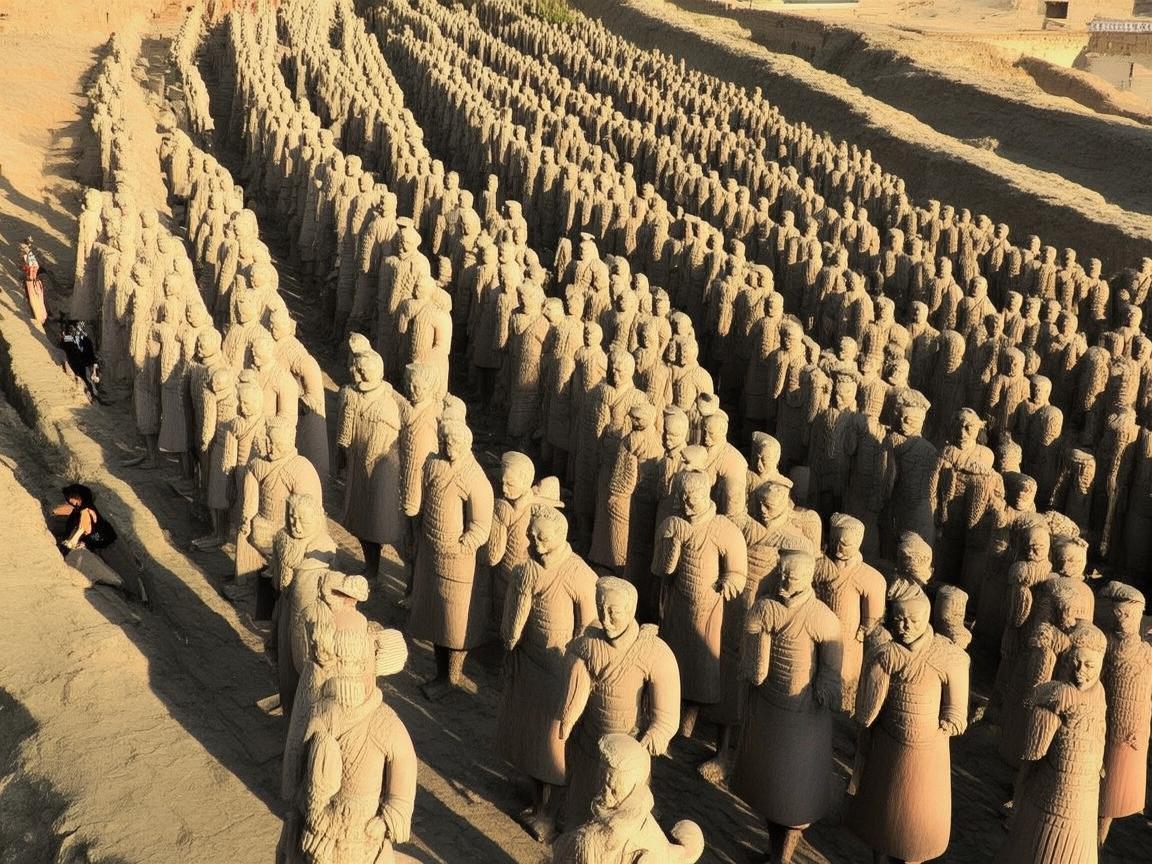
Hire a Guide. Seriously. The pits are huge, and without context, you’ll just see clay figures. A local guide (¥200–300 for a group tour) will tell you how the warriors were made (each face is unique!), why they’re painted in bright colors (now faded), and the story of Emperor Qin Shi Huang’s tomb—still unexcavated because of mercury.
What to See:
- Pit 1: The largest, with 6,000 soldiers lined up in battle formation. It’s overwhelming—imagine the scale!
- Pit 2: More detailed: archers, chariots, and cavalry. My favorite part: the “kneeling archers,” small but fierce.
- Pit 3: The command center, with higher-ranking officers.
- Emperor Qin’s Tomb: Just a mound (they haven’t dug it up yet!), but the museum nearby has artifacts—bronze chariots, weapons, and even ancient “money.”
After the Warriors: Skip the overpriced souvenirs outside. Instead, take the bus to Huaqing Palace (华清宫), a hot spring resort where Emperor Qin and Yang Guifei (his famous consort) once relaxed. It’s less crowded, and the gardens are stunning. Entry: ¥120.
Day 3: Silk Road Stories & Tang Dynasty Glamour
Xi’an was the eastern terminus of the Silk Road, so much of its heritage is tied to trade and cultural exchange. Start at the Shaanxi History Museum (陕西历史博物馆). It’s called the “Chinese treasure house” for a reason: 370,000 artifacts, from Tang Dynasty gold cups to Han Dynasty pottery.
Pro Tip: The museum is free, but you must book 3 days in advance via their WeChat Mini-Program. If you forget, book a “VIP ticket” (¥30) for same-day entry—skip the line!
Highlights:
- Tang Dynasty Hall: Gold and silver objects from the Tang era (618–907 CE), when Xi’an (then called Chang’an) was the world’s largest city. Look for the “lotus-shaped gold cup”—it’s tiny but exquisite.
- Silk Road Road Gallery: Pottery, coins, and glassware from Persia and Rome, showing how trade connected East and West.
After the museum, walk to Big Wild Goose Pagoda (大雁塔). Built in the 7th century to hold Buddhist scriptures brought from India, it’s a symbol of Xi’an’s Silk Road past. Climb to the top (¥50) for views of the city, then wander the surrounding Tang Paradise (大唐芙蓉园) at night. It’s a theme park, but at night, with lanterns and traditional music, it feels like stepping into a Tang Dynasty painting. Entry: ¥120 (night ticket cheaper).
Day 4: Hidden Gems & Local Life
To really understand Xi’an’s heritage, you need to see where locals live. Start at Shuyuanmen (书院门), a street lined with traditional stationery shops and calligraphy stores. Buy a seal (personal stamp) for ¥20–50—carve your name in Chinese, and it’s a unique souvenir.
Next, take a 30-minute bus ride to Banpo Museum (半坡博物馆). It’s a Neolithic village (5,000–6,000 years old) with clay houses, pottery, and even a “children’s cemetery.” It’s small but fascinating—shows how early settlers lived along the Wei River. Entry: ¥30.
Lunch Like a Local: Head to Baolongsha (包龙头), a noodle shop near Banpo. Try youmian qiaomian (sour knife-cut noodles)—thick, chewy noodles in a spicy, sour broth with pickled vegetables. It’s Xi’an’s comfort food, and locals line up for it.
After lunch, visit Tang West Market (大唐西市). Unlike the Muslim Quarter, this is a modern reconstruction of the old Silk Road market, but it’s authentic: you can buy spices from Uzbekistan, silk from Turpan, or try naan baked in a clay oven. Don’t miss the “Silk Road Museum” inside—it’s free and has cool artifacts like ancient coins and textiles.
Food: More Than Just Noodles
Xi’an’s food is heritage on a plate. Here’s what to eat (and where):
- Biangbiang Noodles (biangbiangmian): Wide, belt-like noodles, spicy with chili oil and garlic. Try “袁记biangbiang面” (Yuan Ji) near the Muslim Quarter.
- Yang Rou Paomo (羊肉泡馍): Lamb soup with torn bread—you tear the bread into the bowl, then they add broth. “老孙家” (Lao Sun Jia) is famous, but locals prefer smaller spots.
- Hulatang (胡辣汤): Spicy, peppery soup with beef, potatoes, and dough sticks. Perfect for breakfast. “小贾家胡辣汤” (Xiao Jia) is a hidden gem.
- Pomegranate Juice: Xi’an is known for pomegranates—buy fresh juice (¥5–10) from street vendors.
Where to Stay: Heritage + Convenience
Skip the generic hotels. Stay in a courtyard hotel (四合院客栈) inside the city walls. They’re traditional houses with inner courtyards, often run by families. I stayed at “De Yue Courtyard” (德悦客栈) near the South Gate—¥300/night, clean, and the owner gave me a map of her favorite local spots.
Final Tips for a Real Heritage Experience
- Learn Basic Phrases: “Xièxiè” (thank you), “Nǐ hǎo” (hello), “Duōshao qián?” (how much?). Locals will smile if you try.
- Respect Traditions: At temples and mosques, dress modestly (cover shoulders and knees). Don’t touch artifacts in museums.
- Talk to Locals: The best stories come from people—ask your hotel owner, the noodle shop owner, or a tea seller about Xi’an’s past. They’ll tell you things no guidebook will.
Xi’an isn’t just a city of ancient ruins—it’s a city where the past is alive. You’ll smell the incense from a 1,000-year-old mosque, taste the spices of the Silk Road in your food, and feel the weight of history under your feet as you walk the city wall. So skip the rush, take your time, and let the heritage seep in. That’s the real magic here.
Enjoy the journey—you won’t forget it.
Xi’an Airport Transfer Service
Private English-speaking driver service in Xi’an operated directly by Bruce Zhang. 24/7 airport pickup and hotel transfer for foreign travelers.
Helpful for Your Trip in Xi’an
Xi’an Travel Hack: How Priority Lanes Saved My Trip (and 5 Hours!)
2026-07-29Xi’an Unlocked: A Digital Tourist’s Guide to Ancient Wonders and Modern Convenience
2026-07-29Unlocking Xi’an: A Traveler’s Guide to Digital Tokens for Seamless Journeys
2026-07-29Xi’an Travel Tips: How Online Tickets Turned My Chaos into Adventure
2026-07-28Xi’an Travel: A Tourist’s Guide to Navigating the Digital Entry System
2026-07-28Skip the Line: My VIP Lane Hack for a Stress-Free Xi’an Trip
2026-07-28Unlocking Xi’an: A Traveler’s Guide to the Discovery Entry System
2026-07-28Xi’an Travel Hack: How an Admission Pass Saved Me Time, Money, and Headaches
2026-07-28Visiting Xi’an? How a China Attraction Reservation App Saved My Trip
2026-07-28Skip the Lines, Savor the Stories: My VIP Entry Guide to Xi’an
2026-07-27