

Navigating Xi’an’s Entry Infrastructure: A Traveler’s Practical Guide
I’ve always dreamed of walking Xi’an’s ancient city walls, staring up at the Terracotta Warriors, and getting lost in the Muslim Quarter’s bustling lanes. But as a first-time visitor, I’ll admit—I was a little nervous about the logistics. How do you actually get into Xi’an? And once you’re there, how do you navigate all the entry points for attractions, transport, and more? After a 10-day trip, I’ve learned that Xi’an’s “entry infrastructure”—the systems, facilities, and processes that get you in and around the city—is surprisingly efficient, but only if you know how to use it. Let me break it down like a local would.
Part 1: Getting Into Xi’an—Airport, Train Stations, and Beyond
Your first “entry” into Xi’an is likely via Xianyang International Airport (XIY) or one of its train stations. Here’s what I wish I’d known beforehand.
Xianyang International Airport: From Tarmac to City Center
Xi’an’s main airport is 45 km northwest of the city center, but don’t stress—there are three reliable ways to get downtown, and I tried them all.
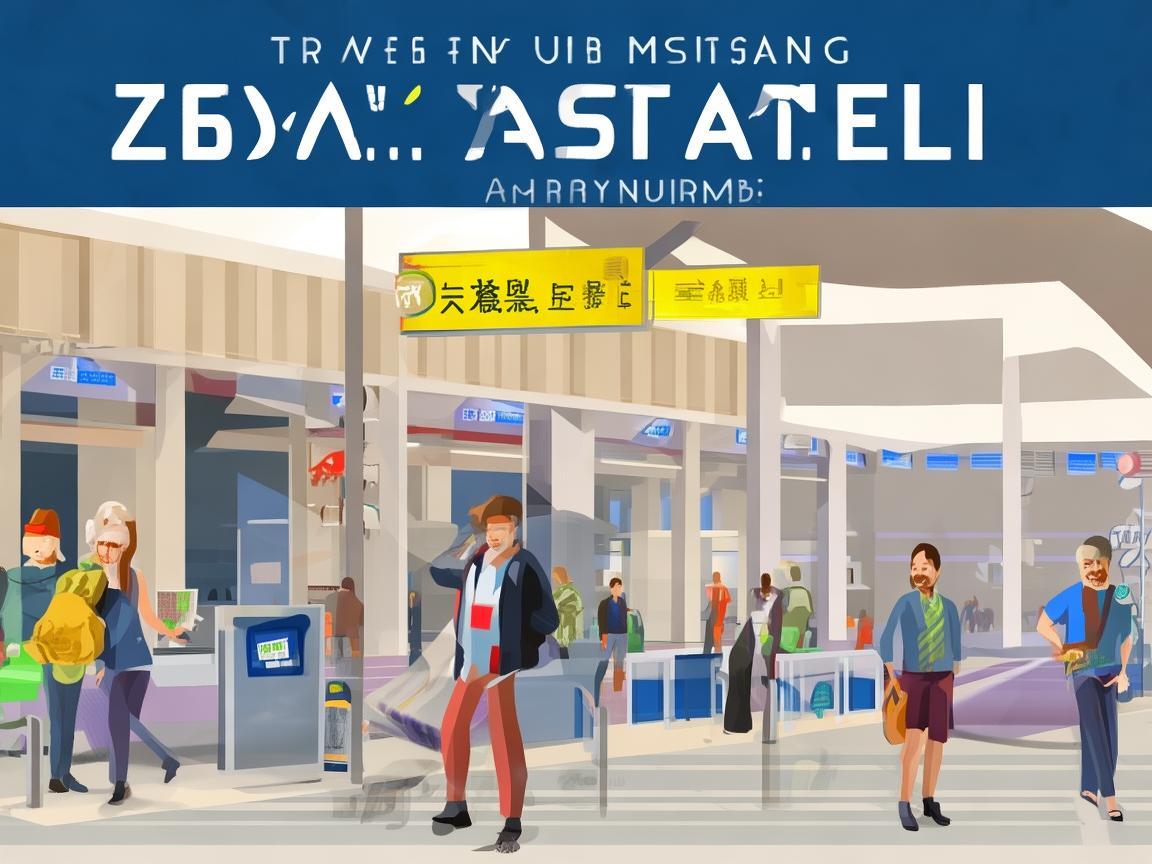
Navigating Xi’an’s Entry Infrastructure: A Traveler’s Practical Guide
-
Airport Express Bus (Cheapest & Most Convenient): This is my top pick. The bus stops are right outside Arrivals Hall 2 (follow the signs for “机场大巴”). There are four routes, but the most useful for tourists are:
- Route 1 (Airport → Xi’an Railway Station): ¥25, takes 60–70 minutes. Drops you off at the station’s south square, steps away from subway Line 1 and the city center.
- Route 5 (Airport → Xi’an North Railway Station): ¥25, 60 minutes. Perfect if you’re taking the high-speed rail to other cities (like Luoyang or Chengdu).
Buses run every 15–20 minutes from 6:00 AM to 11:30 PM. I arrived at 10:00 PM, and there was still a bus waiting—no stress about last transport.
-
Metro (Fastest, if You’re Light on Luggage): Metro Line 14 connects the airport directly to the city. Take Line 14 from Airport Station to North Railway Station (2 stops, ¥6) or transfer to Line 2 at Beikezhuan Station to reach Bell Tower (¥8). It’s clean, air-conditioned, and avoids traffic—but if you’re rolling a huge suitcase, the stairs and escalators might be a hassle.
-
Taxi/Ride-Hailing (Most Expensive, but Door-to-Door): Taxis are available at the designated stand outside Arrivals. A fixed fare to the city center (Bell Tower area) is ¥150–¥180 (insist on using the meter!). For ride-hailing, use Didi (China’s Uber)—it’s cheaper (¥80–¥100) and lets you avoid taxi touts. Pro tip: Download Didi before you land, as international numbers might not work.
Train Stations: Xi’an vs. Xi’an North
Xi’an has two main train stations, and confusing them is a rookie mistake.
-
Xi’an Railway Station (老西安站): In the city center, near the Muslim Quarter and Bell Tower. It’s for regular trains (slow, overnight services to places like Lanzhou or Chengdu). The subway Line 1 stop is right there, so it’s super convenient if you’re staying downtown.
-
Xi’an North Railway Station (西安北站): A massive, modern station 10 km north of the center. This is for high-speed rail (G/D trains) to Beijing (5 hours), Shanghai (6 hours), or Chongqing (4 hours). From here, take Metro Line 2 straight to Bell Tower (20 minutes, ¥5).
Key Tip: When booking train tickets, double-check the station name! I almost missed my train to Beijing because I booked “Xi’an Station” instead of “Xi’an North.”
Part 2: Navigating Attractions—Tickets, Reservations, and Entry Points
Xi’an’s star attractions (Terracotta Warriors, City Walls, Big Wild Goose Pagoda) have strict entry rules. Getting in smoothly comes down to one thing: preparation.
The Terracotta Army: Book Ahead, Skip the Line
This is non-negotiable. The Terracotta Warriors (兵马俑) attract 5 million visitors a year, and in peak season (April–October), the ticket queue can stretch for 2+ hours. I learned my lesson: book online.
- Official Channels: Use the “西安文旅之声” (Xi’an Culture & Tourism Voice) WeChat mini-program or the “秦始皇陵博物院” (Terracotta Army Museum) official website. Tickets are ¥120 (peak season) or ¥110 (off-peak), including the shuttle bus from the entrance to the pits.
- Skip-the-Line Perk: Online ticket holders have a separate entrance—no fumbling with cash or waiting at the ticket window. I walked straight in at 9:00 AM on a Saturday, while the regular line snaked around the block.
- Pro Tip: The shuttle bus from the entrance (华清宫站) to the pits (一号坑站) is mandatory (¥5, included in ticket). Don’t walk—it’s 3 km in the sun!
City Walls: Enter at the Right Gate
Xi’an’s Ancient City Wall (西安城墙) is 14 km long, and not all gates are equal. I made the mistake of entering at Yongning Gate (南门), the most popular “tourist gate”—and it was chaos. Long lines for ticket machines, crowds of selfie-stick vendors, and a bottleneck at the stairs.
- Better Gates: Enter at East Gate (东门) or North Gate (北门). They’re less crowded, and the ticket machines are faster. Tickets are ¥54 (student discount with ID) or ¥54 to rent a bike (2-hour rental, ¥100 deposit).
- Bike Tip: Renting a bike is the best way to see the wall. You can ride the entire 14 km loop (allow 2–3 hours). The path is wide, and the views of the city are stunning—especially at sunset. Just remember to return the bike to the same gate you rented it from.
Big Wild Goose Pagoda & Muslim Quarter: Combine Visits
These two attractions are next to each other, so plan them together to save time.
- Big Wild Goose Pagoda (大雁塔): Tickets are ¥50 (to climb the pagoda) or ¥30 (just enter the grounds). Book on the “西安文旅之声” WeChat mini-program to avoid lines. The pagoda has steep, narrow stairs—if you’re afraid of heights, just admire it from outside.
- Muslim Quarter (回民街): Free entry! But note: the “main” street (Beiyuanmen Street) is packed with tourist-trap restaurants (overprised lamb skewers). Turn onto the side lanes (like Huimin Street) for authentic, cheap eats: roujiamo (Chinese hamburger, ¥10), paomo (bread soup, ¥15), and yangrou paomo (lamb bread soup, ¥20). Pro tip: Eat where the locals line up—not the places with English menus and touts outside.
Part 3: Staying Connected—Transport Cards, Wi-Fi, and Payment
Xi’an’s “entry infrastructure” isn’t just about physical gates—it’s about staying connected so you can actually use those gates.
Transport: Metro Card vs. Mobile Payment
Xi’an’s Metro is clean, reliable, and covers all major attractions. You can either buy a physical card (¥20 deposit, ¥5 minimum top-up) or use mobile payment.
- Mobile Payment: Open Alipay or WeChat, search for “西安地铁乘车码” (Xi’an Metro Ride Code), and add it to your wallet. Scan the QR code at the gate—no need to buy a card! It even calculates the fare for you (base fare ¥2, max ¥8).
- Buses: Same as metro—use the ride code. Buses are useful for areas not covered by metro (like the Terracotta Army, but the shuttle bus is easier).
Wi-Fi: Stay Connected Without Data Roaming
Most hotels and cafes have free Wi-Fi, but if you’re out and about, use “Xi’an Free Wi-Fi” (search for “Xian_Free_WiFi” in settings). It’s available in metro stations, tourist centers, and some parks—you’ll need to register with your phone number. For backup, buy a local SIM card at the airport (China Unicom or China Mobile, ¥30–¥50 for 10GB data).
Payment: Cash vs. Mobile
Alipay and WeChat Pay are king in Xi’an. Even street vendors use them! I brought ¥500 in cash for emergencies (small shops, market stalls), but I only used it twice. Pro tip: Link an international credit card to Alipay/WeChat for easy top-ups.
Part 4: Avoiding Common Entry Pitfalls
After talking to other travelers, I realized most entry struggles come from these three mistakes:
-
Ignoring “Peak vs. Off-Peak”: Terracotta Warriors and City Walls are way less crowded on weekdays (Tuesday–Thursday) than weekends. I visited the Terracotta Warriors on a Wednesday at 10:00 AM—no lines, plenty of time to take photos without elbows in my face.
-
Forgetting ID: China requires ID for everything—train tickets, attraction tickets, hotel check-in. I left my passport in my hotel room once and almost couldn’t enter the City Walls. Carry a photocopy or a digital copy (on your phone) as backup.
-
Underestimating “Entry Rituals”: At some attractions (like the Shaanxi History Museum), you need to pass through metal detectors and bag checks. Don’t bring large bags—they’ll make you slow down the line. I carried a small crossbody bag with just my phone, wallet, and water—smooth sailing every time.
Final Thoughts: Xi’an’s Entry Infrastructure Works—If You Plan Ahead
Xi’an isn’t a city you can “wing.” But with a little prep—booking tickets online, choosing the right transport, and knowing where to enter attractions—its entry infrastructure is a breeze. I spent less time waiting and more time eating roujiamo, riding the city walls, and staring in awe at the Terracotta Warriors.
So if you’re heading to Xi’an, take it from a first-timer: the “entry” part is easy once you know the rules. Now go—there’s a 14-century-old city waiting for you.
Xi’an Airport Transfer Service
Private English-speaking driver service in Xi’an operated directly by Bruce Zhang. 24/7 airport pickup and hotel transfer for foreign travelers.
Helpful for Your Trip in Xi’an
Skip the Lines, Savor the Stories: My VIP Entry Guide to Xi’an
2026-07-27Traveling Xi’an Smart: How Online Booking Made My Trip Seamless and Stress-Free
2026-07-27Navigating Xi’an’s Face Recognition Entry Systems: A Tourist’s Practical Guide
2026-07-27Xi’an Traveler’s Guide: Navigating the City with China’s Visitor Platforms
2026-07-26Navigating Xi’an’s Tour Entry System: A Traveler’s Practical Guide
2026-07-26Xi’an Travel Hack: How a Ticket Issuing App Saved My Trip and 5 Hours in Queues
2026-07-26Xi’an Travel Tips: Navigating Ticket Codes Like a Local
2026-07-25Unlocking Xi’an: A Traveler’s Guide to the China Museum Gate and Beyond
2026-07-25Visiting Xi’an: A Practical Guide to China’s Attraction Regulations
2026-07-23Traveling Xi’an Like a Local: Smart Destination Management Tips for Tourists
2026-07-23