

Taming the Tourist Tide: My Crowd-Controlled Guide to Xi’an
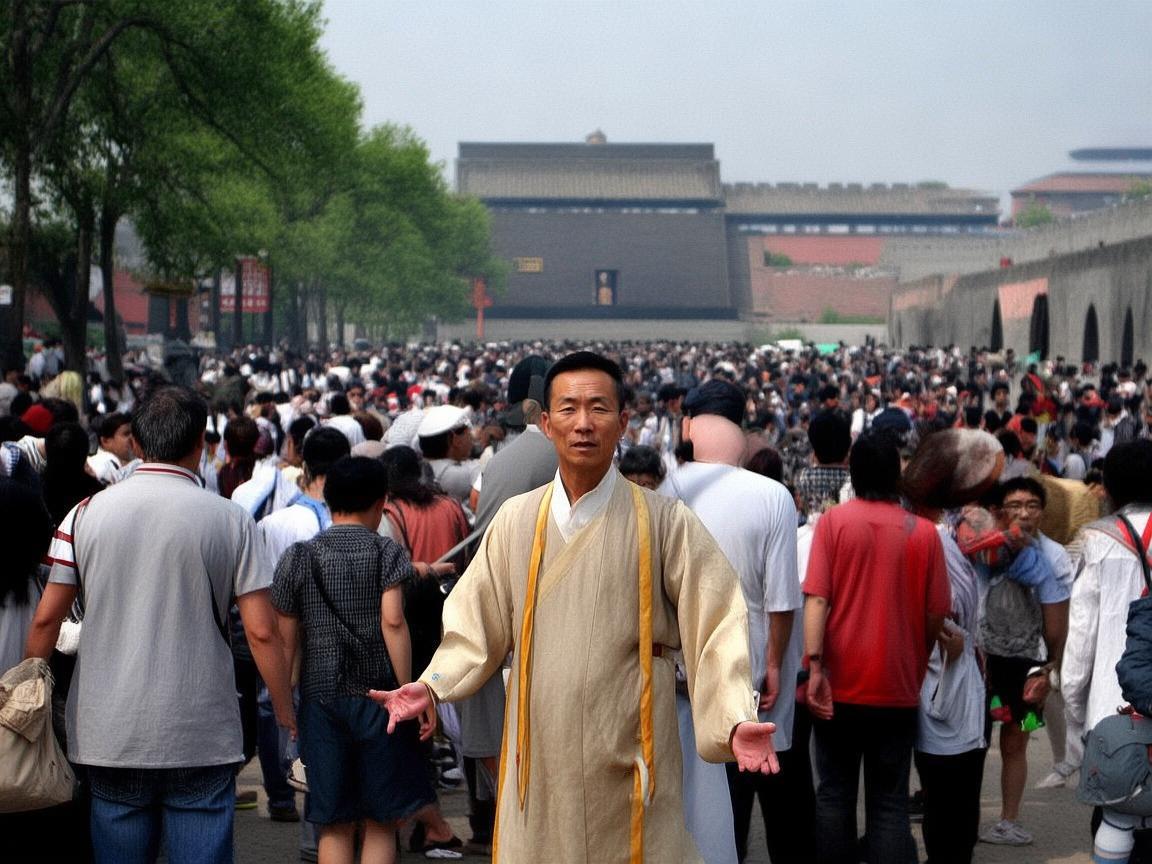
I’ll never forget my first morning in Xi’an. I’d flown in at 6 a.m., adrenaline still buzzing from the overnight flight, and headed straight for the Terracotta Army. By 9 a.m., I was drowning in a sea of selfie sticks, tour groups waving colorful flags, and the collective hum of a thousand cameras clicking. I spent two hours shuffling forward a foot at a time, my view of the 2,000-year-old warriors blocked by a sea of backpacks. That day, I learned a hard truth: Xi’an’s wonders are incredible, but they’re crowded. Crowded like you-won’t-believe crowded.
Taming the Tourist Tide: My Crowd-Controlled Guide to Xi’an
But after a week of trial, error, and way too much elbowing, I cracked the code. I didn’t avoid the crowds entirely—let’s be real, you can’t at the Terracotta Army or Muslim Quarter—but I learned to outsmart them. If you’re heading to Xi’an and want to skip the stress, here’s how I tamed the tourist tide, one strategic move at a time.
First Rule: Embrace the “Off-Peak” Mindset
“Off-peak” in Xi’an doesn’t mean “empty”—it means “manageable.” For most attractions, that means early or late. Like, really early.
Take the Terracotta Army. The gates open at 8:30 a.m., but 90% of tour buses roll in between 9:30 and 11 a.m. I learned this the hard way on Day 1: I showed up at 10 a.m., spent 45 minutes in line just to buy a ticket, and then another hour squeezed in Pit 1, where I could barely see the clay horses for the crowd. On Day 3, I set an alarm for 7 a.m., took a 30-minute taxi from my hotel (cost: ~¥80), and was at the ticket counter by 8 a.m. By 8:45, I was inside Pit 1, with space to breathe. I had the rows of warriors almost to myself for a full 30 minutes before the first tour groups trickled in. Pro tip: Buy tickets online 24 hours in advance on the official “秦始皇陵博物院” (Qin Shi Huang Mausoleum Site Museum) website—you’ll skip the ticket queue entirely.
Same goes for the Big Wild Goose Pagoda (大雁塔). Daytime, it’s surrounded by tourist traps, street performers, and selfie-snapping crowds. But at 7 p.m., when the sun sets, the real magic happens. The pagoda lights up, and the nearby North Square (大雁塔北广场) hosts a free fountain show (8 p.m. in summer, 7 p.m. in winter). Here’s the crowd-control hack: Don’t watch the show from the square. Instead, walk 10 minutes to the west side of the Yuxiangmen (御景门) gate, grab a ¥5 bubble tea from a street vendor, and watch from there. You’ll see the fountains just as clearly, with 80% fewer people blocking your view.
Second Rule: Tour Groups Are Your Secret Weapon (Use Them Wisely)
Tour groups are loud, slow, and impossible to miss—but they also follow predictable schedules. If you can’t beat ’em, out-route ’em.
At the Terracotta Army, most tour groups follow the same path: Pit 1 → Pit 2 → Pit 3 → Qin Shi Huang’s Mausoleum (the actual burial mound). They spend 20-30 minutes in each pit, then rush to the next. I learned to reverse the route: Start with Pit 3 (smallest, least crowded), then Pit 2 (my favorite—fewer people, more detailed warriors), and save Pit 1 for last. By the time I got to Pit 1, the tour groups were already halfway through their tour, and I could move at my own pace.
Another trick? Let tour groups “clear the path.” At the City Wall (西安城墙), which is 14 kilometers long, most tourists rent bikes and ride the entire loop. Bad idea: The bikes are slow, and the path gets jammed with groups. Instead, walk one section—the South Gate (南门) to East Gate (东门) is the most scenic—and skip the bikes. If you do rent, go off-peak (weekday afternoons, 2-4 p.m.), when tour groups are eating lunch. I did this on a Tuesday, and I had the wall almost to myself—only a handful of locals jogging and a few solo travelers.
Third Rule: Eat Like a Local, Not a Tourist
The Muslim Quarter (回民街) is a must-visit, but let’s be real: The main street (Beiyuanmen) is a tourist trap. It’s packed with overprised “authentic” snacks, souvenir shops, and more tour groups than you can count. I made the mistake of eating there on my first night—paid ¥30 for a “lam skewer” that tasted like cardboard, and spent 20 minutes squeezed between a group of 20 Italians and a family of five taking up the entire sidewalk.
The real Muslim Quarter? It’s in the side streets. Wander 5 minutes off Beiyuanmen, and you’ll find narrow alleys lined with steaming pots, handwritten menus, and locals sitting on tiny plastic stools. My favorite spot? Hongji Lamb Pastry (吉庆羊肉泡馍), a hole-in-the-wall near the West Gate. No English menu, no photos on the wall—just locals slurping paomo (bread soaked in lamb soup) and chewing on roujiamo (Chinese burgers). I pointed at what the person next to me was eating, and for ¥15, I got a meal that was 10x better than anything on the main street. Pro tip: Go at 6:30 p.m.—right when dinner starts, before the dinner rush hits at 7:30.
Another food hack? Skip the “famous” restaurants and follow the lines. If a local spot has 10 people waiting, it’s good. If it has 50, it’s great. I found a tiny dumpling place near the Bell Tower (钟楼) with a line snaking around the block. I waited 20 minutes, but the jianbing (savory crepes) were worth it—crispy, fresh, and ¥5 a pop. The best part? The line moved fast because the chefs were pros. No standing around for an hour!
Fourth Rule: Use Transit Like a Local (Avoid Buses at All Costs)
Xi’an’s subway is a lifesaver for crowd control. It’s clean, cheap (¥2-7 per ride), and skips the traffic. But here’s the catch: Avoid rush hour. Lines 2 and 3 get packed between 8-9 a.m. and 6-7 p.m., with commuters squishing in like sardines. I learned to take the subway at 10 a.m. or 2 p.m.—plenty of seats, and no pushing.
Taxis and ride-shares (Didi, the Chinese Uber) are great for longer distances, but always use the app to set a fixed price. I once got scammed by a taxi driver who charged me ¥80 for a 15-minute ride; now, I always use Didi’s “Fixed Price” option, which is usually 30% cheaper.
Buses? Skip ’em unless you’re a glutton for punishment. They get stuck in traffic (Xi’an’s roads are chaos during rush hour), and they’re crowded with commuters who aren’t happy about tourists taking up space. I only took a bus once—to the Shaanxi History Museum—and regretted it. The line for the museum was already 100 people long, and the bus took 45 minutes to get there (a 15-minute taxi ride). Lesson learned: Take the subway to the History Museum (Line 2, Xiaozhaimen Station), and book tickets online a week in advance. The museum is free, but tickets sell out in minutes.
Fifth Rule: Pack Smart—Because Crowds Wear You Down
Crowds are exhausting, and the wrong gear can make them worse. Here’s my survival kit:
- Comfortable shoes: I’m talking really comfortable. I walked 15,000 steps a day in Xi’an, and my only regret was not bringing my hiking boots. Sneakers with good support are a must.
- Portable charger: Crowds mean you’ll be using your phone more—for maps, tickets, photos, and Didi. A dead phone in a crowd is a nightmare. I carried a 10,000mAh battery pack, and it saved me multiple times.
- Foldable water bottle: Xi’an tap water isn’t safe to drink, but buying bottled water adds up (¥2-3 per bottle). I bought a foldable bottle at a convenience store for ¥10 and refilled it at water fountains (most attractions have them). Saved me ¥20 a day.
- Face mask: Not just for COVID—pollution in Xi’an can be bad, and masks also block dust and pollen from crowded streets. I wore a mask in the Terracotta Army pits, and it made breathing way easier.
Final Thought: Crowds Can’t Ruin Xi’an—If You’re Prepared
By the end of my week, I’d seen the Terracotta Army three times—once at 8 a.m. (peaceful), once at 4 p.m. (crowded, but I knew the shortcuts), and once at sunset (the light on the warriors was magical). I’d eaten my weight in roujiamo and paomo, walked the City Wall without being jostled, and even found a quiet teahouse near the Muslim Quarter where I sipped jasmine tea and watched locals play chess.
Xi’an’s crowds are real—they’re loud, they’re pushy, and they can be overwhelming. But they’re also part of the city’s energy. The key isn’t avoiding them; it’s controlling your experience. Plan ahead, think like a local, and don’t be afraid to wander off the beaten path. Because when you do, the real Xi’an—ancient, vibrant, and full of surprises—reveals itself.
And trust me, it’s worth the elbowing.
Xi’an Airport Transfer Service
Private English-speaking driver service in Xi’an operated directly by Bruce Zhang. 24/7 airport pickup and hotel transfer for foreign travelers.
Helpful for Your Trip in Xi’an
Xi’an Travel Hack: How an Admission Pass Saved Me Time, Money, and Headaches
2026-07-28Visiting Xi’an? How a China Attraction Reservation App Saved My Trip
2026-07-28Skip the Lines, Savor the Stories: My VIP Entry Guide to Xi’an
2026-07-27Traveling Xi’an Smart: How Online Booking Made My Trip Seamless and Stress-Free
2026-07-27Navigating Xi’an’s Face Recognition Entry Systems: A Tourist’s Practical Guide
2026-07-27Xi’an Traveler’s Guide: Navigating the City with China’s Visitor Platforms
2026-07-26Navigating Xi’an’s Tour Entry System: A Traveler’s Practical Guide
2026-07-26Xi’an Travel Hack: How a Ticket Issuing App Saved My Trip and 5 Hours in Queues
2026-07-26Xi’an Travel Tips: Navigating Ticket Codes Like a Local
2026-07-25Unlocking Xi’an: A Traveler’s Guide to the China Museum Gate and Beyond
2026-07-25