

Navigating Xi’an Like a Local: My Practical Tips on Tourism QR Codes
I landed in Xi’an with a suitcase full of excitement and a head full of questions. As a first-time visitor to this ancient city—home to the Terracotta Warriors, towering city walls, and the bustling Muslim Quarter—I’d done my homework: I’d booked hotels, listed must-see spots, and even memorized a few basic Mandarin phrases. But nothing prepared me for the one thing that would shape my entire trip: Xi’an’s tourism QR code system. At first, it felt like a tech hurdle—another “China thing” to navigate. But by the end of my five-day stay, I realized it wasn’t just a hurdle; it was the key to exploring Xi’an smoothly, safely, and like a local. If you’re planning a trip here, let me break down everything I learned about these little black-and-white squares—because trust me, they’ll make or break your experience.
First Things First: What Exactly Is a “Tourism QR Code”?
Before I dive in, let’s clear up the confusion. When locals or travel blogs mention “Xi’an tourism QR codes,” they’re usually referring to two types of QR codes: health codes (健康码) and scenic area entry codes (景区预约码). Both are essential, but they serve different purposes.
The health code is your golden ticket for everything in Xi’an—entering restaurants, malls, museums, even taking the subway. It’s a digital record of your health status (think COVID-19 test results, vaccination status, and travel history) that the government uses to track and prevent outbreaks. Without it, you’re pretty much stuck in your hotel.
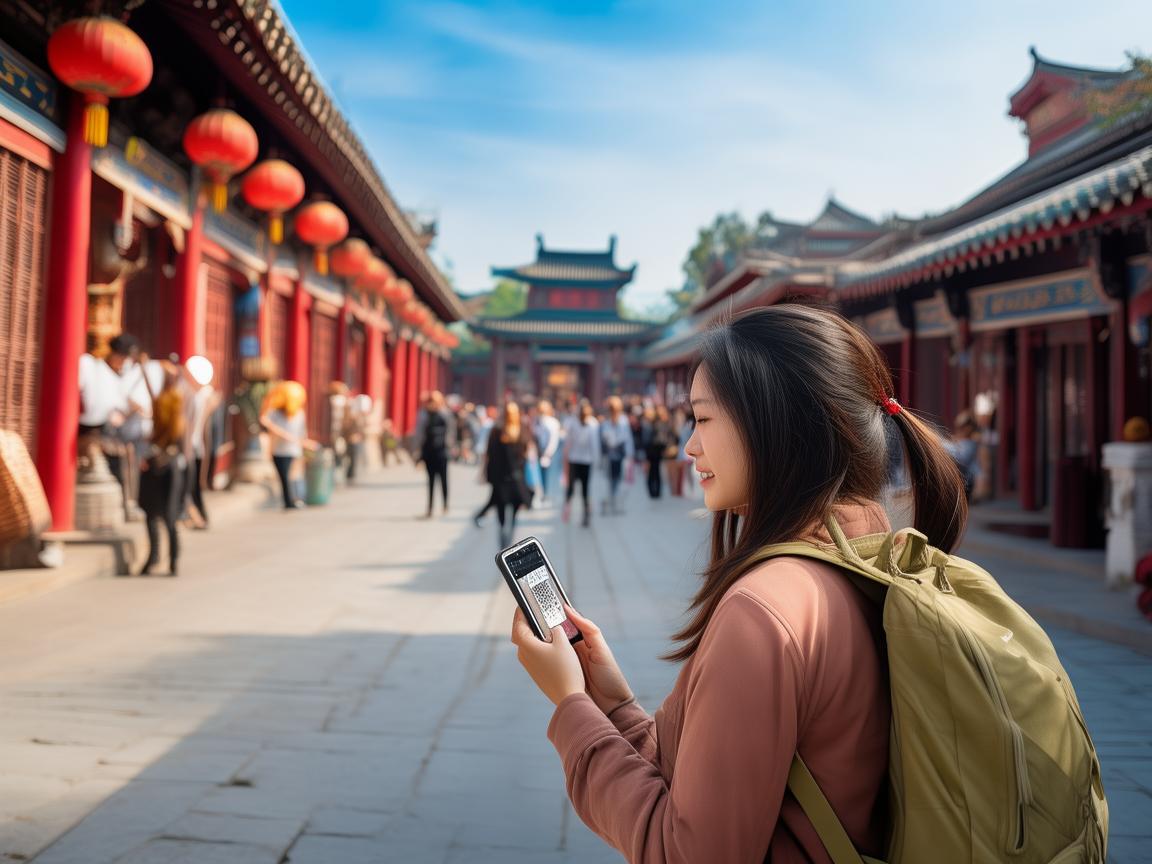
Navigating Xi’an Like a Local: My Practical Tips on Tourism QR Codes
The scenic area entry code is specific to tourist spots. Since Xi’an’s top attractions (like the Terracotta Warriors and City Wall) get millions of visitors yearly, they require advance online booking via QR codes. This isn’t just about convenience—it’s to limit crowds and ensure a safe, enjoyable experience for everyone.
Why These QR Codes Are Non-Negotiable
On my first day, I learned this the hard way. I woke up early, eager to visit the Big Wild Goose Pagoda (大雁塔), a stunning Buddhist temple from the Tang Dynasty. I walked up to the entrance, ticket in hand, only to be stopped by a security guard who pointed at my phone and said, “QR code.” Confused, I showed him my booking confirmation. He shook his head. “Health code. Entry code.” I stood there, red-faced, as he directed me to a nearby QR registration booth.
It took 30 minutes of fumbling with my phone (and a kind staff member’s help) to get both codes. By then, the lines were snaking around the pagoda, and I wasted over an hour that could’ve been spent exploring. That’s when I realized: ignoring these QR codes isn’t just inconvenient—it’s a travel blocker. Xi’an is a modern city with ancient roots, and this system is how they balance preserving history with managing tourism.
Step-by-Step: How to Get Your QR Codes (No Tech Skills Required)
Don’t let the word “digital” scare you. Setting up these codes is easier than ordering food on Uber Eats—if you know the right steps. Here’s what I did, broken down for even the least tech-savvy traveler:
The Health Code: Your “All-Access Pass”
The health code is linked to China’s super-app, WeChat (微信). If you don’t have WeChat, download it immediately (it’s free for iOS and Android). You’ll also need a Chinese phone number to register—don’t worry, you can get a temporary one online (I used a service called “ChinaSIM” for $10, which worked perfectly).
How to activate it:
- Open WeChat and tap the “+” icon in the top-right corner.
- Select “Scan” (扫描) and scan the QR code at any hotel, restaurant, or metro station entrance (they’re everywhere—you can’t miss them).
- When prompted, choose “Foreign User” (外籍用户) and enter your passport details.
- You’ll also need to link your flight/train ticket info (this proves you’ve recently entered Xi legally).
- Within minutes, you’ll get a green “Health Code” with your photo and name. Green means go—red or yellow means you need to get tested or isolate (rare for tourists, but good to know).
Pro tip: Take a screenshot of your health code and save it to your phone’s home screen. You’ll be scanning it 20 times a day—this saves so much time!
Scenic Area Entry Codes: Book Ahead, Skip the Lines
Unlike the health code, entry codes are specific to each attraction. Most require booking 1–3 days in advance (especially during peak season). Here’s how I booked my top spots:
a. Terracotta Warriors (兵马俑): Must-Book in Advance
This is Xi’an’s crown jewel, and it’s always crowded. I learned the hard way: a friend who tried to walk up without a QR code was turned away—tickets were sold out for the day.
How to book:
- Open WeChat and search for the official account “西安博物院” (Xi’an Museum) or “秦始皇陵博物院” (Terracotta Army Museum).
- Tap “预约” (Book) and select “Terracotta Warriors.”
- Choose your date and time (morning slots are less crowded—aim for 9 AM).
- Enter your passport details and pay (around ¥120). You’ll get a QR code confirmation.
- On the day of your visit, scan this code at the entrance—no need to print anything!
Insider tip: Book the “Combo Ticket” (¥240) which includes the Terracotta Warriors, the Qin Shi Huang Mausoleum, and the Bronze Chariots. It’s cheaper than buying separate tickets and lets you skip extra lines.
b. Xi’an City Wall (西安城墙): Rent a Bike, Scan and Go
The City Wall is a 14-kilometer ancient fortification that circles the old city. Renting a bike to ride along it is a must—but you need a QR code to enter.
How to book:
- Search “西安城墙” on WeChat and follow their official account.
- Tap “票务预订” (Ticket Booking) and choose “Bike Rental + Entry.”
- Select your time (bikes are available 8 AM–8 PM) and pay (¥45 for a 2-hour rental).
- At the entrance (I used the South Gate, the most popular), scan your QR code to get your bike and entry pass.
Pro tip: Bring a helmet—they’re free but limited. Also, go during sunset—the views of the city are magical!
c. Muslim Quarter (回民街): No Booking Needed, But QR Codes Still Rule
The Muslim Quarter is a food lover’s paradise, with steaming bowls of roujiamo (Chinese hamburgers) and sweet hulatang (spicy soup). Unlike the Terracotta Warriors, you don’t need to book in advance—but you will need health codes to enter restaurants.
How to navigate:
- Every restaurant in the Quarter has a QR code at the entrance. Scan it with WeChat to register your health status (it takes 10 seconds).
- For ordering, most places accept WeChat pay (just link your international credit card to WeChat). No cash needed!
Must-try foods: Don’t leave without trying yangrou Paomo (bread soaked in lamb soup) or sugar-coated haws (candied fruit on a stick). My favorite spot? “老孙家泡馍” (Old Sun’s Paomo)—the line is long, but it’s worth it.
Common QR Code Problems (and How to Fix Them Fast)
Even with the best planning, things can go wrong. Here are the hiccups I faced—and how I solved them:
Problem 1: “My Health Code Is Yellow!”
On my third day, I woke up to a yellow health code. Panic set in—did I do something wrong? I quickly called my hotel’s front desk (they speak basic English), and they explained: a yellow code means you’ve recently been to a “medium-risk” area (even if it’s just a neighborhood with a few cases).
Fix: Go to a nearby government-designated testing center (they’re everywhere in Xi’an). Get a free COVID-19 test (results in 2 hours), and upload it to WeChat. Your code will turn green within an hour.
Problem 2: “I Forgot to Book the City Wall—What Now?”
I overslept one morning and missed my bike rental slot. I thought my day was ruined, but the staff at the South Gate told me they have a limited number of “walk-in” tickets for bike rentals—if you go early (before 10 AM).
Fix: Show up at 8 AM, smile, and ask in English (or Mandarin, if you know it) if there are any extra bikes. I got lucky—there were two left!
Problem 3: “My Phone Died—Now What?”
I was exploring the Bell Tower (a iconic landmark in the city center) when my phone died. No QR code, no entry. I was about to turn back when I noticed a “QR Code Charging Station” nearby.
Fix: Most tourist spots have free charging stations where you can scan a QR code to borrow a power bank (you’ll need a deposit of ¥200, refunded when you return it). Some hotels also lend out portable chargers—ask at the front desk!
Final Thoughts: QR Codes Are Your Friend
By the end of my trip, I had a love-hate relationship with Xi’an’s QR codes—mostly love. They kept me safe, saved me hours of waiting, and even helped me discover hidden gems (like the testing center staff who recommended a tiny noodle shop off the beaten path).
If you’re heading to Xi’an, here’s my final advice: embrace the QR codes. Download WeChat, get a temporary Chinese number, and screenshot everything. They’re not just a hassle—they’re your ticket to experiencing Xi’an like a local: smoothly, stress-free, and with more time for what matters—eating roujiamo, biking the City Wall, and marveling at the Terracotta Warriors.
Xi’an is a city where ancient history meets modern technology, and these little QR codes are the perfect bridge between the two. So scan, book, and enjoy—your adventure awaits!
Xi’an Airport Transfer Service
Private English-speaking driver service in Xi’an operated directly by Bruce Zhang. 24/7 airport pickup and hotel transfer for foreign travelers.
Helpful for Your Trip in Xi’an
Xi’an Night Markets: A Tourist’s Guide to Navigating QR Code Payments Like a Local
2026-09-08Renting a Car in Xi’an as a Foreigner: A Practical Guide to Payments and More
2026-09-0612-Hour Xi’an Layover: A Foreigner’s Guide to Payments & Must-See Spots
2026-09-03Xi’an Travel Tips for Foreigners: Navigating Payments & Hotel Drop-offs Like a Pro
2026-09-02Your QR Payment Survival Guide for Xi’an: How to Pay Like a Local
2026-09-01Xi’an Travel Tips: Why Cash Still Matters (and Where to Use It!)
2026-08-26Macau Payment Guide for Foreign Travelers: From Cash to Apps
2026-08-19Xi’an Travel: A Tourist’s Guide to Scenic Area Payments & Tips
2026-08-13Navigating Payments in Xi’an Without a Data Plan: A Tourist’s Practical Guide
2026-08-11Smart Savings in Xi’an: A Traveler’s Guide to Education-Friendly Payment Systems
2026-08-10