

Traveling Xi’an Like a Local: How the Digital Economy Makes My Trip Smoother
I landed in Xi’an on a crisp autumn morning, my mind buzzing with images of terracotta warriors, ancient city walls, and steaming bowls of roujiamo. But as a first-time visitor, I’ll admit I was a little anxious—navigating a new city, communicating in basic Mandarin, and avoiding tourist traps can feel overwhelming. What I didn’t expect? Xi’an’s digital economy would become my silent, super-efficient travel buddy, turning potential stress into seamless adventures. Over a week of exploring, I discovered how apps, smart services, and digital infrastructure didn’t just “help” they redefined how I traveled. Here’s exactly how I used them—and why you should too.
First Stop: Ditching Cash and Chaos with Mobile Payments
My first shock? I didn’t touch a single yuan bill (or coin!) the entire trip. Back home, I’d researched China’s cashless society, but experiencing it in Xi’an was next level. The moment I cleared customs, I opened Alipay (linked to my international credit card via the “Tour Pass” feature) and WeChat pay (which lets you add foreign cards now). By lunchtime, I was already a pro.
I grabbed a jianbing (savory crepe) from a street vendor near the Bell Tower. She didn’t speak English, but her Alipay QR code was plastered on her cart. I scanned it with my phone, entered the ¥8 amount, and—poof—payment done. No fumbling for change, no awkward hand gestures. Later, at a Muslim Quarter snack stall, I even split a bill with a new friend (we were bonding over tanghulu) using WeChat’s “Go Dutch” feature—so much easier than calculating who owes what.
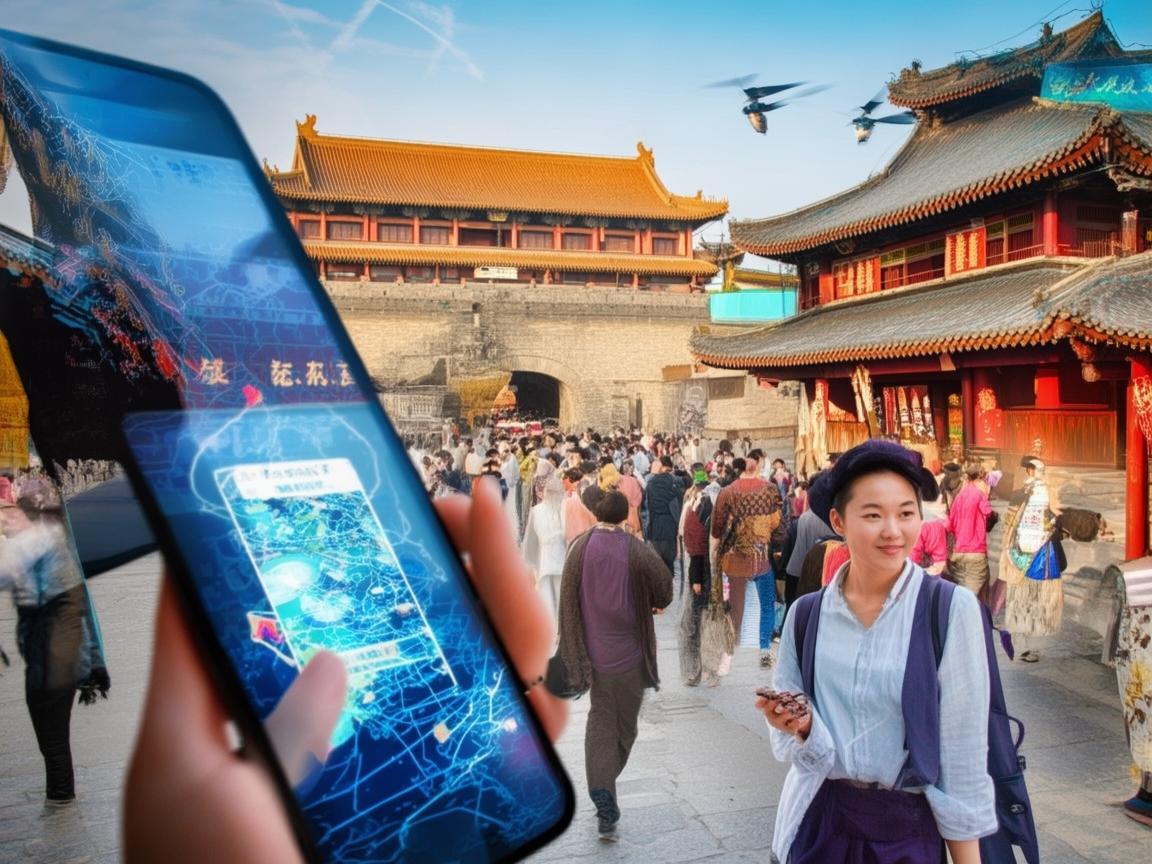
Traveling Xi’an Like a Local: How the Digital Economy Makes My Trip Smoother
Pro tip: Before you go, link your payment methods! Alipay and WeChat both have English interfaces for tourists. Also, keep some change for tiny purchases (like a bottle of water from a street vending machine)—some older vendors might not have QR codes, but they’re rare.
Getting Around: From Airport to Ancient Walls in 3 Clicks
Xi’an’s transport system is a digital dream. I arrived at Xi’an Xianyang International Airport and, instead of waiting in a taxi line, I opened Didi (China’s Uber). I entered my hotel address, chose a “comfort” car, and within 10 minutes, a driver pulled up—no haggling, fixed price (¥120 to the city center, vs. the ¥150-200 some unlicensed taxis charge). The driver even sent me his license plate number via the app, so I felt safe.
Once in the city, I relied on two apps: Gaode Map (like Google Maps, but more detailed in China) and the Metro Metro Xi’an app. To get to the Terracotta Army, I opened Gaode, typed “Terracotta Army Museum,” and it told me to take Metro Line 9 to “Huaqing Palace Station,” then transfer to a free shuttle bus. The Metro app showed real-time train times, so I never waited longer than 3 minutes.
For short distances, I used shared bikes—Meituan’s blue-and-yellow bikes were everywhere. I’d scan the QR code, unlock a bike, and ride 15 minutes to a park, then park it at any designated spot (no docking required!). Cost? ¥1 for 30 minutes. Cheaper than a taxi, and way more fun than walking.
Pro tip: Download Gaode Map before you arrive—Google Maps doesn’t work well in China. Save your hotel, key attractions, and even your favorite restaurants in the app so you can navigate offline.
Booking Tickets: Skip the Lines, Embrace the “Scan-to-Enter” Life
Xi’an’s top attractions get crowded—like, really crowded. I learned the hard way on my first day: I showed up at the Shaanxi History Museum at 9 AM, and the ticket line snaked around the block. A local tapped my shoulder and said, “Use ‘Xi’an Culture Tourism Cloud’—book online!”
I downloaded the app (it’s in English), created an account, and booked a free ticket for the next morning. At 8:45 AM the next day, I walked straight to the “Online Booking” gate, scanned my QR code, and was in within 5 minutes. No line, no stress.
For paid attractions, I used Trip.com or Ctrip (both have English versions). I booked Terracotta Army tickets (¥120) a week in advance—choosing a 9 AM slot meant smaller crowds. At the entrance, I just showed my e-ticket on my phone; the guard scanned it, and I was in. Same for the City Wall: I bought tickets via Ctrip, skipped the ticket office, and went straight to the ramp to rent a bike (scan a QR code, pay ¥45 for 2 hours).
Pro tip: For popular spots like the Terracotta Army or Big Wild Goose Pagoda, book at least 3 days in advance. Weekdays are less crowded than weekends—trust me, your feet will thank you.
Eating Like a Local: Let Apps Guide Your Stomach
Xi’an’s food is legendary—roujiamo, Paomo, yangrou paomo, biangbiang noodles… but how do you avoid the overpriced “tourist traps” in the Muslim Quarter? I let the digital economy be my foodie guide.
I opened Dianping (China’s Yelp), filtered for “highly rated” and “local favorites,” and found a tiny paomo restaurant near the Drum Tower. It had 4.5 stars, 2,000+ reviews, and photos of locals stuffing their faces. I walked in, pointed to the menu (which had pictures), and paid via Alipay. The paomo was incredible—thick broth, tender beef, and fluffy bread—all for ¥25.
For a fancy dinner, I used Meituan to book a table at a dumpling restaurant. The app showed real-time availability, let me choose a window seat, and even offered a 10% discount for booking online. When I arrived, the host already had my name—no waiting.
Pro tip: Look for restaurants with “hidden gem” tags on Dianping—they’re often family-run, cheap, and delicious. Also, use the app’s “translate menu” feature (it uses AI to translate Chinese dishes into English).
Staying Connected: Never Get Lost (or Lonely)
As a solo traveler, staying connected was key. I bought an eSIM from Airalo before I left (¥30 for 7GB of data)—it activated as soon as I landed, so I had internet from the airport. No more hunting for Wi-Fi passwords!
With data, I could use translation apps like Google Translate or iFlyty (which works offline). When I ordered food, I’d type “Can you make it less spicy?” into Translate, show the waiter, and they’d nod and smile. At a night market, a vendor tried to charge me ¥50 for a tanghulu that should cost ¥15—I opened Gaode, found a nearby stall selling them for ¥12, and showed her the price. She laughed, lowered her price to ¥15, and we both had a good laugh.
Pro tip: Download offline maps of Xi’an on Gaode and Translate—so you’re covered even if you lose data.
Bonus: Digital “Wow” Moments
Xi’an doesn’t just use tech for practical stuff—it makes history come alive. At the Terracotta Army, I rented an AR headset (¥50) via a QR code. When I pointed it at a warrior, it showed me what it looked like 2,000 years ago—painted in bright colors, holding real weapons. At the City Wall, I used an app called “City Wall Story” to listen to audio guides as I biked—tales of emperors, battles, and ancient life.
One night, I went to the “Grand Tang Everbright City” theme park. Instead of buying a ticket, I used a “bundle deal” app that included entry, a light show, and a boat ride—all for ¥150. The park had AR everywhere: when I pointed my phone at a fountain, it projected a dragon dancing over the water. It felt like stepping into a historical movie—but with 5G speed.
Final Thoughts: The Digital Economy Is Your Secret Weapon
By the end of my trip, I felt like a Xi’an local—not because I spoke fluent Mandarin, but because the digital economy made everything easy. I didn’t waste time waiting in lines, getting lost, or overpaying for food. Instead, I spent more time experiencing—sipping chajianyangrou paomo* at a street stall, biking the City Wall at sunset, chatting with vendors via translation apps.
If you’re planning a trip to Xi’an, here’s my advice: Embrace the digital. Download the apps, link your payments, and let tech handle the logistics. Then, you can focus on what really matters—soaking in the history, the food, and the magic of this ancient city.
Xi’an isn’t just a trip—it’s a lesson in how technology can make travel more human. And that? That’s something worth coming back for.
Xi’an Airport Transfer Service
Private English-speaking driver service in Xi’an operated directly by Bruce Zhang. 24/7 airport pickup and hotel transfer for foreign travelers.
Helpful for Your Trip in Xi’an
Xi’an Night Markets: A Tourist’s Guide to Navigating QR Code Payments Like a Local
2026-09-08Renting a Car in Xi’an as a Foreigner: A Practical Guide to Payments and More
2026-09-0612-Hour Xi’an Layover: A Foreigner’s Guide to Payments & Must-See Spots
2026-09-03Xi’an Travel Tips for Foreigners: Navigating Payments & Hotel Drop-offs Like a Pro
2026-09-02Your QR Payment Survival Guide for Xi’an: How to Pay Like a Local
2026-09-01Xi’an Travel Tips: Why Cash Still Matters (and Where to Use It!)
2026-08-26Macau Payment Guide for Foreign Travelers: From Cash to Apps
2026-08-19Xi’an Travel: A Tourist’s Guide to Scenic Area Payments & Tips
2026-08-13Navigating Payments in Xi’an Without a Data Plan: A Tourist’s Practical Guide
2026-08-11Smart Savings in Xi’an: A Traveler’s Guide to Education-Friendly Payment Systems
2026-08-10