

Navigating Xi’an: A Traveler’s Guide to China’s SIM & Digital System
Let me start with this: I landed in Xi’an last spring, a wide-eyed tourist clutching a passport and a list of must-sees—the Terracotta Army, the Muslim Quarter, the ancient city wall. But within an hour of arrival, I was sweating, lost, and staring at my phone’s “No Service” sign like it was a personal insult. I’d forgotten one critical thing: in China, your phone isn’t just for taking photos—it’s your key to everything. After a few days of fumbling (and a lot of help from kind strangers), I cracked the code. If you’re heading to Xi’an, let me save you the headache. Here’s how to master China’s SIM and digital system like a pro.
Step 1: Get a Chinese SIM Card—Your Lifeline
First things first: you need a Chinese SIM card. Forget using your home country’s data; it’s either crazy expensive or doesn’t work at all. I learned this the hard way when I tried to use my U.S. SIM to call a ride-share and got hit with a $200 “international roaming” fee. Ouch.
Where to buy one?
Xi’an’s airport is your best bet. When you land at Xi’an Xianyang International Airport (XIY), head straight to the “China Mobile” or “China Unicom” counters in the arrival halls (they’re hard to miss—look for bright red signs). I went to China Mobile because their English support is solid.
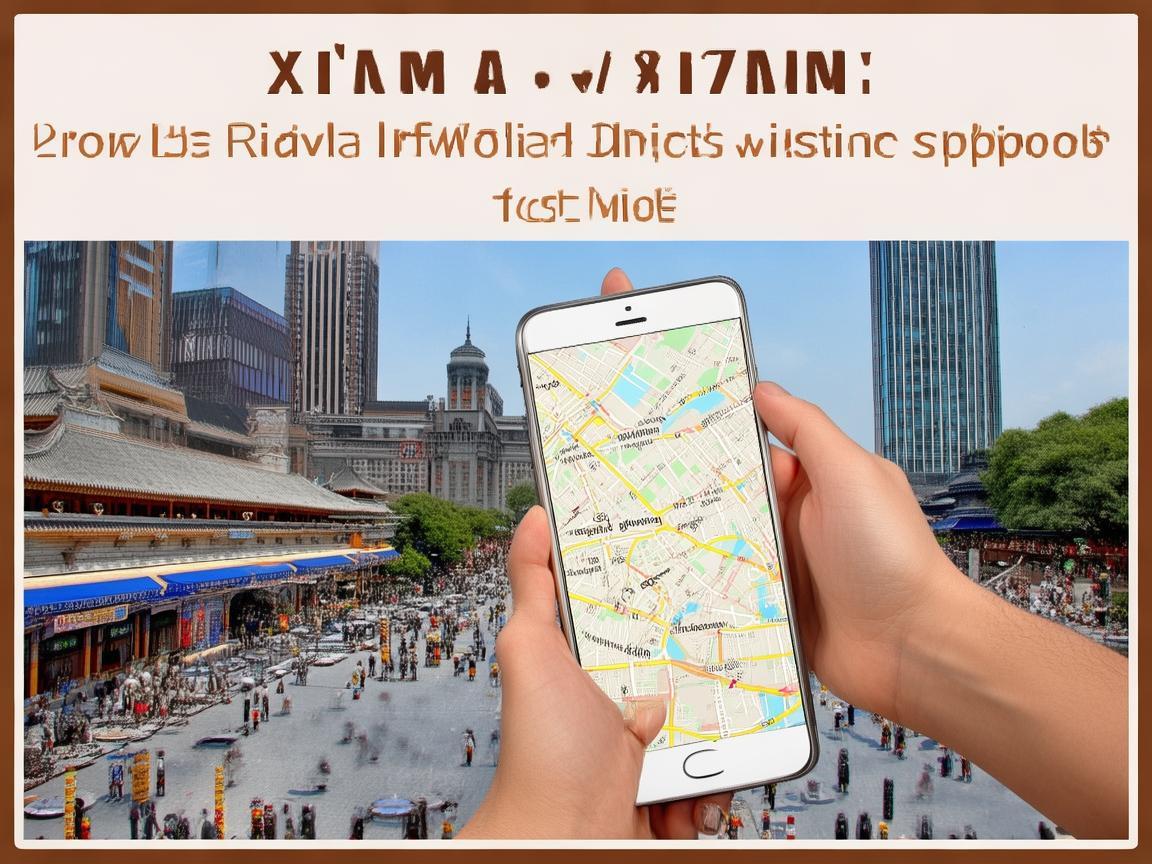
Navigating Xi’an: A Traveler’s Guide to China’s SIM & Digital System
What you’ll need:
- Your passport (they’ll scan it—this is mandatory for实名制, or “real-name registration”).
- A bit of cash (or Alipay/WeChat, but you’ll need those activated after the SIM).
Which plan to choose?
Don’t overthink it. Ask for a “tourist plan” (游客套餐). I got the “30GB/month” package for 100 RMB (~$14). It included:
- Unlimited high-speed data (crucial for Google Maps, WeChat, and ride-shares).
- Some domestic calls (though I mostly used apps).
- It lasted the whole 10 days I was there—no top-ups needed.
Pro tip: Keep your receipt! They’ll give you a paper with your new number and PUK code. If your phone acts up, you’ll need it.
Step 2: Activate Your Digital Life—WeChat & Alipay
Once your SIM is in, the real fun begins: setting up China’s two “super apps,” WeChat and Alipay. These aren’t just social media or payment apps—they’re your wallet, your map, your ticket to almost everything.
WeChat: The Swiss Army Knife
I thought WeChat was just for messaging. Wrong. In Xi’an, it’s how I:
- Ordered food (from KFC to local noodle shops).
- Paid for cabs and ride-shares.
- Checked into hotels.
- Even bought entrance tickets to the Terracotta Army (skip the lines!).
How to set it up:
- Download WeChat from the App Store (it’s blocked in China without a Chinese SIM, so do this after inserting your new SIM).
- Sign up with your phone number (they’ll send a code).
- Bind your bank account: Go to “Me” > “Services” > “Wallet.” Tap “+” to add a bank card. I added my U.S. debit card, but honestly, it’s easier to bring cash and transfer to WeChat pay at a bank (more on that later).
Alipay: The King of Payments
If WeChat is the Swiss Army Knife, Alipay is the power drill. It’s accepted everywhere—markets, buses, even street vendors selling steaming buns. I used it more than cash.
How to set it up:
- Download Alipay (same as WeChat—do it with your Chinese SIM).
- Sign up with your phone number.
- Add money: The easiest way for tourists is to find a “Bank of China” branch and deposit cash into your Alipay account. Just show them your passport, and they’ll help you link it. I put 500 RMB (~$70) in my first week—enough for meals, souvenirs, and transport.
Why both? Some places only take WeChat (older vendors), others only Alipay (modern shops). Having both saves you from awkward “sorry, can’t pay” moments.
Step 3: Go Cash-Light (But Not Cash-Free)
Here’s the thing: China is almost cashless, but not quite. In big cities like Xi’an, you can get by with just WeChat/Alipay, but in rural areas or tiny street stalls, cash is still king.
How much cash to bring?
I’d recommend 300-500 RMB in small bills (10s, 20s, 50s). I used cash once: at a little dumpling shop in the Muslim Quarter where the owner didn’t have a QR code scanner. He just pointed to a “cash only” sign, and I was glad I had 20 RMB on me.
Where to exchange money?
Avoid airport exchange counters—their rates are terrible. Instead, go to a Bank of China branch in the city center (near the Bell Tower or Drum Tower). The rate is way better, and they speak English.
Step 4: Navigate Like a Local—Digital Transport
Xi’an’s public transport is amazing, and your phone makes it even easier. No more fumbling for bus tickets or figuring out metro maps—just scan and go.
Subway & Bus: The “QR Code” Way
- Open WeChat or Alipay and go to the “QR Code” section (WeChat: Me > Services > QR Code; Alipay: Home > QR Code).
- Look for “Xi’an Metro” or “Xi’an Bus” in the “Transport” or “City Services” tab.
- Generate the code—just hold your phone over the scanner at the gate (subway) or on the bus (they’re usually near the driver).
Cost: A subway ride is 2-6 RMB depending on distance; buses are 1-2 RMB. Way cheaper than taxis!
Ride-Shares: Didi (China’s Uber)
Taxis in Xi’an are fine, but Didi is cheaper and more reliable. Here’s how to use it:
- Download the Didi app (English available).
- Sign up with your phone number.
- Enter your destination (use Google Maps to get the address in Chinese—they’ll have it).
- Choose your ride (standard is cheapest).
- Pay via WeChat or Alipay (linked to your Didi account).
Pro tip: If you’re at a busy spot (like the Terracotta Army exit), Didi lines can be long. Walk 5 minutes away to a side street—you’ll get a car faster.
Step 5: Stay Connected—Wi-Fi & Emergency Help
Even with a SIM, Wi-Fi is a lifesaver. Most hotels, malls, and even some buses have free Wi-Fi. Here’s how to connect:
- Hotels: Ask the front desk for the password (they’ll write it in Chinese—just show them your phone).
- Malls/Restaurants: Look for a sign with “Wi-Fi” (often in Chinese: 无线网络). Scan the QR code to log in (some require WeChat/Alipay).
- Public Wi-Fi: Avoid unsecured networks (like “Free Xi’an Wi-Fi”)—they can be hacked. Stick to places you trust.
If you’re in trouble:
- Police: Call 110 (works on any phone, even without a SIM).
- Ambulance: Call 120.
- Language help: Download the “Pleco” app (Chinese dictionary) or “iTranslate”—they’ll save you when you can’t communicate.
My “Oops” Moments—What I Wish I’d Known
- Forgot to top up? I ran out of data on Day 5 because I’d used it all for Google Maps. Easy fix: Open your SIM provider’s app (China Mobile has “Mobile World”) and top up with Alipay.
- QR code not scanning? At the subway, my phone was lagging. A local tapped my phone and said, “Turn on your flashlight!” The scanner needed more light. Duh.
- Lost my phone? Thank goodness I didn’t, but I learned: In WeChat, go to “Me” > “Settings” > “Account Security” > “Lost Mode.” It locks your phone and lets people call you back.
Final Thoughts: You’ve Got This
Xi’an is an incredible city—ancient history, amazing food, and the kindest people. But to really enjoy it, you need to embrace China’s digital system. A local SIM card, WeChat, and Alipay aren’t just “tech stuff”—they’re your keys to freedom. They let you wander the Muslim Quarter without worrying about cash, skip lines at the Terracotta Army, and even chat with a vendor using a translation app.
I left Xi’an not just with photos of the Big Wild Goose Pagoda, but with a new confidence. If I can navigate China’s digital world, you can too. So grab that SIM, download those apps, and get ready to explore. Xi’an is waiting—and now, so are you.
Xi’an Airport Transfer Service
Private English-speaking driver service in Xi’an operated directly by Bruce Zhang. 24/7 airport pickup and hotel transfer for foreign travelers.
Helpful for Your Trip in Xi’an
Surviving and Thriving in Xi’an: A Traveler’s Guide to China’s Internet Carrier
2026-09-10China SIM Verification: A Traveler’s Step-by-Step Guide (From a Xi’an Visitor’s Perspective)
2026-09-08Xi’an Travel Tips: Why China Roaming Data is Non-Negotiable for Foreign Visitors
2026-09-05Traveling Xi’an: A Tourist’s Guide to Navigating China’s SIM Authentication System
2026-09-04Your Ultimate Guide to Network Settings & China SIM Cards for a Seamless Xi’an Trip
2026-08-31Xi’an: Where Ancient History Meets Modern Connectivity – A China Traveler’s Practical Guide
2026-08-30Your Go-To Guide for China SIM Service Centers in Xi’an: Stay Connected Hassle-Free
2026-08-26Surviving Xi’an Without the Slow Lane: A Tourist’s Guide to China SIM Throttling
2026-08-11Xi’an Travel Survival Guide: How a China SIM Card and Call Center Saved My Trip
2026-08-10My Xi’an Survival Guide: Why a China SIM Card is Your Travel Lifeline
2026-08-09