

Traveling Xi’an with Ease: How China Connectivity Providers Made My Trip Seamless
As a history buff who’d dreamed of visiting Xi’an for years, I finally made the trip last fall. I’d heard tales of its ancient wonders—the Terracotta Army, the City Wall, the Muslim Quarter—but I’ll admit, I was a little nervous. Traveling in a foreign country can be daunting, especially when it comes to staying connected, navigating, and handling daily transactions. But by the time I left, I realized my worries were unnecessary. Thanks to China’s robust connectivity providers, my trip wasn’t just smooth—it was effortless. Here’s how they turned potential stress into pure travel joy.
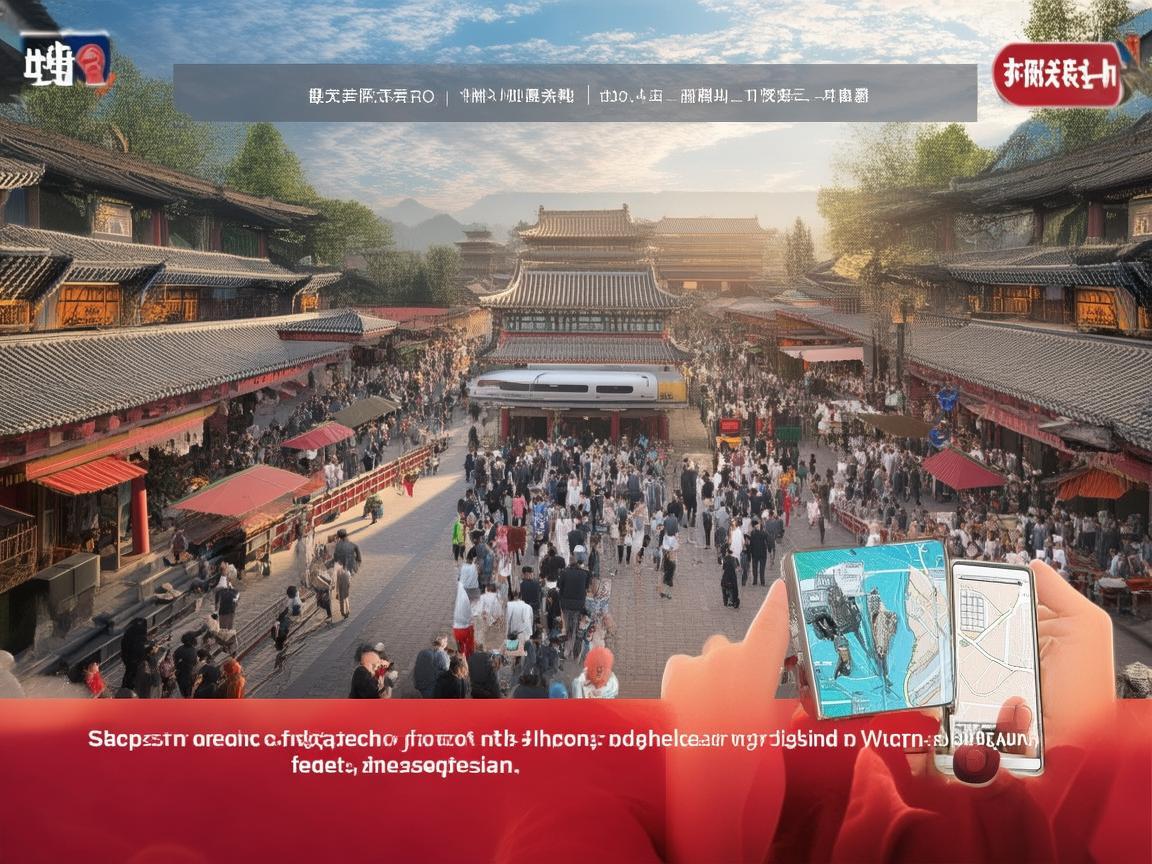
Traveling Xi’an with Ease: How China Connectivity Providers Made My Trip Seamless
First Stop: Staying Connected, No Matter What
Before I left home, everyone told me, “Get a local SIM card or activate eSIM—you’ll need it.” I took the advice and popped a China Mobile SIM card into my phone at Xi’an Xianyang International Airport. For around 30 RMB (about $4), I got 10GB of high-speed data valid for 30 days. What surprised me most? The speed. I was used to spotty 4G back home, but in Xi’an, even in crowded spots like the Terracotta Army or the Muslim Quarter, I had 5G. Streaming maps, video-calling my family, and posting to social media? Instant. No lag, no buffering—nothing.
China’s connectivity providers (China Mobile, China Unicom, and China Telecom) have truly outdone themselves. They’ve built a network that covers cities, countryside, and even remote tourist sites. I remember hiking up to the Giant Wild Goose Pagoda at dusk, expecting no signal, but I still had 5G to check opening hours and snap crystal-clear photos to share. If you’re visiting, don’t rely on hotel WiFi alone—it’s often slow and limited. A local SIM or eSIM is a game-changer. Pro tip: You can buy eSIMs online before you leave (via apps like Airalo) or grab a SIM at the airport arrival hall—super convenient.
Mobile Payment: Cash? What Cash?
One of my biggest fears was “How do I pay for things?” I’d heard China was a cashless society, but I didn’t realize how cashless until I arrived. My first morning, I wandered into a small breakfast shop near my hotel, craving a roujiamo (Xi’an’s famous “Chinese hamburger”). I fumbled for cash, but the shopkeeper just smiled, pointed to a QR code on the wall, and said, “WeChat or Alipay.” I had neither.
Panic set in—until I remembered my friend’s advice: “Link your international card to WeChat pay or Alipay before you go.” Back at the hotel, I opened WeChat, went to “Payments,” selected “Add Bank Card,” and added my Visa. Within minutes, I could scan QR codes to pay. By afternoon, I was a pro: buying snacks from street vendors, paying for bus rides, even leaving a tip at a restaurant. All it took was a quick scan—no cash, no signatures, no hassle.
How does this relate to connectivity providers? Simple: These payment systems run on real-time networks. Every time you scan a code, the transaction is processed in seconds, thanks to the stable 4G/5G infrastructure. I even paid for my Terracotta Army tickets online via Alipay—no排队 (queuing!) in the sun. Just scan the QR code at the gate, and in I went. If you forget to link your card, don’t worry: Most hotels and big tourist spots accept international credit cards, but for small shops, street food, or local buses, mobile payment is king. And that’s all powered by China’s top-notch connectivity.
Navigation: Never Get Lost (Even in a 1,000-Year-Old City)
Xi’an is a maze of ancient streets and modern neighborhoods, but with my phone’s GPS and a good map app, I felt like I knew the city like a local. I used Gaode Maps (高德地图), China’s answer to Google Maps, and it was incredible. It showed real-time traffic, suggested the fastest routes (even for walking!), and even had English voice navigation.
One day, I wanted to find the Muslim Quarter’s hidden alleyways, known for their street art and handmade crafts. Gaode didn’t just give me directions—it pointed me to a “secret” entrance most tourists miss, saving me from the crowds. Another time, I got turned around near the City Wall, but a quick search on Gaode showed my exact location and guided me back to the subway station.
What makes this possible? China’s connectivity providers ensure that GPS and map apps work flawlessly. Even in dense, historic areas where old buildings might block signals, 5G and 4G keep your location updated. I also downloaded offline maps for Gaode just in case, but I never needed them—my signal was always strong. If you’re visiting, skip the paper maps. Gaode (or Baidu Maps) is your best friend, and it works seamlessly thanks to China’s network coverage.
Transportation: Getting Around Has Never Been Easier
Xi’an’s public transport is efficient, but using it requires a bit of planning—unless you have connectivity. I mostly took the subway and buses, and both were a breeze thanks to mobile apps.
For the subway, I used the “Metro Xi’an” app (or Alipay’s “Metro” feature). I could buy tickets directly on my phone, scan the QR code at the gate, and even check real-time train schedules. No need to wait in line or figure out ticket machines—just tap and go.
Buses were just as easy. I used Gaode Maps to find the nearest bus stop, check which route to take, and see when the next bus was coming (live updates!). Once on board, I paid via Alipay or WeChat—just scan the QR code on the bus fare scanner. No exact change needed, no paper tickets.
Even when I took a high-speed train to Luoyang (a nearby city), connectivity made it simple. I bought my ticket on the 12306 app (China’s official railway app) using my phone, scanned my QR code at the station, and boarded without any hassle. The app even sent me real-time updates on delays or platform changes—all thanks to a stable network.
China’s connectivity providers power these systems, ensuring that every step—from buying a ticket to boarding—is smooth and digital. If you’re traveling here, don’t be afraid to use public transport—it’s cheap, reliable, and way easier than you’d think with the right apps.
Bonus: Real-Time Help and Local Insights
One of the best parts of having great connectivity was access to real-time information and local tips. I followed a few Xi’an travel bloggers on WeChat, and they often posted updates—like “The Bell Tower is less crowded on weekday mornings” or “Try the new dumpling spot near the South Gate.” I also used Douyin (China’s TikTok) to find short videos of locals sharing their favorite hidden gems, like a quiet teahouse in the Muslim Quarter or the best biangbiang noodles in town.
When I had a question—“What’s the best way to get to the Terracotta Army from downtown?”—I just posted it on a travel forum on WeChat, and within minutes, locals replied with detailed directions and even warned me about “tourist traps” near the site. All of this was possible because of fast, reliable internet. Without it, I’d have been stuck with outdated guidebooks and generic advice.
Final Thoughts: Connectivity Makes Travel Stress-Free
By the end of my trip, I was amazed at how much China’s connectivity providers had enhanced my experience. From staying connected with family to paying for a 5 RMB bowl of noodles, from navigating ancient streets to booking last-minute train tickets, every aspect of my trip was smoother because of the network.
If you’re planning a trip to Xi’an (or anywhere in China), here’s my advice: Don’t skimp on connectivity. Get a local SIM or eSIM, download WeChat, Alipay, Gaode Maps, and 12306 before you go, and embrace the cashless, digital world. China’s connectivity providers have built a system that makes traveling easy, safe, and fun—so you can focus on what really matters: exploring the wonders of this incredible city.
Thanks to them, my Xi’an adventure wasn’t just a trip—it was a lesson in how technology can turn travel from stressful to unforgettable. Now, I can’t wait to plan my next trip to China, knowing I’ll stay connected every step of the way.
Xi’an Airport Transfer Service
Private English-speaking driver service in Xi’an operated directly by Bruce Zhang. 24/7 airport pickup and hotel transfer for foreign travelers.
Helpful for Your Trip in Xi’an
Surviving and Thriving in Xi’an: A Traveler’s Guide to China’s Internet Carrier
2026-09-10China SIM Verification: A Traveler’s Step-by-Step Guide (From a Xi’an Visitor’s Perspective)
2026-09-08Xi’an Travel Tips: Why China Roaming Data is Non-Negotiable for Foreign Visitors
2026-09-05Traveling Xi’an: A Tourist’s Guide to Navigating China’s SIM Authentication System
2026-09-04Your Ultimate Guide to Network Settings & China SIM Cards for a Seamless Xi’an Trip
2026-08-31Xi’an: Where Ancient History Meets Modern Connectivity – A China Traveler’s Practical Guide
2026-08-30Your Go-To Guide for China SIM Service Centers in Xi’an: Stay Connected Hassle-Free
2026-08-26Surviving Xi’an Without the Slow Lane: A Tourist’s Guide to China SIM Throttling
2026-08-11Xi’an Travel Survival Guide: How a China SIM Card and Call Center Saved My Trip
2026-08-10My Xi’an Survival Guide: Why a China SIM Card is Your Travel Lifeline
2026-08-09