

Xi’an Travel Diary: How a Weekly SIM Card Saved My Trip
Landing in Xi’an at 8 AM, I was buzzing with excitement—this was my first time in China, and I’d dreamed of seeing the Terracotta Warriors and wandering through the Muslim Quarter for years. But within an hour of stepping out of Xi’an Xianyang International Airport, I was already stressed: my phone’s international roaming was charging me $10 per GB, my map app kept loading in blurry pixels, and I couldn’t even order a taxi because WeChat pay wouldn’t work without a local number. That’s when I realized: a weekly SIM card wasn’t just a “nice-to-have”—it was my lifeline. Over the next seven days, this tiny piece of plastic turned my chaotic trip into a smooth, unforgettable adventure. Here’s why it’s a must-have for any Xi’an traveler, and exactly how to use it.
First Stop: Why You Need a Weekly SIM Card in Xi’an
Before I dive into the “how,” let’s talk about the “why.” China’s internet and payment systems are incredibly efficient—but they’re also local. If you’re a foreign visitor, you’ll hit three big walls without a Chinese SIM:
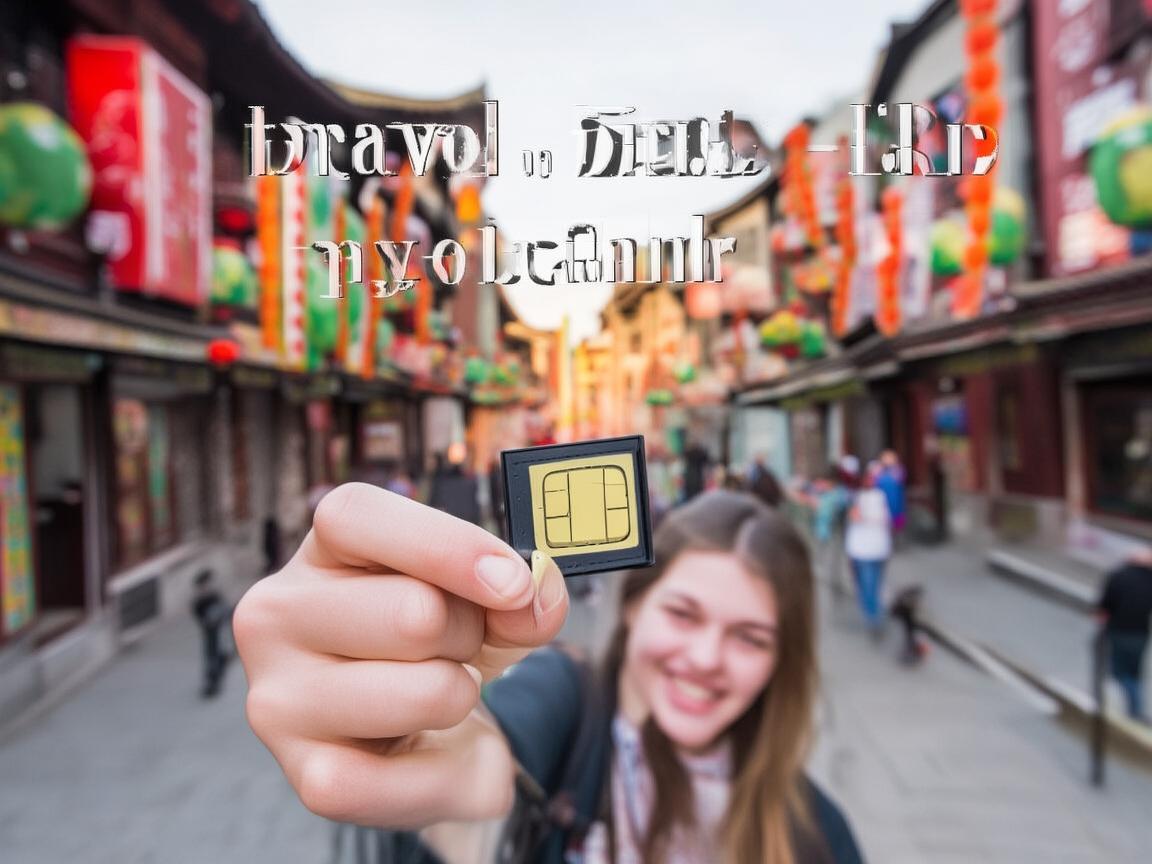
Xi’an Travel Diary: How a Weekly SIM Card Saved My Trip
-
Navigation Nightmares: Xi’an is huge—think ancient city walls, the Terracotta Warriors 30 km outside the city center, and winding alleyways in the Muslim Quarter. Without reliable data, Google Maps doesn’t work (it’s blocked), and even Baidu Maps (China’s top map app) needs a local number to verify your location. I learned this the hard way: my first day, I tried to walk from the train station to my hotel using roaming data, and I ended up in a residential neighborhood three blocks away, sweating and lost.
-
Cashless Chaos: China is cashless. Like, really cashless. Vendors at the Muslim Quarter, street food stalls near the Bell Tower, even the ticket office for the Terracotta Warriors—they all expect WeChat Pay or Alipay. Both apps require a Chinese phone number to link to your bank account. Without one, you’ll be stuck trying to explain (in charades) that you only have foreign currency, or overpaying in cash (if they even accept it).
-
Communication Breakdowns: Need to call your hotel to ask about late check-in? Want to text your travel buddy to meet at the Big Wild Goose Pagoda? Without a local SIM, international calls are expensive and spotty. Plus, many hotels, homestays, and even bike rentals (more on that later!) need a Chinese number to confirm bookings.
How to Get a Weekly SIM Card: Step-by-Step
Okay, so you’re convinced. Now, how do you actually get one? Here’s what I did, and it couldn’t have been easier.
Where to Buy It: Airport vs. City
I bought my SIM card right at the airport, and it was the smartest move. Xi’an Xianyang International Airport (XIY) has counters for all three major carriers—China Mobile, China Unicom, and China Telecom—before you go through security. So even if you’re just transiting, you can grab one.
If you miss the airport, don’t worry: you can also buy SIMs at convenience stores like 7-Eleven (super common in the city), or at carrier stores in downtown areas like the Bell Tower or Muslim Quarter. I saw a China Mobile store near the Drum Tower, and the staff spoke basic English.
What to Bring: Your Passport!
This is key: you must show your passport to buy a SIM card in China. No exceptions. They’ll register your number with the government (a legal requirement), so don’t forget it. I had my passport in my hand before I even got to the counter.
Which Carrier to Choose?
I went with China Mobile because it has the best coverage in Xi’an, especially in rural areas like the Terracotta Warriors site. China Unicom is also great for cities, and China Telecom has good 5G speed, but for a week of travel, China Mobile’s reliability was worth it.
The Best Plan: Weekly + Enough Data
I asked the China Mobile staff for a “weekly plan for tourists,” and she handed me a perfect option:
- Price: ¥89 (about $12 USD)
- Validity: 7 days (exactly what I needed)
- Data: 20GB of high-speed 4G/5G data (plenty for maps, WeChat, and even uploading photos)
- Calls: 100 minutes of domestic calls (useful for calling hotels or taxis)
- Extra: Free access to popular apps like WeChat, Douyin (TikTok), and Baidu Maps (no extra data drain)
They activated it on the spot, and I just had to pop it into my phone’s SIM slot. Done!
How My Weekly SIM Card Made Xi’an a Breeze: Real-Life Examples
Over the next seven days, that SIM card was my constant companion. Here’s exactly how it saved me (and made my trip 100x better):
Navigation: From “Lost in Translation” to “Confident Explorer”
Day 2: Terracotta Warriors. Without my SIM, I’d have been stuck. I used Baidu Maps (which works perfectly with a local SIM) to:
- Find the right bus from Xi’an Railway Station to Terracotta Army (Bus 5/914/915—Baidu told me exactly which stop to get off at).
- Navigate inside the archaeological site (it’s huge, and the app showed me the route from Pit 1 to Pit 3, plus where the English-speaking guides were).
- Grab a taxi back to the city (I opened Didi, China’s Uber, and the driver found me in 2 minutes—no more haggling with street taxi drivers!).
Day 4: Cycling the City Wall. Xi’an’s Ancient City Wall is a must-do—you can rent bikes and ride the 14km loop. But the entrance gates are spread out, and I wanted to start at the South Gate (the most scenic). My SIM card let me pull up Baidu Maps to find the nearest bike rental spot (just 200m from the South Gate!) and even check opening hours (they close at 6 PM—phew, I made it just in time!).
Payments: From “Cash Panic” to “Tap and Go”
The Muslim Quarter is a food lover’s paradise—think roujiamo (Chinese hamburgers), Paomo (bread soup), and yangrou paomo (lamb bread soup). But every stall is cashless. My SIM card let me:
- Link my foreign credit card to WeChat Pay (it’s easy: open WeChat > Me > Services > Wallet > Add Bank Card, follow the prompts).
- Pay for street food with a single scan. I’ll never forget the roujiamo vendor’s smile when I tapped my phone—no fumbling for cash, no awkward “do you take USD?” moments.
- Even buy souvenirs: at a shop selling Terrac Warrior replicas, the owner scanned my WeChat QR code in 10 seconds.
Restaurants were just as easy. At a dumpling place near the Bell Tower, I scanned a QR code on the table to order (no waiting for a waiter!) and paid the same way. Total lifesaver when I was tired and hungry after a long day of sightseeing.
Communication: From “Miscommunication” to “Smooth Coordination”
I was traveling with a friend, and we kept splitting up to explore different parts of the city. My SIM card let us:
- Use WeChat to send voice messages (way easier than typing in a crowded market) and share our real-time location (“I’m at the entrance of the Big Wild Goose Pagoda—meet you in 5!”).
- Call our homestay when we got lost (the owner spoke basic English, and she guided us over the phone).
- Even book a last-minute hot spring hotel near Huaqing Palace (the place where Emperor Xuanzong and Yang Guifei stayed). The hotel needed a Chinese number to confirm the booking—my SIM card made it possible.
Entertainment: From “Bored in Transit” to “Never Missing a Moment”
Long bus rides or waiting in lines? No problem. My 20GB data meant I could:
- Watch Douyin (TikTok) to learn about Xi’an’s history (I found a video showing how the Terracotta Warriors were made—super cool before visiting the site!).
- Upload photos to Instagram and Facebook instantly (my family back home were getting jealous updates in real time).
- Listen to Chinese podcasts on the way to the Terracotta Warriors (I learned a few basic Mandarin phrases, like “nǐ hǎo” (hello) and “xiè xie” (thank you)—the locals loved it!).
Bonus Tips: Making the Most of Your Weekly SIM
- Activate It ASAP: As soon as you get the SIM, turn on your phone and restart it. Sometimes it takes a minute to connect to the network.
- Save the Customer Service Number: China Mobile’s customer service is 10086. I had a small issue with data one day (it was slow), and calling them fixed it in 5 minutes (they told me I’d accidentally turned on “data saver mode”).
- Don’t Worry About Running Out of Data: 20GB is a lot for a week, but if you do, you can buy a “data top-up” package at any convenience store (¥30 for 10GB—super cheap).
- Keep It for Future Trips: I’m already planning to visit Shanghai and Beijing next year, and I’ll definitely buy another weekly SIM. It’s reusable (just keep the number!) and makes traveling in China so much easier.
Final Thoughts: A Small Investment for a Big Difference
By the end of my week in Xi’an, I felt like a local—not a confused tourist. I could navigate the city like a pro, eat at any stall I wanted, and stay connected with friends and family. All because of a tiny SIM card that cost less than a fancy dinner.
If you’re planning a trip to Xi’an (or anywhere in China), don’t make the mistake of relying on international roaming. A weekly SIM card is affordable, easy to get, and absolutely essential. It’s the first thing I’ll pack for my next China adventure—and it should be yours too.
Now go—explore Xi’an like a pro. Just don’t forget to grab that SIM card first!
Xi’an Airport Transfer Service
Private English-speaking driver service in Xi’an operated directly by Bruce Zhang. 24/7 airport pickup and hotel transfer for foreign travelers.
Helpful for Your Trip in Xi’an
Surviving and Thriving in Xi’an: A Traveler’s Guide to China’s Internet Carrier
2026-09-10China SIM Verification: A Traveler’s Step-by-Step Guide (From a Xi’an Visitor’s Perspective)
2026-09-08Xi’an Travel Tips: Why China Roaming Data is Non-Negotiable for Foreign Visitors
2026-09-05Traveling Xi’an: A Tourist’s Guide to Navigating China’s SIM Authentication System
2026-09-04Your Ultimate Guide to Network Settings & China SIM Cards for a Seamless Xi’an Trip
2026-08-31Xi’an: Where Ancient History Meets Modern Connectivity – A China Traveler’s Practical Guide
2026-08-30Your Go-To Guide for China SIM Service Centers in Xi’an: Stay Connected Hassle-Free
2026-08-26Surviving Xi’an Without the Slow Lane: A Tourist’s Guide to China SIM Throttling
2026-08-11Xi’an Travel Survival Guide: How a China SIM Card and Call Center Saved My Trip
2026-08-10My Xi’an Survival Guide: Why a China SIM Card is Your Travel Lifeline
2026-08-09