

An Educational Entry to Xi’an: A Traveler’s Practical Guide
Before my trip to Xi’an, I’d only seen it in textbooks—“the eastern terminus of the Silk Road,” “home of the Terracotta Warriors,” “a city where dynasties rose and fell.” But I quickly realized Xi’an isn’t just a museum of old stones; it’s a living classroom where every street corner, stele, and dumpling tells a story. If you want more than just selfies at landmarks (though those are great too), here’s how to turn your trip into an educational entry—a deep dive into China’s past that feels more like a conversation than a lecture.
Pre-Trip Prep: Read, Watch, and Learn (A Little)
Xi’an’s history spans over 3,000 years, so a tiny bit of prep goes a long way. I watched The Longest Day in Chang’an (a drama about Tang Dynasty life) and skimmed a kids’ book about the Terracotta Warriors—nothing heavy, just enough to recognize names like Qin Shi Huang or Xuanzang. Pro tip: Download a map app (like Baidu Maps) offline; Wi-Fi can spotty near some sites.
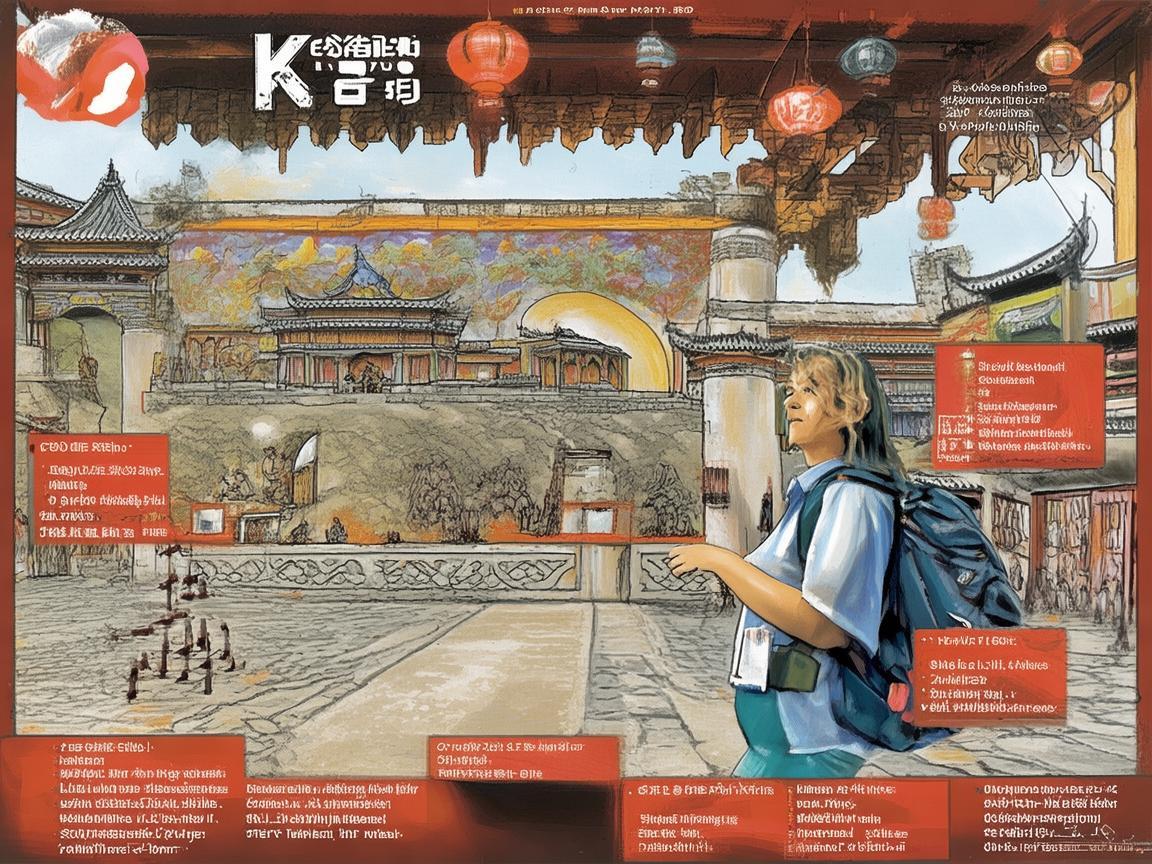
An Educational Entry to Xi’an: A Traveler’s Practical Guide
Stop 1: Terracotta Warriors—Beyond the “Eighth Wonder”
Everyone knows the Terracotta Warriors, but few understand why they’re mind-blowing. Here’s how to make it educational:
- Skip the crowds (sort of): Go right when the gates open (8:30 AM) or after 3 PM. Tour buses arrive around 10 AM, so you’ll have more space to actually look.
- Hire a guide or rent an audio player. I almost skipped this, but my guide (a local college student named Li Hua) pointed out details I’d have missed: The archers’ knees are bent slightly, ready to shoot; the generals’ uniforms have intricate knots showing their rank; and some warriors have fingerprints in the clay—proof real craftsmen made them.
- Pit 1 is the big one, but don’t skip Pits 2 and 3. Pit 2 has cavalry and chariots, showing Qin’s military strategy; Pit 3 is the command center, with smaller, higher-ranking officers. Together, they’re not just “soldiers”—they’re a 3D model of Qin Shi Huang’s army.
- Connect the dots: After the tour, I visited the nearby Qin Shi Huang Mausoleum (the actual burial mound, not excavated yet). Standing there, I finally got it: The warriors weren’t just for show—they were Qin’s “army for the afterlife,” meant to protect him in death. That’s why each face is unique: He wanted real soldiers, not copies.
Practical tip: Wear comfy shoes—you’ll walk 2+ km on uneven ground. And bring water; it’s dusty and hot in the pits!
Stop 2: Xi’an City Wall—A Walk Through 600 Years of Defense
The City Wall is one of the best-preserved ancient walls in China, but it’s not just a “pretty wall.” It’s a textbook in stone—and riding a bike on top is the best way to “read” it.
- Rent a bike (¥30/hour) or walk. I chose a bike and cycled the entire 14 km loop (took 2 hours with stops). The path is wide and flat, perfect for beginners.
- Look at the details: Notice the crenels (the notches on the wall)—some are square, some are round. Square ones were for archers; round ones for cannons (added later, during the Ming Dynasty). The moat below isn’t just for defense; it’s part of a “water defense system” that flooded to keep enemies out.
- Climb the towers: Every 120 meters, there’s a watchtower. Climb one (like the South Gate tower) and you’ll see the city layout: The grid inside the wall mirrors Tang Dynasty Chang’an, once the world’s largest city. My guide told me, “In the Ming Dynasty, they rebuilt this wall to protect the city from northern invaders—but it also protected the culture inside.” That’s why Xi’an still feels so “old” compared to Beijing or Shanghai.
Practical tip: Go early morning (7-9 AM) or evening (5-7 PM) to avoid heat and crowds. At night, the wall is lit up, and it’s magical—but skip the “night tour” bike rides; they’re overpriced.
Stop 3: Muslim Quarter—Food, Faith, and Fusion
The Muslim Quarter isn’t just “street food heaven” (though it is that). It’s a living example of how cultures blend in Xi’an—a city that was the Silk Road’s crossroads for 1,000 years.
- Eat like a local, but ask questions. I tried roujiamo (“Chinese hamburger”) from a stall run by an 80-year-old man. “My grandfather made this for travelers on the Silk Road,” he said, stuffing minced pork into a baked bun. “Muslims use beef, we use pork—same recipe, different culture.” I also tried Paomo—bread soaked in lamb soup, a dish that mixes Han Chinese carbs with Central Asian flavors.
- Visit the Great Mosque. It’s hidden in the middle of the quarter, and it’s stunning: Chinese-style roofs with Arabic calligraphy, a courtyard with a moon gate, and a prayer hall that feels both Chinese and Islamic. My favorite part? The “Stone of Steeds”—a carving of a horse with a missing hoof. Legend says it’s from the Tang Dynasty, when Arab traders brought horses to Chang’an. “We don’t just worship here,” a docent told me. “We remember the people who came here—on camels, on horses, bringing spices, ideas, and faith.”
- Skip the “tourist traps.” The main street (Beiyuanmen) is crowded with overpriced snacks. Turn onto a side alley (like Huajue Lane) and find the qingtuan (green rice ball) shop run by a family—they’ve been there for 50 years.
Practical tip: Bring hand sanitizer (street food stalls don’t always have sinks) and cash—some small vendors don’t take cards.
Stop 4: Shaanxi History Museum—3000 Years in One Afternoon
If Xi’an is a textbook, the Shaanxi History Museum is the “spiral binder”—it ties everything together. With over 370,000 artifacts, it’s overwhelming, but if you follow these tips, you’ll learn a lot:
- Book your ticket online in advance. I tried to walk up and was told the next slot was 3 days later! Use the museum’s WeChat account or a travel app (like Trip.com) to book for free (yes, free!).
- Focus on three dynasties: Zhou, Qin, and Tang. They’re the “golden ages” of Xi’an, and their artifacts tell the best stories.
- Zhou Dynasty (1046-256 BC): Look at the bronze vessels. They’re covered in intricate patterns—dragons, tigers, birds. My guide said, “These weren’t just for eating. They were for rituals—like how we use trophies today, but for gods.”
- Qin Dynasty (221-206 BC): The terracotta figures here are smaller than the warriors, but more detailed—some have painted hair, others hold bronze swords. “Qin Shi Huang wanted to take his entire life to the afterlife,” a guard said, pointing to a figurine of a stable boy. “Not just soldiers—cooks, gardeners, even acrobats.”
- Tang Dynasty (618-907 AD): This is my favorite. The tripod pottery (sancai) has bright yellow, green, and brown glazes—colors from the Silk Road (the yellow came from Persia). There’s also a camel figurine with a load of silk and spices on its back. “Tang Chang’an was the most international city in the world,” a docent said. “You could meet a Persian merchant, a Japanese monk, and a Turkish soldier—all on the same street.”
- Don’t miss the “Tang Murals.” They’re huge paintings of court life—dancers playing pipas (a lute), nobles hunting, even a game of polo. They’re so detailed you can see the wrinkles on a dancer’s dress or the sweat on a horse’s neck.
Practical tip: Rent an audio guide (¥40) or join a free English tour (check the schedule when you arrive). The museum is huge, so pick 2-3 halls and spend time there—don’t try to see everything.
Bonus: A “Classroom” Outside the Museums
Xi’an’s best lessons aren’t always behind glass. Here are two unexpected spots that taught me more than any textbook:
- Forest of Steles (Beilin Museum): It’s a garden full of stone tablets with calligraphy and carvings from the Han to Qing dynasties. I spent an hour copying the characters for “peace” (和平) with a brush and water—something locals do for good luck. A retired teacher helped me: “Each stroke tells a story,” she said. “The ‘he’ (和) means harmony—like the Silk Road, where different cultures lived together peacefully.”
- Tang Dynasty Dinner Show: Okay, this is touristy, but it’s fun and educational. I went to the Tang Yue Gong show, where performers dance to Tang music (played on replicas of ancient instruments like the pipa and xiao). The best part? The emcee explained each dance: the “Dance of the Silk Road” shows traders camels; the “Dance of the Peacock” is from southern China, brought to Chang’an by diplomats. “Tang art wasn’t just Chinese,” she said. “It was global.”
Final Thoughts: Travel as Education
By the end of my trip, I didn’t just “see” Xi’an—I understood it. I knew why the Terracotta Warriors had unique faces (Qin Shi Huang’s fear of death), why the City Wall had round crenels (Ming Dynasty cannons), and why the Muslim Quarter’s food was so diverse (Silk Road traders).
Xi’an taught me that travel isn’t just about checking off landmarks. It’s about asking questions: Why was this built? Who made it? What does it say about the people who lived here? When you do that, every place becomes a classroom—and every trip, an education.
So if you go to Xi’an, don’t just rush to the next spot. Sit on the City Wall and watch the sunset. Talk to a street food vendor about their recipe. Copy a character at the Forest of Steles. That’s how you’ll really learn—and that’s the best souvenir you can bring home.
Xi’an Airport Transfer Service
Private English-speaking driver service in Xi’an operated directly by Bruce Zhang. 24/7 airport pickup and hotel transfer for foreign travelers.
Helpful for Your Trip in Xi’an
Xi’an Through My Eyes: A Visitor’s Approval Guide to the Must-Do, Must-Eat, and Must-Avoid
2026-09-01Xi’an on Your Terms: How the Smart Access System Made My Trip a Breeze
2026-08-30Xi’an: Where Ancient History Meets a Modern Integrated Tourism Ecosystem
2026-08-29Xi’an: Where Ancient Heritage Breathes with Living Ecosystems
2026-08-27Xi’an on the Metro: A Traveler’s Guide to Getting Around Like a Local
2026-08-27Xi’an Travel Tips: Navigating Ticket Codes Like a Local
2026-08-25What I Only Figured Out After 3 Trips
2026-08-23Is the Forest of Stone Steles Actually Worth Visiting in Xi'an?
2026-08-182026 Travel Season: How to Visit Xi'an in Summer Without the Crowds
2026-08-16Xi’an Travel Diary: How Reservation Confirmations Saved My Trip
2026-08-14