

Exploring Xi’an: A Traveler’s Guide to Heritage Management on the Ground
Before I landed in Xi’an, all I could picture was terracotta warriors and ancient city walls—classic “China stuff” I’d seen in textbooks. But after five days here, walking through millennia of history, I’ve realized something: Xi’an’s magic isn’t just in its relics. It’s in how carefully those relics are managed. At first, I didn’t even notice the “management” part—until I started digging. Now, I get it: good heritage management is the quiet force that lets us travelers experience the past without destroying it. If you’re planning a trip, here’s what I learned, straight from a tourist who’s been there—about how to navigate Xi’an’s sites, respect the rules, and actually appreciate the work that goes into keeping history alive.
First Stop: Terracotta Army—Booking Smart and Avoiding the Crowds
Let’s start with the obvious: the Terracotta Army. I’d heard it’s crowded, so I took the advice of a friend and booked my ticket three days in advance on the official “秦始皇陵博物院” (Qin Shi Huang Mausoleum Site Museum) WeChat mini-program. Pro tip: Don’t use third-party apps—they might overcharge or skip the timed-entry slots, which are key. The museum limits 65,000 visitors per day, and timed tickets (morning slots are less packed) mean you won’t be shoulder-to-shoulder with 10,000 people trying to take selfies with the same warrior.
When I arrived at 8:30 AM, the line was short, and by 9 AM, I was inside Pit 1. Wow. Those 6,000 life-sized warriors? Even better in person. But what struck me wasn’t just the scale—it’s how controlled the experience is. You walk on a raised metal walkway, so you never get close enough to touch the paint (most of which has faded anyway—good thing, because touching would ruin what’s left). There are signs everywhere saying “请勿闪光拍照” (No flash photography)—and actually, staff enforce it. I saw a guard gently ask a woman to turn off her flash; she apologized immediately. Turns out, the paint on the warriors is super light-sensitive, and flashes can make it flake off over time.
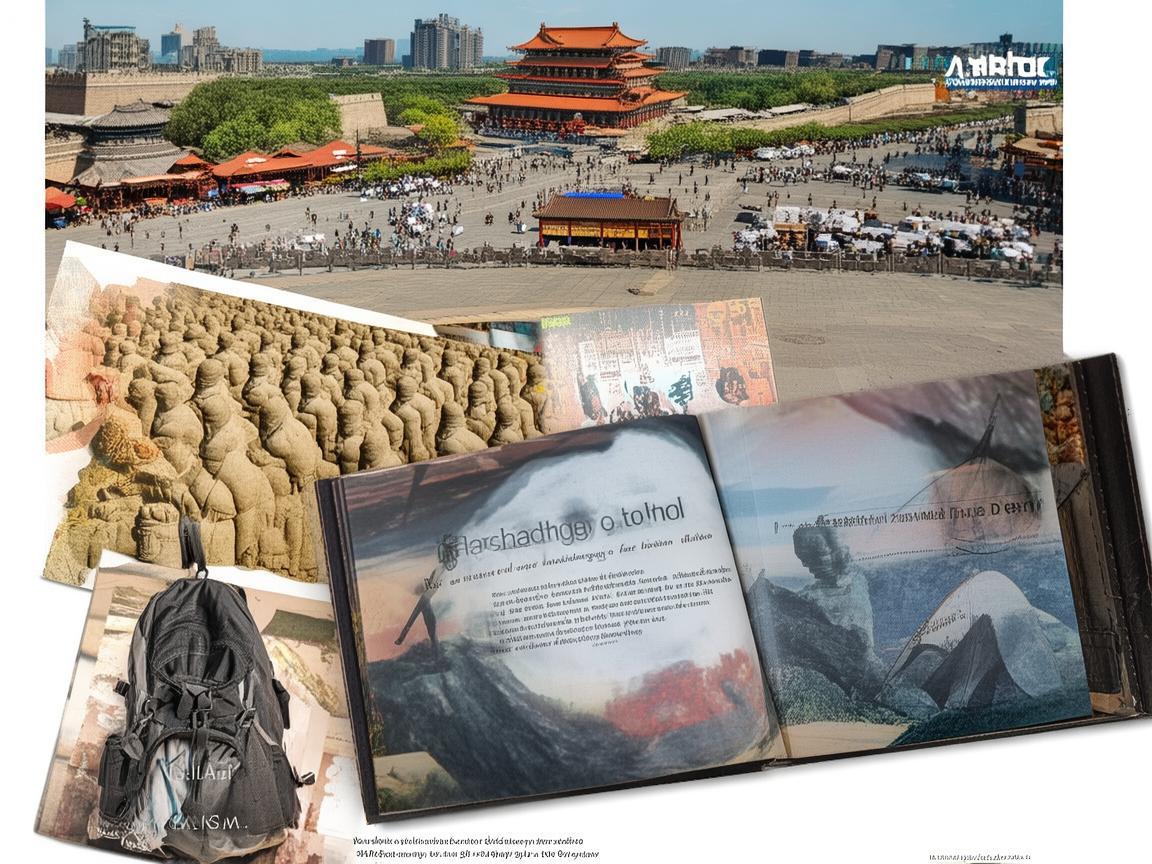
Exploring Xi’an: A Traveler’s Guide to Heritage Management on the Ground
Then there’s Pit 3, the command center, which is smaller but has more intact figures. A guide (I hired one for ¥150 at the entrance—worth it!) pointed out that the warriors’ faces are all different, and some still have hair braids. “These details would be lost if people rushed,” she said. “Management lets you look closely, but not too closely.”
After the pits, I visited the exhibition hall with the bronze chariots. Again, strict rules: no leaning on glass cases, no bags larger than 30x20cm (check them at the entrance!). At first, I thought it was overkill—until I saw a kid try to touch a 2,000-year-old bronze horse. A staff member appeared out of nowhere, smiling but firm, and explained why keeping distance matters. It clicked then: heritage management here isn’t about being bossy. It’s about letting us see history without loving it to death.
City Wall: Cycling, Climbing, and Balancing Access and Preservation
Next up: Xi’an’s Ancient City Wall. I’d heard it’s the best-preserved city wall in China, and wow, they’re not kidding. It’s 14 kilometers long, 12 meters high, and dates back to the Ming Dynasty. But here’s the thing: you can walk it, bike it, or even take an electric cart. How do they manage all that without wearing the wall down?
I opted for a bike rental—¥40 for two hours, from a stall right at the South Gate. The path is wide, but there are separate lanes for bikes and walkers, so no chaos. What I loved: sections under repair (marked with signs) are closed. No detours around scaffolding, no pretending “it’s just a little crack.” The wall is made of rammed earth and bricks, and rain or too many feet can loosen it. So when I saw a team of workers repointing bricks with traditional lime mortar, I got it. Temporary closures mean the wall stays intact for the next visitor.
There are also rules about what you can bring: no skateboards, no rollerblades (they’d chip the bricks), and no nails in the tires (bikes are checked before you rent them). At one point, I saw a staff member wipe mud off a bike’s wheels before letting someone continue. “Moorings can hold moisture,” he explained, gesturing to the wall. “Moisture weakens the earth.” Small stuff, but it adds up.
The best part? Watching the sunset from the wall. As the sky turned pink, the lights of the city flicked on below, and the wall glowed golden. No crowds, no noise—just quiet management doing its job.
Muslim Quarter: Food, Culture, and Keeping the “Old” in Old Street
Xi’an isn’t just ancient tombs and walls—it’s a living city, and nowhere is that more obvious than the Muslim Quarter. I went for the food (roujiamo, biangbiang noodles, persimmon cake—so good), but I stayed for the vibe. Narrow lanes, lanterns hanging overhead, the smell of grilled lamb… but it’s not a tourist trap. Why? Because heritage management here isn’t just about preserving buildings—it’s about preserving culture.
The quarter is centered around the Great Mosque, one of China’s oldest, built in the Tang Dynasty. Unlike the Terracotta Army, you can’t wander freely inside during prayer times—signs tell you when to enter and where to stand. But that’s okay, because the mosque is stunning: Chinese architecture with Islamic details, peaceful courtyards, and a history that’s still alive (locals pray here daily).
Around the mosque, the streets are busy but organized. Vendors have designated stalls, not carts pushed randomly. No loudspeakers blasting music—just the sizzle of grills and vendors calling out prices. I asked a street seller why there were no plastic bags (everything’s served in paper or reusable containers). “The city wants to keep the quarter clean,” she said. “Plastic messes up the old streets.” Smart.
What’s cool is how they blend old and new. You can buy a traditional hand-painted lantern or a phone case with the mosque design. But even the “new” stuff feels connected to the past. A shop owner showed me how they make biangbiang noodles—stretching the dough by hand, just like they did 100 years ago. “Management helps us keep these recipes alive,” he said. “They don’t let big chains take over, so we can stay small and real.”
Big Wild Goose Pagoda: Preserving a Landmark Without Freezing It
The Big Wild Goose Pagoda is another must-see—built in the 7th century to hold Buddhist sutras brought from India. It’s seven stories tall, made of brick, and leans slightly (don’t worry, it’s supposed to—like the Leaning Tower of Pisa, but sturdier).
When I visited, I noticed something: the base is surrounded by a fence, and you can’t get too close. Why? Because the pagoda’s foundation is fragile. “We’ve had to reinforce it over the years,” a guide told me. “But we didn’t want to cover it up with concrete. We used traditional methods, so it still looks ancient.”
Inside, you can climb to the top for a view of Xi’an. But there’s a catch: only 20 people are allowed up at a time, and you have to wear boot covers (to protect the wooden stairs). At first, I thought it was annoying—until I saw the stairs: worn smooth by 1,300 years of feet, but not broken. “If we let everyone run up and down, they’d collapse,” the guide said. “Slow and steady keeps the pagoda standing.”
Outside, the square has fountains and gardens—modern additions, but designed to match the pagoda’s style. No neon signs, no plastic chairs. Just trees, benches, and the pagoda towering above. It’s a reminder that heritage management isn’t about keeping things “as they were” in 645 AD. It’s about letting them adapt—without losing their soul.
My Big Takeaway: Heritage Management Is Everywhere—And It’s Our Job to Respect It
By the end of my trip, I couldn’t stop noticing the little things: the signs at the Bell Tower telling you not to sit on the ancient steps; the way the Shaanxi History Museum limits visitors to 6,000 per day (so you can actually see the artifacts instead of just passing them); even the recycling bins at every tourist site (labeled in English and Chinese, so no excuses).
Xi’an’s heritage management isn’t perfect—I heard some tourists complain about the strict rules at the Terracotta Army (“Why can’t I take a flash photo? It’s just a statue!”). But here’s the thing: those statues aren’t “just statues.” They’re 2,000-year-old clay figures with paint that’s fading faster than we realize. They’re pieces of a story that could disappear if we’re not careful.
So, what did I learn? For travelers, respecting heritage management is simple: follow the rules, even if they seem annoying. Book tickets in advance. Don’t touch things. Turn off your flash. And when you see a staff member enforcing a rule, say “thank you”—they’re not ruining your fun, they’re saving history for the next person.
Xi’an taught me that heritage isn’t just something to look at. It’s something to take care of. And thanks to smart, quiet management, this city’s past isn’t just preserved—it’s alive.
Final Tips for Travelers:
- Book ahead: Use official WeChat mini-programs for tickets (search the site’s name + “预约”).
- Hire guides: At the Terracotta Army and Big Wild Goose Pagoda, they explain the why behind the rules.
- Wear comfy shoes: You’ll walk a lot—especially on the city wall!
- Respect prayer times: At the Great Mosque, be quiet during services.
- **Skip the “hacks”:” Don’t pay extra for “backstage access” to sites—it’s either a scam or破坏 (damages) the site.
Xi’an’s heritage is a gift. Let’s make sure we leave it intact for the next traveler.
Xi’an Airport Transfer Service
Private English-speaking driver service in Xi’an operated directly by Bruce Zhang. 24/7 airport pickup and hotel transfer for foreign travelers.
Helpful for Your Trip in Xi’an
Xi’an Through My Eyes: A Visitor’s Approval Guide to the Must-Do, Must-Eat, and Must-Avoid
2026-09-01Xi’an on Your Terms: How the Smart Access System Made My Trip a Breeze
2026-08-30Xi’an: Where Ancient History Meets a Modern Integrated Tourism Ecosystem
2026-08-29Xi’an: Where Ancient Heritage Breathes with Living Ecosystems
2026-08-27Xi’an on the Metro: A Traveler’s Guide to Getting Around Like a Local
2026-08-27Xi’an Travel Tips: Navigating Ticket Codes Like a Local
2026-08-25What I Only Figured Out After 3 Trips
2026-08-23Is the Forest of Stone Steles Actually Worth Visiting in Xi'an?
2026-08-182026 Travel Season: How to Visit Xi'an in Summer Without the Crowds
2026-08-16Xi’an Travel Diary: How Reservation Confirmations Saved My Trip
2026-08-14