

Exploring Xi’an: A Traveler’s Guide to Navigating China’s Automated Tourism
Landing in Xi’an, I’ll admit I was a little nervous. I’d heard stories about China’s high-tech marvels, but as someone who still struggles with self-checkout machines back home, the idea of a “fully automated” trip sounded… intimidating. What if I couldn’t figure out the ticket machines? What if the AI translators failed? Three days later, though, I’m hooked. Xi’an isn’t just a city of ancient history—it’s a living lab for how automation can make travel smoother, more efficient, and even more fun. If you’re planning a trip here, let me walk you through exactly how to leverage China’s automated tourism scene, step by step.
Exploring Xi’an: A Traveler’s Guide to Navigating China’s Automated Tourism
First Stop: Getting Around Like a Local (No Language Skills Needed)
The moment I stepped out of Xi’an Xianyang International Airport, I saw it: sleek, silver robots zipping around the baggage claim, delivering luggage to carousels with pinpoint accuracy. But the real game-changer was getting into the city.
Taxis vs. Ride-Hailing Apps: I initially hesitated to use Didi (China’s Uber), but it’s way easier than hailing cabs. Here’s how: Download the Didi app (it’s in English!), link your credit card, and enter your destination. The app shows you the fare upfront, so no worrying about drivers overcharging. When your car arrives, you’ll see the license plate and driver’s photo—super safe. For my hotel downtown, the ride cost ¥80 (around $11) and took 40 minutes; a taxi would’ve been the same price but with more hassle negotiating.
Metro Magic: Xi’an’s subway system is a traveler’s dream. All signs are in English and Chinese, and ticket machines accept both cash and mobile payments. But the easiest way? Alipay or WeChat pay. Just open your app, scan the QR code at the ticket machine, select your destination, and the ticket prints instantly. No fumbling for coins, no language barriers. I took the metro from the airport to the city center, then to the Terracotta Army, and it cost less than $5 total. Pro tip: Download the “MetroMan” app for real-time schedules and route planning—even it has an English interface!
Bike Sharing for the Win: Xi’an is flat and bike-friendly, perfect for exploring neighborhoods like Muslim Quarter. I used Meituan Bike (similar to Lime), but there are plenty of options. Just open the app, find a nearby bike, scan the QR code on the handlebar, and ride. For ¥1-2 per 30 minutes, it’s cheaper than taxis and lets you stop whenever you want—like when I smelled yang rou Paomo (bread soaked in lamb soup) and had to turn around immediately!
Where to Stay: Hotels That Check You In Without a Front Desk
I stayed at the Hantang Inn near the Bell Tower, a mid-range hotel that’s all about automation. Check-in? I did it on my phone. The hotel sent a QR code via text; I scanned it at the self-service kiosk in the lobby, selected my room, and got my key card—all in 2 minutes. No waiting in line, no passport copies (though you’ll need to show your ID once).
The room itself was smart: lights and AC controlled by a tablet on the nightstand, a TV with Netflix (and Chinese streaming apps), and a robot that delivered room service. I ordered dumplings at 10 PM, and the robot beeped at my door 15 minutes later—way cooler than a knock on the door. If you need help, there’s a 24/7 chatbot on the hotel’s WeChat account; it answered my question about breakfast times in seconds.
Upscale hotels take it further. The InterContinental Xi’an has facial recognition check-in: stand in front of a screen, smile, and your room key is sent to your phone. No keys, no cards—just your face.
Sightseeing: Skip the Lines, Let AI Be Your Guide
Xi’an’s top attractions—Terracotta Army, Big Wild Goose Pagoda, City Wall—are crowded, but automation makes visiting a breeze.
Booking Tickets Online: Do not buy tickets at the gate. I used Trip.com (English-friendly) to book Terracotta Army tickets in advance. Cost: ¥120 (around $17), vs. ¥150 if you buy on-site. More importantly, you pick a time slot—so I arrived at 9 AM, walked straight in, and skipped the 200-person line. The app even has a map showing where the crowds are thinnest!
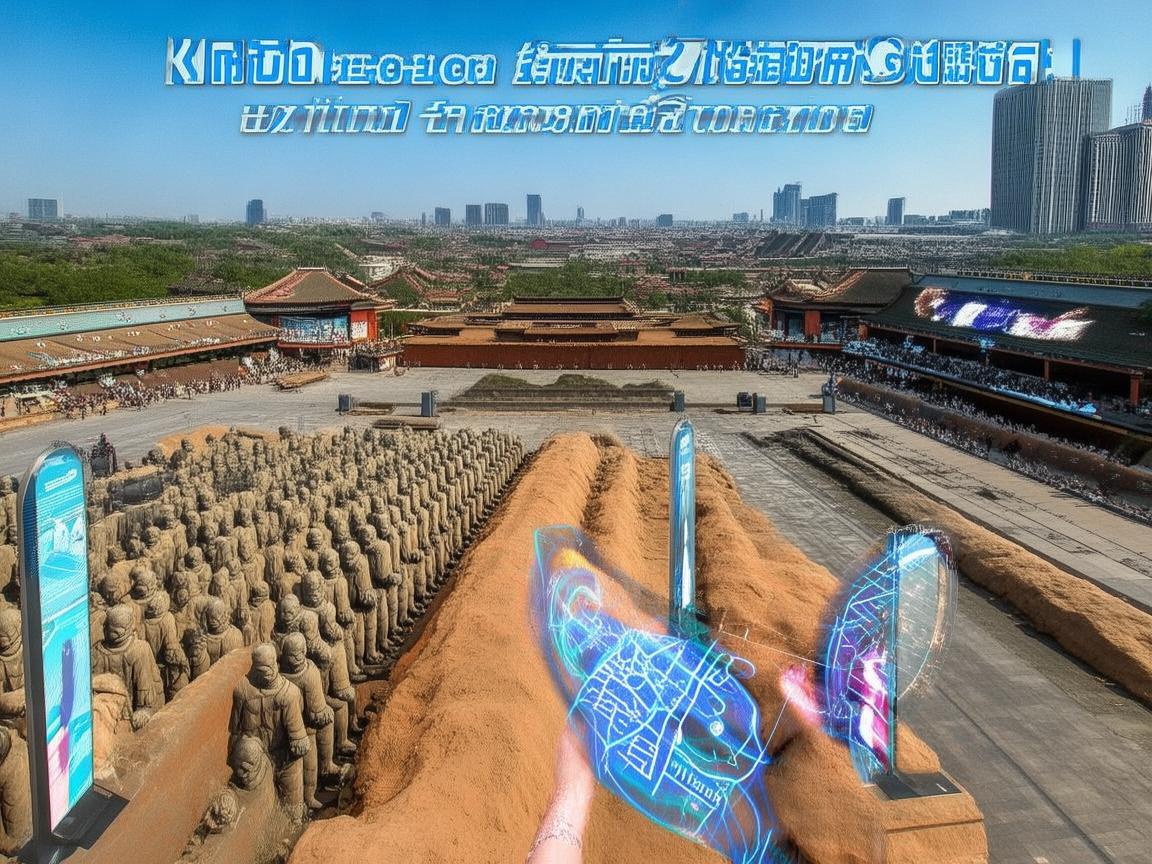
AI Guides > Human Guides: At the Terracotta Army, I rented an AR headset for ¥50. Point it at a warrior, and it “rebuilds” the broken pieces, shows you what colors it was originally painted, and tells stories about Qin Shi Huang’s tomb—all in English. Way more engaging than a guidebook. For the City Wall, I downloaded the “Xi’an City Wall” app, which has an audio guide triggered by GPS. As I walked, it said, “You’re now at the southeast tower—this is where guards watched for invaders during the Ming Dynasty.”
Smart Lockers: Carrying a backpack all day? No thanks. At the Big Wild Goose Pagoda, I stored my bag in a smart locker for ¥5. Scan the QR code, pop your bag in, and get a code. When you come back, scan it again—done. No worrying about theft, no lugging heavy stuff up pagodas.
Eating Like a Local: How Automation Solved My “I Don’t Speak Chinese” Problem
Xi’an’s food is incredible, but I was worried about ordering. Solution: Picture menus and AI translators.
At Muslim Quarter, I walked into a tiny restaurant called “Lamb Burger Shop.” The menu had photos of each dish—yang rou bao (spiced lamb burgers), roujiamo (Chinese burgers), biangbiang mian (wide noodles). I pointed to what looked good, and the cashier scanned it into the Alipay app. Paid in 2 seconds. No words needed.
For fancier meals, I used Google Translate’s camera feature. I’d point my phone at the Chinese menu, and it’d pop up an English translation below. Once, I tried to order “spicy noodles” but accidentally picked “spicy tripe”—the translation app caught it before I ordered! Pro tip: Many restaurants now have WeChat mini-programs for ordering. Just scan the QR code on the table, pick your food, and pay. The kitchen gets the order instantly—no waiters, no mistakes.
Unexpected Perks: Automation Made My Trip Saider and More Reliable
I didn’t expect automation to make me feel safer, but it did. At the Terracotta Army, I got separated from my friend. Instead of panicking, I opened the “Find My Friends” feature on WeChat (it’s like WhatsApp), and we met up in 5 minutes. At night, walking back to my hotel, I used the “SOS” feature on my Alipay app—it shares your location with emergency contacts if you feel unsafe.
Even the weather was automated! I downloaded the “China Weather” app, which sends push notifications if rain is coming. One morning, it said, “Heavy rain expected at 2 PM—bring an umbrella!” I did, and stayed dry while other tourists were scrambling for ponchos.
A Few Tips to Avoid the “Oops” Moments
Automation isn’t perfect—here’s what I learned the hard way:
-
Download Apps Before You Go: Alipay, WeChat Pay, Didi, and Trip.com all need Chinese phone numbers to sign up. Instead, use a foreign-friendly app like “Airwallex” or “Wise” to set up a digital wallet, or ask your hotel to help you register. Many hotels now offer “virtual phone numbers” for tourists.
-
Cash is Still King (Sometimes): Small street vendors or rural attractions might not take mobile payments. Carry a little cash (¥100-200) just in case.
-
Don’t Forget Your Passport: Even with automation, you’ll need your ID for hotel check-ins, some attractions, and train tickets. Keep a photo on your phone too.
-
Ask for Help—Humans Still Exist: If a machine confuses you, just ask a staff member. Younger Chinese people often speak English, and older staff are happy to help—they’re used to tourists!
Final Thoughts: Automation Doesn’t Replace Magic—It Enhances It
Three days in Xi’an, and I never once had to argue with a taxi driver, wait in a ticket line, or point at a menu hoping for the best. Automation handled the logistics, so I could focus on what mattered: staring in awe at the Terracotta Army, eating biangbiang mian until I was full, and watching the sunset from the City Wall.
Xi’an taught me that automation isn’t about replacing human connection—it’s about making travel accessible. Whether you’re a tech newbie or a seasoned traveler, China’s automated tourism scene will make your trip smoother, cheaper, and more fun. So go ahead, book that ticket, download those apps, and get ready to explore. The future of travel is here—and it’s pretty amazing.
Xi’an Airport Transfer Service
Private English-speaking driver service in Xi’an operated directly by Bruce Zhang. 24/7 airport pickup and hotel transfer for foreign travelers.
Helpful for Your Trip in Xi’an
Xi’an Through My Eyes: A Visitor’s Approval Guide to the Must-Do, Must-Eat, and Must-Avoid
2026-09-01Xi’an on Your Terms: How the Smart Access System Made My Trip a Breeze
2026-08-30Xi’an: Where Ancient History Meets a Modern Integrated Tourism Ecosystem
2026-08-29Xi’an: Where Ancient Heritage Breathes with Living Ecosystems
2026-08-27Xi’an on the Metro: A Traveler’s Guide to Getting Around Like a Local
2026-08-27Xi’an Travel Tips: Navigating Ticket Codes Like a Local
2026-08-25What I Only Figured Out After 3 Trips
2026-08-23Is the Forest of Stone Steles Actually Worth Visiting in Xi'an?
2026-08-182026 Travel Season: How to Visit Xi'an in Summer Without the Crowds
2026-08-16Xi’an Travel Diary: How Reservation Confirmations Saved My Trip
2026-08-14