

Exploring Xi’an: A Traveler’s Hands-On Guide to Unforgettable Adventures
Xi’an isn’t just a city—it’s a living history book where every street corner whispers stories of emperors, traders, and warriors. As someone who wandered its lanes for a week, I learned that the best way to “explore” Xi’an isn’t just to tick off landmarks, but to live them: savoring street food at dawn, biking atop ancient walls at sunset, and getting lost in alleys where locals have gathered for centuries. If you’re planning a trip, here’s my no-fluff, practical guide to diving deep into Xi’an’s soul—just like I did.
First Things First: Getting Around & Where to Stay
Xi’an’s transportation is traveler-friendly, but a little prep saves time. I landed at Xi’an Xianyang International Airport and took the Airport Metro Line (14 yuan, 1 hour) directly to Zhongnan Road Station, near the city center. Taxis are cheap (start at 13 yuan), but always insist on using the meter—drivers might quote higher fares to tourists.
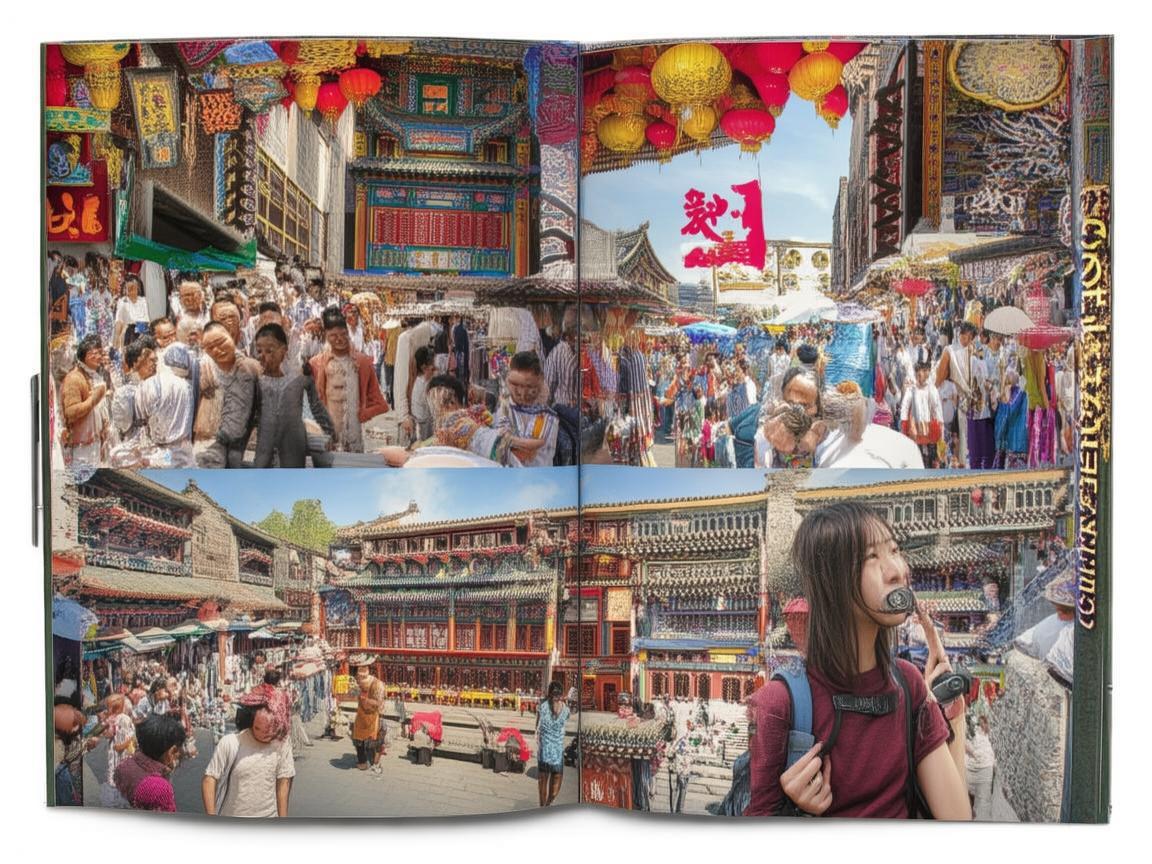
Exploring Xi’an: A Traveler’s Hands-On Guide to Unforgettable Adventures
For accommodation, I stayed near the Bell Tower (Zhonglou). It’s pricey (300-500 yuan/night for a decent hotel), but unbeatable for convenience: you’re a 10-minute walk from the Muslim Quarter, 15 minutes from the South Gate, and surrounded by metro lines (Line 1 and 2). If you’re on a budget, the area around Xiaozhai Station (Line 2) has hostels and affordable hotels, plus it’s near the Big Wild Goose Pagoda.
Pro tip: Download the “Alipay” app and link your bank card—you can use it for metro rides, street food, and even entrance tickets. No need to carry cash!
Day 1: The Muslim Quarter—More Than Just Food
My first morning in Xi’an, I skipped the fancy hotel breakfast and headed straight to the Muslim Quarter (Huimin Jie). Don’t waste time on the main street—it’s packed with overpriced, tourist-trap snacks. Instead, turn into the side alleys: Beiyuanmen and Dapiyuan are where locals eat.
I started with roujiamo (Chinese hamburger) from a stall run by an elderly couple. The bread was crispy, the fatty pork belly was tender, and the spices hit just right—cost 10 yuan. Next, biangbiang noodles: wide, hand-pulled noodles in a spicy, garlicky sauce. I found a tiny shop with only four stools, ordered the “extra spicy” version (15 yuan), and slurped it while watching the chef knead dough like it was art.
By noon, the alleys buzzed with vendors selling hulatang (spicy soup with offal), sugar-coated haws (candied fruit on a stick), and Paomo (bread soaked in lamb soup). I saved the latter for dinner—Lao Mi Da (老米家) near the Drum Tower is famous, but I preferred a no-name place where the owner let me tear the bread myself and poured in rich broth (35 yuan).
After eating, I wandered to the Great Mosque (Qingzhen Si). Unlike most mosques, it has Chinese-style architecture: red gates, pavilions, and a tranquil garden. Entry is 25 yuan, and it’s less crowded in the afternoon. Don’t miss the minaret—climb to the top for a view of the mosque’s green roofs peeking over the Muslim Quarter’s rooftops.
Day 2: Terracotta Warriors—Beat the Crowds & Hire a Local
The Terracotta Army is Xi’an’s crown jewel, but it’s packed with tour groups. I learned the hard way: on my first attempt, I arrived at 9 AM and waited 2 hours just to get in. The second time, I went at 7:30 AM (gates open at 8:30 AM) and was one of the first 50 people in—no lines, and I could actually take clear photos!
The site has three pits plus the Mausoleum of Qin Shi Huang. Pit 1 is the largest (over 6,000 soldiers), but Pit 2 and 3 are more intimate. I spent 2 hours here, but if you’re short on time, focus on Pit 1 and the exhibition hall with the bronze chariots.
Hire a guide! I tried the audio guide first (65 yuan), but it was dry. Then I hired a local student for 150 yuan for 2 hours—she pointed out details I’d missed: the archers’ different hairstyles (indicating rank), the bronze swords coated in chromium (2,000 years ahead of its time), and the fact that each warrior’s face is unique.
Getting there: Take Metro Line 9 to Huaqing Pool Station, then switch to Bus 5 or 306 (direct to the Terracotta Army, 5 yuan). Avoid “unofficial” buses at the station—they’ll overcharge you.
Day 3: City Wall Bike Ride—Sunset & Local Life
Xi’an’s City Wall is one of the best-preserved ancient walls in the world, and biking it is a must. I rented a bike near the South Gate (Yongning Men) for 45 yuan for 100 minutes—enough time to circle the entire 14-kilometer wall.
Start early (8 AM) to avoid the midday heat, but if you want views, go at sunset. I cycled clockwise: the east side has views of the skyline, the south side faces the Bell Tower, and the west side overlooks residential neighborhoods. Halfway, I stopped at a tai chi practice spot where locals invited me to join—my “warrior pose” was wobbly, but they laughed and clapped.
Tip: Rent a tandem bike if you’re with a friend—it’s more fun! And wear sunscreen—there’s little shade.
Day 4: Shaanxi History Museum—Free Tickets & Hidden Gems
The Shaanxi History Museum has over 370,000 artifacts, including the famous horse treading on a flying flying horse of Gansu. But here’s the catch: free tickets are released at 9 AM daily on their WeChat account, and they sell out in minutes. I set an alarm for 8:55 AM and managed to snag two tickets for the next day.
Inside, don’t miss the Tang Dynasty hall—gold cups, ceramic camels, and frescoes from princes’ tombs. My favorite? A tiny, 1,000-year-old “toilet” with a flushing system—proof that ancient Chinese were ahead of their time!
If you can’t get free tickets, book a “special exhibition” ticket (65 yuan) for the Tang Dynasty Gold and Silver exhibit—it’s worth it.
Day 5: Beyond the Tourist Trail—Little Wild Goose Pagoda & Backstreets
Most tourists skip the Little Wild Goose Pagoda (Xiao Yan Ta) because it’s smaller than the Big Wild Goose Pagoda, but it’s my hidden gem. Entry is 25 yuan, and the garden is quiet—you can sit under a 1,300-year-old tree and watch monks chant.
Afterward, I wandered the backstreets near the pagoda, where locals sell jianbing (Chinese crepes) and fresh persimmons. I stumbled upon a shadow puppet workshop—old men carving leather puppets while telling stories from Journey to the West. I bought a small puppet for 50 yuan and learned to make one (they even let me try!).
For dinner, I went to Cui Hua Zhuang (翠花庄), a restaurant serving Qin Opera themed food. The decor is over the top (actors’ costumes on the walls), but the yangrou paomo (lamb bread soup) is the best I had—tender lamb, fluffy bread, and a side of pickled garlic (25 yuan).
Foodie Tips: Eat Like a Local
Xi’an’s food is cheap, flavorful, and everywhere. Here’s my cheat sheet:
- Breakfast: Paomo (bread soup) at Lao Sun Family (老孙家), or doujiang (soy milk) + youtiao (fried dough sticks) from a street cart (5 yuan total).
- Lunch: Biangbiang noodles at Laopaopao Noodles (泡泡面馆)—order the “vinegar spicy” version (12 yuan).
- Dinner: Shuizhuyu (poached fish in chili oil) at De Ji La (德家腊)—ask for “extra numbing” (45 yuan).
- Drinks: Bingfeng (ice-cream soda, a Xi’an staple) at any convenience store, or suanmeitang (sweet and sour soup) at the Muslim Quarter (8 yuan).
Avoid restaurants with English menus and photos of food—they’re overpriced. Look for stalls with long lines of locals—that’s where the best food is!
Final Thoughts: Exploration Is About Getting Lost
Xi’an taught me that the best travel moments aren’t planned—they’re the detours. Like the time I got lost in a residential alley and found an old man making paper-cuts, or the afternoon I sat in a park eating hulatang with a group of retirees who taught me basic Mandarin.
So, skip the “top 10 lists” for a day. Wander without a map, talk to locals, and eat whatever they recommend. That’s how you really “explore” Xi’an—not just as a tourist, but as someone ready to soak in its history, flavors, and heart.
Xi’an isn’t just a destination. It’s an adventure. And trust me—you’ll leave planning your next trip before you even leave.
Xi’an Airport Transfer Service
Private English-speaking driver service in Xi’an operated directly by Bruce Zhang. 24/7 airport pickup and hotel transfer for foreign travelers.
Helpful for Your Trip in Xi’an
Xi’an Through My Eyes: A Visitor’s Approval Guide to the Must-Do, Must-Eat, and Must-Avoid
2026-09-01Xi’an on Your Terms: How the Smart Access System Made My Trip a Breeze
2026-08-30Xi’an: Where Ancient History Meets a Modern Integrated Tourism Ecosystem
2026-08-29Xi’an: Where Ancient Heritage Breathes with Living Ecosystems
2026-08-27Xi’an on the Metro: A Traveler’s Guide to Getting Around Like a Local
2026-08-27Xi’an Travel Tips: Navigating Ticket Codes Like a Local
2026-08-25What I Only Figured Out After 3 Trips
2026-08-23Is the Forest of Stone Steles Actually Worth Visiting in Xi'an?
2026-08-182026 Travel Season: How to Visit Xi'an in Summer Without the Crowds
2026-08-16Xi’an Travel Diary: How Reservation Confirmations Saved My Trip
2026-08-14