

Manual Gates, Memories, and My Must-Do Xi’an Tips
Let me start with this: I’m not a “plan-every-minute” traveler. I like wandering, getting lost, and letting a city surprise me. But Xi’an? Oh, Xi’an taught me that a little prep—especially when it comes to things like manual gates—can turn a stressful moment into a favorite memory. I spent five days there last fall, and by the end, I’d figured out a thing or two about navigating these old-school doors, eating like a local, and avoiding the tourist traps. So, if you’re heading to Xi’an, grab a coffee (or a roujiamo), and let me break it down.
First Things: What’s a “Manual Gate” and Why Should You Care?
Okay, let’s get straight to it. In Xi’an, especially in the old city or near historic sites, you’ll run into manual gates—old wooden or iron doors that you have to push, pull, or slide open yourself. No automatic sensors, no buttons, just… you and the door. At first, I thought, “How hard could it be?” Spoiler: harder than you’d think, especially when you’re lugging a backpack, it’s 90 degrees out, and you’re late for your Terracotta Warriors tour.
I learned this the hard way on Day 1. I stayed in a hutong (alleyway) guesthouse near the Muslim Quarter, tucked behind a wall with a heavy, wooden manual gate. The owner told me, “Just pull hard— it sticks a bit.” Easy, right? Wrong. That evening, I came back tired from walking, tried to pull the door, and it wouldn’t budge. I tugged, I yanked, I even said “please” (though I’m not sure it heard). Finally, a neighbor peeked out, laughed, and showed me: you have to lift the handle slightly while pulling. The old hinge was warped, and just yanking straight down made it jam.
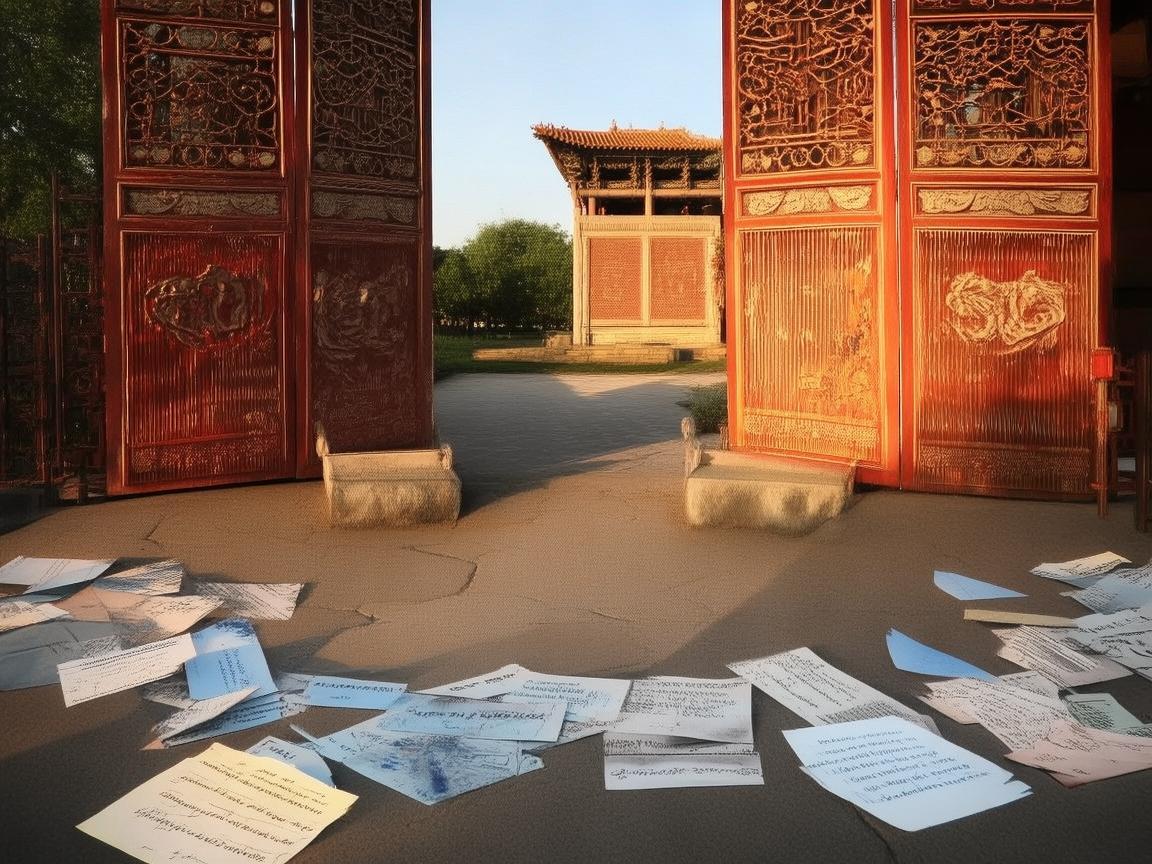
Manual Gates, Memories, and My Must-Do Xi’an Tips
After that, I noticed manual gates everywhere: the side entrance to the Giant Wild Goose Pagoda, a small courtyard museum in the Muslim Quarter, even the gate to my friend’s apartment complex. Some were rusty, some were stuck, some had signs in Chinese that I couldn’t read. But by the end of my trip, I’d turned “manual gate panic” into a game. Here’s what I wish I’d known from the start.
My Top Tips for Navigating Xi’an’s Manual Gates (Seriously, Read This)
Size Up the Door Before You Touch It
Manual gates in Xi’an come in all shapes and sizes. Some are heavy wooden slabs with iron handles, like the one at my guesthouse. Others are sliding metal gates, common in alleyways, or arched stone doors at temples. Before you put your weight into it, take a 2-second look:
- Handles: Is it a pull handle, a push bar, or a knob? My guesthouse had a circular iron handle—you had to twist it lightly while pulling. A museum I visited had a flat push bar; no twisting needed, just a firm shove.
- Direction: Some gates swing inward, some outward. If there’s a crowd, watch how locals go through. I once saw a tourist try to pull a gate that clearly swung inward—she almost took out an elderly woman carrying groceries. Oops.
- Signs: Look for small stickers or painted characters. Even if you don’t read Chinese, symbols like “推” (tuī, push) or “拉” (lā, pull) are universal. I memorized those two real quick.
When in Doubt, Watch a Local
Xi’an locals are used to these gates, and they’ll open them without a second thought. If you’re stuck, just stand back and watch. At the Muslim Quarter’s main entrance, there’s a huge wooden gate that gets crowded during peak hours. I saw a teenager squeeze through, hold it open for others, and then let it close slowly—no slamming, no jamming. I copied him: after that, I made it a habit to give the door a little “nudge” as I went through, so it didn’t slam shut behind me (which, trust me, annoys everyone).
One time, I was at a small temple outside the city, and a manual gate was so stiff I thought I’d break my arm. An elderly monk saw me struggling, smiled, and showed me: instead of pulling straight, you have to angle your body and let the weight of your backpack help. He said, “The gate isn’t your enemy—just listen to it.” Cheesy? Maybe. But it worked.
Carry a “Gate Kit” (It’s Not as Weird as It Sounds)
By Day 3, I’d started carrying three small things in my daypack that made manual gates way easier:
- Light Gloves: My hands are soft, okay? Rusty handles and splintered wood left me with red marks. A thin pair of cotton gloves (I bought them for 10 yuan at a night market) saved me.
- Hand Sanitizer: Manual gates are touched by everyone, and let’s just say some looked… less than clean. A quick spritz after opening kept me from worrying about germs.
- A Small Cloth: For wet or muddy gates. One morning, it had rained, and a sliding gate near my guesthouse was covered in sludge. I used my water bottle to rinse my cloth, wiped the handle, and—voilà—no slipping.
Avoid “Gate Rush Hour”
This is a big one. Manual gates + crowds = stress. At popular spots like the Muslim Quarter or the City Wall, gates get packed during lunch (11:30 AM–1:30 PM) and dinner (5:30–7:30 PM). I learned to adjust my schedule: if I wanted to visit the Muslim Quarter, I’d go at 9 AM—empty gates, fresh bread, and no pushing. Same with the City Wall: I climbed it at 7:30 AM, and the entrance gate was a breeze to open. No lines, no sweaty tourists, just me and the morning sun.
Don’t Be Afraid to Ask for Help
Xi’an locals are some of the friendliest people I’ve met. If a gate is stuck, and you’re stuck, just say, “请问,这个门怎么开?” (Qǐngwèn, zhège mén zěnme kāi? — “Excuse me, how do I open this door?”) Even simple phrases work. I used “谢谢” (xièxiè — thank you) so much, I started saying it in my sleep.
Once, at a baozi (steamed bun) shop, the back gate was stuck. I pointed at it, looked confused, and the owner—a woman with flour on her face—laughed, came out, and showed me how to lift the latch. She even gave me a free baozi for “being so polite.” Win-win.
Beyond Manual Gates: My Honest, No-Fluff Xi’an Tips
Okay, manual gates are cool, but Xi’an has so much more. Here are the things that actually made my trip great—stuff I learned from trial, error, and way too much yangrou Paomo (mutton stew with broken bread).
Where to Stay: Pick the Old City, But Avoid the Main Drag
I stayed in a hutong near the Drum Tower, about a 10-minute walk from the Muslim Quarter. It was quiet, cheap (150 yuan/night for a clean room with AC), and full of local life. My only regret? Not booking a place with a manual gate that actually worked (mine stuck, but I grew to love it). Avoid staying right on Muslim Quarter’s main street— it’s loud, overpriced, and full of tourist-trap restaurants.
Food: Eat Where the Elderly Eat
Xi’an is a foodie paradise, but don’t fall for the places with English menus and photos of food. Instead, look for small, family-run spots with only Chinese menus and a bunch of locals eating there. My favorite? A roujiamo (burger) stand run by an old couple. No sign, just a cart on a side street. I pointed at what the person before me ordered, and—boom—the best burger of my life. Juicy, spicy, and 10 yuan.
Also, try suan tang zi (sweet and Sour Dumplings) in the Muslim Quarter. There’s a tiny shop called “Li’s Family Dumplings”—no English, but the owner’s daughter speaks a little. Just say “suan tang zi,” and she’ll bring you a plate of steaming, tangy dumplings that’ll make you cry (in a good way).
Attractions: Skip the “Big Three” Crowds (Sort Of)
Everyone goes to the Terracotta Warriors, the City Wall, and the Muslim Quarter. And for good reason—they’re amazing. But here’s how to do them without losing your mind:
- Terracotta Warriors: Go right when they open (8:30 AM). I was there by 8:45, and the pits were empty. By 10 AM, they were packed. Pro tip: Hire a guide at the entrance—they’re 200 yuan for a group tour, and they’ll tell you stories you won’t find in guidebooks (like how the warriors’ faces were based on real Qin Dynasty soldiers).
- City Wall: Rent a bike! It’s 150 yuan for 2 hours, and you can cycle the entire 14-km wall. I went at 4 PM—cooler weather, and the sunset over the city is unreal. Bonus: The bike gate is manual, but it’s wide and easy to open (just watch out for the little carts that carry supplies).
- Muslim Quarter: Come hungry, but skip the main street. Turn down the first alley you see—there’s a liangpi (cold skin noodle) stand where the owner slaps the dough right in front of you. It’s 15 yuan, and it’s better than any Michelin-star meal I’ve had.
Transport: Taxis Are Cheap, But Learn “Dītiē”
Xi’an’s subway is clean and easy to use, but if you’re going somewhere late at night, taxis are your best bet. They’re cheap (start at 9 yuan) and honest—most use meters. Just make sure the driver turns it on. If they try to negotiate a price, say “no thanks” and hop out—another taxi will stop in 2 seconds.
One last transport tip: Learn to say “Dītiē” (subway). I once got in a taxi and said “Muslim Quarter,” and the driver took me to the tourist entrance (crowded, overpriced). The next day, I said “Qīngzhēnmén Dìtiē zhàn” (Qingzhenmen subway station), which is a 5-minute walk from the real Muslim Quarter. Way better.
The Big Takeaway: Manual Gates Teach You to Slow Down
By the end of my trip, I started looking forward to manual gates. They forced me to slow down, watch locals, and ask for help. I met a grandma who showed me how to open a rusty gate with a stick, a kid who laughed as I struggled with a sliding door, and a shop owner who gave me free tea for holding a door open. Those moments? Better than any tourist attraction.
Xi’an isn’t just about Terracotta Warriors and roujiamo. It’s about the little things—the squeak of a manual gate, the smell of street food at dawn, the sound of a local saying “欢迎再来” (huānyíng zàilái — “come again”). So, when you go, don’t rush. Take time to open a door the “hard way.” Talk to the person next to you. And trust me—you’ll leave with more than just photos. You’ll leave with stories.
Now go. And when you pull that first sticky manual gate, give it a little smile. You’ve got this.
Xi’an Airport Transfer Service
Private English-speaking driver service in Xi’an operated directly by Bruce Zhang. 24/7 airport pickup and hotel transfer for foreign travelers.
Helpful for Your Trip in Xi’an
Xi’an Through My Eyes: A Visitor’s Approval Guide to the Must-Do, Must-Eat, and Must-Avoid
2026-09-01Xi’an on Your Terms: How the Smart Access System Made My Trip a Breeze
2026-08-30Xi’an: Where Ancient History Meets a Modern Integrated Tourism Ecosystem
2026-08-29Xi’an: Where Ancient Heritage Breathes with Living Ecosystems
2026-08-27Xi’an on the Metro: A Traveler’s Guide to Getting Around Like a Local
2026-08-27Xi’an Travel Tips: Navigating Ticket Codes Like a Local
2026-08-25What I Only Figured Out After 3 Trips
2026-08-23Is the Forest of Stone Steles Actually Worth Visiting in Xi'an?
2026-08-182026 Travel Season: How to Visit Xi'an in Summer Without the Crowds
2026-08-16Xi’an Travel Diary: How Reservation Confirmations Saved My Trip
2026-08-14