

Three Days in Xi’an: A First-Timer’s Honest Visit Experience
If you’re thinking of visiting Xi’an, let me start by saying: this city will steal your heart. I went there as a history nerd who’d only seen pictures of the Terracotta Army, and I left completely obsessed—not just with the ancient relics, but with the way old and new life here collide. I spent three days exploring, got lost a few times, ate way too much carbs, and learned a ton. So if you’re planning your first trip, let me share what actually helped—no fluff, just the stuff that’ll make your smoother, tastier, and more fun.
Day 1: Getting Lost (and Found) in the Ancient Heart
Morning: Arrival & First Impressions
I flew into Xi’an Xianyang International Airport, which is about 45 minutes from the city center. Pro tip: Skip the taxis at the arrivals hall—they’re overpriced. Instead, go to the official taxi stand (look for the blue-and-white signs) or, even better, take the Airport Metro Line (14号线). It’s clean, cheap (around ¥25), and drops you right at North Railway Station, where you can transfer to Line 2 to get to most hotels. I stayed at a hostel near Bell Tower—super central, and I could walk to almost everything in the Old City.
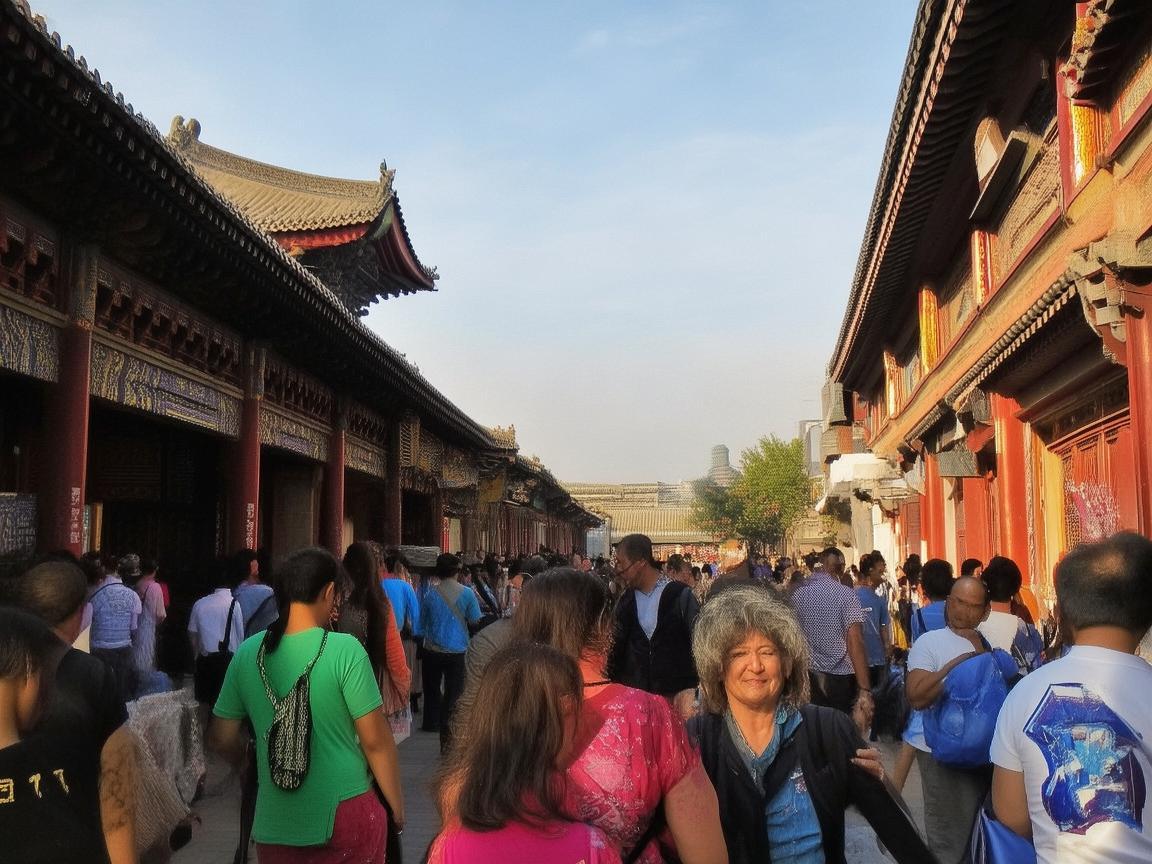
Three Days in Xi’an: A First-Timer’s Honest Visit Experience
After dropping my bags, I headed straight to the Bell Tower (钟楼). It’s right in the middle of a roundabout, and you can’t miss it—this huge, wooden, Ming Dynasty structure with golden roofs. You can go inside (¥35) to climb up and see the view of the city’s crossroads, but honestly, the best part is just sitting in the nearby square and people-watching. Locals dance, kids fly kites, and tourists snap photos—there’s so much energy.
Lunch: The “Real” Muslim Quarter
Everyone talks about the Muslim Quarter (回民街), but here’s a secret: the main street (Beiyuanmen) is super touristy and overpriced. Walk behind it, into the side alleys like Huajue Xiang (化觉巷). That’s where the locals eat. I found a tiny stall run by an old grandma selling roujiamo (肉夹馍)—“Chinese hamburgers,” but way better. The bread is crispy, the braised pork is tender, and it costs ¥8. I also tried biangbiang noodles (biangbiang面)—wide, chewy noodles with chili oil, garlic, and veggies. So good, and only ¥12 a bowl.
Afternoon: Walking the City Walls
Next up: the Xi’an City Wall (西安城墙). It’s one of the oldest and best-preserved city walls in China, dating back to the Ming Dynasty. You can walk, bike, or even take an electric cart around it (¥45 for a bike, ¥80 for the cart). I chose to bike—it’s 14 km around, so give yourself 2-3 hours. The best part? Riding on top of the wall, watching the city sprawl out below. You’ll see locals playing chess, kids riding bikes, and even couples taking wedding photos (super common!). Tip: Go in the late afternoon—less crowded, and the sunset over the wall is breathtaking.
Evening: Drum Tower & Night Markets
As the sun went down, I walked to the Drum Tower (鼓楼), just a few minutes from the Bell Tower. It’s less crowded than the Bell Tower, and at night, they have a traditional drum performance (¥30, check the schedule). After that, I headed back to the Muslim Quarter—but this time, for the night market. The stalls are lit up with lanterns, and the air smells of grilled lamb skewers (chuar) and sweet tanghulu (candied hawthorns). I tried yangrou Paomo (羊肉泡馍)—a soup with bread you tear into pieces yourself. It’s a Xi’an classic, and it’s filling enough for dinner (¥25).
Day 2: Terracotta Warriors & “Wow” Moments
Morning: The Terracotta Army (Yes, It’s Worth It)
No trip to Xi’an is complete without the Terracotta Army (兵马俑). It’s about 40 km east of the city, so I took Metro Line 9 to “Huaqing Palace Station” (华清宫站), then switched to Bus 601 (¥7) directly to the museum entrance. Pro tip: Buy your tickets online in advance (¥120 for the main pit + Emperor Qin’s Mausoleum site) to avoid the huge lines.
When you walk into Pit 1, the first thing you’ll think is: “Wow.” It’s massive—over 2,000 life-sized terracotta soldiers, each with unique faces, hairstyles, and armor. They’ve been standing there for over 2,000 years, and it’s hard to wrap your head around. I hired a local guide (¥150 for a small group) because otherwise, you’ll just see “dirt and statues”—she explained the history of Emperor Qin, how the army was built, and even pointed out details like the archers’ crossbows. Don’t skip Pit 2 (the cavalry and archers) or Pit 3 (the command center)—they’re smaller but just as impressive.
Lunch: Near the Terracotta Army
After the museum, I was starving. There are a few restaurants near the entrance, but I walked 10 minutes to a place called “Terra Cotta Warriors Restaurant” (yes, cheesy name, but good food). I had qingzhen yangrou paomo (halal lamb soup with bread)—same as the night before, but the lamb here is even more tender (¥30).
Afternoon: Huaqing Palace (Optional, but Pretty)
If you have time, visit Huaqing Palace (华清宫), right next to the Terracotta Army. It’s a hot springs palace where Emperor Tang Xuanzong and his consort Yang Guifei used to hang out. The gardens are beautiful, and you can even soak in the hot springs (if you’re into that). It’s ¥30 to enter, and it’s a nice break from the crowds at the Terracotta Army.
Evening: Back to the City, Hot Pot!
I took the bus back to the city and met a friend for dinner. Xi’an is famous for hot pot (火锅), and we went to a place called “Laomao Jirou” (老毛肉夹馍)—not just for roujiamo, but for their spicy hot pot. You choose your broth (I picked “mala,” or numbing-spicy), then pick your meats (lamb, beef), veggies, and even noodles. The best part? dipping the fresh-baked bing (flatbread) into the soup. It’s messy, delicious, and the perfect way to end a long day.
Day 3: Hidden Gems & Last Bites
Morning: Shaanxi History Museum (Book Ahead!)
If you love history, the Shaanxi History Museum (陕西历史博物馆) is a must. It has over 370,000 artifacts, including Tang Dynasty pottery, gold jewelry, and even the famous “Flying Apsaras” from the Dunhuang caves. But here’s the catch: you must book tickets online 3-7 days in advance (it’s free, but you pay ¥30 for a guided tour). I went at 9 AM when it opened, and it wasn’t too crowded. My favorite part? The Tang Dynasty murals—they’re so detailed, you can see the clothes, hair, and even the expressions on people’s faces.
Lunch: Little Wild Goose Pagoda & “Biang Biang” Noodles
After the museum, I walked to the Little Wild Goose Pagoda (小雁塔), a 7-story pagoda built in the Tang Dynasty. It’s smaller than the Big Wild Goose Pagoda, but the park around it is peaceful—locals practice tai chi, play chess, and walk their dogs. For lunch, I went to “Biang Biang Noodle House” (biangbiang面馆) near the pagoda. I ordered the “super spicy biangbiang” (¥15), and it was so spicy—my nose was running, but I couldn’t stop eating. The chef even came out to ask if I wanted it less spicy (I said no, bring it on!).
Afternoon: Art Districts & Souvenirs
In the afternoon, I explored the Tang West Market (大唐西市), a modern reconstruction of an ancient Silk Road market. It’s more upscale than the Muslim Quarter, but great for souvenirs: I bought a small terracotta warrior replica (¥50, bargain hard!), silk scarves, and some local tea. If you’re into art, check out the Qujiang Art District (曲江艺术区)—it’s full of galleries, cafes, and street art. I sat at a rooftop cafe, drank jasmine tea, and watched the sunset over the city.
Evening: Last Dinner & Reflections
For my last dinner, I went back to the Muslim Quarter—but this time, to a place called “Zangmi Roujiamo” (藏肉夹馍) for roujiamo (¥8) and liangpi (凉皮, cold noodles with chili oil and cucumber, ¥10). Simple, but perfect. As I sat there, eating my last roujiamo and watching the lanterns glow, I thought about how much I’d seen in three days: ancient walls, thousands of terracotta soldiers, spicy noodles, and so many kind people. Xi’an isn’t just a “historical city”—it’s a city where you can feel the past in every bite, every street, every smile.
Final Tips for Your Visit
- Transport: Xi’an’s metro is clean, cheap, and covers most tourist spots. Get a “Yikatong” card (一卡通) at any station—you can tap it on buses and metros.
- Food: Don’t just eat in the main tourist areas! Wander into side alleys for local spots. And yes, you’ll eat a lot of carbs—it’s worth it.
- Timing: Spring (April-May) and autumn (September-October) are best—summer is hot (40°C/104°F), and winter is cold (but fewer crowds).
- Respect: When visiting the Terracotta Army or museums, don’t touch the artifacts (duh!). And if you see locals doing tai chi or playing chess, feel free to watch—just ask before taking photos.
Xi’an changed the way I think about travel. It’s not just about seeing “sights”—it’s about feeling the history, tasting the food, and talking to the people. So go with an empty stomach, comfortable shoes, and an open mind. You won’t regret it.
Xi’an Airport Transfer Service
Private English-speaking driver service in Xi’an operated directly by Bruce Zhang. 24/7 airport pickup and hotel transfer for foreign travelers.
Helpful for Your Trip in Xi’an
Xi’an Through My Eyes: A Visitor’s Approval Guide to the Must-Do, Must-Eat, and Must-Avoid
2026-09-01Xi’an on Your Terms: How the Smart Access System Made My Trip a Breeze
2026-08-30Xi’an: Where Ancient History Meets a Modern Integrated Tourism Ecosystem
2026-08-29Xi’an: Where Ancient Heritage Breathes with Living Ecosystems
2026-08-27Xi’an on the Metro: A Traveler’s Guide to Getting Around Like a Local
2026-08-27Xi’an Travel Tips: Navigating Ticket Codes Like a Local
2026-08-25What I Only Figured Out After 3 Trips
2026-08-23Is the Forest of Stone Steles Actually Worth Visiting in Xi'an?
2026-08-182026 Travel Season: How to Visit Xi'an in Summer Without the Crowds
2026-08-16Xi’an Travel Diary: How Reservation Confirmations Saved My Trip
2026-08-14