

Cash in China: A Xi’an Tourist’s Honest Guide to Spending (and When to Skip It!)
Landing in Xi’an, I was buzzing with excitement—ancient city walls, terracotta warriors, steaming roujiamo (meat burgers)… but also, a tiny knot of anxiety: Can I use cash in China? I’d heard stories about a cashless society, but as someone who still carries physical money out of habit (and paranoia), I wasn’t sure. After a week of wandering through alleyways, bargaining at markets, and figuring out the ropes, I’ve got the real talk for you: Cash does work here, but it’s not always the easiest. Here’s what I learned—no fluff, just practical tips to save you stress (and maybe a few awkward moments).
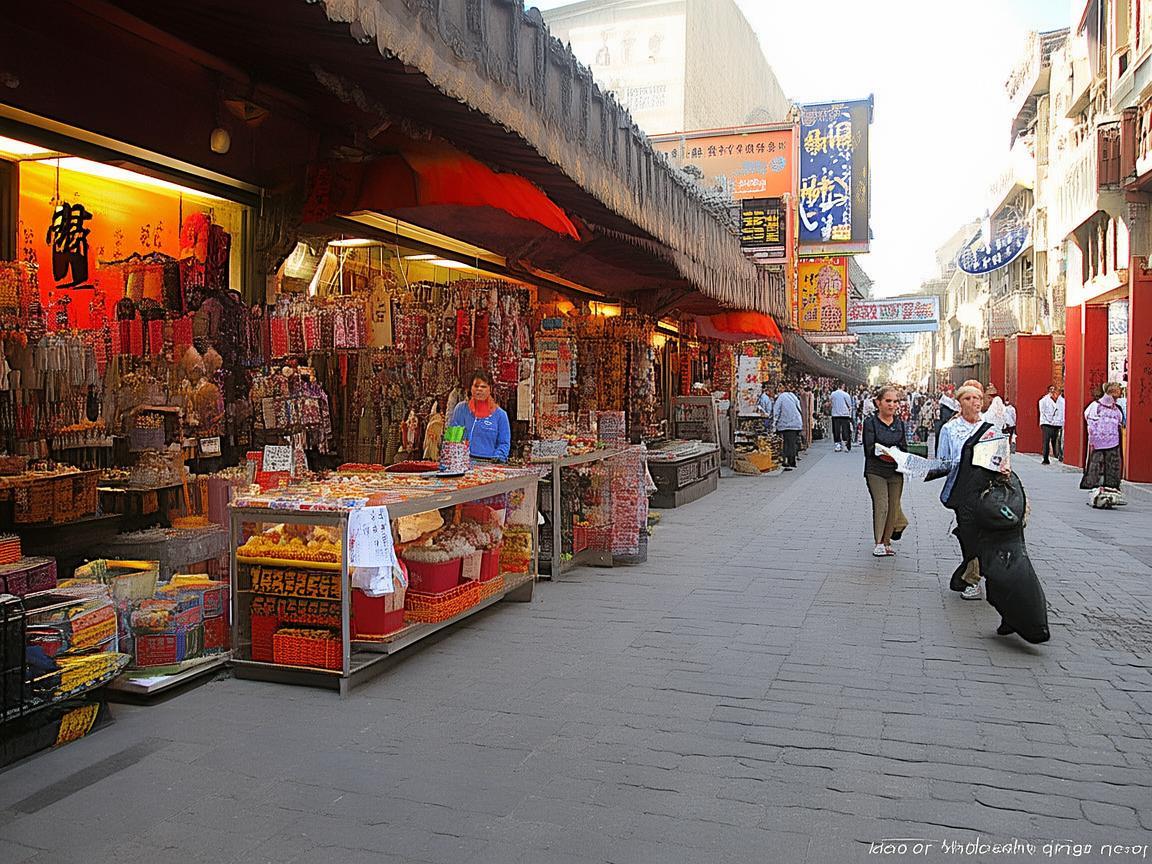
Cash in China: A Xi’an Tourist’s Honest Guide to Spending (and When to Skip It!)
First Things First: Yes, Cash Works. But Here’s the Catch.
When I touched down at Xi’an Xianyang International Airport, the first thing I did was hit the Bank of China counter to exchange some USD for RMB (Chinese yuan). I’d read online that exchanging currency at airports is “bad value,” but honestly? It was convenient, and the rate wasn’t that worse than downtown banks. I got about 6.8 RMB per USD (rates fluctuate, so check before you go), and walked away with 500 RMB in small bills (10s, 20s, 50s)—a smart move, as I’d soon learn.
But here’s the catch: Not everyone takes cash. Especially in places catering to tourists or run by younger folks, mobile payments (Alipay or WeChat pay) are king. I learned this the hard way my first morning, trying to buy a baozi (steamed bun) from a street vendor near the Muslim Quarter. I handed her a 20 RMB bill, and she just stared at me, then pointed to a QR code on her stall. “WeChat,” she said, shaking her head. I mumbled “Sorry, no Chinese account,” and she shrugged—luckily, a kind tourist behind me paid me back in cash. Lesson learned: Cash is great for small, local spots, but always have a backup plan.
When Cash Is Your Best Friend (Seriously, Don’t Skip It)
While mobile payments are everywhere, there are definitely times cash will save your bacon:
Tiny, Family-Run Stalls (Especially Older Vendors)
The Muslim Quarter is a food paradise, but half the stalls there are run by grandparents who’ve never touched a smartphone. I found this out when I craved a yangrou Paomo (milk bread soup with lamb). The stall was a tiny hole-in-the-wall with just a wok and a couple of stools. The auntie behind it barely spoke Mandarin, let alone English, and when I pulled out my phone to try Alipay, she just waved her hand. “Cash,” she said, tapping a worn wooden box. I had a 10 RMB bill (about $1.50) ready, and she beamed, plopping a huge bowl of soup in front of me. Score.
Pro tip: Carry small bills (10s, 20s, 50s). Vendors rarely have change for big 100 RMB notes, and you don’t want to hold up a line while they scramble for coins.
Rural Areas and “Off the Beaten Path” Sites
Xi’an’s amazing not just for the city center—day trips to places like the Terracotta Army or Huashan Mountain are a must. But even there, cash comes in handy. At the Terracotta Army, the official ticket office takes cards and cash, but when I wanted to hire a local guide (a guy named Lao Wang who spoke great English and told hilarious stories about the soldiers), he only accepted cash. “WeChat is slow sometimes,” he explained, “and banks take a cut.” I paid him 200 RMB (about $30) for a 2-hour tour, and it was worth every penny.
Same with Huashan Mountain: The cable car takes cards, but the little tea stalls halfway up? Cash only. I had a 5 RMB bill (less than a dollar) for a cup of hot jasmine tea while I soaked in the views—bliss.
Taxis (Some Old-School Drivers Still Prefer Cash)
Xi’an’s taxis are cheap and reliable, but about half the drivers I met didn’t take cards. My first taxi ride from the airport to my hotel? The driver shook his head when I offered my credit card. “Cash only,” he said, pointing to a sign on the dashboard. Luckily, I had exchanged money at the airport, so I handed him 80 RMB (about $12) for a 45-minute ride—way cheaper than a ride-share!
Pro tip: Always have small cash for taxis. If you pay with a big bill, they might “forget” to give you change (oops).
When Mobile Payments Are King (And How to Set Them Up)
Okay, so cash is useful, but let’s be real: 90% of the time, you’ll want to use Alipay or WeChat Pay. They’re faster, safer (no need to carry wads of cash), and accepted almost everywhere—convenience stores, restaurants, malls, even street markets.
But here’s the thing: As a foreigner, you can’t just link a foreign bank account to these apps easily (I tried for an hour and failed). So how do you use them? Two ways:
Use Alipay’s “Tour Pass” (Super Easy!)
Before I left home, I downloaded Alipay and found the “Tour Pass” feature. It lets you link a foreign credit/debit card (Visa, Mastercard, etc.) to a “virtual wallet” in Alipay. You top it up with cash—say, $100 USD—and it converts to RMB at the current rate. Then, just like a regular mobile wallet, you can scan QR codes to pay. I used this for everything: buying bubble tea at a mall, paying for a bike rental to ride around the city walls, even buying souvenirs at a night market. It was seamless—no more fumbling with cash!
WeChat Pay “Friend Transfer” (If You Have a Chinese Friend)
I met a traveler from Canada who was staying in my hostel, and she had a Chinese friend who helped her set up WeChat Pay. Her friend sent her 200 RMB via “Friend Transfer” (a free, instant way to send money within WeChat), and then she could use that balance to pay. It worked for her, but I didn’t have a Chinese contact, so Alipay Tour Pass was my go-to.
Pro tip: If you use mobile payments, always set a password or enable fingerprint/face ID. I saw a sign at a convenience store warning about phone theft—better safe than sorry!
The Golden Rules: Cash vs. Mobile Payments in Xi’an
After a week of trial and error, I’ve boiled it down to these simple rules:
- Carry 300-500 RMB in cash at all times (small bills!). Use it for street food, small vendors, taxis, and rural areas.
- Use mobile payments for everything else: Restaurants, malls, big tourist sites, and hotels. They’re faster and more convenient.
- Exchange money at the airport or a big bank (like Bank of China or ICBC). Avoid “private exchange shops”—they often have bad rates or try to scam you.
- Download Alipay before you go—it’s way easier to set up Tour Pass at home than when you’re jet-lagged.
- If you’re lost, ask a young person for help. College students and young professionals almost always speak English and can help you with QR codes or mobile payments.
Final Thoughts: Cash Isn’t Dead in China—It’s Just a Team Player
By the end of my trip, I felt like a pro. I’d start my day with 200 RMB in my wallet, then use Alipay for bigger purchases. The key was balance—not relying on just one method. Xi’an is a city of contrasts: ancient walls next to skyscrapers, cash-only stalls next to high-tech malls. And that’s what makes it so special.
So, can you use cash in China? Absolutely. But don’t forget your phone—because in this city, the future of payments is happening right now. Happy travels (and don’t skip the roujiamo—you won’t regret it!)
Xi’an Airport Transfer Service
Private English-speaking driver service in Xi’an operated directly by Bruce Zhang. 24/7 airport pickup and hotel transfer for foreign travelers.
Helpful for Your Trip in Xi’an
Xi’an Night Markets: A Tourist’s Guide to Navigating QR Code Payments Like a Local
2026-09-08Renting a Car in Xi’an as a Foreigner: A Practical Guide to Payments and More
2026-09-0612-Hour Xi’an Layover: A Foreigner’s Guide to Payments & Must-See Spots
2026-09-03Xi’an Travel Tips for Foreigners: Navigating Payments & Hotel Drop-offs Like a Pro
2026-09-02Your QR Payment Survival Guide for Xi’an: How to Pay Like a Local
2026-09-01Xi’an Travel Tips: Why Cash Still Matters (and Where to Use It!)
2026-08-26Macau Payment Guide for Foreign Travelers: From Cash to Apps
2026-08-19Xi’an Travel: A Tourist’s Guide to Scenic Area Payments & Tips
2026-08-13Navigating Payments in Xi’an Without a Data Plan: A Tourist’s Practical Guide
2026-08-11Smart Savings in Xi’an: A Traveler’s Guide to Education-Friendly Payment Systems
2026-08-10