

From Xi’an to Huangshan: A Foreigner’s Guide to Navigating Payments in China
I’ll never forget my first week in China. I landed in Xi’an, eager to explore the Terracotta Army and Muslim Quarter, but almost immediately hit a snag: How do I pay for things? Back home, I’d just swipe a card or tap my phone, but here? Cash felt bulky, and my credit cards were often rejected. By the time I boarded the high-speed train to Huangshan, I’d learned a few hard lessons—but I still had a lot to figure out. If you’re a foreign traveler heading to Xi’an and beyond, especially Huangshan, let me save you the headache. Here’s what you actually need to know about payments in China, straight from someone who’s been there.
First Stop: Xi’an—A Warm-Up for China’s Cashless World
Xi’an, as a major tourist city, is relatively foreigner-friendly when it comes to payments. Most hotels, big restaurants, and attractions (like the Terracotta Army or City Wall) accept credit cards—Visa and Mastercard work, but Amex is less common. However, don’t rely on that alone. My first night, I tried to pay for dinner at a popular noodle spot with my card; the waiter just smiled and shook his head. Cash only.
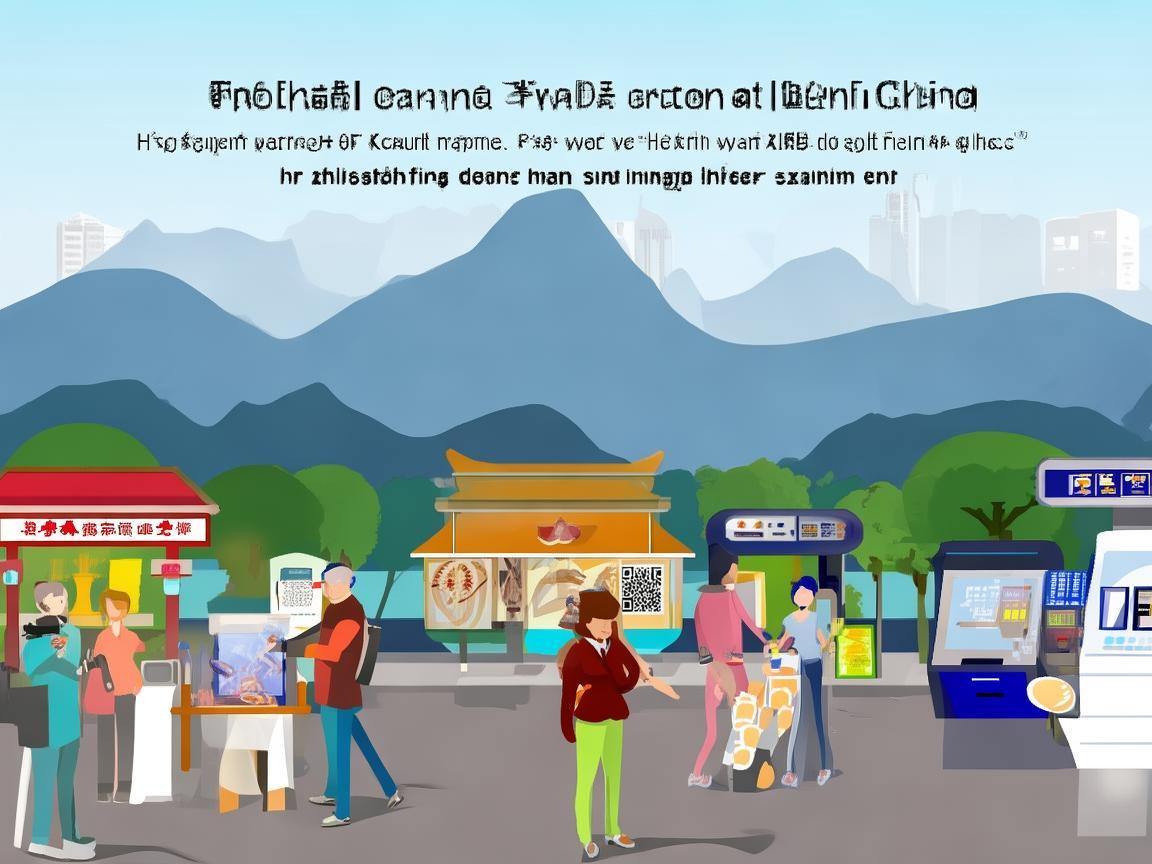
From Xi’an to Huangshan: A Foreigner’s Guide to Navigating Payments in China
Thankfully, ATMs are easy to find—especially around the Bell Tower, Muslim Quarter, or near major hotels. You can withdraw RMB (Chinese yuan) using your foreign debit card. Pro tip: Banks like ICBC or China Construction Bank have ATMs with English interfaces, and they often accept international cards. Just note: Your bank might charge foreign transaction fees, so withdraw larger amounts (e.g., ¥500–¥1000) to minimize costs.
But the real game-changer in Xi’an? Mobile payments. I resisted at first—“Do I really need another app?”—but by day three, I was hooked. Alipay and WeChat Pay are everywhere. Even street vendors selling steamed buns or taxi drivers use them. Here’s how to set them up as a foreigner:
- Alipay: Download the app, link it to your international credit/debit card (Visa/Mastercard), and verify your identity. You’ll need a passport and sometimes a phone number (you can use a virtual number from apps like TextNow if you don’t have a Chinese SIM). Once set up, just scan QR codes to pay—no cash, no card.
- WeChat Pay: Similar to Alipay, but integrated into WeChat (China’s “super app”). You can link your card via the “Wallet” tab. Bonus: WeChat has a built-in translation feature, so if you need to ask a vendor if they accept mobile payments, just type it in English and translate to Chinese.
Xi’an taught me two key lessons: 1) Always carry some cash (small bills like ¥10, ¥20, and ¥50 are handy for small purchases), and 2) Mobile payments are your best friend once you get the hang of them.
On to Huangshan: Mountain Adventures and Payment Realities
After three days in Xi’an, I hopped a high-speed train to Huangshan City (the gateway to Huangshan Mountain). The train ride was smooth—booked via the 12306 app (which has English) and paid for with Alipay. Easy. But Huangshan itself? A whole different ballgame.
Huangshan Mountain is a natural wonder—think jagged peaks, pine trees clinging to cliffs, and sea clouds that roll through the valleys. But it’s also remote. While the base town (Tunxi) has modern amenities, the mountain trails and summit lodges are where payment gets tricky. Here’s what I learned:
Tickets: Book Online (If Possible)
Huangshan’s entrance tickets cost ¥190 (peak season) or ¥150 (off season). You can buy them at the gate, but I’d recommend booking online via the official Huangshan Tourism website or a trusted platform like Trip.com. Why? For one, it saves time (queues can be long). Two, some online platforms accept international cards, whereas the on-site ticket office might only take Chinese bank cards or cash.
I used Trip.com: Selected my date, entered my passport details, and paid with my Visa. Smooth. The e-ticket was sent to my email, which I showed at the gate (they scan a QR code). No hassle.
Accommodation: Cash is King on the Summit
Huangshan has two main areas to stay: the base (Tunxi) and the mountain summit. I chose to stay on the summit to catch sunrise—stunning, but payment-wise, a challenge.
- Tunxi Hotels: Most mid-range to high-end hotels (like The Holiday Inn Huangshan Tunxi) accept credit cards and even Alipay/WeChat. I stayed at a boutique hotel in Tunxi’s old town—paid with Alipay, no problem.
- Mountain Lodges: This is where cash becomes essential. There are a few guesthouses on the summit (e.g., Beihai Hotel, Xihai Hotel), and they’re basic but functional. I called ahead to book a room and asked, “Do you accept credit cards?” The front desk’s reply? “Cash only.”
No exaggeration: I withdrew ¥1,000 in cash before taking the cable car up the mountain. Why so much? Food, drinks, and souvenirs on the summit are pricey (a bottle of water costs ¥10, a bowl of noodles ¥30), and no one takes cards. The lodges also require a cash deposit for incidentals (e.g., if you break a glass).
Pro tip: Bring small bills. The lodges might not have change for large notes (¥100 or ¥500). I had a ¥50 bill and got stuck paying for a ¥10 snack with it—they had to scramble for coins.
Food and Drinks: Mobile Payments (Mostly) Work—Until They Don’t
Tunxi’s food scene is amazing: try huiguo rou (braised pork), unban xiaolongbao (soup dumplings), and tanghulu (candied hawthorns). Most restaurants in Tunxi’s old town or pedestrian streets accept Alipay/WeChat. I ate at a tiny dumpling place with no English menu—just pointed at what other people were eating and paid with Alipay. Worked like a charm.
On the mountain? Not so much. The summit has a few canteens and snack bars, but most only take cash. I saw a foreign traveler try to pay for a hot chocolate with his card—the vendor just laughed and shook his head. Keep a stash of cash for this.
Also: Tipping isn’t customary in China. Don’t feel obligated to leave extra—your bill is what you pay.
Getting Around: Taxis, Buses, and Cable Cars
- Tunxi to Huangshan Gate: The easiest way is by taxi (¥50–¥70) or bus (¥19, takes ~1 hour). Taxis in Tunxi usually take cash, but some accept Alipay if you ask. Buses are cash only—have exact change ready.
- Cable Cars: Huangshan has two cable cars: one from the front gate (Taiping Cableway) and one from the back gate (Yungu Cableway). A round-trip ticket costs ¥230 (Taiping) or ¥190 (Yungu). You can buy tickets at the gate with cash or a Chinese bank card. I paid with cash—no issues.
- On the Mountain: Once you’re up, you’ll walk (or take the shuttle bus between scenic spots). The shuttle is free, so no payment needed.
Emergencies: What If You Run Out of Cash?
I was paranoid about this, so I did some research beforehand. Here’s what you need to know:
- ATMs on the Mountain: There are zero ATMs on Huangshan’s summit. The last one is at the base (near the ticket gate). So if you’re staying overnight, withdraw all the cash you need before taking the cable car up.
- Banks in Tunxi: Plenty of banks (ICBC, ABC, etc.) with ATMs that accept international cards. Tunxi’s old town has several—just look for the “UnionPay” or “Visa/Mastercard” signs.
- Asking for Help: If you’re really stuck, most hotels or guesthouses can help you find an ATM or even lend a small amount (but don’t rely on this—come prepared).
My Top Payment Tips for Foreign Travelers in China (Especially Huangshan)
After Xi’an and Huangshan, I’ve narrowed down my go-to strategies. Here’s what works:
-
Download Alipay and WeChat Pay Before You Leave Home. Trust me, trying to set them up with a slow VPN in a crowded train station is stressful. Link your international card early, and test it with a small purchase (like a coffee) to make sure it works.
-
Carry Cash—But Not Too Much. Small bills (¥10, ¥20, ¥50) are your best friend. Use cash for mountain lodges, street food, and small vendors. For bigger expenses (hotels, train tickets), use mobile payments or credit cards.
-
Tell Your Bank You’re Traveling. Nothing worse than having your card frozen because “unusual activity” in China. Call your bank before you go and let them know the dates and locations.
-
Have a Backup Card. Bring two different credit/debit cards (e.g., Visa and Mastercard) in case one gets lost or declined.
-
Learn a Few Basic Phrases. “Nǐ shōu xiànfà ma?” (Do you take cash?) and “Wǒ yǒu Alipay” (I have Alipay) go a long way. Google Translate’s voice feature works wonders too.
Final Thoughts: Don’t Let Payments Ruin Your Adventure
Huangshan is breathtaking—waking up to see the sun rise over the sea of clouds, hiking through “Guest-Greeting Pine” trail, and taking in the panoramic views from the summit. It’s worth every step, and every payment hassle.
By the time I left Huangshan, I felt like a pro. I’d paid for a ¥5 bottle of water with cash, bought a ¥200 souvenir with Alipay, and even negotiated a taxi fare in broken Chinese. It’s all part of the adventure.
So if you’re heading from Xi’an to Huangshan, relax. Come prepared, stay flexible, and focus on the views—not the payments. China’s payment system can be tricky, but with a little planning, you’ll be fine. Now go—those pine trees aren’t going to admire themselves!
Xi’an Airport Transfer Service
Private English-speaking driver service in Xi’an operated directly by Bruce Zhang. 24/7 airport pickup and hotel transfer for foreign travelers.
Helpful for Your Trip in Xi’an
Xi’an E-Wallet: How This Little App Made My Trip a Breeze
2026-07-29Xi’an Traveler’s Survival Guide: How to Master China’s Mobile Wallets (WeChat Pay & Alipay)
2026-07-28Xi’an Travel: Your Practical ID Guide to Navigate China’s Real-World Rules
2026-07-28Xi’an Long Stay: How to Handle Payments Like a Local
2026-07-28Paying at Xi’an Clubs: A Foreigner’s No-Fluff Guide
2026-07-28Navigating Xi’an’s Metro: A Foreigner’s Practical Payment Guide
2026-07-27Navigating Xi’an: A Tourist’s Guide to Mastering Mobile Payments in China
2026-07-27Navigating Xi’an Like a Local: My Digital Pay Survival Guide
2026-07-26Xi’an Travel Tips: Cash vs. QR Codes for Entrance Tickets——A Tourist’s Practical Guide
2026-07-25Alipay for Foreign Travelers in Xi’an: A Practical Setup Guide
2026-07-25