

Xi’an Night Markets: Eat, Shop, and Pay Like a Local – A Traveler’s No-Nonsense Guide
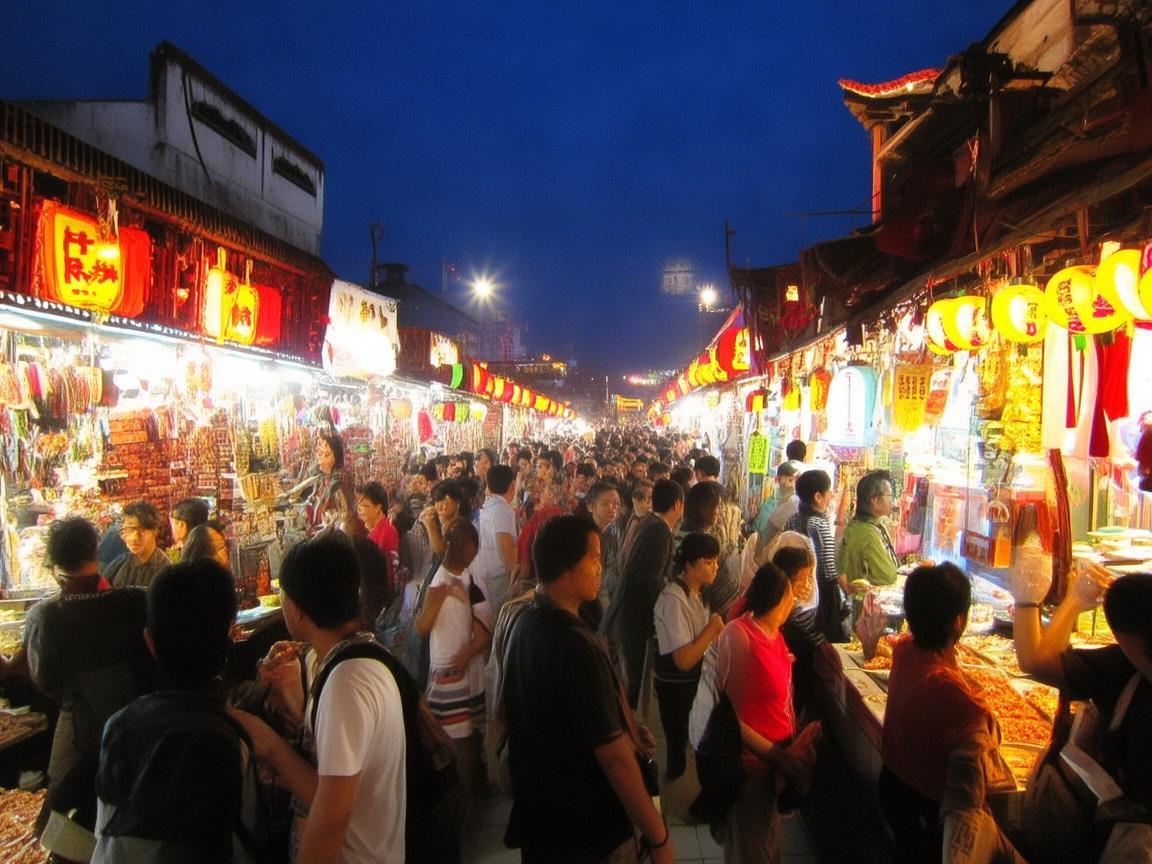
Let me tell you, Xi’an’s night markets are the reason I fell in love with this city. There’s something magical about wandering lanes lit by red lanterns, the sizzle of grilling skewers filling the air, and vendors shouting “来来来,尝一尝!” (Come on, have a taste!) in thick Shaanxi accents. But as a first-time visitor, I’ll admit: I was so confused about paying at first. One minute I was trying to hand over a 100-yuan bill for a 10-yuan snack, the next I was staring at a QR code like it was hieroglyphics. After a week of trial (and a little error), I’ve cracked the code. Here’s your no-fluff guide to navigating Xi’an’s night markets—especially when it’s time to pay.
First Stop: Which Night Markets to Actually Visit
Xi’an has dozens of night markets, but not all are worth your time (some are just tourist traps with overpriced junk). Stick to these for the real deal:
- Muslim Quarter (回民街, Huí Mín Jiē): The most famous, but don’t just hit the main street! Turn into the side alleys (like Huimin West Street, 回民西街) where locals eat. It’s chaotic, crowded, and incredible—think hand-pulled noodles, lamb skewers, and candied hawthorns.
- Yongxingfang (永兴坊): A bit more organized, this “Snack Street” focuses on Shaanxi’s “non-heritage” foods (yes, there’s a difference!). Come for biangbiang noodles, roujiamo, and mianpi (cold skin noodles). Pro tip: Arrive by 6 PM to avoid the post-dinner rush.
- Xiaonanmen Night Market (小南门夜市): My personal favorite! It’s smaller, more local, and feels like a hidden gem. Vendors here are older folks who’ve been cooking for decades—their Paomo (bread soaked in lamb soup) is life-changing.
What to Eat (and How Much to Budget)
Before we talk money, let’s talk food. You can’t leave Xi’an without trying these:
Xi’an Night Markets: Eat, Shop, and Pay Like a Local – A Traveler’s No-Nonsense Guide
- Roujiao (肉夹馍, “Chinese hamburger”): Crispy baked bun stuffed with slow-cooked pork/beef. ¥8-15 per piece. Don’t pay more than ¥15!
- Biangbiang Noodles (biangbiang面): Wide, chewy noodles in a spicy, garlicky sauce with veggies. ¥12-18 per bowl.
- Liangpi (凉皮, “cold skin noodles”): Silky, chewy noodles in a sour, spicy sesame sauce. ¥10-15.
- Yangrou Paomo (羊肉泡馍, “lamb bread soup”): Tear bread into a bowl, then ladle hot lamb broth over it. Eat it for breakfast or dinner—some stalls sell it at night too! ¥15-25.
- Tanghulu (糖葫芦, “candied hawthorns”): Skewers of hawthorns coated in hard sugar. ¥5-10 per stick.
Budget tip: For a filling night market crawl, budget ¥50-100 per person. You can eat way cheaper if you skip the “tourist trap” stalls on main streets.
Paying Like a Local: The Lowdown on Cash vs. Mobile Payment
This is the part that stressed me out most. Let’s break it down simply:
Cash: Still King (Sometimes)
Yes, some vendors—especially older ones in smaller markets like Xiaonanmen—only take cash. I learned this the hard way when I tried to buy liangpi with my phone and the vendor just shook her head, pointing to a “现金支付” (cash payment) sign.
- What to bring: Small bills! ¥1, ¥5, ¥10, and ¥20 notes. Vendors rarely have change for ¥100 or ¥50 bills (I once tried to pay ¥100 for a ¥10 tanghulu and got a blank stare).
- Where to get cash: ATMs are everywhere in Xi’an (banks like ICBC, China Construction Bank), but take out cash during the day—night markets ATMs often run out of money or have long lines.
Mobile Payment: WeChat pay & Alipay (The Big Players)
Most younger vendors (and all bigger markets like Yongxingfang) use mobile payment. But here’s the catch: you need a Chinese bank card or a foreign card that works with these apps.
- WeChat Pay (微信支付): Super common. If you have a Chinese phone number, you can link your foreign bank card (Visa/Mastercard) in the app. Go to “Me” → “Services” → “Wallet” → “Payment Methods” → “Add Bank Card.”
- Alipay (支付宝): Similar to WeChat Pay. You can also link foreign cards here. Pro tip: Some vendors prefer Alipay, so have both apps ready!
- How it works: Vendors will show you a QR code (usually a laminated card or a sticker on their stall). Open your WeChat/Alipay app, click “扫一扫” (Scan), and scan the code. Enter the amount, confirm, and you’re done!
Credit/Debit Cards: Rarely Used
Don’t rely on cards! Only a few “modern” stalls in big markets (like Yongxingfang) take Visa/Mastercard, and even then, they might charge a 3-5% fee. I tried to use my card at a Muslim Quarter stall once and the vendor laughed—cash or mobile only, he said.
Payment Pitfalls to Avoid (I Made These Mistakes So You Don’t Have To)
- Scam QR codes: Some scammers stick fake QR codes next to real ones (e.g., “扫码领红包” = “Scan to get a red envelope”). Always double-check that the QR code is from the vendor’s official WeChat/Alipay account (it should have their name/stall number).
- “No change” excuses**: If you pay with ¥100 for a ¥20 meal and the vendor says “没零钱” (no change), just say “没关系,我等一下” (No problem, I’ll wait). Most will suddenly “find” change!
- Overpaying for “special” foods: A vendor might try to charge you ¥30 for a “super spicy” biangbiang noodles. Don’t fall for it! Regular price is ¥12-18. Just say “太贵了,谢谢” (Too expensive, thanks) and walk away—they’ll often call you back with a fair price.
My Night Market Routine: A Sample Itinerary
To show you how it all comes together, here’s what I did on my last night in Xi’an:
- 6:00 PM: Start at Xiaonanmen Night Market. Cash only here! I took out ¥200 in ¥10 and ¥20 bills.
- Bought roujiamo (¥10) from a grandma who’s been making them for 30 years.
- Got liangpi (¥12) from a stall with a line of locals (if locals eat there, it’s good!).
- 7:30 PM: Walk to Yongxingfang (10 mins). Used WeChat Pay here.
- Ordered biangbiang noodles (¥15) and yangrou paomo (¥20). The vendor scanned my WeChat QR code—easy!
- 9:00 PM: Wander back to Muslim Quarter for dessert. Cash again.
- Bought tanghulu (¥8) and huluomo (fried dough twists, ¥5) from a street vendor.
Total spent: ¥70. Full stomach, happy wallet, and zero payment stress.
Final Tips
- Bring a power bank: If you use mobile payment a lot, your phone battery will die. Night markets have nowhere to charge.
- Learn a few phrases: “多少钱?” (How much?), “现金还是手机支付?” (Cash or mobile payment?), “便宜一点!” (Cheaper, please!). Vendors appreciate the effort!
- Don’t be afraid to haggle: For food, prices are fixed. But for souvenirs (like keychains or lanterns), bargaining is normal. Start at 50% of the asking price and meet in the middle.
Xi’an’s night markets are more than just places to eat—they’re where you’ll feel the city’s pulse. With a little cash in your pocket, your phone charged, and this guide in hand, you’ll be eating, shopping, and paying like a local in no time. Now go—those roujiamo won’t eat themselves!
Xi’an Airport Transfer Service
Private English-speaking driver service in Xi’an operated directly by Bruce Zhang. 24/7 airport pickup and hotel transfer for foreign travelers.
Helpful for Your Trip in Xi’an
Xi’an Night Markets: A Tourist’s Guide to Navigating QR Code Payments Like a Local
2026-09-08Renting a Car in Xi’an as a Foreigner: A Practical Guide to Payments and More
2026-09-0612-Hour Xi’an Layover: A Foreigner’s Guide to Payments & Must-See Spots
2026-09-03Xi’an Travel Tips for Foreigners: Navigating Payments & Hotel Drop-offs Like a Pro
2026-09-02Your QR Payment Survival Guide for Xi’an: How to Pay Like a Local
2026-09-01Xi’an Travel Tips: Why Cash Still Matters (and Where to Use It!)
2026-08-26Macau Payment Guide for Foreign Travelers: From Cash to Apps
2026-08-19Xi’an Travel: A Tourist’s Guide to Scenic Area Payments & Tips
2026-08-13Navigating Payments in Xi’an Without a Data Plan: A Tourist’s Practical Guide
2026-08-11Smart Savings in Xi’an: A Traveler’s Guide to Education-Friendly Payment Systems
2026-08-10