

First Time in Xi’an: How a Smart SIM Made My Trip Smooth
I’ll never forget my first trip to Xi’an. As a history buff and food lover, I’d dreamed of walking the ancient city walls, seeing the Terracotta Warriors, and stuffing my face with roujiamo (Chinese hamburgers) for years. But when I landed at Xi’an Xianyang International Airport, excitement quickly turned to panic. My phone had no signal, my international roaming was ridiculously expensive, and I had no idea how to get to my hostel or order food. That’s when a friend back home yelled, “Get a Chinese SIM card!”—and it turned out to be the best travel advice I ever received. If you’re visiting Xi’an (or China) for the first time, here’s my story of how a smart SIM card saved my trip and made everything possible.
Why a Chinese SIM Card? The Pre-Trip Panic
Before leaving home, I’d read about China’s “Great Firewall” and knew Google, Instagram, and WhatsApp wouldn’t work. I planned to rely on Wi-Fi, but I didn’t realize how unreliable that would be. At the airport, I tried connecting to the free Wi-Fi, but it required a Chinese phone number to verify, and the signal kept dropping. I couldn’t use Google Maps to navigate, couldn’t call my hostel to say I’d be late, and couldn’t even look up how to take the subway to the city center.
I stood there, luggage in hand, feeling utterly lost. A stranger tapped my shoulder and said in broken English, “SIM card? You need SIM card.” He pointed to a counter labeled “China Mobile” nearby. That’s when it hit me: a local SIM card wasn’t just a “nice-to-have”—it was essential.
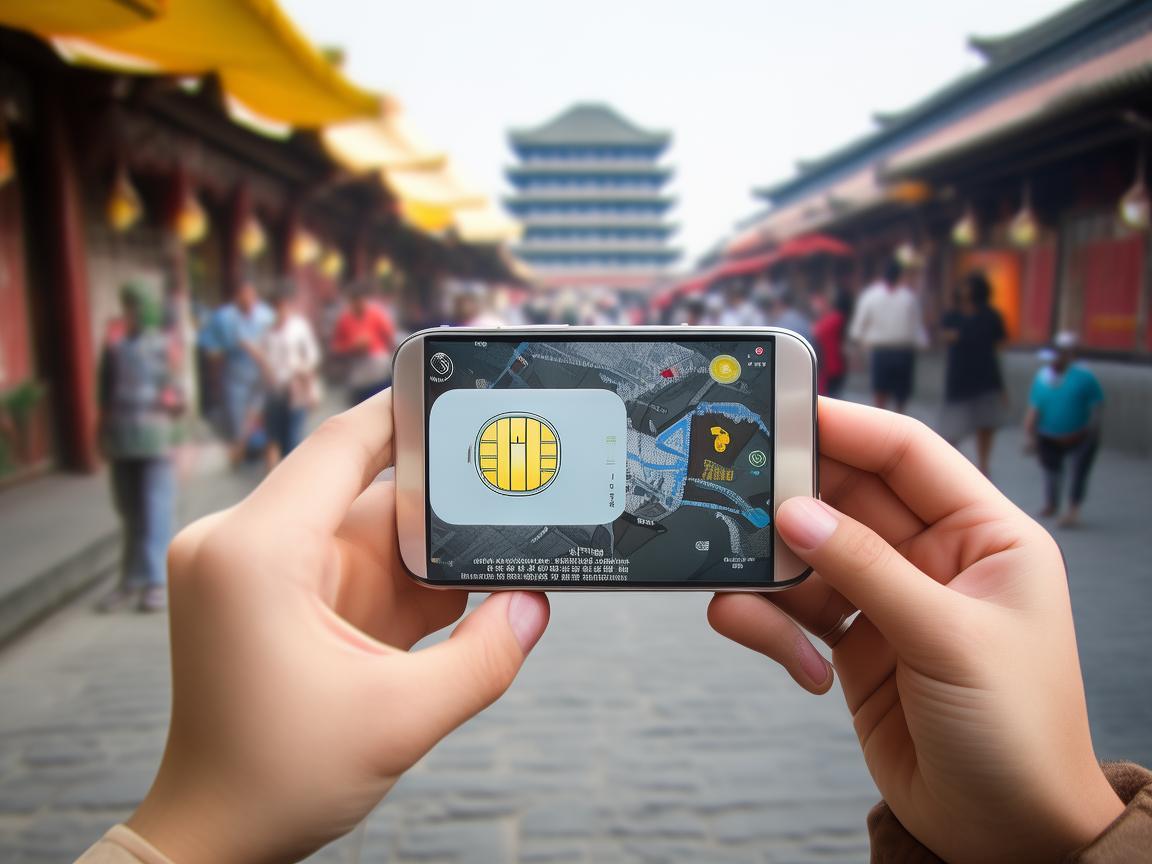
First Time in Xi’an: How a Smart SIM Made My Trip Smooth
Choosing a SIM Card: What I Wish I’d Known Earlier
At the airport, there are three major carriers: China Mobile, China Unicom, and China Telecom. I’d done a little research, so I knew:
- China Mobile has the best coverage, especially in rural areas or tourist spots outside the city.
- China Unicom is cheaper but slightly weaker signal in some remote spots.
- China Telecom is great for high-speed data but less common in smaller cities.
Since I was sticking to Xi’an and nearby areas (like the Terracotta Warriors and Huashan Mountain), any would work, but I went with China Mobile for its reliability.
At the counter, the staff spoke basic English, which was a relief. I needed two things to buy a SIM: my passport and a copy of my visa (they made a photocopy for me). I chose a “tourist package” with 20GB of high-speed data, unlimited calls within China, and 10GB of “global data” (for when I crossed into Hong Kong later). It cost 150 RMB (about $20) and lasted 30 days. The best part? It came pre-activated—no waiting, no fussy setup.
The “Smart” Part: How My SIM Card Transformed My Trip
Once I popped the SIM card into my phone, it was like a switch flipped. Suddenly, I was connected to a world that made Xi’an easy to explore. Here’s how it changed everything:
Navigation: No More Getting Lost
I’d downloaded Maps.me (a Google Maps alternative that works offline) before leaving, but with the SIM card, I could use Amap (高德地图), China’s most popular navigation app. It was a game-changer. Amap not only gave turn-by-step directions but also showed real-time bus and subway times, estimated taxi fares, and even warned me about traffic jams.
One day, I wanted to visit the Giant Wild Goose Pagoda (大雁塔). I typed it into Amap, and it told me to take Subway Line 3 from “Wulukou Station” (my nearest stop). When I got to the station, the app showed me exactly which exit to take and even had a “walking” guide with photos of landmarks to look for. No more standing at confusing subway entrances, wondering if I was going the right way!
Payments: Cashless and Stress-Free
Xi’an is a cashless city. Even street vendors selling roujiamo or tanghulu (candied hawthorns) use WeChat Pay or Alipay. Before my SIM card, I’d carried a wad of cash, but I was always worried about losing it or getting shortchanged.
With the SIM, I linked my international credit card to Alipay (it’s easy—you just scan a QR code at the airport or use the Alipay app to add your card). Then, whenever I bought something, I just opened Alipay, scanned the vendor’s QR code, and paid. No more fumbling with coins, no more “Do you take credit cards?” (most small places don’t).
My favorite memory? At a night market in Muslim Quarter, I bought a bowl of paomo (bread soup) from a tiny stall. The owner, an elderly lady, smiled at me, pointed to her Alipay QR code, and said, “Sǎo yī xià!” (Scan it!). I tapped my phone, and she gave me a thumbs-up. It was that simple.
Communication: Talking to Locals and Getting Help
I’d booked a hostel through Booking.com, but when I arrived, the address was in Chinese characters, and the taxi driver couldn’t read it. No problem—I opened WeChat (China’s super app, like WhatsApp + Instagram + Facebook), found my hostel owner, and sent him my location via Amap. He called me (yes, calls worked with the SIM!) and guided the driver over the phone.
Later, I wanted to book a day trip to the Terracotta Warriors. I used Dianping (a Chinese Yelp app) to find highly rated tour companies, then called one directly to ask about English-speaking guides. The SIM card let me be spontaneous—if I saw a temple I wanted to explore, I could look up its hours online; if I got lost, I could ask a local for help and use Google Translate to chat.
Staying Connected (Without Breaking the Bank)
International roaming is a scam. I checked my carrier’s rates before leaving: $10 per day for 1GB of data, and $2 per minute for calls. With my China SIM, I paid $20 for 20GB of data and unlimited calls for a whole month. I even used the SIM to message my family back home via WeChat (which works perfectly in China) and share photos of the Terracotta Warriors in real time.
Tips for Buying and Using a Chinese SIM Card
Based on my experience, here’s what you need to know to avoid my initial panic:
- Buy it at the airport: It’s the easiest option—no need to hunt for stores, and staff speak basic English. If you land late at night, don’t worry: airport SIM counters are open 24/7.
- Bring your passport and visa: You can’t buy a SIM without ID. They’ll make a copy, so keep your original safe.
- Choose a tourist package: Look for ones with “high-speed data” and “unlimited calls.” China Mobile’s “Tourist Card” (旅游卡) or Unicom’s “Global Card” are great for short stays.
- Download apps beforehand: Even though you’ll have data, download Amap, WeChat, Alipay, and Dianping before you leave home (in case Wi-Fi is slow at the airport).
- Don’t forget to top up: If your data runs out, you can recharge online via the carrier’s app (like “China Mobile”) or at any convenience store (7-Eleven, FamilyMart) with cash.
The Verdict: A Smart SIM Is a Travel Must-Have
By the end of my trip, I’d walked 10 kilometers a day exploring Xi’an’s ancient streets, eaten enough roujiamo to last a lifetime, and even took a spontaneous day trip to Huashan Mountain—all thanks to my little SIM card. It turned a stressful start into an adventure, letting me navigate, pay, and connect like a local.
If you’re visiting Xi’an (or anywhere in China) for the first time, skip the expensive roaming and buy a local SIM. It’s cheap, easy, and will make your trip smoother than you can imagine. Trust me—once you’re sipping bubble tea at Muslim Quarter, sharing a photo of the Terracotta Warriors with your family, and confidently hopping on the subway, you’ll thank me.
Xi’an is a city of history, flavor, and wonder—and with a smart SIM, you’ll get to experience it all, without the stress. Now go book that ticket!
Xi’an Airport Transfer Service
Private English-speaking driver service in Xi’an operated directly by Bruce Zhang. 24/7 airport pickup and hotel transfer for foreign travelers.
Helpful for Your Trip in Xi’an
Your Ultimate China SIM App Guide: Navigating Xi’an Like a Local
2026-07-27China SIM: My Lifeline for Seamless Travel in Xi’an
2026-07-27Xi’an Travel Guide: Staying Connected with China SIM for a Hassle-Free Trip
2026-07-27Navigating Xi’an: A Traveler’s SIM Card Troubleshooting Guide
2026-07-27Xi’an Travel Tips: Staying Connected with China SIM & Offline Maps
2026-07-27Why a China 5G SIM Made My Xi’an Trip Effortless (and How to Get One)
2026-07-27Your Essential Guide to Getting a SIM Card in Xi’an: A Traveler’s Handbook
2026-07-27Xi’an Hotspot Access: A Traveler’s No-Nonsense Guide to China’s Ancient Capital
2026-07-27Xi’an Travel Tips: My Hassle-Free China SIM Activation Experience
2026-07-26Your Xi’an SIM Card Survival Guide: Skip the Roaming Rip-offs with China SIM Kiosks
2026-07-26