

Xi’an Adventure: How an Instant SIM Card Saved My Trip and Made It Seamless
Landing in Xi’an felt like stepping into a living history book—one minute I was marveling at the terracotta warriors, the next I was lost in the maze of the Muslim Quarter, sticky-fingered from a roujiamo (Chinese hamburger) and dizzy from the scent of cumin. But before all that, I stood at Xi’an Xianyang International Airport, clutching my passport and staring at my phone, which stubbornly displayed “No Service.” I’d forgotten one critical thing: international roaming is expensive, and my carrier’s “global plan” barely worked in China. Within an hour, I was stressed, disconnected, and wondering how I’d navigate, order food, or even call my hotel. That’s when I discovered China’s instant activation SIM cards—and they became my trip’s unsung hero.
The Pre-Trip Panic: Why “No Service” Is a Big Deal in China
I’d traveled to other countries before and mostly gotten by with WiFi or local SIMs, but China is different. Here, everything runs on local apps: WeChat for messaging and payments, Alipay for buying street food, Didi (China’s Uber) for hailing cabs, and Baidu Maps for navigating (Google Maps barely works). Even buying a bottle of water at a convenience store often requires scanning a QR code on your phone. Without a local SIM, I was basically blind, mute, and cashless in a city where few people spoke English.
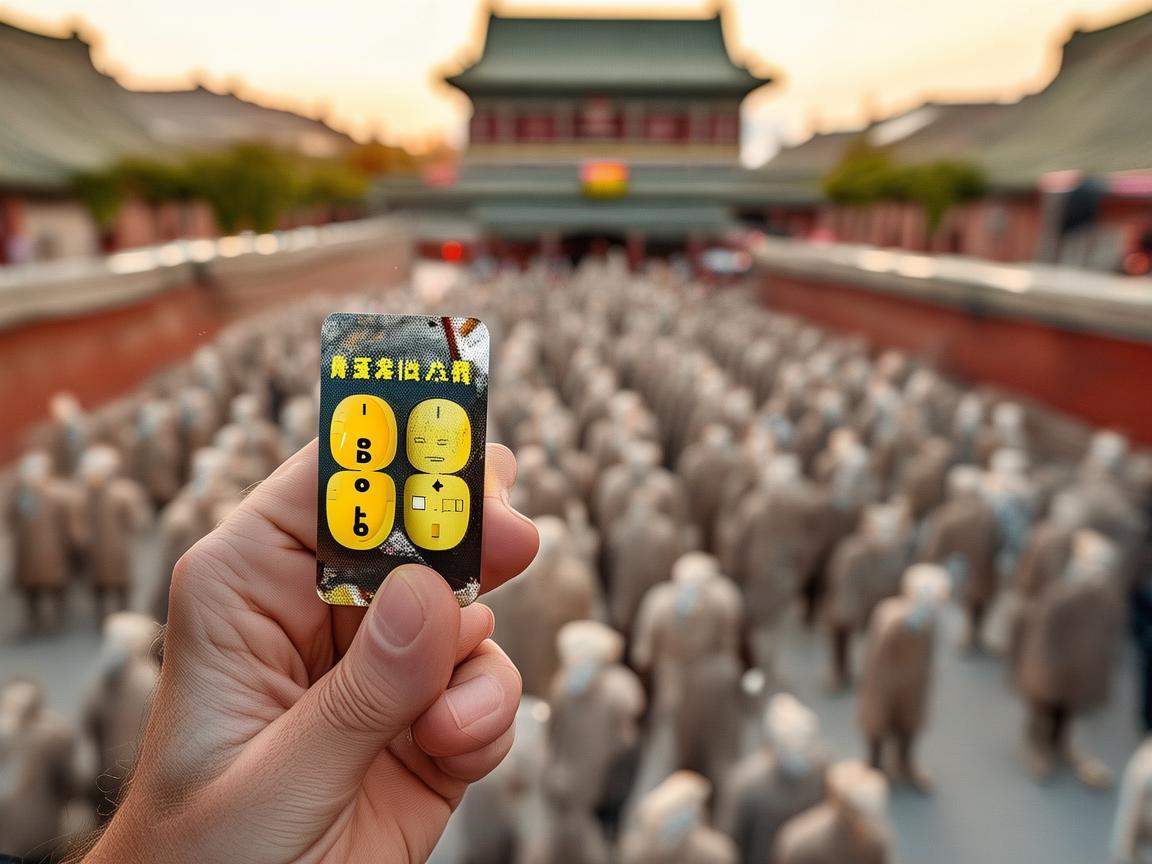
Xi’an Adventure: How an Instant SIM Card Saved My Trip and Made It Seamless
My first attempt to “fix” this was asking my hotel for help. They directed me to a nearby China Mobile store, but the line was an hour long, and the staff spoke minimal English. I was about to give up when I spotted a small kiosk in the airport’s arrival hall labeled “Instant SIM Card—No Registration Needed.” It was a lifesaver.
Getting the SIM: Quick, Easy, and No Fuss
The kiosk, run by a company called “China Telecom,” had a simple setup: a counter with friendly staff, a few posters showing data plans, and a machine that printed SIM cards on the spot. I approached, showed my passport, and said, “I need a SIM—works now, no waiting.” The staff member, a young woman named Lily, smiled and handed me a brochure in English.
“Three options,” she explained, pointing to a chart. “Option 1: 10GB data, 7 days, 30 RMB (about $4). Option 2: 20GB data, 15 days, 60 RMB ($8). Option 3: 50GB data, 30 days, 120 RMB ($16). All include unlimited calls and texts within China, and 5G if your phone supports it.”
I went with Option 2—15 days felt right for my 10-day trip, and 20GB was more than enough for maps, social media, and the occasional video call home. Lily took my passport, scanned it (a quick, legal requirement for all SIMs in China), and handed me a small plastic card with the SIM already inserted. “Just put this in your phone,” she said. “It activates in 5 minutes. No need to call anyone or download apps.”
I popped the SIM into my iPhone, waited two minutes, and—ding—the signal bars popped up. “China Telecom” appeared in the corner, and I immediately opened WeChat. My messages flooded in. I’d never been so happy to see a “Delivered” notification.
How the SIM Made My Xi’an Trip Seamless
Over the next 10 days, that little SIM card was my constant companion. Here’s exactly how it saved me—and will save you—time, stress, and money.
Navigation: No More Getting Lost (or Arguing with Taxi Drivers)
Xi’an is huge, and its streets are a mix of ancient alleys and modern highways. On my first day, I wanted to visit the Big Wild Goose Pagoda, a Tang Dynasty landmark a few miles from my hotel. Without a SIM, I’d have been stuck with a paper map or trying to explain the address in Mandarin (my “hello” and “thank you” were the extent of my Chinese).
With my activated SIM, I opened Baidu Maps (which works flawlessly in China), typed in the pagoda’s name, and hit “Start Navigation.” The app gave me turn-by-turn directions in English, even showing me which subway line to take and which exit to use. When I got off the train, it guided me through a labyrinth of streets, pointing out a “must-try” dumpling shop along the way. I never once felt lost.
Later, when I took a Didi to the Terracotta Army, the driver didn’t speak English, but the app handled everything: I entered the destination, he accepted, and the fare was automatically charged to my Alipay (linked to WeChat) when I arrived. No haggling, no confusion—just smooth, affordable rides.
Food Adventures: Eating Like a Local, No Language Barrier
Xi’an is a foodie paradise, but most street vendors don’t have English menus. On my first night in the Muslim Quarter, I wanted to try Paomo—a hearty soup with torn bread and beef—but the vendor only pointed at a chalkboard covered in Chinese characters. I was about to walk away when I remembered my SIM.
I quickly opened Google Translate (which worked over my mobile data), pointed my phone at the menu, and it translated: “Paomo: Lamb broth with hand-torn bread, 25 RMB ($3.50).” I ordered it, and it was incredible—rich broth, soft bread, and tender meat. Over the next few days, I used my SIM to translate menus at hole-in-the-wall noodle shops, find highly rated hot pot restaurants on Xiaohongshu (China’s version of Instagram), and even watch videos of how to eat biangbiang noodles (the wide, belt-like noodles without a direct English translation).
One tip: Download offline translation packs for Chinese before you go, just in case your data is spotty in some areas. But in Xi’an, my 4G signal was strong even in the crowded Muslim Quarter.
Payments: Cashless and Hassle-Free
China is almost entirely cashless. Even street vendors selling 10 RMB ($1.50) snacks expect you to pay via WeChat pay or Alipay. When I first arrived, I had a wad of yuan, but I quickly realized it was useless. My SIM card saved me here too.
Linking my international credit card to WeChat Pay was easy: I opened WeChat, went to “Me” > “Services” > “Wallet” > “Payment Methods,” and added my card (Visa and Mastercard work for most foreign cards). Within minutes, I was scanning QR codes to buy bubble tea, pay for museum tickets, and even tip my hotel housekeeper.
At the Terracotta Army, I wanted to rent an audio guide, but the ticket counter only accepted mobile payments. I whipped out my phone, scanned the QR code, and was good to go—no fumbling for cash or asking for help. My SIM turned my phone into a wallet, and it was way more convenient than carrying around a bunch of coins.
Staying Connected: Sharing Moments and Calling for Help
I traveled with my sister, and we wanted to share our adventures with family back home. With my SIM, I could upload photos to Instagram and send videos to our group chat in real time. One evening, we got caught in a sudden rainstorm near the City Wall, and I needed to call our hotel to ask for an umbrella. I dialed the number directly (my SIM included unlimited local calls), and front desk staff spoke enough English to help.
Without the SIM, I would have had to find a WiFi spot (rare and slow in old areas) or use a hotel phone (which often charges fees). Instead, I felt safe and connected, knowing I could reach anyone if I needed to.
A Few Tips for Choosing and Using Your Instant SIM
After my trip, I talked to other travelers, and some had questions about instant SIMs. Here’s what I learned:
- Where to Buy: Airports are the best bet—Xi’an Xianyang, Beijing Capital, and Shanghai Pudong all have kiosks with English-speaking staff. You can also buy them at convenience stores like 7-Eleven or Watsons, but airport kiosks are fastest for arriving travelers.
- Carrier Choice: China Mobile has the best coverage in rural areas, but China Telecom and China Unicom work great in cities like Xi’an. I used China Telecom and had 5G almost everywhere.
- Data Needs: If you’re just using maps, messaging, and social media, 10GB/week is enough. If you plan to stream videos or video call daily, go for 20GB or more.
- eSIM vs. Physical SIM: Many newer phones support eSIM, which lets you activate a plan without a physical card. I didn’t try this (my phone is older), but I heard it’s just as quick—just scan a QR code at the airport kiosk and activate it on your phone.
- Renewing: If you need more data, you can top up via the carrier’s app (just search “China Telecom” or “China Mobile” in your app store) or at any convenience store. It takes 2 minutes and costs as little as 30 RMB for 10GB.
The Verdict: An Instant SIM Is a Must for China Travel
By the end of my trip, I couldn’t imagine visiting Xi’an without my instant SIM card. It turned a potential nightmare (no service, no cash, no way to navigate) into a smooth, stress-free adventure. I focused on what mattered: staring in awe at the terracotta warriors, bargaining for souvenirs in the Muslim Quarter, and eating way too many dumplings.
If you’re planning a trip to Xi’an—or anywhere in China—don’t make my mistake. Skip the expensive international roaming, skip the long lines at carrier stores, and grab an instant SIM at the airport. It’s cheap, easy to activate, and will make your trip 100% better. Trust me: the only thing you’ll worry about is whether to get another roujiamo. And with a local SIM, even that’s easy to decide.
Xi’an Airport Transfer Service
Private English-speaking driver service in Xi’an operated directly by Bruce Zhang. 24/7 airport pickup and hotel transfer for foreign travelers.
Helpful for Your Trip in Xi’an
Surviving and Thriving in Xi’an: A Traveler’s Guide to China’s Internet Carrier
2026-09-10China SIM Verification: A Traveler’s Step-by-Step Guide (From a Xi’an Visitor’s Perspective)
2026-09-08Xi’an Travel Tips: Why China Roaming Data is Non-Negotiable for Foreign Visitors
2026-09-05Traveling Xi’an: A Tourist’s Guide to Navigating China’s SIM Authentication System
2026-09-04Your Ultimate Guide to Network Settings & China SIM Cards for a Seamless Xi’an Trip
2026-08-31Xi’an: Where Ancient History Meets Modern Connectivity – A China Traveler’s Practical Guide
2026-08-30Your Go-To Guide for China SIM Service Centers in Xi’an: Stay Connected Hassle-Free
2026-08-26Surviving Xi’an Without the Slow Lane: A Tourist’s Guide to China SIM Throttling
2026-08-11Xi’an Travel Survival Guide: How a China SIM Card and Call Center Saved My Trip
2026-08-10My Xi’an Survival Guide: Why a China SIM Card is Your Travel Lifeline
2026-08-09