

First Time in Xi’an: My Honest China SIM Card Experience for Foreign Travelers
Landing in Xi’an felt like stepping into a living history book—one minute I’m marveling at the terracotta warriors, the next I’m lost in the winding alleys of the Muslim Quarter, trying to decipher a menu scrawled in characters that look like abstract art. As a first-time visitor to China, I’d spent months researching: what to pack, how to use high-speed rail, even the best baozi spots. But one thing I didn’t research enough? My phone. And let me tell you, that almost turned my dream trip into a nightmare.
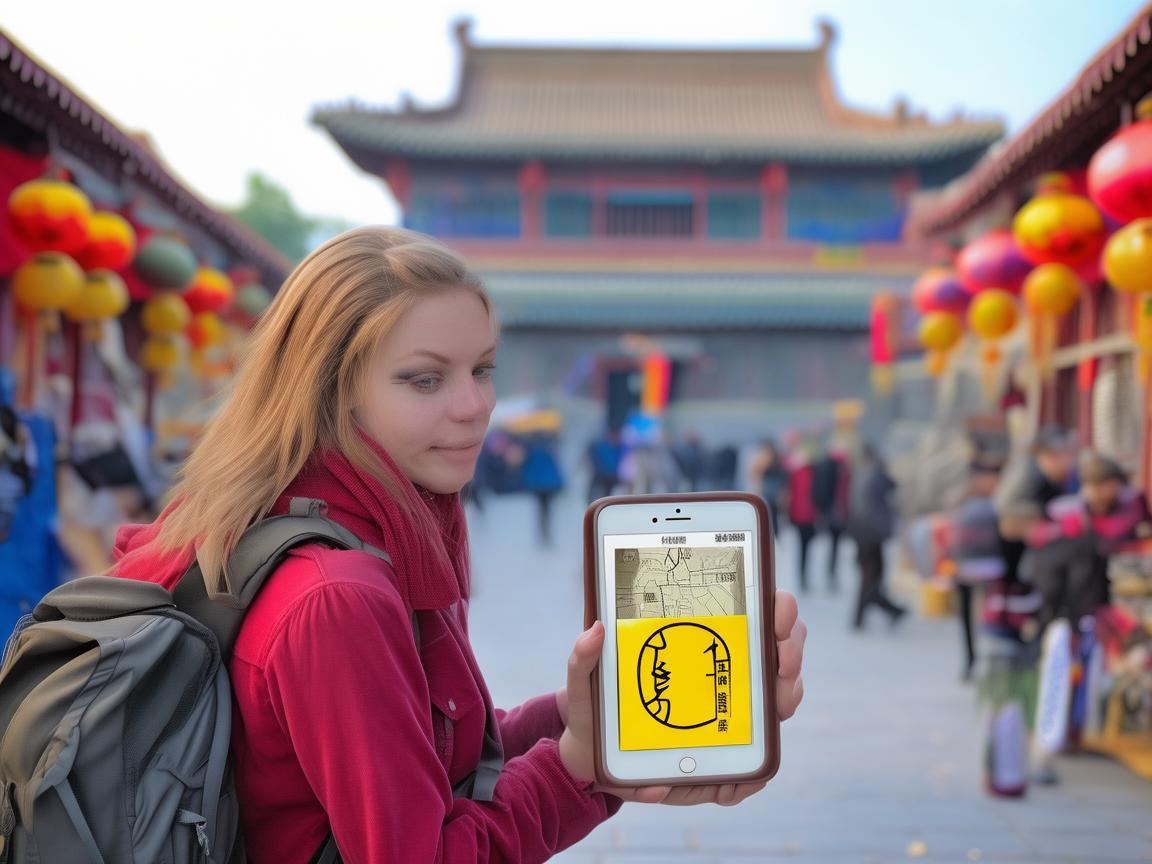
First Time in Xi’an: My Honest China SIM Card Experience for Foreign Travelers
The Pre-Trip Panic: “Will My Phone Even Work?”
Before I left, I asked friends, “Do I need a special SIM card for China?” The vague answers—“Maybe?” “Check with your carrier”—left me uneasy. I’d heard horror stories: foreign SIM cards being blocked, exorbitant roaming charges, and Google Maps being useless. So, I did what any anxious traveler would do: I bought an eSIM online labeled “China Tourist SIM.” Big mistake.
When I landed at Xi’an Xianyang International Airport (XIY), my phone kept searching for signal. The eSIM, it turned out, only worked in major cities like Beijing and Shanghai—not Xi’an. Panic set in. How would I navigate? Call my hotel? Order food on Meituan? I was standing in the arrivals hall, surrounded by signs in Chinese, when a kind airport staff member saw my frantic expression and pointed to a China Mobile counter. “SIM card,” she said, with a smile. That was my lifeline.
At the Airport: Getting a SIM Card (Without Speaking Mandarin)
The China Mobile counter at Terminal 3 was a lifesaver. The staff spoke basic English, which was a relief—my Mandarin is limited to “nǐ hǎo” (hello) and “xièxiè” (thank you). Here’s what I learned about getting a SIM card as a foreigner:
Bring Your Passport!
This is non-negotiable. I had to hand over my passport, and the staff made a photocopy. They also needed my visa (I had a 10-day tourist visa). No passport, no SIM—simple as that.
Choose Your Carrier: China Mobile, China Unicom, or China Telecom?
The staff recommended China Mobile for its wide coverage, especially in rural areas like the Terracotta Army site (which I planned to visit). China Unicom is great for cities, and China Telecom has good 5G, but for a tourist bouncing between urban and rural spots, China Mobile was the safest bet.
Pick a Tourist-Friendly Plan
I opted for the “China Tourist SIM Card,” specifically designed for short-term visitors. Here’s what it included:
- Unlimited 4G data for 10 days (enough for Google Maps, WeChat, and Instagram—yes, it worked!).
- 100 minutes of domestic calls (useful for calling my hotel or tour guides).
- Free incoming calls (so my family back home could reach me via apps like WhatsApp).
- Cost: 150 RMB (about $20). Not cheap, but way better than paying $10/day for roaming with my home carrier.
Activation Took 5 Minutes
The staff inserted the nano-SIM into my phone, activated it on the spot, and even helped me set up the APN (Access Point Name) settings—critical for data to work. No fuss, no waiting. I paid with Alipay (they helped me link my international credit card), and walked out of the airport with a working phone.
Using the SIM Card: The Good, the “Uh-Oh,” and the Pro Tips
Once I got to my hotel in the city center, the real test began. Could I actually use the SIM card in daily life? Here’s the breakdown:
The Good: Everything Worked (Almost)
- Google Maps: Yes, it worked! I could navigate from the Bell Tower to the Muslim Quarter, find nearby metro stations, and even locate hidden jianbing (Chinese crepe) stalls.
- WeChat: This is China’s “super app”—it’s used for messaging, paying for everything (from street food to metro rides), and even scanning health codes to enter attractions. With data, I could use WeChat pay seamlessly.
- International Apps: WhatsApp, Instagram, and Gmail all worked without a VPN (which was a relief—I’d heard horror stories about blocked apps).
- Metro and Buses: I used WeChat to scan QR codes for metro tickets—no more fumbling with cash or language barriers at ticket machines.
The “Uh-Oh”: Minor Hiccups (and How to Fix Them)
- Signal in Rural Areas: When I visited the Terracotta Army (about 40 km outside the city), the 4G signal got a bit spotty. But it was still strong enough for Google Maps and a quick WeChat call to my tour guide. If you’re planning to visit remote spots, China Mobile’s “coverage map” app (in Chinese, but your hotel can help) shows signal strength.
- WeChat Pay Setup: To use WeChat Pay, you need to link a Chinese bank card or add funds via an international card (which has a daily limit). I had to ask my hotel’s concierge to help me link my card—she walked me through it in 10 minutes. Pro tip: Bring a small amount of cash (RMB) just in case, but I barely used it—WeChat Pay is king.
- Recharging Data: My 10-day plan expired right before my last day. I recharged online via the China Mobile app (which has an English version) by scanning a QR code at a 7-Eleven. Easy peasy.
One Big Lesson: Skip the eSIM (For Now)
I know, I know—eSIMs are convenient. But for China, especially as a first-time visitor, a physical SIM card from China Mobile/Unicom/Telcom is way more reliable. ESIMs often have limited coverage, and if something goes wrong, you can’t just walk into a store to fix it. Plus, the tourist SIM plans are tailored for short stays, so you get better value.
Before You Leave: Don’t Forget This!
When my trip ended, I had to decide what to do with my SIM card. You have two options:
- Keep It: If you plan to return to China within 6 months, you can reactivate it (just bring your passport to a China Mobile store).
- Top Up and Give It Away: I had 20 RMB left on my balance, so I gave the SIM to a traveler I met at the airport—they were grateful, and it didn’t go to waste.
One last tip: Save the China Mobile customer service number (+86 10086) in your phone. If you lose your SIM or have issues, they can help (though English support is limited—ask your hotel to translate if needed).
Final Thoughts: A SIM Card Made My Trip
By the end of my 10 days in Xi’an, I felt like a local—navigating the city with ease, ordering food like a pro, and even bargaining at the Muslim Quarter (okay, mostly pointing and smiling). My China SIM card wasn’t just a “tech thing”—it was my bridge to the culture. It let me focus on what mattered: eating roujiamo (Chinese hamburgers) until I burst, watching the sunset from the City Wall, and getting lost in the history that makes Xi’an so magical.
So, to all the foreign travelers heading to Xi’an: Don’t skip the SIM card. Do your research, pick China Mobile, and trust me—it’ll turn “I’m lost” into “I’m exactly where I want to be.” Safe travels!
Xi’an Airport Transfer Service
Private English-speaking driver service in Xi’an operated directly by Bruce Zhang. 24/7 airport pickup and hotel transfer for foreign travelers.
Helpful for Your Trip in Xi’an
Surviving and Thriving in Xi’an: A Traveler’s Guide to China’s Internet Carrier
2026-09-10China SIM Verification: A Traveler’s Step-by-Step Guide (From a Xi’an Visitor’s Perspective)
2026-09-08Xi’an Travel Tips: Why China Roaming Data is Non-Negotiable for Foreign Visitors
2026-09-05Traveling Xi’an: A Tourist’s Guide to Navigating China’s SIM Authentication System
2026-09-04Your Ultimate Guide to Network Settings & China SIM Cards for a Seamless Xi’an Trip
2026-08-31Xi’an: Where Ancient History Meets Modern Connectivity – A China Traveler’s Practical Guide
2026-08-30Your Go-To Guide for China SIM Service Centers in Xi’an: Stay Connected Hassle-Free
2026-08-26Surviving Xi’an Without the Slow Lane: A Tourist’s Guide to China SIM Throttling
2026-08-11Xi’an Travel Survival Guide: How a China SIM Card and Call Center Saved My Trip
2026-08-10My Xi’an Survival Guide: Why a China SIM Card is Your Travel Lifeline
2026-08-09