

Xi’an: Where Ancient History Meets a Modern Integrated Tourism Ecosystem
Landing in Xi’an, I wasn’t just expecting a trip to see terracotta warriors and ancient walls—though those were definitely on my list. What I didn’t anticipate was how seamlessly this 3,000-year-old city has woven its historical treasures into a modern, traveler-friendly ecosystem. Think of it as a “one-stop shop” for immersive experiences: efficient transport, stay-and-play accommodations, bite-sized cultural activities, and even digital tools that make navigating the past feel like a breeze. As someone who’s struggled with disjointed travel plans before, Xi’an’s integrated approach felt like a breath of fresh air. Let me break down how this ecosystem works, and why it’s a game-changer for any visitor.
Getting Around: The “No-Stress” Transport Backbone
First things first: how do you move between a city that’s both a living metropolis and an open-air museum? Xi’an’s answer is a transport network that’s as efficient as it is intuitive. The metro system is my personal hero here. Lines 1, 2, 3, and 4 connect major hubs like Xi’an North Railway Station (where high-speed trains from Beijing or Shanghai drop you off), the airport, and key attractions. I landed at 10 a.m., took the metro Line 14 from the airport to Line 2 at Beishanglong Road, and was at my hotel near the Bell Tower by 11:30—all for under ¥20. No language barriers, no haggling with taxis.
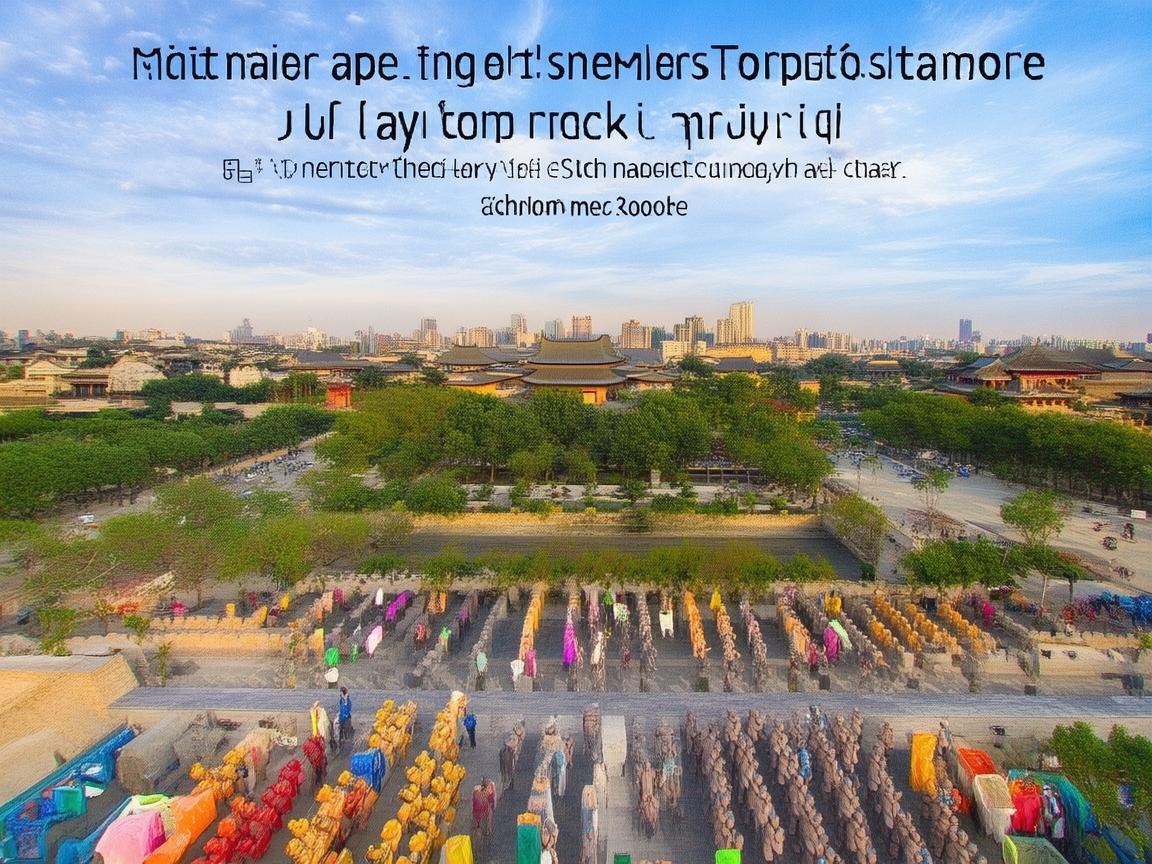
Xi’an: Where Ancient History Meets a Modern Integrated Tourism Ecosystem
For shorter distances, shared bikes (Meituan or HelloBike) are everywhere. I rented one near the City Wall for ¥5/hour and cycled along the top, stopping to snap photos of the city’s skyline peeking over the ancient battlements. Bikes are also perfect for exploring neighborhoods like Muslim Quarter, where you can weave through alleyways smelling of lamb skewers and spices without getting stuck in traffic.
Pro tip: Grab a “长安通” (Chang’an Tong) card at any metro station. It works on buses, metros, and even some convenience stores, so you don’t have to fumble with cash every time. And if you’re traveling with family or a group, ride-hailing apps like Didi are cheap and reliable—just have your hotel’s address in Chinese handy!
Stay & Play: Hotels That Are More Than Just a Place to Sleep
Xi’an’s tourism ecosystem isn’t just about getting from A to B—it’s about making every part of your trip feel connected. I stayed at a boutique hotel near the South Gate of the City Wall, and it perfectly encapsulates this idea. The front desk didn’t just check me in; they handed me a “Xi’an Experience Kit” with a metro map, a list of “must-try” street foods (with English translations), and even pre-booked tickets to the Terracotta Army for the next morning—no 2-hour wait in line.
Many hotels in Xi’an partner with local tour operators and cultural venues. My hotel offered a “Culture Package” that included a morning dumpling-making class (yes, I learned how to roll out dough and fill it with pork and chives—messy but fun!) followed by a twilight tour of the Muslim Quarter with a local guide who pointed out hidden tea houses and told stories of the Silk Road. It was like having a local friend plan my day.
If you’re on a budget, hostels like “The Village” near the Bell Tower have communal kitchens where you can buy ingredients from nearby markets (like the bustling Shuyuanmen Market) and cook with fellow travelers. Some even organize free walking tours—great for meeting people and getting off-the-beaten-path recommendations.
Attractions: Beyond the “Big Three” with Integrated Experiences
Everyone knows Xi’an’s “Big Three”: the Terracotta Army, the City Wall, and the Muslim Quarter. But what makes the city’s ecosystem shine is how it turns these must-sees into immersive, multi-layered experiences—and adds smaller, equally fascinating stops along the way.
Take the Terracotta Army, for example. Instead of just wandering through the pits (which are incredible, by the way), I booked a “Combo Ticket” online (¥240) that included the pits, the Bronze Chariot Exhibition Hall, and a nearby “Terracotta Workshop.” At the workshop, artisans showed us how the original warriors were made—using the same clay and techniques from the Qin Dynasty. I even got to try my hand at sculpting a mini terracotta warrior (mine looked lopsided, but it’s a great souvenir!).
The City Wall is another example. You can walk, bike, or even take an electric cart around its 14-kilometer loop. But the real magic is at night: the wall is lit up with lanterns, and some sections have “night markets” where you can buy crafts and try snacks like bingfengbing (a crispy, savory pastry). I rented a bike at dusk and cycled slowly, stopping to listen to a street musician playing the erhu—it felt like stepping back in time.
Even the Muslim Quarter, often dismissed as just a tourist trap, has depth. Beyond the main street (which is packed with skewers and souvenirs), the side alleys are home to century-old mosques (like the Great Mosque, a serene oasis of Chinese-Islamic architecture) and family-run restaurants serving roujiamo (Xi’s “hamburger,” but better) that have been around for generations. My hotel gave me a “Muslim Quarter Food Map” with stops like “Li’s Family Lamb Pastry” (try the sanchaorou—three-layer pork belly) and “Old Tang Sweets” (rose cake and hulatang, a spicy soup with bread).
Food & Shopping: Where Taste and Culture Collide
Xi’an’s food scene is a core part of its tourism ecosystem, and it’s designed to be as accessible as it is delicious. The Muslim Quarter isn’t the only place to eat—every neighborhood has its own food streets, and many are connected by metro lines. Near my hotel, I found “Jiefang Road Food Street,” where stalls sell biangbiang noodles (wide, chewy noodles with chili oil and pork) and Paomo (bread soaked in mutton soup—you tear the bread yourself, which is surprisingly therapeutic).
What I loved most is how food experiences are integrated with cultural activities. For example, at the “Tang Dynasty Dinner Show” (yes, it’s a bit touristy, but worth it for the experience), you eat traditional dishes like quanquxi (a hot pot with lamb and vegetables) while watching dancers perform in Tang Dynasty costumes. The show is at the Tang Paradise theme park, which itself is a recreation of a Tang Dynasty garden—so you can spend the afternoon exploring the park and then catch the show at night.
Shopping is equally seamless. If you want souvenirs, head to the “Xi’an Art & Craft Market” near the Bell Tower. It’s not just trinkets—you can find handmade shadow puppets, silk scarves, and even replicas of Tang Dynasty pottery. Many vendors accept Alipay or WeChat pay, so you don’t need to carry cash. And if you’re looking for something modern, the “Grand Mall” (a shopping center near the South Gate) has both international brands and local stores selling Xi’an-themed fashion (like jackets with the Terracotta Army printed on them).
Digital Tools: Your Pocket-Sized Tour Guide
Xi’an’s tourism ecosystem is powered by technology, and it’s a lifesaver for international travelers. The “Xi’an Tourism” app (available in English) is my go-to. It has real-time info on metro delays, crowd levels at attractions, and even a “Voice Guide” feature for major sites—just scan the QR code at the Terracotta Army, and you’ll get a detailed history of each pit in your preferred language.
WeChat and Alipay are also essential. Most restaurants, shops, and even street vendors accept mobile payments. I set up WeChat Pay before my trip (it’s linked to my international credit card), and paying for a bowl of noodles was as easy as scanning a QR code. For language help, I downloaded the “Pleco” app—when I wanted to order “no chili” at a restaurant, I just showed the vendor the Chinese characters: “不要辣椒.”
Final Thoughts: Why Xi’an’s Ecosystem Works
After a week in Xi’an, I realized why the “integrated tourism ecosystem” concept is so powerful. It’s not just about having good transport or nice hotels—it’s about making every part of your trip feel connected and effortless. You don’t have to spend hours researching how to get from the Terracotta Army to the City Wall; the metro gets you there in 30 minutes. You don’t have to guess where to eat; your hotel gives you a map of the best local spots. You don’t have to worry about language barriers; apps and digital tools do the heavy lifting.
Xi’an shows that a city’s history and modernity don’t have to compete—they can work together to create a travel experience that’s both educational and fun. Whether you’re a history buff, a foodie, or just someone who wants to explore without stress, this city’s ecosystem has something for you. So pack your bags, download the apps, and get ready to fall in love with a city where the past isn’t just preserved—it’s alive, and it’s waiting for you.
Xi’an Airport Transfer Service
Private English-speaking driver service in Xi’an operated directly by Bruce Zhang. 24/7 airport pickup and hotel transfer for foreign travelers.
Helpful for Your Trip in Xi’an
Xi’an Through My Eyes: A Visitor’s Approval Guide to the Must-Do, Must-Eat, and Must-Avoid
2026-09-01Xi’an on Your Terms: How the Smart Access System Made My Trip a Breeze
2026-08-30Xi’an: Where Ancient History Meets a Modern Integrated Tourism Ecosystem
2026-08-29Xi’an: Where Ancient Heritage Breathes with Living Ecosystems
2026-08-27Xi’an on the Metro: A Traveler’s Guide to Getting Around Like a Local
2026-08-27Xi’an Travel Tips: Navigating Ticket Codes Like a Local
2026-08-25What I Only Figured Out After 3 Trips
2026-08-23Is the Forest of Stone Steles Actually Worth Visiting in Xi'an?
2026-08-182026 Travel Season: How to Visit Xi'an in Summer Without the Crowds
2026-08-16Xi’an Travel Diary: How Reservation Confirmations Saved My Trip
2026-08-14