

Exploring Xi’an’s Parks: A Traveler’s Guide to Smart Park Management
I’ve always loved cities where history feels alive, not just trapped in museums. Xi’an? Oh, it’s a perfect example—ancient walls whisper stories of dynasties, street food stalls fill the air with cumin and spice, and then there are the parks. Lots of them. As a traveler who’d spent a week cramming in the Terracotta Army, the Muslim Quarter, and the Big Wild Goose Pagoda, I needed a break from the crowds. What I didn’t expect? How much I’d learn about smart park management while wandering through Xi’an’s green spaces. These aren’t just pretty lawns; they’re masterclasses in balancing tourism, culture, and sustainability. Let me break it down—like I’m chatting with a friend over a bowl of yangrou paomo.
First Stop: Big Wild Goose Pagoda North Square (大雁塔北广场) – Where Crowds and Calm Coexist
My first park adventure was here, mostly because the fountain show is iconic. But wow, the management? Impressive. I arrived at 6 PM, expecting chaos—tourists, vendors, maybe even traffic snarling the entrance. Nope. Smooth sailing.
First, the entry: QR codes for tickets (no fumbling for cash!), clear signs in English and Chinese, and staff directing people to different gates to avoid bottlenecks. Inside? The square is huge, but what stood out was how they handled crowds. The fountain area has designated viewing zones—roped-off sections with numbered signs, so you know exactly where to stand without elbowing strangers. When the show started (lights, music, water dancing—so cool!), volunteers in red vests were stationed around the edges, helping elderly visitors find seats and answering questions.
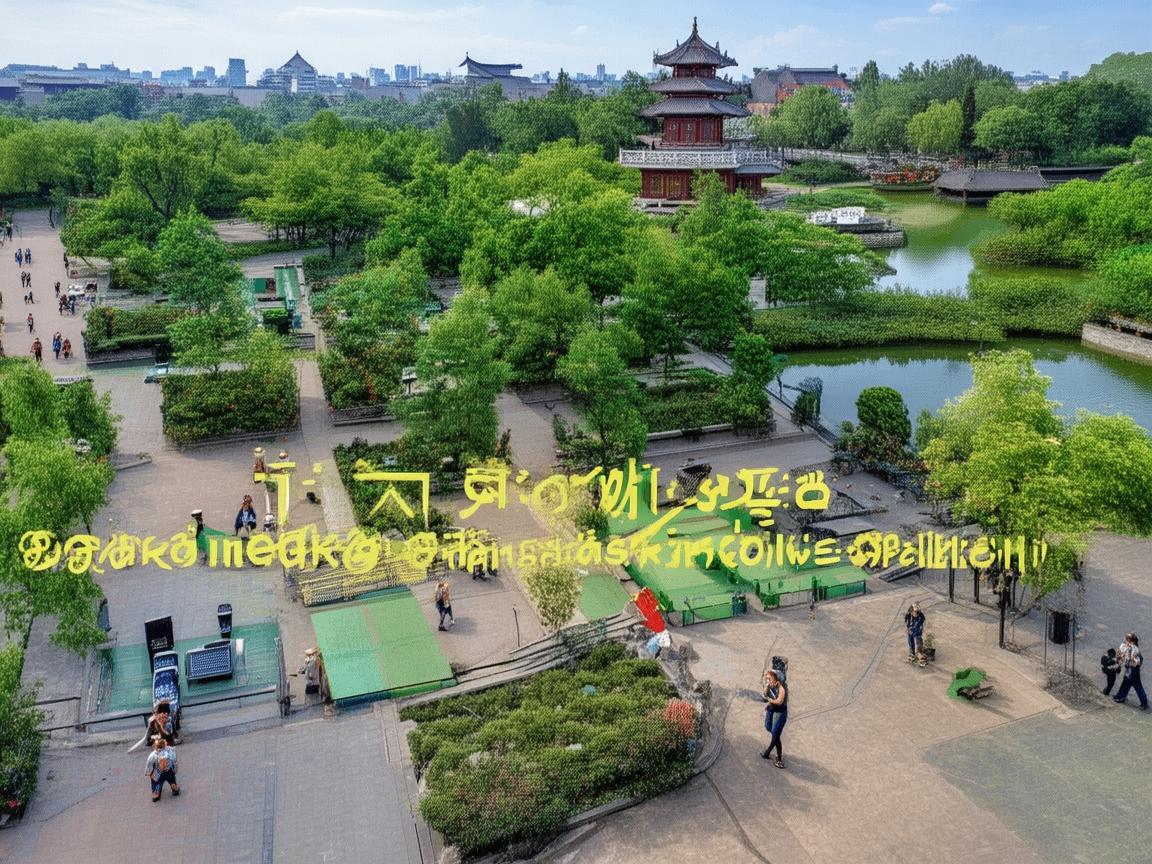
Exploring Xi’an’s Parks: A Traveler’s Guide to Smart Park Management
But here’s the smart part: flow. After the show, instead of everyone funneling through one exit, there were four staggered exits, each marked with arrows and lit-up signs. No pushing, no “excuse me” every two seconds. I even spotted a “lost child” station near the main exit—staff with walkie-talkies and a board where parents could pin photos of their kids. Hope no one needed it, but it’s the kind of detail that makes a traveler feel safe.
Oh, and waste management? Bins everywhere—and they’re sorted. “Recyclables,” “Food Waste,” “Other Waste” with pictures (great for non-Chinese speakers). Cleaners were constantly emptying them too, so no overflowing bins or trash rolling around. Small thing, but it keeps the park clean even with thousands of visitors.
Second Stop: Xingqing Palace Park (兴庆宫公园) – History Meets Everyday Life
Next, I headed to Xingqing Palace Park, built on the site of an Tang Dynasty imperial palace. This place felt… different. Quieter, more local. But the management was just as thoughtful, just in a different way.
First, accessibility. The park has tons of elderly visitors—Xi’an’s retirees love morning tai chi and evening dancing. So, the paths? Wide, paved, and smooth—no cobblestones that trip up walkers or wheelchairs. Benches every 50 meters or so, most with backrests and armrests. I saw one bench with a small sign: “Rest Area—Free Water,” with a thermos and paper cups. A volunteer refilled it every 20 minutes. Genius—older visitors (or tired tourists like me!) can stay hydrated without lugging water bottles.
Then there’s the cultural integration. The park isn’t just a lawn; it has ruins (you can walk on wooden platforms over old palace foundations), ponds with lotuses, and even a small museum. What I loved? The signage. Each ruin had a QR code—scan it, and you get an audio guide in English, Chinese, or Japanese, explaining what you’re looking at (e.g., “This is the foundation of the Hanlin Academy, where scholars studied during the Tang Dynasty”). No need to hire a guide; the park does the work for you.
And they respect the local vibe. There’s a dedicated area for tai chi classes in the morning, a corner for calligraphy practice in the afternoon, and even a stage for traditional opera on weekends. The management doesn’t shut these down—they embrace them. It’s not just a “tourist park”; it’s a community park. That balance? Hard to do, but Xi’an nails it.
Third Stop: City Wall Park (城墙公园) – Merging Old and New Safely
Okay, the City Wall is a must-do—riding a bike along the top is iconic. But the “park” here is the green space around the wall, plus the wall itself. Managing a UNESCO site with thousands of daily visitors? No small feat. Let me tell you how they do it.
First, capacity control. You can just show up and bike the wall anymore. You must book a time slot online—morning, afternoon, or evening. When I arrived, staff checked my booking (on my phone) and gave me a numbered wristband. Only 500 people allowed per time slot. No overcrowding, no rushing. Smart.
On the wall itself? Safety first. The bike lanes are wide, separated from walking paths by a small barrier. Staff patrol regularly, fixing wobbly bikes and reminding people not to lean over the edge (too many selfies have ended badly, I guess). There are even emergency call boxes every 500 meters—just press a button, and security answers within seconds.
The park around the wall? Green and lush, with playgrounds, picnic areas, and food stalls. But here’s the management win: separation. The playground is fenced off from the main path, so kids can play safely without dodging bikes. Picnic areas have designated grills (charcoal only, in specific spots) and bins for coals—no random fires on the grass. And when I left, I noticed signs: “Please return bikes to Zone 3—Follow the Blue Arrows.” Clear, simple, no confusion.
Fourth Stop: Chanba River Wetland Park (浐灞湿地公园) – Nature with a Green Thumb
Last stop: this park on the outskirts, known for its wetlands and birdlife. It’s quieter, more nature-focused, but the management here is all about sustainability. And as a traveler who cares about eco-tourism, I was impressed.
First, protecting the ecosystem. Most of the park is boardwalks—raised wooden paths that keep visitors off the actual wetlands. Signs everywhere say “Stay on Boardwalks—Plants and Animals Are Protected.” I even spotted hidden cameras (small, unobtrusive) to monitor wildlife—no poaching, no littering.
Water management? Genius. The park uses recycled water from the river to irrigate the plants, and there are “rain gardens”—small depressions that collect rainwater, reducing runoff and watering the grass naturally. Bins? Solar-powered, with compactors that signal when they’re full (so cleaners only come when needed—saving energy and time).
What about education? The park has a small “eco-center” with interactive exhibits: “Meet the Birds of Chanba River,” “How Wetlands Clean Water,” even a game where you can “design your own eco-park.” Perfect for families, but I loved it too—learned a ton about local biodiversity. And the gift shop? No plastic junk. Locally made crafts, reusable water bottles, seed packets for native plants. The park walks the talk on sustainability.
So, What’s the Big Deal About Park Management?
Look, I’m not a city planner. But after a week in Xi’an’s parks, I realized: good park management isn’t just about pretty flowers. It’s about making sure everyone—tourists, locals, kids, seniors—can enjoy the space safely, comfortably, and respectfully.
It’s the QR code tickets that save you from long lines. The sorted bins that keep parks clean even with crowds. The accessible paths that let grandma join the family picnic. The QR code guides that turn a walk in the park into a history lesson. The time slots on the city wall that protect a 600-year-old landmark from being loved to death.
Xi’an’s parks don’t just “manage” visitors—they guide them. They balance tourism with preservation, fun with education, crowds with calm. As a traveler, that matters. It means I can relax, soak in the culture, and not worry about getting lost, tripping over a broken path, or littering by accident (because the bins are everywhere!).
So, if you’re planning a trip to Xi’an, don’t skip the parks. They’re not just a break from sightseeing—they’re a window into how a city can take care of its people, its history, and its planet. And that? That’s travel gold.
Xi’an Airport Transfer Service
Private English-speaking driver service in Xi’an operated directly by Bruce Zhang. 24/7 airport pickup and hotel transfer for foreign travelers.
Helpful for Your Trip in Xi’an
Unlocking Xi’an: A Traveler’s Guide to the Discovery Entry System
2026-07-28Xi’an Travel Hack: How an Admission Pass Saved Me Time, Money, and Headaches
2026-07-28Visiting Xi’an? How a China Attraction Reservation App Saved My Trip
2026-07-28Skip the Lines, Savor the Stories: My VIP Entry Guide to Xi’an
2026-07-27Traveling Xi’an Smart: How Online Booking Made My Trip Seamless and Stress-Free
2026-07-27Navigating Xi’an’s Face Recognition Entry Systems: A Tourist’s Practical Guide
2026-07-27Xi’an Traveler’s Guide: Navigating the City with China’s Visitor Platforms
2026-07-26Navigating Xi’an’s Tour Entry System: A Traveler’s Practical Guide
2026-07-26Xi’an Travel Hack: How a Ticket Issuing App Saved My Trip and 5 Hours in Queues
2026-07-26Xi’an Travel Tips: Navigating Ticket Codes Like a Local
2026-07-25