

Navigating Xi’an’s Entry Controls: A Traveler’s Practical Guide
As I stood in the sweltering morning heat outside the Terracotta Army Museum, watching a fellow traveler argue with security over a forgotten ID, I realized: Xi’an’s entry controls—those little rules that get you into attractions, hotels, and even subway stations—can make or break your trip. I’d spent a week navigating them, from missed bookings to last-minute ID checks, and let me tell you: a little prep goes a long way. If you’re heading to Xi’an, here’s what you actually need to know about getting in (and avoiding stress) at every turn.
First Things First: IDs Are Non-Negotiable
Xi’an, like most Chinese cities, runs on a strict ID system. Whether you’re Chinese or foreign, you cannot enter major attractions, check into hotels, or even buy train tickets without proper identification. For Chinese travelers, that’s a national ID card; for us foreigners, it’s a passport. No exceptions.
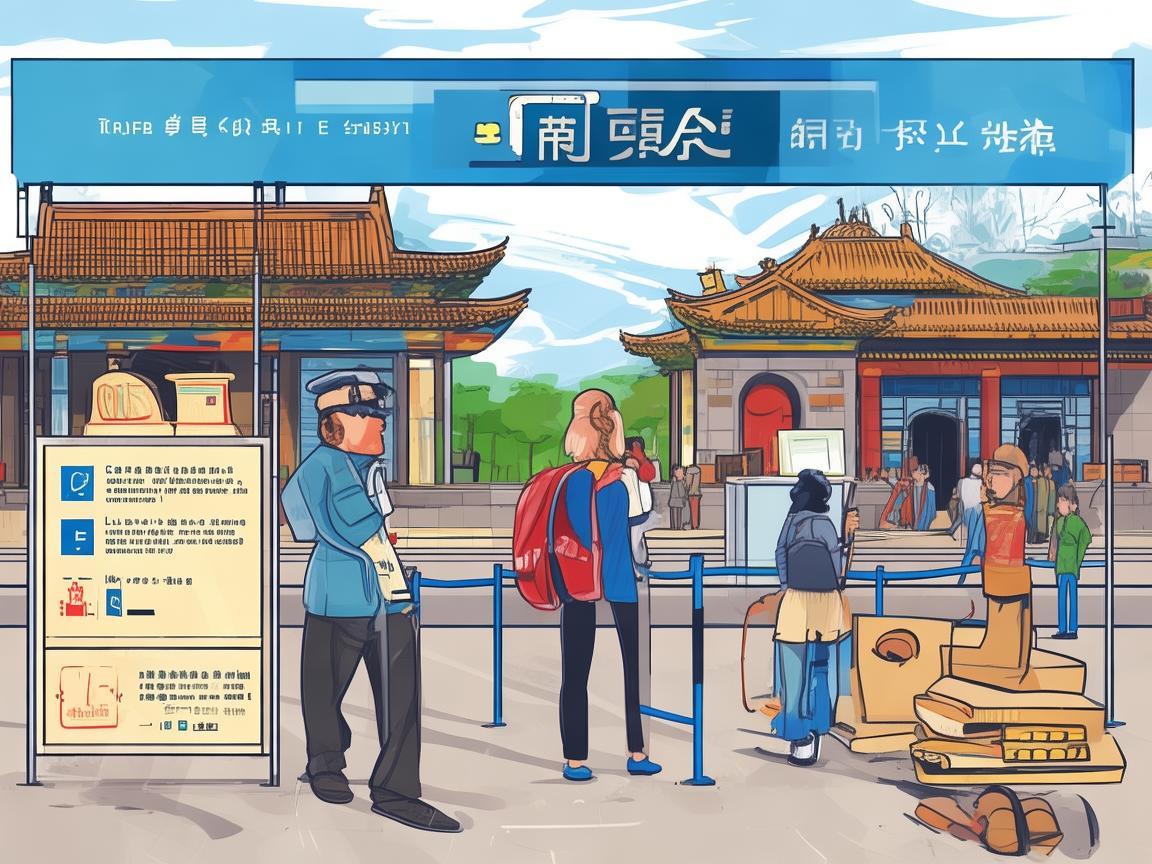
Navigating Xi’an’s Entry Controls: A Traveler’s Practical Guide
I learned this the hard way on my first day. I’d planned to visit the Big Wild Goose Pagoda, popped into a nearby café for coffee, and then headed to the gate—only to be stopped. “Passport, please,” the guard said, pointing to a sign I’d missed: “Foreign visitors must show passport for entry.” I’d left mine at the hotel. An hour round trip later, sweating and frustrated, I finally got in. Lesson learned: Never leave your hotel without your passport. It’s your golden ticket to everything.
Pro tip: Keep a photocopy of your passport (and visa) in your day bag, too. Some smaller attractions or ticket offices might ask for it instead of the original, and it’s lighter to carry.
Attraction Reservations: Book Early, or Wait (Maybe)
Xi’an’s top spots—Terracotta Army, City Wall, Shaanxi History Museum—are popular. Like, “wait in line for 3 hours” popular. To avoid that, you must book tickets in advance. But here’s the catch: each attraction has its own booking system, and they’re not always user-friendly for foreigners.
Take the Terracotta Army, for example. The official way to book is through their WeChat account (“秦始皇帝陵博物院” — Qin Shi Huang Mausoleum Museum). Problem? It’s all in Chinese. I spent 20 minutes fumbling with translation apps, trying to figure out how to select a date and time (tip: look for “预约日期” for date and “预约时段” for time). Foreigners can pay with Alipay or a UnionPay card, but if you don’t have those, you’ll need a Chinese friend to help—or book through a third-party app like Trip.com, which has an English interface. I did the latter, paid a small fee, and skipped the entire ticket queue. Worth it.
The Shaanxi History Museum is even trickier: it’s free, but you still need a timed ticket. They release tickets 7 days in advance at 10 AM sharp, and they sell out in minutes. I set an alarm for 9:55 AM, refreshed my phone like a madwoman, and snagged a ticket for 2 PM the next day. Phew. If you miss the window, you can try their on-site ticket office at 8 AM the next day—they release a limited number of “walk-up” tickets, but it’s a gamble.
Smaller attractions, like the Muslim Quarter or the Small Wild Goose Pagoda, don’t always require advance booking, but it’s still smart to check their websites or WeChat accounts for any entry rules (some may limit capacity during peak hours).
Health Codes & COVID Rules: Still a Thing (Sort Of)
Post-pandemic, China’s health code system (“健康码”) is still part of daily life, though it’s loosened up a lot. For most places in Xi’an, you’ll need to show a green health code (proving you’re not COVID-positive) and a “行程码” (行程卡, travel code) showing you haven’t been to high-risk areas recently.
How to get them? Download the “支付宝” (Alipay) app. Go to “健康码” (Health Code) and “行程卡” (Travel Card) in the “市民中心” (Citizen Services) section. You’ll need to link your phone number and verify your info—foreigners can use their passport number. The codes update daily, so check them in the morning before heading out.
I only ran into one issue: when I visited a rural temple outside the city, the guard asked for a negative COVID test from the past 48 hours. Luckily, I’d gotten one out of caution (you can buy rapid tests at any pharmacy for ~¥20), but it’s a good reminder: if you’re planning day trips to smaller towns, keep a test handy. For most central Xi’an attractions, though, a green code is enough.
Hotel Check-In: Your Passport + a Little Patience
Checking into hotels in Xi’an is straightforward, but it requires paperwork. By law, hotels must register your passport with the police within 24 hours of arrival. So when you check in, the front desk will take your passport, scan it, and give you a temporary registration slip (临时住宿登记表). Keep this—you might need to show it at attraction ticket offices or police checkpoints.
I stayed at a mid-range hotel near the Bell Tower, and the check-in took 15 minutes because the staff had to manually enter my info into a system. For smaller guesthouses, it can take longer, so don’t arrive late at night expecting a quick in-and-out.
If you’re staying in an Airbnb or private apartment, make sure the host has registered you with the police. Some hosts will ask for a copy of your passport and visa beforehand—comply, or you risk getting fined (or even evicted). Pro tip: Before booking, message the host to confirm they’re familiar with foreign guest registration.
Transportation: Getting In & Around
Xi’an’s subway and buses are efficient, but they have their own entry rules. For the subway, you can buy a single-ride ticket with cash or use a transportation card (“长安通卡”). Foreigners can also pay with Alipay or WeChat—just scan the QR code at the ticket gate (look for the “支付宝” or “微信支付” sign).
The bigger hassle? Bag checks. Xi’an’s subway stations have security screenings, similar to airports. They’ll scan your bag with a metal detector and sometimes open it for a quick check. I learned to keep my water bottle in a side pocket—makes the process faster. If you’re carrying a large backpack, expect it to be checked every time.
Taxis and ride-shares (Didi, the Chinese Uber) are easier—no entry checks, just hop in. But if you’re taking a high-speed train to Xi’an (from Beijing, Shanghai, etc.), you’ll need your passport to enter the station and board. The ticket is linked to your ID, so no ticket, no entry. I made the mistake of downloading my ticket to my phone and forgetting my passport—had to run back to the hotel to get it. Don’t be me.
Final Tips: Roll with the Punches
Xi’an’s entry controls can feel bureaucratic, but they’re there for safety and crowd control. The key is to plan ahead:
- Always carry your passport (and a photocopy).
- Book popular attractions in advance—use third-party apps if Chinese ones are tricky.
- Check health codes daily—Alipay is your friend.
- Arrive early—security checks and ticket lines take time.
On my last day, I visited the City Wall at 8 AM. No lines, no crowds, just me biking along the ancient ramparts as the sun rose. I’d spent the week stressing over entry rules, but in the end, they just meant more time for the good stuff—like actually enjoying Xi’an.
So pack your patience, your passport, and this guide. You’ve got this.
Xi’an Airport Transfer Service
Private English-speaking driver service in Xi’an operated directly by Bruce Zhang. 24/7 airport pickup and hotel transfer for foreign travelers.
Helpful for Your Trip in Xi’an
Xi’an Through My Eyes: A Visitor’s Approval Guide to the Must-Do, Must-Eat, and Must-Avoid
2026-09-01Xi’an on Your Terms: How the Smart Access System Made My Trip a Breeze
2026-08-30Xi’an: Where Ancient History Meets a Modern Integrated Tourism Ecosystem
2026-08-29Xi’an: Where Ancient Heritage Breathes with Living Ecosystems
2026-08-27Xi’an on the Metro: A Traveler’s Guide to Getting Around Like a Local
2026-08-27Xi’an Travel Tips: Navigating Ticket Codes Like a Local
2026-08-25What I Only Figured Out After 3 Trips
2026-08-23Is the Forest of Stone Steles Actually Worth Visiting in Xi'an?
2026-08-182026 Travel Season: How to Visit Xi'an in Summer Without the Crowds
2026-08-16Xi’an Travel Diary: How Reservation Confirmations Saved My Trip
2026-08-14