

Navigating Xi’an: A Traveler’s Guide to Smart Booking Management
I’ll never forget my first trip to Xi’an. I landed at Xi’an Xianyang International Airport, clutching a crumpled list of “must-sees”—the Terracotta Army, the Muslim Quarter, the City Wall—and a vague plan that mostly involved “winging it.” By day two, I was a mess: stuck in a 2-hour taxi line to my hotel far from the city center, staring at a sold-out sign for the Terracotta Army tickets, and realizing I’d booked a “cooking class” that turned out to be a tourist trap with overpriced, mediocre food.
That trip taught me a hard lesson: traveling without a system is chaos. Now, whether I’m exploring Xi’an’s ancient streets or planning a weekend getaway, my secret weapon is a solid booking management system—a digital toolkit that keeps track of flights, hotels, tickets, and experiences, all in one place. If you’re heading to Xi’an, let me share how this system can turn stress into smooth sailing, with practical tips I’ve learned the (sometimes painful) way.
Why a Booking Management System? The Xi’an Travel Reality
Xi’an is a city of contrasts: 3,000-year-old history bumping up against modern skyscrapers, bustling night markets steps from quiet temple courtyards. It’s incredible, but it’s also busy. During peak season (spring and autumn, especially around Chinese holidays), the Terracotta Army can draw 50,000 visitors a day. Hotels in the Muslim Quarter get fully booked months in advance. And if you’re trying to coordinate trains, buses, and entry tickets across multiple sites? It’s a recipe for missed opportunities—like skipping the sunset on the City Wall because you were stuck buying tickets.
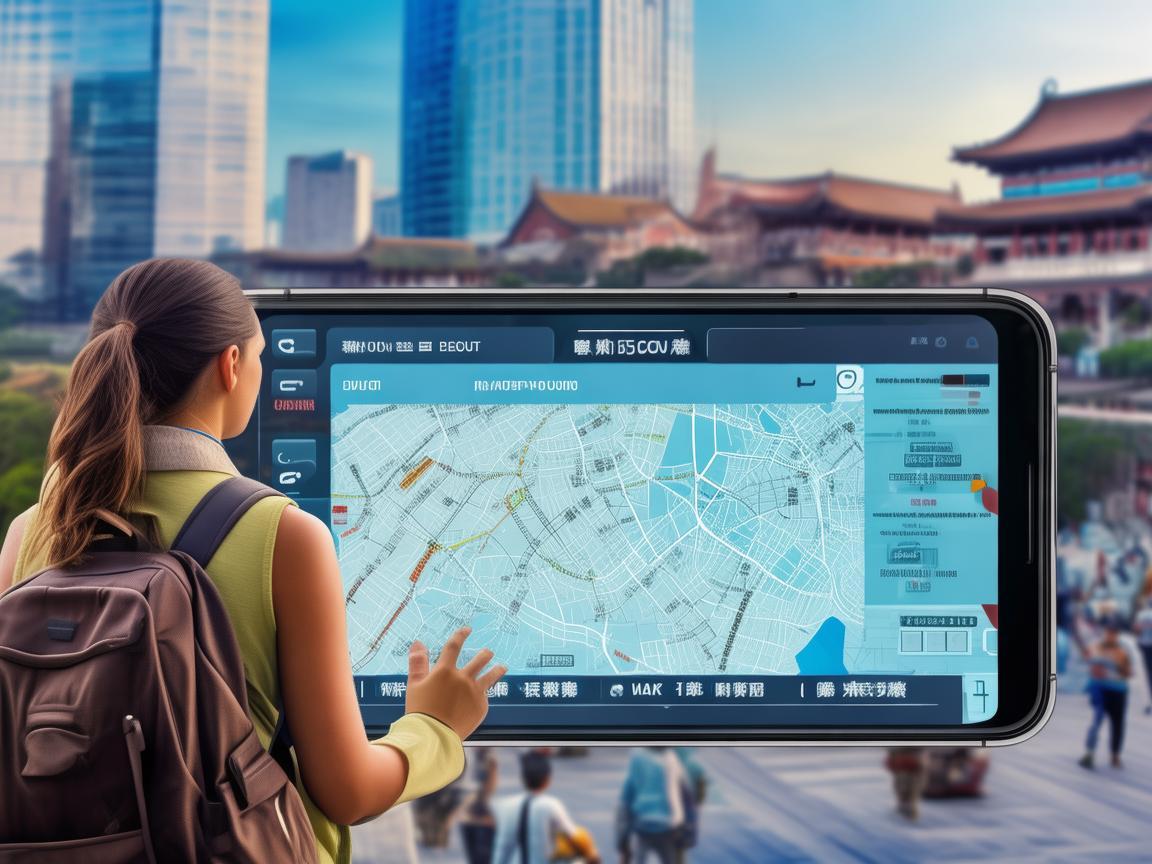
Navigating Xi’an: A Traveler’s Guide to Smart Booking Management
A booking management system doesn’t just “store” your reservations; it organizes your entire trip. Think of it as a travel command center: it reminds you of check-in times, lets you modify bookings on the fly, and even flags problems (like a hotel overbooking) before they ruin your day. For Xi’an, where logistics can make or break your experience, this is non-negotiable.
Step 1: Choose Your System—Simple or Supercharged?
You don’t need fancy software to get started. Your “system” can be as basic as a Google Sheets spreadsheet or as robust as a dedicated travel app like TripIt or Sygic Travel. I’ve tried them all, and here’s what works for me:
For Minimalists: Google Sheets (Free & Flexible)
I use a simple spreadsheet with columns for “Date,” “Item” (e.g., “Flight to Xi’an”), “Details” (e.g., “MU2101, 8:00 AM, Gate B12”), “Confirmation #,” “Contact Info,” and “Notes.” For Xi’an, I add a “Location” column (e.g., “Xi’an North Railway Station”) and a “Transport Link” (e.g., “Metro Line 2 to Bell Tower, 30 mins”). It’s not pretty, but it’s searchable and syncs across my phone and laptop—perfect for when I’m offline and need to find my hotel’s address.
For Tech Lovers: TripIt (Automated & Organized)
TripIt is like having a personal travel assistant. You forward all your booking emails (flights, hotels, tickets) to a special address, and it automatically pulls the details into a master itinerary. For my last Xi’an trip, it sent me real-time alerts for flight delays, reminded me to check in for my hotel 24 hours early, and even included a map of my hotel’s neighborhood with nearby restaurants. The best part? It works offline, so I didn’t panic when I lost Wi-Fi in the Muslim Quarter.
For Local Flavor: WeChat Mini-Programs (Xi’an-Specific)
In China, WeChat is everything. For Xi’an, I use mini-programs like “西安旅游” (Xi’an Tourism) for official ticket bookings and “大众点评” (Dianping, like Yelp) for restaurant reservations. These integrate with my WeChat wallet, so I can show a QR code for tickets instead of printing them. Pro tip: Link your WeChat to TripIt so the mini-programs’ updates sync with your main itinerary.
Step 2: Master Key Bookings—How the System Saves the Day
Xi’an’s top attractions and services require advance planning, and a booking system ensures you don’t miss out. Here’s where to focus:
Flights & Trains: Lock In Early, Modify Easily
Xi’an has two major airports: Xi’an Xianyang (international) and Xi’an Yanliang (domestic, mostly for low-cost carriers). For most travelers, Xianyang is the main hub. I always book flights through Skyscanner or Kayak and then immediately add the confirmation to my booking system. Why? Because flights to Xi’an get pricey during peak season, and delays are common (I’ve had two weather-related delays in three trips).
Trains are even trickier. Xi’an is a high-speed rail hub, with connections to Beijing (2 hours), Chengdu (3 hours), and Xi’an North Railway Station being one of the busiest in China. For trains, I use the official “12306” app (China’s railway booking system) and sync it to TripIt. Here’s how the system helped me: Last fall, I booked a train from Xi’an to Luoyang but realized later it was a “slow” train (3 hours) instead of the high-speed “G” train (1 hour). My spreadsheet had the train number and time, so I quickly spotted the mistake, canceled on the 12306 app (no fee, since it was 48 hours in advance), and rebooked the G-train—all before leaving my hotel.
System Tip: Add a “Backup Transport” column to your spreadsheet. For example, if your flight arrives at 10 PM, note that the last Metro to the city center stops at 11 PM, and a taxi costs ~¥150.
Hotels: Location, Location, Location (and a System to Prove It)
Xi’an’s neighborhoods are distinct, and booking the right one is half the battle. The Muslim Quarter (Huimin Jie) is perfect for foodies but loud at night; the Bell Tower area is central but pricier; and near the South Gate (Nanmen) is quieter with great access to the City Wall.
I use Booking.com for hotels but always cross-reference with my system. Here’s why: On my first trip, I booked a “cheap” hotel in a suburb because the price was low. My system’s “Location” column had the address (“15 km from Bell Tower”), but I ignored it. Turns out, it took 45 minutes by bus to get anywhere, and I wasted 3 hours every day on transport. Now, I filter hotels by “distance to top attraction” (e.g., “≤1 km from Terracotta Army”) and add the travel time to my system.
For boutique stays or homestays (great for experiencing local life), I use Airbnb, but I always message the host via the platform (never off-app) and save the conversation in my system. Last year, a host canceled my reservation 48 hours before arrival—luckily, my system had her contact info, so I called her, and she helped me find a similar place nearby.
System Tip: Add a “Hotel Notes” section with check-in instructions (e.g., “Code for front door lock: #1234”), breakfast times, and nearby ATMs. I once missed breakfast because I didn’t realize it ended at 9 AM—my system now reminds me!
Attractions: Skip the Lines, Book Smart
Xi’an’s top attractions require advance tickets, especially during peak season. A booking system ensures you don’t waste hours in line—or worse, get turned away.
-
Terracotta Army: This is non-negotiable. Tickets sell out daily in peak season. I book through the official “秦始皇陵博物院” (Terracotta Army Museum) website or WeChat mini-program, choosing a time slot (e.g., 9:00–11:00 AM). My system saves the QR code, so I skip the ticket office and go straight to the entrance. Pro tip: Book the “+1 pit” ticket (includes Pit 3 and the exhibition hall)—most tourists skip it, but it’s worth it.
-
City Wall: You can walk, bike, or take a e-bike around the 14km wall. I always book e-bikes in advance via Dianping—they’re ¥80/4 hours, and booking ensures they have your size ready. My system notes the bike rental location (“South Gate, East Side”) and the return time (they close at 8 PM).
-
Big Wild Goose Pagoda & Shaanxi History Museum: Both are free but require timed tickets. For the History Museum, I book 3 days ahead on its official website—tickets vanish by 10 AM. My system sets a reminder to book at 9 AM when they’re released.
System Tip: Add a “Crowd Level” note to each attraction. For example, “Terracotta Army: least crowded 4–6 PM; Muslim Quarter: busiest 7–9 PM.” Adjust your schedule to avoid the masses!
Food & Experiences: Go Local, Go Booked
Xi’an is a food paradise, but the best spots (like a hidden noodle shop in a hutong) don’t take reservations. However, popular experiences do—and a booking system helps you snag them.
-
Muslim Quarter Food Tours: I love “Xi’an Food Tour” on Viator—they take you to family-run spots for roujiamo (Chinese burgers) and liangpi (cold noodles). I book 1 week ahead and save the meeting point (“Bell Tower, West Exit”) and guide’s number in my system. Last time, my guide texted me a 10-minute delay—my system had her contact, so I didn’t panic.
-
Cooking Classes: Skip the tourist traps! I use Dianping to find highly-rated classes (look for 4.8+ stars, 500+ reviews) and book via the platform. My system saves the class menu (“Learn to make paomo bread soup”) and what to bring (“apron provided”).
-
Evening Tang Dynasty Show: The “Tang Paradise” show is iconic but sells out. I book through Klook (a popular travel app in Asia) and save the e-ticket in my system. The show starts at 8 PM, so I note the “arrive by 7:30 PM” rule—latecomers aren’t allowed in!
Step 3: Handle the Unexpected—How Your System Saves You
No trip goes 100% to plan, and that’s where a booking system shines. Here are two real-life examples from my Xi’an adventures:
Example 1: The Overbooked Hotel
Last spring, I arrived at my hotel near the Muslim Quarter at 10 PM, tired from a delayed flight. The front desk said, “Sorry, we overbooked—no room for you.” I panicked for 2 seconds, then opened my booking system. I had the hotel’s manager’s number (saved from a prior message), the booking confirmation, and a backup hotel’s name (filtered by “≤1 km away”) from my spreadsheet. I called the manager, who apologized and moved me to a sister hotel 5 minutes away. My system even had the backup hotel’s directions, so I didn’t wander the streets at night.
Example 2: The Rainy Day Pivot
One trip, I planned a full day at the Terracotta Army—but woke up to a downpour. My system had a “Rainy Day Backup” list: Shaanxi History Museum (indoor) and a tea-tasting experience in a traditional courtyard. I quickly canceled my Terracotta Army tickets (no fee, since it was 24 hours in advance) via the official website (saved in my system) and rebooked the museum and tea class. The result? A cozy, cultural day instead of a soggy outdoor slog.
Final Tips: Make Your System Work for You
A booking system is only as good as how you use it. Here’s my advice:
-
Update It Daily: Add new bookings, take screenshots of tickets, and jot down notes (e.g., “Try the lamb burger at Lao Sun Ji—next to the mosque”).
-
Keep It Accessible: Save your system offline (Google Sheets works offline, TripIt has a premium offline feature). You won’t always have Wi-Fi in Xi’an’s hutongs.
-
Don’t Overcomplicate: You don’t need 10 apps. A spreadsheet + one booking app (like Klook for tickets) + WeChat mini-programs is enough.
-
Trust the System: If your spreadsheet says your train leaves at 10:15 AM, don’t “wing it” and leave at 10:00 AM—Xi’an’s train stations are huge, and you’ll need time to navigate security.
Wrapping Up: Travel Xi’an Like a Pro
Xi’an is a city that stays with you—the smell of cumin skewers in the night market, the sight of terracotta warriors standing guard for 2,000 years, the feel of the city wall beneath your feet as the sun sets. But to truly enjoy it, you need to spend less time stressing about logistics and more time soaking it all in.
A booking management system isn’t about being “organized for the sake of it”—it’s about giving yourself the freedom to explore. When you know your train is booked, your hotel is confirmed, and your tickets are saved, you can wander down a random alley, try a street food stall that looks sketchy but smells amazing, or stay an extra hour at the Terracotta Army because you’re having so much fun.
So before your trip to Xi’an, take an hour to set up your system. Your future self—standing in line for a taxi at midnight, or trying to find a lost reservation—will thank you. And who knows? You might just have the trip of a lifetime.
Happy travels—and happy booking!
Xi’an Airport Transfer Service
Private English-speaking driver service in Xi’an operated directly by Bruce Zhang. 24/7 airport pickup and hotel transfer for foreign travelers.
Helpful for Your Trip in Xi’an
Skip the Lines, Savor the Stories: My VIP Entry Guide to Xi’an
2026-07-27Traveling Xi’an Smart: How Online Booking Made My Trip Seamless and Stress-Free
2026-07-27Navigating Xi’an’s Face Recognition Entry Systems: A Tourist’s Practical Guide
2026-07-27Xi’an Traveler’s Guide: Navigating the City with China’s Visitor Platforms
2026-07-26Navigating Xi’an’s Tour Entry System: A Traveler’s Practical Guide
2026-07-26Xi’an Travel Hack: How a Ticket Issuing App Saved My Trip and 5 Hours in Queues
2026-07-26Xi’an Travel Tips: Navigating Ticket Codes Like a Local
2026-07-25Unlocking Xi’an: A Traveler’s Guide to the China Museum Gate and Beyond
2026-07-25Visiting Xi’an: A Practical Guide to China’s Attraction Regulations
2026-07-23Traveling Xi’an Like a Local: Smart Destination Management Tips for Tourists
2026-07-23