

Cash in China: A Xi’an Traveler’s Honest Guide to Money Matters
Landing in Xi’an for the first time, I’ll admit I was a bit nervous about money. Back home, I rarely carry cash—everything’s tap-to-pay or Venmo. But China? I’d heard mixed things: some said “cash is king,” others swore “everyone uses QR codes.” So, clutching my wallet (stuffed with yuan I’d exchanged at the airport) and my phone (downloaded with Alipay and WePay), I set out to figure it out: Is cash actually accepted in Xi’an? Spoiler: It’s complicated. But after a week of wandering through Muslim Quarter lanes, bargaining at markets, and fumbling with payment apps, I’ve got a实用 (practical) guide to share. Let’s break it down.
First Things First: Cash Is Legal Tender—But…
Let’s start with the basics: yes, Chinese yuan (CNY) is official currency, and businesses must accept cash by law. I learned this the hard way when I panicked at a small noodle shop in Bell Tower Square, realizing I’d left my wallet at the hotel. The owner, seeing my fluster, smiled and said, “Cash is fine! We take both.” He even had a stack of worn 10-yuan notes tucked behind the counter.
But here’s the catch: while cash will work, it’s not always the easiest option. In big cities like Xi’an, mobile payments (we call them “扫码支付” or “scan-to-pay”) dominate. So, think of cash as your “backup plan,” not your primary strategy.
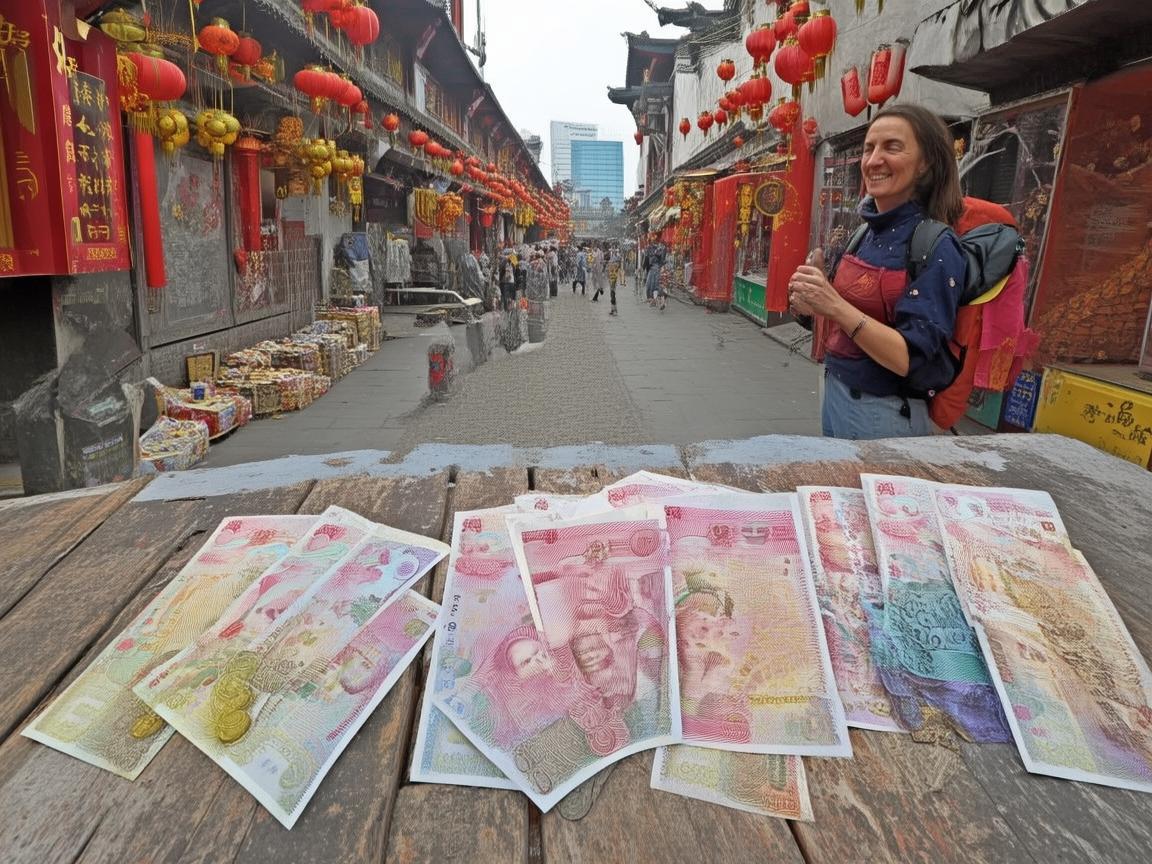
Cash in China: A Xi’an Traveler’s Honest Guide to Money Matters
When Cash Is Your Best Bet (Trust Me)
Tiny Street Stalls and Local Eateries
Xi’an’s soul lives in its street food: roujiamo (Chinese hamburgers), biangbiang noodles, and persimmon cakes from night markets. I learned quickly that the smallest vendors—think a grandma pushing a cart of steaming buns or a hole-in-the-wall dumpling shop with no English sign—often prefer cash. Why? They’re not set up for digital payments: no smartphone, no QR code, or they’re just not tech-savvy.
My story: At Muslim Quarter’s night market, I craved a skewer of grilled lamb. The vendor, a middle-aged man with a charcoal grill, pointed to a worn sign: “现金 only.” I handed him a 20-yuan note; he grunted, took the money, and slid the skewer across. No app, no PIN—just a simple exchange. If I’d only had my phone, I would’ve missed out.
Rural Areas and Small Villages Near Xi’an
I took a day trip to Huashan Mountain (about 2 hours from Xi’an) and stopped at a tiny village at the base. The local farmer selling fresh peaches? Cash only. The minivan driver taking us up the mountain? Cash only. Even the entrance fee for a small temple there? Cash only. In these places, digital payments haven’t fully trickled down, so stash some small bills (10s, 20s, 50s) before leaving the city.
Bargaining at Markets (Like the Big Wild Goose Pagara Market)
Xi’an has amazing markets for souvenirs: terracotta army figurines, silk paintings, and Shaolin kung fu uniforms. Bargaining is expected, and cash makes it easier. Why? When you pay with cash, the vendor can give you change on the spot, no “let me check the app” delays. I once tried to bargain for a silk scarf using Alipay; the vendor kept getting distracted by notifications, and the haggling lost its momentum. When I switched to cash, we settled on a price in 2 minutes.
Pro tip: Bring small, crisp bills. Torn or wrinkled notes might be refused—especially by vendors who are careful about “good” money.
When to Ditch Cash (And Embrace QR Codes)
Almost Every Restaurant, Café, and Chain Store
From modern cafes in the High-tech Zone to hotpot restaurants in the city center, mobile payments are king. I ate at a popular yangrou Paomo (bread soaked in lamb soup) spot, and even the waiter—maybe 20 years old—scanned my QR code without a second thought. Most places display two QR codes: one for WeChat pay (green) and one for Alipay (blue). Just open your app, scan, and confirm. It’s faster than inserting a card!
Bonus: Many apps offer discounts for using mobile payments. Alipay often has “red envelopes” (random coupons) for food, and WeChat Pay gives “points” you can redeem for small perks. I saved about 30 yuan in a week just by using these!
Malls, Supermarkets, and Convenience Stores
Places like SKP Xi’an (a fancy mall) or Walmart accept both cash and cards, but mobile payments are way quicker. At a 7-Eleven, I tried to pay with cash, but the cashier pointed to the QR code terminal: “Scan here, faster.” Even vending machines in subway stations now take Alipay/WeChat—no coins needed!
Taxis and Ride-Sharing (Didi)
Taxis in Xi’an do accept cash, but drivers often prefer mobile payments. Why? They don’t have to carry change, and the money goes straight to their account. I took a taxi from the airport to my hotel; when I offered cash, the driver said, “WeChat or Alipay, please?” I scanned his QR code, paid, and got a digital receipt—no fumbling for small bills.
Side note: If you use ride-sharing apps like Didi (China’s Uber), you must use mobile payments. Cash isn’t an option.
The Mobile Payment Lowdown: What You Need to Know
If you’re coming from abroad, mobile payments in China can seem daunting. But don’t worry—they’re easy once you set them up. Here’s the 101:
WeChat Pay vs. Alipay: Which One?
Both are like super apps: you can pay for food, shopping, taxis, even split bills with friends. WeChat Pay is more popular for everyday transactions (buying coffee, street food), while Alipay is big for shopping and online orders. Honestly, having both is best—some places only take one.
How to Set Up Mobile Payments as a Foreigner
This is the tricky part. Most foreign bank cards won’t work directly on WeChat/Alipay. Here’s what I did:
-
Link a Foreign Credit/Debit Card: Open WeChat Pay or Alipay, go to “Wallet,” and add your card (Visa/Mastercard). It might work—many travelers have success with this. I linked my U.S. debit card, and it worked for small payments (under 1,000 yuan).
-
Use a “Digital Wallet” Service: If your card doesn’t work, try services like Alipay+ or WeChat Pay International. These let you top up your balance using foreign cards, or even convert currencies. I used Alipay+ to add 500 yuan to my account, and it worked seamlessly.
-
Ask a Local Friend: If you have a Chinese friend, they can “send you money” via WeChat/Alipay, which you can then use to pay. It’s a quick fix if you’re stuck.
Pro Tips for Mobile Payments
- Download the Apps Before You Arrive: WeChat and Alipay are blocked in some countries, so download them and set up payment while you’re on Wi-Fi.
- Keep Your Phone Charged: No power = no payment. I carried a portable charger—essential!
- Save QR Codes: If you go to a place often (like your favorite café), save their QR code to your phone’s home screen for quick access.
Cash: How Much to Carry, and Where to Get It
So, how much cash should you bring? As a rule of thumb: 300-500 yuan per day for small expenses, plus a bit extra for emergencies. Here’s what worked for me:
- Small Bills: Get 10s, 20s, and 50s. Vendors rarely have change for 100s, and a 100-yuan note is like a $20 bill—too big for a 10-yuan snack.
- Exchange Money Wisely:
- Airports: Easy, but rates are worse than in the city. I exchanged $50 at Xi’an Xianyang International Airport—got 350 yuan. Later, I found a bank downtown that gave me 370 for the same amount.
- Banks: Bank of China, ICBC, and China Construction Bank all exchange foreign currency. Bring your passport—you’ll need it.
- ATMs: Most ATMs accept foreign cards (Visa/Mastercard). I used one at a Bank of China and got cash with a small fee (around 50 yuan).
- Avoid “Currency Exchange” Shops on the Street: They often have terrible rates. Stick to banks or official ATMs.
Cash vs. Mobile: My Final Verdict
After a week in Xi’an, here’s my take: Use mobile payments for 90% of things, cash for 10%. Mobile payments are faster, more convenient, and accepted almost everywhere in the city. But for tiny street vendors, rural areas, or bargaining, cash is still king.
I made one mistake early on: I only brought 200 yuan, thinking “I’ll just use my phone.” Then I got stuck in a tiny village with no Wi-Fi and no way to pay for a bus ride. Lesson learned: always have a backup.
Quick Checklist for Your Xi’an Trip
- ✅ Download WeChat Pay and Alipay.
- ✅ Link a foreign card or set up a digital wallet.
- ✅ Carry 300-500 yuan in small bills (10s, 20s, 50s).
- ✅ Keep a portable charger handy.
- ✅ Learn a few phrases: “现金可以吗?” (Can I use cash?) and “微信支付” (WeChat pay) or “支付宝” (Alipay).
Xi’an is an incredible city—ancient history, amazing food, and friendly people. Don’t let money worries ruin your trip. With a little prep, you’ll navigate payments like a pro. Now go enjoy that roujiamo—you’ve got this!
Xi’an Airport Transfer Service
Private English-speaking driver service in Xi’an operated directly by Bruce Zhang. 24/7 airport pickup and hotel transfer for foreign travelers.
Helpful for Your Trip in Xi’an
Xi’an Night Markets: A Tourist’s Guide to Navigating QR Code Payments Like a Local
2026-09-08Renting a Car in Xi’an as a Foreigner: A Practical Guide to Payments and More
2026-09-0612-Hour Xi’an Layover: A Foreigner’s Guide to Payments & Must-See Spots
2026-09-03Xi’an Travel Tips for Foreigners: Navigating Payments & Hotel Drop-offs Like a Pro
2026-09-02Your QR Payment Survival Guide for Xi’an: How to Pay Like a Local
2026-09-01Xi’an Travel Tips: Why Cash Still Matters (and Where to Use It!)
2026-08-26Macau Payment Guide for Foreign Travelers: From Cash to Apps
2026-08-19Xi’an Travel: A Tourist’s Guide to Scenic Area Payments & Tips
2026-08-13Navigating Payments in Xi’an Without a Data Plan: A Tourist’s Practical Guide
2026-08-11Smart Savings in Xi’an: A Traveler’s Guide to Education-Friendly Payment Systems
2026-08-10