

Cash or Code? My Real Talk About Paying at Xi’an Restaurants
Let me start with this: When I first touched down in Xi’an, starving after a 12-hour flight, my brain was stuck on one loop: Do restaurants here take cash? I’d heard China was all about mobile payments—WeChat, Alipay, the whole digital shebang—but I’m old-school (and let’s be real, a bit paranoid about tech when I’m jet-lagged). What if I found a tiny, hole-in-the-wall noodle spot that only took yuan? What if my phone died? Spoiler: I survived, and ate like a queen. Here’s what I actually learned, no fluff—just the real stuff that’ll help you not stress about money while you’re busy falling in love with Xi’an’s food.
First things first: Yes, most restaurants take cash. But here’s the catch.
China law says all businesses must accept cash—no ifs, ands, or buts. So technically, if you walk into a restaurant, slap down a 100-yuan bill, and demand to pay in cash, they can’t refuse. But in reality? It’s complicated.
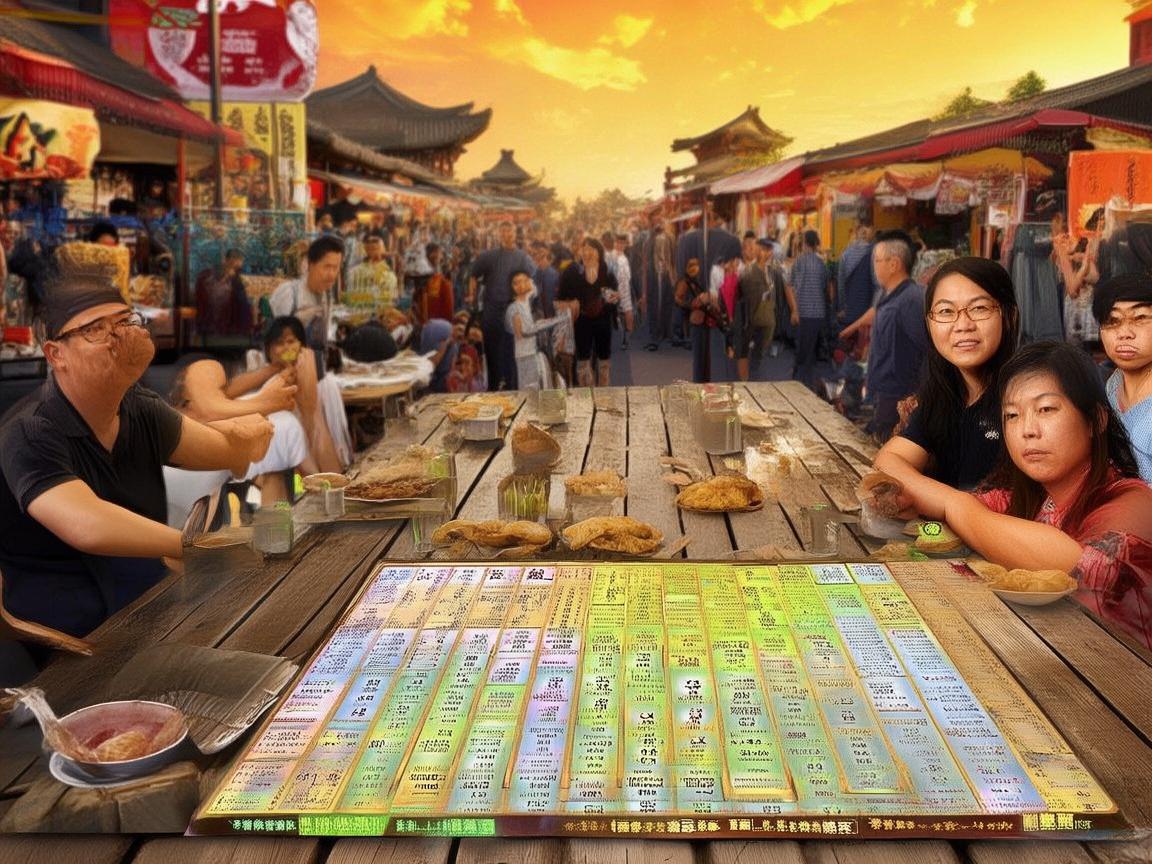
Cash or Code? My Real Talk About Paying at Xi’an Restaurants
Big, fancy places? Totally fine. They’ll take cash, no problem. I ate at a fancy restaurant near the Bell Tower, ordered Shaanxi’s signature roujiamo (meat burgers) and paomo (bread soup), and paid with a 200-yuan bill. The cashier just smiled, took it, and gave me change. Easy.
But here’s where it gets tricky: the tiny spots. The street stalls, the family-run xiaochi (snack) shops, the hidden noodle joints in Muslim Quarter. Those places? They might take cash, but they really prefer mobile payments. Why? Because handling cash means counting it, dealing with fake bills (rare, but happens), and running to the bank to deposit it. Mobile payments? Instant, no fuss, no change to carry.
I learned this the hard way. My first night, I wandered into a tiny yangrou paomo stall near the Drum Tower. The sign had a QR code, but no “cash accepted” sign. I nervously pulled out a 50-yuan bill, and the owner—a sweet grandma—looked at me like I’d handed her a rock. She shook her head, pointed to her phone, and said (in Mandarin, which I barely understood, but gestures work), “WeChat, Alipay.” I froze. “But… I don’t have those set up!” She sighed, then yelled to her grandson, who whipped out his phone, scanned my QR code (wait, I had a QR code?), and helped me pay. Turns out, even if you don’t have WeChat/Alipay, they can scan your payment app to send you a request. More on that later.
So, when should you carry cash? (And how much?)
Let’s break it down by restaurant type, because that’s what really matters.
Big, popular restaurants (touristy or chain): Cash = safe.
Places like De Yue Lou (a famous biangbiangmian spot) or Lao Sun Family (for roujiamo)? They’re used to tourists. They’ll have cash registers, and staff who speak enough English to handle bills. I paid cash at both—no issues. Pro tip: Keep small bills (10s, 20s, 50s). Big 200-yuan bills? Some places might struggle to break them, especially if your bill is small (like 30 yuan for a bowl of noodles).
Street stalls and small eateries: Mobile payments = king, cash = maybe.
This is where you’ll find the best food in Xi’an—think steaming baskets of jianbing (savory crepes), skewers of yangrouchuan (grilled lamb skewers), or suan tangzi (sweet sour soup). These stalls are often run by one or two people, and they live on their phones. I asked a jianbing vendor if she took cash. She laughed and said, “We do, but it’s easier for us if you scan this.” She showed me a laminated QR code. “Even if you don’t have WeChat, you can use Alipay—foreigners can use it now!”
Wait, foreigners can use Alipay? Yes! More on that in a sec. But the point is: at small spots, mobile payments are faster, easier, and what the locals use. Cash? It’s a backup, but not your first choice.
Hotels or restaurants in tourist areas: Cash + mobile = both work.
Places near the Terracotta Army, the Muslim Quarter, or the Big Wild Goose Pagoda? They cater to everyone. I ate at a rooftop restaurant with a view of the Drum Tower, paid cash, and the next day grabbed a baozi (steamed bun) from a cart outside the Muslim Quarter—paid with Alipay. No stress.
Okay, but what if I don’t have WeChat or Alipay? (Don’t panic—you’ve got options.)
This is the big one. I arrived in Xi’an with only cash and a credit card (which I knew might not work—most small places don’t take cards). Here’s how I survived, and how you can too.
Option 1: Set up Alipay before you go.
Yes, it’s a bit of a hassle, but worth it. Alipay lets you link a foreign credit card (like Visa or Mastercard). Here’s how:
- Download Alipay from the App Store/Google Play.
- Sign up with your email/phone number (use your international number).
- Go to “Profile” > “Payment Methods” > “Add Bank Card.” Enter your card details.
- Verify your identity (you might need to upload a passport photo).
Done! Now you can pay at any place with a QR code. I did this a week before my trip, and it was a lifesaver. The only catch? Some foreign cards get blocked for “security reasons,” so call your bank first and tell them you’re traveling to China.
Option 2: Use WeChat Pay (if you have a Chinese friend).
WeChat Pay is a bit trickier for foreigners because it often requires a Chinese bank account. But if you have a friend in China, they can help:
- Send them money via PayPal or bank transfer.
- They can then “transfer” it to your WeChat Pay (you’ll need to add them as a contact first).
- Once the money’s in your WeChat wallet, you can pay by scanning QR codes.
I didn’t do this (no friends in China), but I met a traveler who did—said it worked like a charm.
Option 3: Use “cash on delivery” style payments (the “scan me” trick).
This is what happened at the yangrou paomo stall. If you don’t have WeChat/Alipay, just show the vendor your payment app (even if it’s empty). They can open their app, scan your QR code, and send you a “request for payment.” You get a notification, enter your card details, and pay. It’s like a digital version of handing them cash. I did this at least 5 times—no problem.
Option 4: Just carry cash. (But not too much.)
Look, if you’re not into tech, you can still pay cash. Just follow these rules:
- Bring small bills (10s, 20s, 50s). Big bills? Hard to break.
- Keep cash in a money belt or hidden pocket. Pickpockets exist in tourist areas, but not as bad as you think—just be smart.
- Have at least 300-500 yuan (about $40-70) on hand at all times. Enough for a few meals, snacks, and emergencies.
What if my phone dies? (The “oh crap” moment.)
This happened to me. I was exploring the Muslim Quarter, phone at 1%, and starving. I saw a suan tangzi stall, panicked—how would I pay? I walked up, showed the vendor my dead phone, and said (in English), “Sorry, phone dead. Cash?” She smiled, took my 20-yuan bill, and handed me a bowl of soup. Turns out, most people are understanding. If your phone dies, just explain, and they’ll take cash.
Pro tip: Bring a power bank. I carried a small 10,000mAh power bank everywhere—charged my phone while I ate, while I walked, even while I waited in line for the Terracotta Army. No more dead phone panic.
My top tips for paying in Xi’an (no fluff, I promise):
- Carry some cash, but don’t rely on it. Small bills, 300-500 yuan. For emergencies and tiny spots that don’t do QR codes.
- Set up Alipay before you go. It’s the easiest way to pay at 90% of places. Link your foreign card, call your bank, and you’re good.
- Download a translation app. Google Translate or iTranslate. If you need to say “Do you take cash?” just show them the translation: “你们收现金吗?” (Nǐmen shōu xiànjīn ma?). Works like a charm.
- Look for the QR code. If a restaurant has a sign with WeChat (green) or Alipay (blue) QR codes, they take mobile payments. If not, ask—most people will point or nod.
- Don’t stress. Even if you forget everything, remember this: China requires businesses to take cash. So worst-case scenario? You pay cash. No big deal.
Final thought:
Xi’an is a food lover’s paradise—biangbiangmian, roujiamo, jianbing, paomo, you name it. And paying for it? Way easier than you think. Yes, mobile payments are huge, but cash is still a safety net. Mix and match, do what makes you comfortable, and focus on the food—not the bills.
So, do restaurants in China take cash? Yes. But the real question is: Should you rely on cash? Probably not. But with a little prep (and a power bank), you’ll eat well, stress less, and have an amazing time.
Now go—try that yangrou paomo. It’s worth every yuan (or scan).
Xi’an Airport Transfer Service
Private English-speaking driver service in Xi’an operated directly by Bruce Zhang. 24/7 airport pickup and hotel transfer for foreign travelers.
Helpful for Your Trip in Xi’an
Navigating Payments in Xi’an: A Group Traveler’s Practical Guide
2026-07-29Ordering and Paying in Xi’an: A Traveler’s No-Stress Guide
2026-07-29Xi’an E-Wallet: How This Little App Made My Trip a Breeze
2026-07-29Xi’an Traveler’s Survival Guide: How to Master China’s Mobile Wallets (WeChat Pay & Alipay)
2026-07-28Xi’an Travel: Your Practical ID Guide to Navigate China’s Real-World Rules
2026-07-28Xi’an Long Stay: How to Handle Payments Like a Local
2026-07-28Paying at Xi’an Clubs: A Foreigner’s No-Fluff Guide
2026-07-28Navigating Xi’an’s Metro: A Foreigner’s Practical Payment Guide
2026-07-27Navigating Xi’an: A Tourist’s Guide to Mastering Mobile Payments in China
2026-07-27Navigating Xi’an Like a Local: My Digital Pay Survival Guide
2026-07-26