

Navigating Payments in Xi’an: A Group Traveler’s Practical Guide
Let me start by saying this: Xi’an is magical. The Terracotta Army, the Muslim Quarter’s street food, the ancient city walls at sunset—every moment feels like stepping into a history book. But as part of a group of five travelers (three Americans, two Canadians) visiting last month, we quickly learned that one thing can make or break your trip in China: payments. Before we left, we’d heard whispers about “cashless China,” but none of us expected how much group dynamics would complicate things. After a week of fumbling, figuring out hacks, and almost missing a dumpling-making class, I’m here to share what actually works for groups in Xi’an.
First, the Basics: China’s Payment Landscape
Before diving into group-specific tips, let’s cover the big three: WeChat Pay, Alipay, and cash.
WeChat Pay and Alipay are China’s twin giants—think of them as PayPal, Venmo, and a debit card all rolled into one. Both link to your bank account (or a “balance” you top up) and let you pay for almost everything: street food, metro rides, hotel bills, even entrance fees. The catch? They require a Chinese phone number to register fully. As foreigners, we could set up “lite” versions, but these had limits (e.g., spending ¥500/day, no receiving money). Not ideal for a group splitting costs.
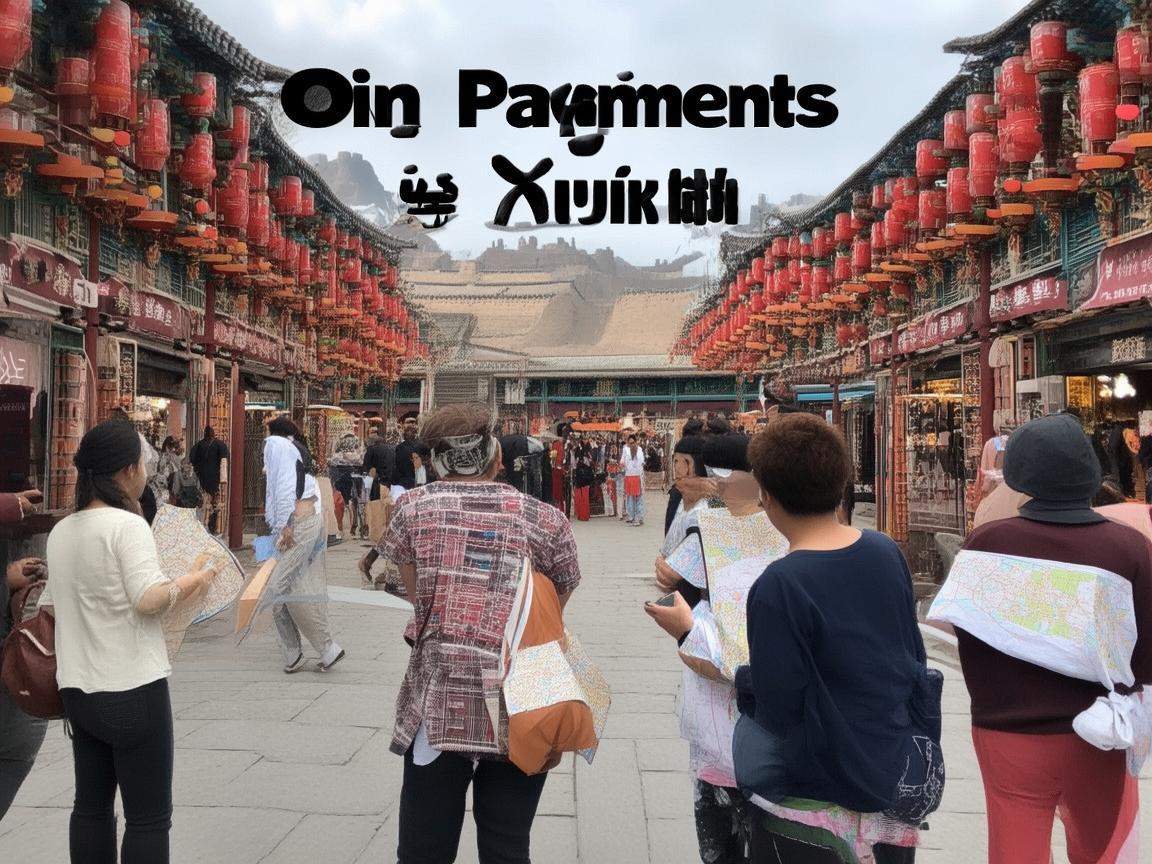
Navigating Payments in Xi’an: A Group Traveler’s Practical Guide
Cash (RMB, or yuan) is still king in small, local spots—think grandma’s noodle stall or a night market vendor who glares at your QR code. ATMs are easy to find in tourist areas (near the Bell Tower, Muslim Quarter), but they charge international fees (around ¥30-50 per withdrawal). Pro tip: Exchange a small amount at the airport (rates are mediocre, but it’s convenient) and hit up a local bank downtown for better rates.
The Group Dilemma: How to Split Bills Without Losing Your Mind
Here’s where things get tricky. In China, almost no one splits bills “Western-style” (each person paying for their exact order). Instead, one person pays the full amount, and everyone else transfers them their share. For a group, this means constant “who owes what” chaos—unless you have a system.
Step 1: Designate a “Group Treasurer”
On our second day, we realized we were wasting 20 minutes after every meal arguing over who paid for what. So we voted Chloe (our most organized friend) as treasurer. She kept a running note in her phone: “Lunch at Muslim Quarter: Joe paid ¥120—each owes ¥24.” Simple, but it worked.
Step 2: Use WeChat Pay’s “AA收款” (AA收款) Feature
This is a game-changer. Both WeChat and Alipay have built-in “AA收款” (AA收款) tools. Here’s how to use it in WeChat:
- Open WeChat, go to “Me” > “Service” > “AA收款.”
- Enter the total amount (e.g., ¥120 for lunch) and the number of people (5).
- It generates a QR code. Each person in the group scans it with their WeChat Pay, and the money splits automatically. Note: Everyone needs to have WeChat Pay set up, and the treasurer’s account must accept transfers (lite versions can’t receive money, so make sure the treasurer has a full account).
We used this for our dumpling-making class (¥150 per person, total ¥750). Chloe generated the QR code, we all scanned, and done—no cash, no math.
Step 3: For Big Expenses (Hotels, Transport), Pre-Pay or Use a Shared Card
Our biggest group expense was a 3-day private car driver (¥1800 total). To avoid carrying cash, we paid the deposit via Alipay (our driver had a business account) and settled the rest on our last day. For hotels, we booked one room together on Booking.com (which accepts international cards) and split the cost via bank transfer (since we had foreign cards, we used Wise for low fees).
What to Do When Your Card Doesn’t Work
One night, we tried to pay for dinner at a fancy restaurant near the Bell Tower, and all of our foreign cards were declined. Panic! The manager pointed to a sign: “UnionPay only.” UnionPay is China’s domestic card network—Visa/Mastercard rarely work outside big hotels or international chains.
Our backup plan? Cash. But we’d only taken out ¥200 that day. Solution: We found a 7-Eleven nearby (they accept Alipay/WeChat) and bought ¥500 worth of “virtual gift cards” for Alipay—you can transfer these to your balance instantly. We used that to pay the restaurant, and the next morning, we topped up our Alipay balances at a bank (you can link foreign cards to Alipay to add money, though it takes 1-2 days).
Pro tip: Always carry at least ¥1000 in cash as an emergency fund. Split it among group members so no one carries too much.
Scams to Avoid (and How They Relate to Payments)
Xi’an is generally safe, but we heard of a few payment-related scams:
- Fake “QR code” scams: At the Muslim Quarter, a vendor tried to hand us a random QR code, saying it was for “discounted lamb skewers.” We realized too late—he’d swapped it with his personal one, so we’d be paying him directly instead of the stall. Always check the vendor’s official WeChat/Alipay account name (it should match their stall name).
- “Cash only” overcharging: A taxi driver tried to charge us ¥80 for a ¥30 ride. We refused and showed him the meter—then paid with cash (he couldn’t argue with physical yuan). Always carry small bills (¥10, ¥20, ¥50) to avoid getting stuck with no change.
Our “Group Payment Toolkit” (What We Packed)
By day three, we’d perfected our system. Here’s what we recommend:
- One person with a full WeChat/Alipay account: If you have a friend with a Chinese phone number, have them set up a full account (they’ll need to verify with ID). They can be the “primary payer” for big expenses.
- Wise or Revolut cards: These travel cards have low foreign transaction fees and let you withdraw cash from ATMs without crazy charges.
- A shared Google Sheet: For tracking expenses. Columns like “Date,” “Item,” “Total,” “Paid By,” “Each Owes” kept us sane.
- Small cash: ¥500 in ¥10 and ¥20 bills. For street food, tips, or “cash only” spots.
The Final Verdict
By the end of our trip, paying as a group felt second nature. We’d grab dinner, Chloe would flash the AA收款 QR code, and we’d all scan while waiting for our food. We paid for our Terracotta Army tickets (¥120 each) via WeChat, and even haggled for silk souvenirs in the Muslim Quarter (pro tip: group bargaining gets you better prices!).
Xi’an’s charm is in its mix of ancient traditions and modern tech—and payments are no exception. A little prep, a designated treasurer, and the right apps can turn a potential headache into a smooth part of the adventure. So go ahead, eat that roujiamo (Chinese hamburger), climb the city walls, and don’t worry about the bills—your group’s got this.
Safe travels, and enjoy the noodles!
Xi’an Airport Transfer Service
Private English-speaking driver service in Xi’an operated directly by Bruce Zhang. 24/7 airport pickup and hotel transfer for foreign travelers.
Helpful for Your Trip in Xi’an
Navigating Payments in Xi’an: A Group Traveler’s Practical Guide
2026-07-29Ordering and Paying in Xi’an: A Traveler’s No-Stress Guide
2026-07-29Xi’an E-Wallet: How This Little App Made My Trip a Breeze
2026-07-29Xi’an Traveler’s Survival Guide: How to Master China’s Mobile Wallets (WeChat Pay & Alipay)
2026-07-28Xi’an Travel: Your Practical ID Guide to Navigate China’s Real-World Rules
2026-07-28Xi’an Long Stay: How to Handle Payments Like a Local
2026-07-28Paying at Xi’an Clubs: A Foreigner’s No-Fluff Guide
2026-07-28Navigating Xi’an’s Metro: A Foreigner’s Practical Payment Guide
2026-07-27Navigating Xi’an: A Tourist’s Guide to Mastering Mobile Payments in China
2026-07-27Navigating Xi’an Like a Local: My Digital Pay Survival Guide
2026-07-26