

Eating in Xi’an: A Foodie’s Guide to What to Order & How to Pay
I landed in Xi’an with one mission: eat. Having heard tales of “China’s food capital,” I arrived with an empty stomach and a list of must-tries scribbled in my notebook—roujiamo, liangpi, yangroupaomo, and the mysterious biangbiang noodles. What I didn’t expect was how much I’d learn about paying for all this deliciousness. So, as a fellow traveler who’s navigated Xi’an’s streets (and stomachs), here’s your no-nonsense guide to eating well here—without overpaying or getting stuck without cash.
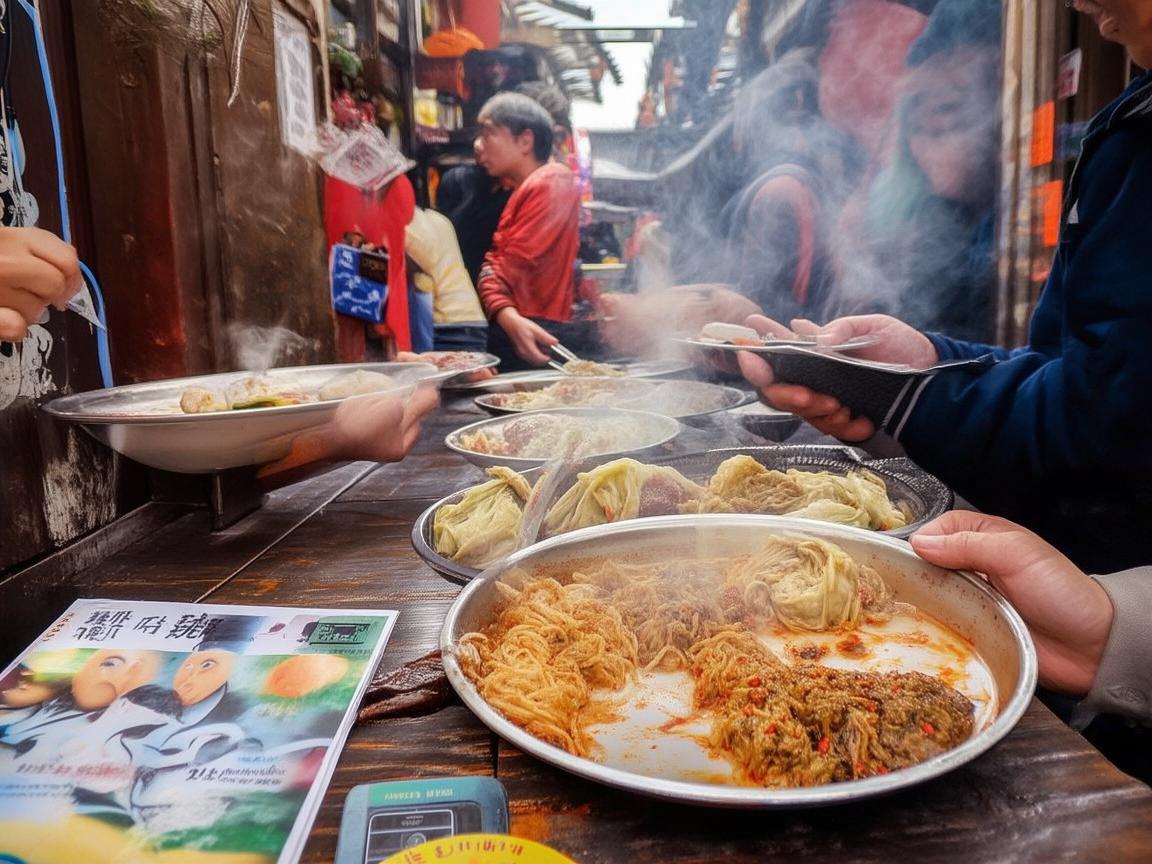
Eating in Xi’an: A Foodie’s Guide to What to Order & How to Pay
First, the Food: What to Eat (and Where to Find It)
Xi’an’s food is a love letter to history and spice, shaped by its role as the start of the Silk Road. You’ll find wheat-based dishes (thanks to Northern China’s climate), robust flavors (cumin, chili, vinegar), and hearty portions. Here’s what you can’t miss—plus where locals go (spoiler: skip the overpriced “tourist traps” in the main tourist areas).
Roujiamo: The Chinese “Hamburger”
Let’s start with the OG. Roujiamo (肉夹馍) is a street-food staple: a crispy, baked mantou (steamed bun) stuffed with slow-braised pork (usually dongpo rou, tender with a hint of sweetness). The magic is in the contrast—fluffy bread, juicy meat, and a hit of garlic.
Where to try: Skip the fancy shops. Head to Zhang Ji Roujiamo (子午路张记肉夹馍) near the South Gate. Their roujiamo is ¥12-15, and the queue (mostly locals!) is worth it. Pro tip: Ask for “la jiao” (chili oil) if you like spice.
Liangpi: Cold Noodles for a Hot Day
Liangpi (凉皮) is Xi’an’s answer to summer heat: chewy wheat or rice noodles tossed in a tangy sauce made from vinegar, soybean paste, and chili oil, topped with cucumber, bean sprouts, and crispy fried dough. It’s refreshing, spicy, and addictively savory.
Where to try: Lao Sun Liangpi (老孙家凉皮) has multiple locations, but the one near the Bell Tower is tourist-friendly (and still ¥10-15). For a more local vibe, wander into the Sajin Qiao (洒金桥) alley—find the stall with the longest line. Their liangpi is ¥8-10, and you’ll eat standing at a plastic table (very authentic!).
Yangroupaomo: The “Dunking” Soup
Yangroupaomo (羊肉泡馍) is Xi’an’s most iconic dish, but it’s not for the faint of heart. You get a bowl of dense, unleavened bread (paomo) and a rich mutton broth. The ritual? You tear the bread into tiny pieces (takes 10-15 minutes—don’t rush!) and let it soak in the soup, which is loaded with tender lamb, tofu skin, and wood ear mushrooms.
Where to try: Laosun Yangroupaomo (老孙家泡馍) is a legend, but it’s pricey (¥50-70 per bowl). For better value, try Dipanpaomo (디판빠오모) near the Muslim Quarter—it’s ¥30-40, and the broth is richer. Pro tip: If you’re not confident tearing bread, ask the server to do it—they won’t mind!
Biangbiang Noodles: The “Wide, Wild” Noodles
Biangbiang noodles (biangbiang面) are named after their shape: wide, thick, and hand-pulled, like ribbons. Tossed in a spicy chili oil sauce with garlic, chili flakes, and sometimes pork or tofu, they’re messy, satisfying, and a must-try. The character “biang” is so complex it has 57 strokes—locals joke it’s “too hard to write, so too delicious to forget!”
Where to try: Biang Biang Noodle House (biangbiang面馆) near the Big Wild Goose Pagoda. A bowl is ¥15-20, and you can choose spice levels (ask for “zhong la” for medium, “la de hen” for very spicy).
Hu辣汤 (Spicy Soup) for Breakfast
Start your day like a local with hulatang (胡辣汤)—a thick, spicy soup made from wheat flour, beef, potatoes, and a blend of spices (star anise, cinnamon, Sichuan peppercorns). It’s hearty, warming, and often eaten with youtiao (fried dough sticks) for dipping.
Where to try: Hulatang Wang (胡辣汤王) near the train station. A bowl is ¥8-10, and it’s served from 6 AM to 10 AM—get there early, or they’ll sell out!
Now, the Pay Part: How to Pay Without Panic
Xi’an is a modern city, but “modern” here has layers: while WeChat Pay and Alipay are king, some places—especially small street stalls or older shops—still rely on cash. Here’s what you need to know to avoid “I can’t pay!” panic.
Mobile Payment: WeChat Pay & Alipay
If you have a Chinese phone number, setting up WeChat Pay or Alipay is easy. Just link your bank card (international cards work, but Chinese banks are smoother). For tourists without a local number, Alipay’s “Tour Card” (支付宝旅游卡) lets you use foreign credit cards—look for the “Tour Card” logo at stores.
How to use: At restaurants or stalls, just show the QR code (WeChat: “Me” > “Wallet” > “QR Code”; Alipay: “Home” > “QR Code”). The vendor scans it, and you confirm with your fingerprint or password.
Warning: Some small vendors (e.g., the liangpi stall in Sajin Qiao) may not accept international cards via Alipay/WeChat. Always have cash as a backup!
Cash: Still King for Small Stuff
I learned this the hard way: at a youtiao stall in the Muslim Quarter, the vendor just shook his head when I offered WeChat. “xianjin (现金),” he said—cash. So bring small bills: ¥1, ¥5, ¥10, and ¥20. You can exchange currency at airports, banks, or hotels (rates are better at banks).
Pro tip: Keep coins handy! Some vending machines or public toilets (yes, you’ll need them) only take coins.
Credit/Debit Cards: For Big Meals
Mid-range to high-end restaurants (like Laosun Yangroupaomo or hotels) accept Visa/Mastercard. But don’t rely on them—small shops and street food stalls almost never do.
Splitting Bills: No “Go Dutch” Drama
In China, it’s common for one person to pay and others to transfer them later. If you’re with friends, use WeChat’s “Red Packet” (红包) feature: split the bill equally, send a red packet with your share, and add a fun message (e.g., “For the roujiamo!”). It’s easier than counting cash every time.
Money-Saving Tips: Eat Like a Local, Not a Tourist
Xi’an’s food is affordable, but tourist areas (like the Muslim Quarter’s main street) can be overpriced. Here’s how to save:
- Skip the “Tourist Menu”: At restaurants near attractions, prices might be 20-30% higher. Walk 5-10 minutes away to side streets—you’ll find the same food for less.
- Eat at “苍蝇馆子” (Cangying Guanzzi: “Fly Restaurants”): These are tiny, unassuming stalls with plastic tables and no English menus. They’re cheap, delicious, and loved by locals. I found a paomo stall in Sajin Qiao where a bowl was ¥15—half the price of the “famous” shop nearby.
- Use Group-Buying Apps: Check Meituan (美团) or Dianping (大众点评) for deals. Many restaurants offer 10-20% discounts if you book through the app (just download them and set up a—weChat login works).
- Avoid Buffets: Xi’an’s food is about quality, not quantity. A ¥50 buffet might seem like a deal, but you’ll get mediocre roujiamo and liangpi. Spend ¥30 on a real bowl of paomo—you’ll thank me later.
Final Thoughts: Eat, Pay, Repeat
Xi’an’s food is more than just a meal—it’s history in a bowl, a story in every bite. I spent 10 days here, eating from dawn till dusk, and I never got tired of the flavors. The key? Be flexible: try the street food, chat with vendors (use Google Translate if needed), and always have cash on hand.
So come hungry, bring your appetite (and some ¥10 bills), and get ready to fall in love with Xi’an—one roujiamo, one liangpi, one biangbiang noodle at a time. And don’t worry about paying—between mobile apps and a little cash, you’ll be fine. Now go eat!
Xi’an Airport Transfer Service
Private English-speaking driver service in Xi’an operated directly by Bruce Zhang. 24/7 airport pickup and hotel transfer for foreign travelers.
Helpful for Your Trip in Xi’an
Navigating Xi’an’s Metro: A Foreigner’s Practical Payment Guide
2026-07-27Navigating Xi’an: A Tourist’s Guide to Mastering Mobile Payments in China
2026-07-27Navigating Xi’an Like a Local: My Digital Pay Survival Guide
2026-07-26Xi’an Travel Tips: Cash vs. QR Codes for Entrance Tickets——A Tourist’s Practical Guide
2026-07-25Alipay for Foreign Travelers in Xi’an: A Practical Setup Guide
2026-07-25How to Survive (and Thrive) in Xi’an: A Tourist’s Guide to Digital Transactions
2026-07-24Navigating Theme Park Payments in Xi’an: A Traveler’s Practical Guide
2026-07-24Xi’an’s Convenience Stores: Your Go-To for Easy Travel Payments
2026-07-23My Cash Backup Strategy for Traveling in China: A Tourist’s Practical Guide
2026-07-22Emergency Payments in Xi’an: A Foreign Traveler’s Practical Guide
2026-07-22