

Lost Luggage in Xi’an? Here’s How Foreign Tourists Can Get Help with Payments in China
Landing in Xi’an, I was buzzing with excitement—the Terracotta Army, the Muslim Quarter, the ancient city walls… I’d dreamed of this trip for months. But within an hour of arriving at Xi’an Xianyang International Airport, my heart sank: my checked luggage hadn’t made it off the plane. Panic hit. As a foreign tourist, I barely spoke Mandarin, and I had no idea how to handle this in China. What if I couldn’t pay for essentials? Would anyone here speak English? Turns out, navigating lost luggage as a foreigner in China is manageable—if you know the steps, especially when it comes to payments. Let me walk you through exactly what I learned, step by step.
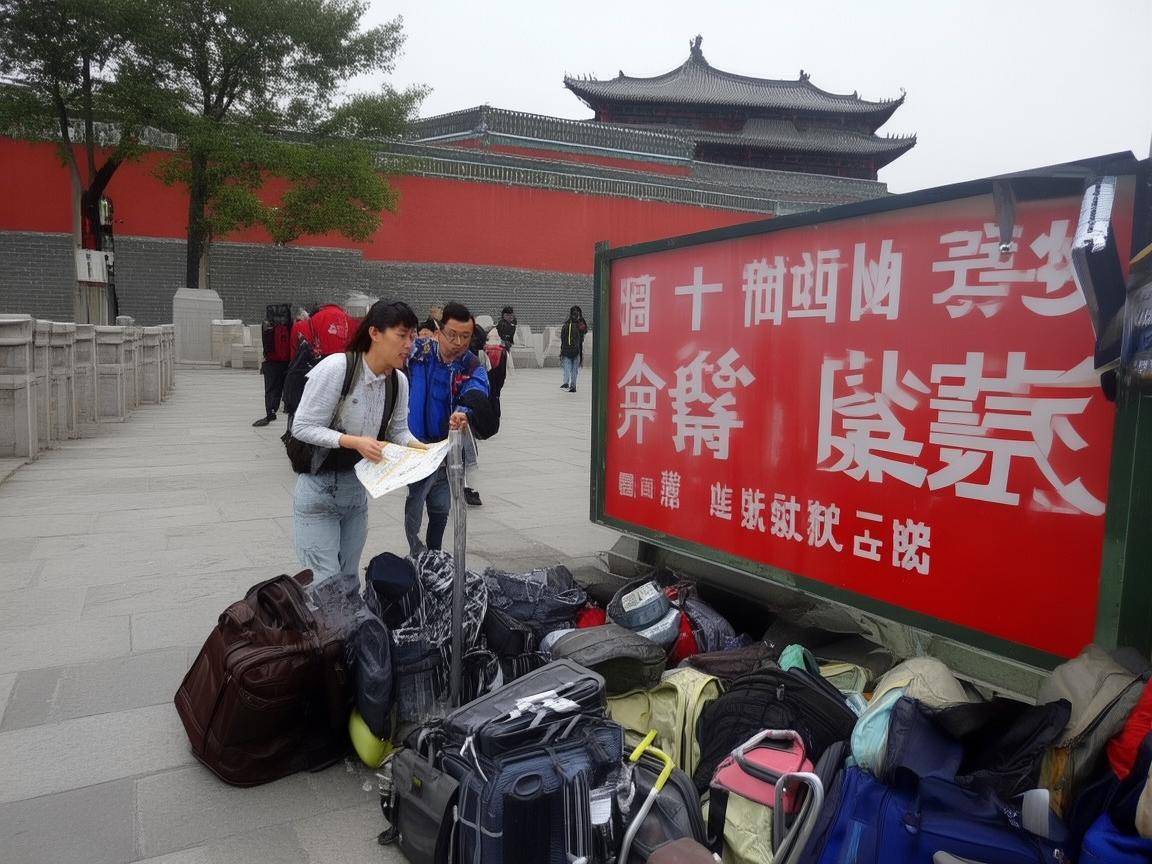
Lost Luggage in Xi’an? Here’s How Foreign Tourists Can Get Help with Payments in China
Step 1: Stay Calm and Head Straight to the Airport’s Lost Property Office
First things first: panic won’t help. I took a deep breath, found an airport staff member in a uniform (they’re easy to spot—blue or red vests), and said, “Excuse me, my luggage is missing” in English. Thankfully, she pointed me toward the Lost Property Office (失物招领处) in Terminal 3, near the baggage claim area for international flights.
When I arrived, the office was small but efficient. A staff member named Lisa (her English name—many use them for tourists) greeted me with a smile. She asked for my flight details (airline, flight number, arrival time) and baggage claim ticket. Pro tip: Always keep your baggage claim ticket! It has a barcode that’s crucial for tracking. Lisa scanned it, typed into a computer, and confirmed my luggage hadn’t been loaded onto my flight from Beijing. She handed me a Property Irregularity Report (PIR)—a pink form with my case number (mine was “XIY20231015-001”). “This is your proof,” Lisa said. “Call the airline or us with this number. They’ll find your luggage.”
Step 2: File a Police Report (If Needed) and Contact Your Airline
Lisa mentioned that for some airlines, especially international ones, a police report is required for insurance claims. Since my flight was from Beijing (domestic), she said it might not be necessary, but she offered to help anyway. “Better safe than sorry,” I thought.
We walked to the airport’s police station (公安派出所), just a 5-minute walk from the Lost Property Office. The officer on duty spoke basic English. I showed him my PIR, explained the situation, and he filled out a short report in Chinese and English. He stamped it, and I paid a small fee—20 RMB—for the copy. (Yes, even police reports here cost a bit, but it’s worth it for insurance.)
Next, Lisa helped me call my airline’s Xi’an office using the office phone (my phone was dying, and I didn’t have a local SIM yet). A representative answered in English, took my PIR number, and promised to update me within 24 hours. “Check your email tomorrow,” she said.
Step 3: Solve the Payment Problem—This Is Key for Foreigners
Now for the big one: I had no luggage—no clothes, no toiletries, no phone charger, and almost no cash. I’d planned to withdraw money from an ATM at the airport, but my bank card was in my luggage. (Classic mistake, I know.) How would I pay for a toothbrush, a change of clothes, or even a taxi to my hotel?
Option 1: Use International Credit/Debit Cards (If You Have Them)
I had a Visa credit card in my wallet, thank goodness. I asked Lisa where I could find an ATM that accepts international cards. She pointed to a Bank of China (中国银行) ATM in the terminal—most international airports in China have at least one. I inserted my card, entered my PIN, and withdrew 500 RMB. Easy! But note: some smaller ATMs in rural areas might not accept foreign cards, so stick to major banks like Bank of China, ICBC, or China Construction Airport in big cities.
Option 2: Mobile Payment (Alipay/WeChat)—But You Need Help Setting It Up
China is a cashless society. Even at the airport convenience store, the cashier scanned a QR code—no cash accepted. I wanted to use Alipay (支付宝) or WeChat Pay (微信支付), but I didn’t have a Chinese bank account or a local SIM to register.
Lisa came to the rescue. “We can help you set up a temporary Alipay account,” she said. She took me to the Alipay help desk (near the baggage claim—many airports have these for tourists). A staff member named Jack asked for my passport, scanned it, and linked my international Visa card to Alipay. “Now you can scan any QR code to pay,” he said. “Just like locals!”
How it works: Many shops have two QR codes: green for Alipay, blue for WeChat. Open Alipay, click the “+” button, scan the green code, and confirm the payment with your fingerprint or password. I used this to buy a phone charger, a water bottle, and even a bowl of noodles at the airport food court—super convenient!
Option 3: Ask the Airport for Emergency Cash or Support
If you have no cards or cash, the airport might offer limited help. I saw a sign for “Emergency Assistance for Tourists” and asked Lisa. She said, “We can’t give you cash, but we can contact your hotel or a travel agency to help.” In my case, I’d booked a hotel through Agoda, so Lisa helped me call them. The hotel agreed to hold a room for me and even sent a taxi driver to pick me up—I paid him later with Alipay.
Step 4: Get Temporary Essentials—Where to Shop and How to Pay
With 500 RMB and Alipay set up, I needed basics. Lisa recommended a nearby mall, Century Ginwa Department Store (世纪金花), a 10-minute taxi ride from the airport. The taxi driver used the meter (I made sure!), and I paid 35 RMB via Alipay—no problem.
At the mall, I bought a cheap t-shirt, underwear, a toothbrush, and a charger. Most shops accepted Alipay, but a small boutique only took cash. I went to a Bank of China branch inside the mall (they’re everywhere in China), showed my passport, and exchanged 100 USD for 700 RMB. (Note: Exchange rates at airports or banks are better than hotels or small exchange shops.)
Pro tip: Pack a “go-bag” with essentials in your carry-on! Even a toothbrush, underwear, and a phone charger can save you hours of stress. I learned this the hard way.
Step 5: Follow Up and Stay Connected
That evening, I got an email from my airline: “Your luggage has been located. It will be delivered to your hotel tomorrow by 6 PM.” What a relief! The delivery guy called me in the morning (I’d bought a local SIM card at the airport—50 RMB for 10GB data), and I paid him 50 RMB cash for the delivery tip.
For the next 24 hours, I used Alipay for everything: street food in the Muslim Quarter (a roujiamo for 15 RMB!), a bus ticket to the Terracotta Army (2 RMB!), and even a coffee at Starbucks. Mobile payment made life so much easier—no need to carry cash, and no worries about card fraud (China’s digital payment systems are super secure).
Final Tips for Foreign Tourists in China
- Download Alipay/WeChat Before You Go: Even if you don’t have a Chinese bank account, you can link your international card. Practice using it at home with a QR code!
- Keep Emergency Numbers Handy:
- Airport Lost Property: +86-29-88798765 (Xi’an Xianyang Airport)
- Tourism Police: 12301 (English service available)
- Your airline’s local office
- Pack a Carry-On Essentials Bag: Toothbrush, underwear, charger, and some cash (at least 200 RMB).
- Use Major Banks for Withdrawals: Bank of China, ICBC, and China Construction Bank are the most foreigner-friendly.
- Don’t Panic—Chinese People Are Helpful: Every staff member I met went out of their way to help. A little English (or a translation app) goes a long way.
Losing luggage in Xi’an was stressful, but it taught me a lot about navigating China as a foreigner. The key is preparation: know how to use mobile payment, keep emergency contacts, and stay calm. China’s support systems for tourists are improving every day, and with the right tools, you can turn a disaster into a manageable hiccup. Now, go enjoy those Terracotta Warriors—just pack smart!
Xi’an Airport Transfer Service
Private English-speaking driver service in Xi’an operated directly by Bruce Zhang. 24/7 airport pickup and hotel transfer for foreign travelers.
Helpful for Your Trip in Xi’an
Navigating Payments in Xi’an: A Group Traveler’s Practical Guide
2026-07-29Ordering and Paying in Xi’an: A Traveler’s No-Stress Guide
2026-07-29Xi’an E-Wallet: How This Little App Made My Trip a Breeze
2026-07-29Xi’an Traveler’s Survival Guide: How to Master China’s Mobile Wallets (WeChat Pay & Alipay)
2026-07-28Xi’an Travel: Your Practical ID Guide to Navigate China’s Real-World Rules
2026-07-28Xi’an Long Stay: How to Handle Payments Like a Local
2026-07-28Paying at Xi’an Clubs: A Foreigner’s No-Fluff Guide
2026-07-28Navigating Xi’an’s Metro: A Foreigner’s Practical Payment Guide
2026-07-27Navigating Xi’an: A Tourist’s Guide to Mastering Mobile Payments in China
2026-07-27Navigating Xi’an Like a Local: My Digital Pay Survival Guide
2026-07-26