

Navigating Payments in Xi’an: A Tourist’s Guide to China’s Cashless Scene for Foreigners
Landing in Xi’an, I was buzzing with excitement to explore the Terracotta Army, wander through the Muslim Quarter, and bite into a roujiamo (Chinese hamburger). But my first challenge hit before I even left the airport: the taxi driver shook his head when I handed him a $100 bill. “Cash, RMB only,” he said, pointing to a QR code on the dashboard. Panic flashed through me—how do I pay here?
Navigating Payments in Xi’an: A Tourist’s Guide to China’s Cashless Scene for Foreigners
As a foreign tourist, I quickly learned that China’s payment system is a cashless wonderland, but one that can trip up visitors if you’re unprepared. Over two weeks in Xi’an, I figured out the ropes (and survived a few payment mishaps). Here’s what you need to know to avoid the stress I faced and focus on enjoying the trip.
First Things First: Cash Still Matters (But Not Everywhere)
My first mistake? Assuming China was as “card-friendly” as home. While big cities like Beijing or Shanghai are more accustomed to foreign cards, Xi’an—especially outside tourist hotspots—still relies heavily on cash, especially for small vendors, local taxis, and neighborhood markets.
When to carry cash:
- Street food and small markets: In the Muslim Quarter, vendors selling yangrou paomo (bread soaked in lamb soup) or bingfengguo (ice apple crisps) often only take cash. I once tried to pay for a jianbing (savory crepe) with my credit card, and the vendor just laughed and pointed to a “Cash Only” sign.
- Local buses and some taxis: While ride-hailing apps like Didi (China’s Uber) accept digital payments, smaller taxi drivers may not have card machines. I learned this the hard way when a driver to the Terracotta Warriors refused my Visa card—luckily, I had 200 RMB (~$28) in my pocket.
- Rural attractions: If you plan to day-trip to places like the Famen Temple (about 2 hours from Xi’an), smaller ticket booths or souvenir shops might not take cards.
Where to exchange cash:
Skip the airport exchange counters (their rates are terrible!). Head to a Bank of China or ICBC branch in the city center—they offer better rates. I exchanged $200 at the Bank of China near the Bell Tower and got 1,400 RMB (at an exchange rate of ~7.0 RMB/$, which was fair). Pro tip: Bring small bills (10s, 20s, 50s) for vendors; they often can’t break large 100s.
The Game-Changer: Mobile Payments (WeChat Pay & Alipay)
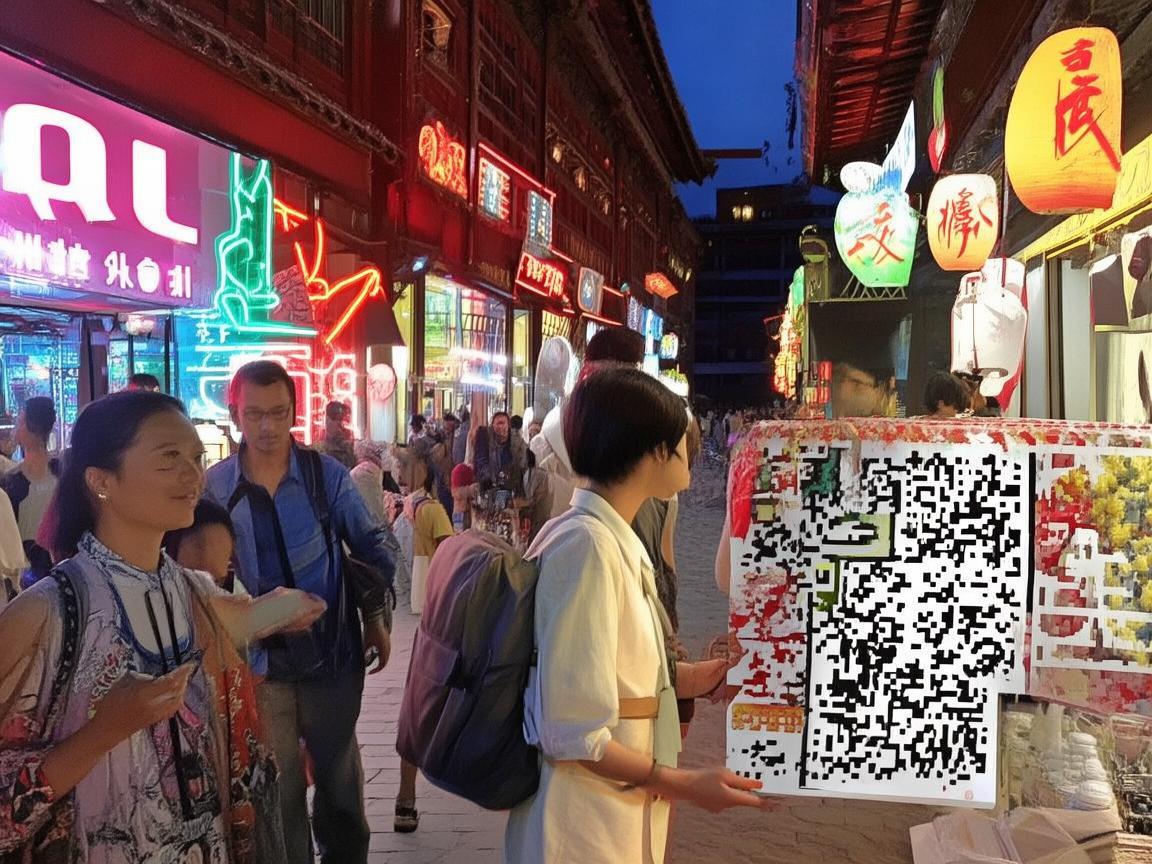
By Day 2 in Xi’an, I realized cash alone wasn’t enough. Everywhere I looked—restaurants, museums, even street vendors—had QR codes plastered on tables, walls, and even carts. “WeChat Pay or Alipay,” they’d say. For a foreigner, this can feel like trying to pay with a Monopoly card, but it’s easier than you think.
How to Set Up WeChat Pay
WeChat is like China’s WhatsApp + PayPal combined. Most locals use it for everything, from buying subway tickets to splitting dinner with friends. Here’s how to get it as a foreigner:
- Download WeChat: It’s available on iOS and Android.
- Sign up with your phone number: You’ll need a Chinese SIM card to verify it (more on that later).
- Link your international credit/debit card: Go to “Me” > “Services” > “Wallet” > “Payment Methods” > “Add Bank Card.” I added my Visa debit card, and within minutes, it was linked!
- Add money (optional but helpful): You can transfer USD to WeChat Pay via the “Wallet” > “Recharge” section (uses a service called “WeChat Pay Balance”). This avoids foreign transaction fees when scanning QR codes.
Pro tip: If you don’t have a Chinese SIM, ask a hotel or friend to help you verify your account with a “virtual number” (some hotels offer this service).
Alipay: The Other Giant
Alipay (owned by Alibaba) is just as popular, especially for online shopping and bigger stores. Setting it up is similar to WeChat: download the app, sign up, and link your international card. I used both interchangeably—some vendors only accepted one, so having both is a backup.
Real-life example: At the Shaanxi History Museum (a must-see!), I bought a ticket online via Alipay (you can book in advance to skip the line). Later, at a restaurant near the Big Wild Goose Pagoda, I scanned a WeChat Pay QR code to pay for dinner—no cash, no card needed.
International Cards: Where (and When) They Work
Not everywhere in Xi’an accepts foreign cards, but you can use them in some places:
- Hotels and mid-range to high-end restaurants: I paid my hotel bill (a Marriott near the Bell Tower) with my Mastercard, and a fancy hotpot restaurant in the Qujiang新区 accepted Visa.
- Big tourist attractions: The Terracotta Warriors ticket office accepted my credit card, but only for the full-price ticket (120 RMB). If you want a combo ticket (e.g., Terracotta Warriors + Huaqing Pool), they might only take cash or digital payments.
- Shopping malls: The Grand Mall and SKP in Xi’an have stores that take foreign cards, but smaller shops inside might not.
ATM tips:
- Use ICBC or Bank of China ATMs—they’re most likely to accept foreign cards.
- Withdraw RMB directly from your bank account (avoid “dynamic currency conversion,” which charges extra fees). I took out 3,000 RMB (~$430) at an ICBC ATM near the Muslim Quarter; the fee was $5 from my bank, but worth it for convenience.
Avoiding Common Payment Pitfalls
I made a few blunders, but you don’t have to! Here’s what to watch out for:
- “No Foreign Cards” Signs: Always check for signs before ordering food or buying tickets. If a vendor says “cash only,” don’t argue—just pull out your RMB.
- QR Code Scams: Only scan official QR codes (from restaurants, shops, or official attractions). Fake QR codes for “tax refunds” or “discounts” are rare but exist—when in doubt, ask staff.
- Network Issues: WeChat Pay and Alipay need internet to work. Download a Chinese SIM card (China Unicom or China Mobile) for 4G/5G—costs ~30 RMB ($4) for a 7-day plan. I bought one at the Xi’an airport; it saved me when my Wi-Fi died.
- Splitting Bills: In China, it’s common to split bills via WeChat Pay. Just open the app, go to “Me” > “Payments” > “Transfer,” and select “Split Bill.” I used this with my travel buddies to split dinner costs—no more messy cash calculations!
My Top Payment Tips for Xi’an
After two weeks, here’s my “survival guide” for payments:
- Carry 500–1,000 RMB in cash at all times (small bills are key).
- Set up WeChat Pay and Alipay before you leave home—download the apps and link your card.
- Get a Chinese SIM card for data (you can use it for WeChat/Alipay even without a Chinese bank account).
- Ask for help: Chinese people are friendly! If you’re stuck, show a vendor your card or phone, and they’ll often point to the QR code or help you set up a payment method.
- Use Didi for taxis: Download the Didi app (link your WeChat Pay or Alipay), and you can pay digitally—no cash needed. It’s also cheaper than hailing cabs on the street.
Final Thoughts
Xi’an is a city where ancient history meets modern tech, and its payment system is a perfect example. Yes, it can be confusing at first, but with a little prep—cash + mobile payments + an open mind—you’ll navigate it like a pro. By the end of my trip, I was scanning QR codes like a local, bargaining at markets, and even teaching a vendor how to use WeChat Pay (he’d never had a foreign customer before!).
Don’t let payment stress ruin your trip—plan ahead, and focus on what really matters: biting into a roujiamo, marveling at the Terracotta Warriors, and soaking in Xi’an’s magic. Happy travels!
Xi’an Airport Transfer Service
Private English-speaking driver service in Xi’an operated directly by Bruce Zhang. 24/7 airport pickup and hotel transfer for foreign travelers.
Helpful for Your Trip in Xi’an
Navigating Xi’an’s Metro: A Foreigner’s Practical Payment Guide
2026-07-27Navigating Xi’an: A Tourist’s Guide to Mastering Mobile Payments in China
2026-07-27Navigating Xi’an Like a Local: My Digital Pay Survival Guide
2026-07-26Xi’an Travel Tips: Cash vs. QR Codes for Entrance Tickets——A Tourist’s Practical Guide
2026-07-25Alipay for Foreign Travelers in Xi’an: A Practical Setup Guide
2026-07-25How to Survive (and Thrive) in Xi’an: A Tourist’s Guide to Digital Transactions
2026-07-24Navigating Theme Park Payments in Xi’an: A Traveler’s Practical Guide
2026-07-24Xi’an’s Convenience Stores: Your Go-To for Easy Travel Payments
2026-07-23My Cash Backup Strategy for Traveling in China: A Tourist’s Practical Guide
2026-07-22Emergency Payments in Xi’an: A Foreign Traveler’s Practical Guide
2026-07-22