

Navigating Xi’an: A Traveler’s Guide to Social Apps and Seamless Payments
Landing in Xi’an, I was equal parts excited and overwhelmed. The ancient city’s mix of history, street food, and modern energy was thrilling, but as a first-time visitor, I had no idea where to start. What saved me? Two things: social apps (my lifeline for local insights) and payment apps (my ticket to hassle-free exploring). If you’re planning a trip to Xi’an, let me break down exactly how I used these tools to turn potential chaos into an adventure.
Before You Go: Social Apps for Pre-Trip Prep
My Xi’an journey started weeks before I even left home, thanks to social apps. I downloaded WeChat (essential in China—more on that later) and Xiaohongshu (aka “Little Red Book,” China’s answer to Instagram). I also kept Douyin (TikTok’s Chinese version) handy for visual inspiration.
On Xiaohongshu, I searched hashtags like #西安旅游攻略 (Xi’an travel guide) and #西安美食 (Xi’an food). Local users shared so much more than generic tourist tips: one post listed “10 Hidden Eateries in Muslim Quarter,” another detailed “How to Avoid Crowds at Terracotta Army.” I saved these to my “Favorites” and even took screenshots of maps users drew with handwritten notes (“Turn left at the red lantern, look for the queue of grandma!”).
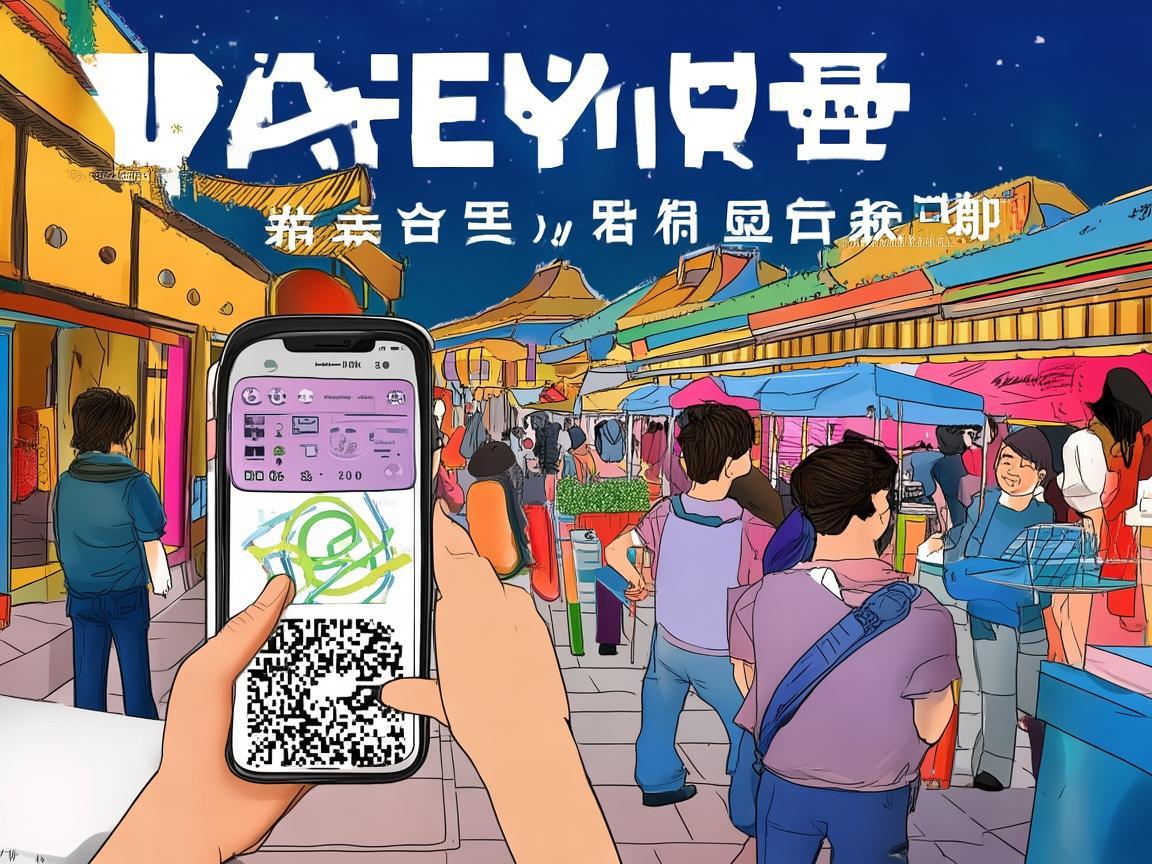
Navigating Xi’an: A Traveler’s Guide to Social Apps and Seamless Payments
Douyin was my visual tour guide. I watched short videos of locals making biangbiang noodles (the dough-throwing technique is mesmerizing) and vlogs of cycling on the ancient city wall at sunset. These clips helped me prioritize: I knew I had to try that noodle spot and bike the wall, no matter what.
Pro tip: Follow local travel bloggers on Xiaohongshu—they often reply to comments! I asked, “Is it worth visiting the Terracotta Army at 8 AM?” and got a reply: “Yes! The tour buses come at 9 AM, so you’ll have the pits to yourself.” That tip saved me from a crowded morning.
Upon Arrival: Setting Up Payment Apps (No Cash Needed!)
Here’s a truth: China is cashless. Even street vendors use QR codes. I panicked at first—how would I pay? But my friend (who’d traveled in China before) told me: Alipay and WeChat Pay are non-negotiable.
Step 1: Link Your Bank Account
I downloaded both apps and linked my international debit card (Visa/Mastercard work, but you might need a Chinese bank account for full functionality—more on that later). For small purchases, adding funds via card was easy.
Step 2: Get a “Digital Wallet” Backup
I learned the hard way: some small stalls only accept WeChat Pay (Alipay is less common in rural areas or tiny shops). So, I set up WeChat Pay’s “Wallet” feature and topped it up with 500 RMB (~$70) via my linked card. That became my “emergency fund” for snacks, taxi rides, or entrance fees.
Step 3: Use the “Transportation” Card
Xi’an’s subway and buses are efficient, but buying tickets at machines can be confusing (all in Chinese). Instead, I activated the “Transportation Card” in both Alipay and WeChat Pay. Just tap your phone at the turnstile—done! I used this daily to get from my hostel to the Muslim Quarter or Terracotta Army.
A Note for Foreign Travelers:
If you don’t have a Chinese bank account, WeChat Pay’s “Overseas User” feature is a lifesaver. You can link your international card and pay directly, though there’s a small fee (around 3%). Alternatively, ask a friend in China to help you “recharge” your WeChat Pay via their bank account (they can send you money via WeChat, then you transfer it to your Wallet). I did this with my cousin—she sent me 300 RMB, and I paid her back via PayPal. Easy!
In Xi’an: Social Apps for Real-Time Help
Once I was in the city, social apps became my “local friend.” Here’s how I used them every day:
Finding Food: Xiaohongshu = Your Personal Foodie Guide
Xi’an’s food scene is incredible, but menus are all in Chinese. I’d snap a photo of a dish, upload it to Xiaohongshu, and add the caption, “What is this? So good!” Within minutes, locals would reply: “That’s roujiamo (Chinese hamburger)—try the one at Lao Sun Ji!”
One night, I craved yangrou paomo (bread soaked in lamb soup). I searched “best yangrou paomo near me” on Xiaohongshu and found a post: “Avoid the tourist traps—go to ‘Definitely Not Tourist Trap’ (their real name, lol). They’ve been making it for 30 years.” I followed the map, and it was amazing. The owner even gave me extra soup when she saw me taking a photo (I’d posted about it on Xiaohongshu later—she found it and laughed).
Navigating: WeChat’s “Mini Programs” Are a Game-Changer
WeChat isn’t just for messaging—it’s a super-app with “Mini Programs” (small apps within WeChat). I used three daily:
- Didi (Chinese Uber): For hailing taxis. Just open the Didi Mini Program, enter your destination, and pay via WeChat Pay. No language barrier—drivers get your location automatically.
- Meituan (Food Delivery/Reviews): Like Yelp, but better. I used it to check restaurant ratings (look for places with 4.8+ stars and 1,000+ reviews) and even pre-booked tickets to the Terracotta Army (avoided the 2-hour ticket line!).
- Amap (Chinese Google Maps): Essential for walking directions. Download offline maps in case you lose Wi-Fi (I did this in Muslim Quarter—signal gets spotty there).
Making Friends: Douyin and WeChat “Moments”
I stayed at a hostel in Muslim Quarter, and the owner suggested joining a “Xi’an Travelers” group on WeChat. In the group, I met a girl from Canada and a guy from Australia—we decided to explore the city wall together. We posted photos in our WeChat “Moments” (like a Facebook timeline), and another local traveler commented, “You’re at the East Gate? Try the bike rental place next to the Starbucks—they give helmets for free!”
Douyin also helped me connect with locals. I filmed a short video of myself trying to eat suan tang zi (a sour, spicy soup) and tagged the stall owner. He reposted it, and suddenly, his other customers were waving at me, offering tissues (the soup is spicy). It was a small moment, but it made me feel so welcome.
Handling “Oops” Moments: When Social/Payment Apps Save the Day
Travel never goes 100% smoothly—here’s how apps bailed me out:
When I Lost My Phone
I panicked—I had my hostel key, train ticket, and all my payment apps on my phone. But I remembered I’d shared my location with my hostel owner on WeChat. He called me within 5 minutes, and I used a friend’s phone to log into my WeChat account (you can do this on a new device via SMS verification). WeChat Pay’s “Find My Device” feature helped me track my phone (it was in a taxi—someone had handed it to the driver!).
When a Vendor Didn’t Take Alipay
I bought a silk painting from a street artist, and he only accepted cash. I’d used up all my RMB earlier! But I remembered Xiaohongshu posts about “cashless workarounds.” I opened WeChat, found a local user who’d commented on my food posts, and sent a message: “Hey, I’m in Muslim Quarter—can you help me pay this vendor 50 RMB? I’ll transfer you via WeChat!” She agreed (we’d chatted enough that she trusted me), and I paid her back instantly. Crisis averted!
When I Needed a Last-Minute Hotel
My train to Xi’an arrived at 2 AM, and my hostel booking fell through. I opened Meituan, searched “hotels near train station,” and found one with 4.9 stars. I booked a room in 2 minutes and paid via WeChat Pay. No stress, no waiting in line at 3 AM.
Final Tips: Making the Most of Social + Payment Apps
- Learn Basic Chinese Phrases: Apps like Pleco (dictionary) help, but locals love when you try “谢谢” (thank you) or “多少钱” (how much). I used WeChat’s “Translate” feature to type phrases and show them to vendors—worked every time.
- Backup Everything: Screenshots of addresses, train tickets, and reservation confirmations. Save them to your phone and cloud (Google Drive/iCloud). I once lost my wallet, but my screenshots helped me cancel cards and find my way back to the hostel.
- Trust, But Verify: Social apps have fake reviews. Look for posts with details (“Try the beef roujiamo with cumin—not the spicy one”) and users who’ve posted for months (not just accounts that joined last week).
Xi’an is a city where ancient history meets modern life, and social/payment apps are the bridge between the two. They turned me from a lost tourist into a confident explorer—helping me eat like a local, navigate like a pro, and even make friends along the way. So download those apps, embrace the cashless life, and get ready to fall in love with Xi’an. You’ve got this!
Xi’an Airport Transfer Service
Private English-speaking driver service in Xi’an operated directly by Bruce Zhang. 24/7 airport pickup and hotel transfer for foreign travelers.
Helpful for Your Trip in Xi’an
Navigating Xi’an’s Metro: A Foreigner’s Practical Payment Guide
2026-07-27Navigating Xi’an: A Tourist’s Guide to Mastering Mobile Payments in China
2026-07-27Navigating Xi’an Like a Local: My Digital Pay Survival Guide
2026-07-26Xi’an Travel Tips: Cash vs. QR Codes for Entrance Tickets——A Tourist’s Practical Guide
2026-07-25Alipay for Foreign Travelers in Xi’an: A Practical Setup Guide
2026-07-25How to Survive (and Thrive) in Xi’an: A Tourist’s Guide to Digital Transactions
2026-07-24Navigating Theme Park Payments in Xi’an: A Traveler’s Practical Guide
2026-07-24Xi’an’s Convenience Stores: Your Go-To for Easy Travel Payments
2026-07-23My Cash Backup Strategy for Traveling in China: A Tourist’s Practical Guide
2026-07-22Emergency Payments in Xi’an: A Foreign Traveler’s Practical Guide
2026-07-22