

Paying in China Without a Local Bank Account: A Xi’an Traveler’s Practical Guide
Landing in Xi’an at 6 a.m., bleary-eyed but buzzing with excitement, I had one mission: find baozi (steamed buns) for breakfast. I spotted a tiny stall near the Muslim Quarter, steam curling from a bamboo basket, and the owner beamed at me. “Two, please!” I said, pulling out a 100 RMB note. She shook her head, pointed to her phone, and said, “WeChat, Alipay.” I froze. Did I need a Chinese bank account to eat?
As it turns out, no—but navigating payments in China without one requires a little prep. After a week wandering Xi’an’s streets, sampling roujiamo (Chinese hamburgers), and bargaining at the Great Bazaar, I’ve cracked the code. Here’s what you actually need to know.
First Things First: Can You Really Skip a Chinese Bank Account?
Yes, 99% of the time. China’s cashless society is legendary, but it’s built on two apps: Alipay and WeChat Pay. Both work like PayPal or Venmo but are ubiquitous—even street vendors, fruit sellers, and bus drivers use them. The catch? They’re designed for Chinese bank accounts. But don’t panic: tourists have workarounds.
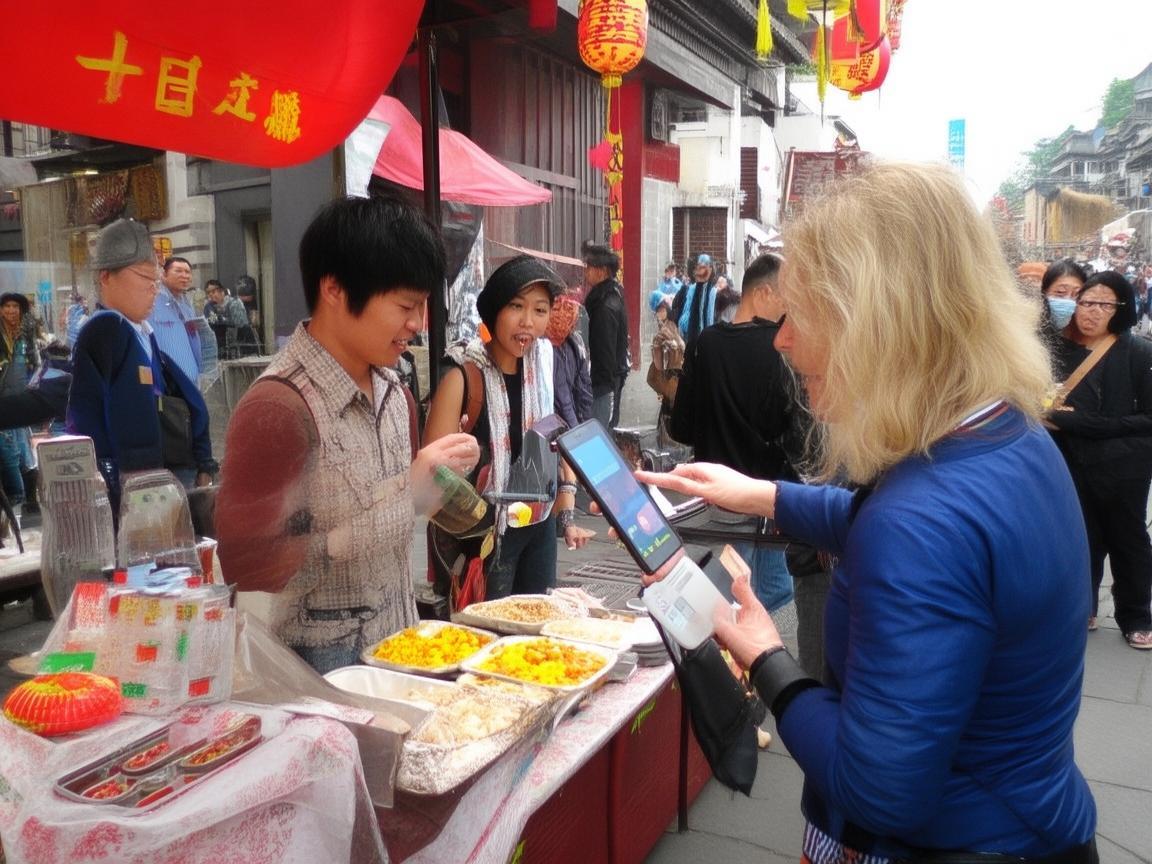
Paying in China Without a Local Bank Account: A Xi’an Traveler’s Practical Guide
Option 1: Use Alipay or WeChat Pay with a Foreign Credit/Debit Card
This is the easiest method, and it’s what I used 90% of the time. Here’s how to set it up:
For Alipay:
- Download the Alipay app (it’s in English—search “Alipay” in your app store).
- Sign up with your phone number (use your foreign number; you’ll get a verification code via SMS).
- Go to “Me” → “Payment Methods” → “Add Bank Card.”
- Enter your foreign card details (Visa, Mastercard, Amex—most work). Alipay will verify it with a small, temporary charge (usually ~$1) that’s refunded within 3 days.
- Done! You can now use Alipay at almost any shop, restaurant, or attraction in Xi’an.
Pro tip: Alipay has an “International Version” (Alipay+) that’s tailored for tourists—look for the globe icon in the app. It even lets you link foreign cards directly without a Chinese ID.
For WeChat Pay:
WeChat is trickier because it’s primarily a social app, but here’s the hack:
- Download WeChat (again, English version is available).
- Sign up with your phone number and verify your account.
- Go to “Me” → “Wallet” → “Payment Methods.”
- Tap “Add Bank Card” and enter your foreign card details. WeChat may ask for a Chinese ID if you try to link it to a “WeChat Pay Balance,” but you can skip that—just link the card directly for payments.
Where to use it: WeChat Pay is huge in restaurants (scan a QR code at the table) and small shops. Note: Some vendors prefer Alipay, but most accept both.
Option 2: Use International Credit/Debit Cards (But Only Sometimes)
If you’re not into apps, your foreign card (Visa, Mastercard, Amex) can work—but only in certain places. In Xi’an:
- Yes, you can use it at: Large hotels (like the Sheraton or Hyatt), international restaurants (e.g., McDonald’s, Starbucks), big department stores (SKP, Century Ginwa), and some tourist sites (the Terracotta Warriors ticket booth accepts cards, for example).
- No, you can’t use it at: Street stalls, small family-run restaurants, local markets, or buses. I tried paying with my Mastercard at a tanghulu (candied hawthorn) stand and got a blank stare.
Pro tip: Carry a small amount of cash (see below) for these “card-no-go” zones.
Option 3: Cash—Your “Just in Case” Backup
China is cashless, but cash isn’t useless. I kept ~500 RMB (~$70) in my wallet for emergencies:
- Where to exchange money: The airport (Xi’an Xianyang International Airport) has currency exchange counters with fair rates. Hotels also exchange money, but rates are worse. Avoid airport ATMs—they charge high fees.
- ATMs: Look for “Bank of China” or “ICBC” (Industrial and Commercial Bank of China) ATMs—they accept foreign cards. Withdraw 3,000–5,000 RMB at a time to avoid multiple fees (usually ~$3–$5 per transaction).
- Small bills are king: Vendors often can’t break 100 RMB notes, so get 10s, 20s, and 50s. I once bought a 5 RMB bottle of water with a 100 RMB note and got a “sorry” until I found a nearby shop to break it.
Option 4: The “Friend with a Chinese Account” Hack
If you’re traveling with a Chinese friend or meet a local who’s willing to help, this is the quickest fix:
- They pay with their Alipay/WeChat.
- You transfer them money via PayPal, Wise, or even cash.
- They transfer the money to your account later (using apps like Remitly for international transfers).
I did this once with my hostel owner when I forgot my wallet. He bought me yangrou paomo (Xi’an’s famous soup dumplings), and I paid him back via PayPal. Easy!
Xi’an-Specific Payment Tips (Because Every City’s Different)
- At the Terracotta Warriors: Buy tickets online via Alipay or the official “Xi’an Tourism” app to skip the line. You can pay with a foreign card—no Chinese account needed.
- In the Muslim Quarter: Bargaining at the Great Bazaar? Vendors often take Alipay/WeChat, but cash works too. I paid 80 RMB for a silk scarf (down from 200!) using WeChat.
- Taking the subway: Download the “Metro Xi’an” app, or use Alipay/WeChat’s “Transportation” section to scan the QR code at the gate. It’s cheaper than taxis and faster than buses.
- Street food: For jianbing (savory crepes) or roujiamo, vendors usually have a QR code taped to their cart. Just open Alipay/WeChat, scan, and pay—no cash needed.
What If You Run Into Trouble?
- Card declined? Call your bank before you travel—some block foreign transactions for security. I had to notify my bank I’d be in China, or my card would’ve been frozen.
- Can’t link your card to Alipay/WeChat? Try using a VPN (Alipay sometimes blocks foreign IPs) or switch to a different card (Amex works better than some Visa cards, in my experience).
- Lost your phone? Keep a backup of your Alipay/WeChat QR codes in your photos (you can scan them from there). Also, carry a physical card and cash—just in case.
Final Verdict: Do You Need a Chinese Bank Account?
No. With a foreign credit/debit card, Alipay, and a little cash, you’ll be fine. I spent a week in Xi’an—ate at hole-in-the-wall restaurants, bought souvenirs at markets, and took taxis—without ever opening a Chinese bank account.
My biggest takeaway? China’s cashless system is intimidating at first, but it’s designed to be user-friendly. Download Alipay the night before you leave, link your card, and relax. The only thing you’ll worry about is whether to get another baozi—and that’s a good problem to have.
Happy travels—and enjoy the paomo*! It’s worth every penny (or RMB).
Xi’an Airport Transfer Service
Private English-speaking driver service in Xi’an operated directly by Bruce Zhang. 24/7 airport pickup and hotel transfer for foreign travelers.
Helpful for Your Trip in Xi’an
Navigating Xi’an’s Metro: A Foreigner’s Practical Payment Guide
2026-07-27Navigating Xi’an: A Tourist’s Guide to Mastering Mobile Payments in China
2026-07-27Navigating Xi’an Like a Local: My Digital Pay Survival Guide
2026-07-26Xi’an Travel Tips: Cash vs. QR Codes for Entrance Tickets——A Tourist’s Practical Guide
2026-07-25Alipay for Foreign Travelers in Xi’an: A Practical Setup Guide
2026-07-25How to Survive (and Thrive) in Xi’an: A Tourist’s Guide to Digital Transactions
2026-07-24Navigating Theme Park Payments in Xi’an: A Traveler’s Practical Guide
2026-07-24Xi’an’s Convenience Stores: Your Go-To for Easy Travel Payments
2026-07-23My Cash Backup Strategy for Traveling in China: A Tourist’s Practical Guide
2026-07-22Emergency Payments in Xi’an: A Foreign Traveler’s Practical Guide
2026-07-22