

Surviving and Thriving in Xi’an: A Traveler’s Guide to the Payment System
Let me start by saying this: Xi’an is a city that grabs you by the soul. The smell of roujiamo (meat burgers) wafting through Muslim Quarter, the shadow of the Bell Tower at dusk, the awe of standing before the Terracotta Warriors—it’s magic. But as a first-time visitor from Canada, I’ll admit, my first 24 hours were a little stressful, all because of one thing: payments. I’d heard China was a “cashless society,” but I didn’t realize how cashless until I tried to buy a bottle of water at a convenience store and my credit card was met with a blank stare.
So, if you’re heading to Xi’an, let me save you the headache. This is your no-BS guide to navigating Xi’an’s payment system—what works, what doesn’t, and how to avoid looking as lost as I did outside the Muslim Quarter at 8 PM with a hungry stomach and a wallet full of useless plastic.
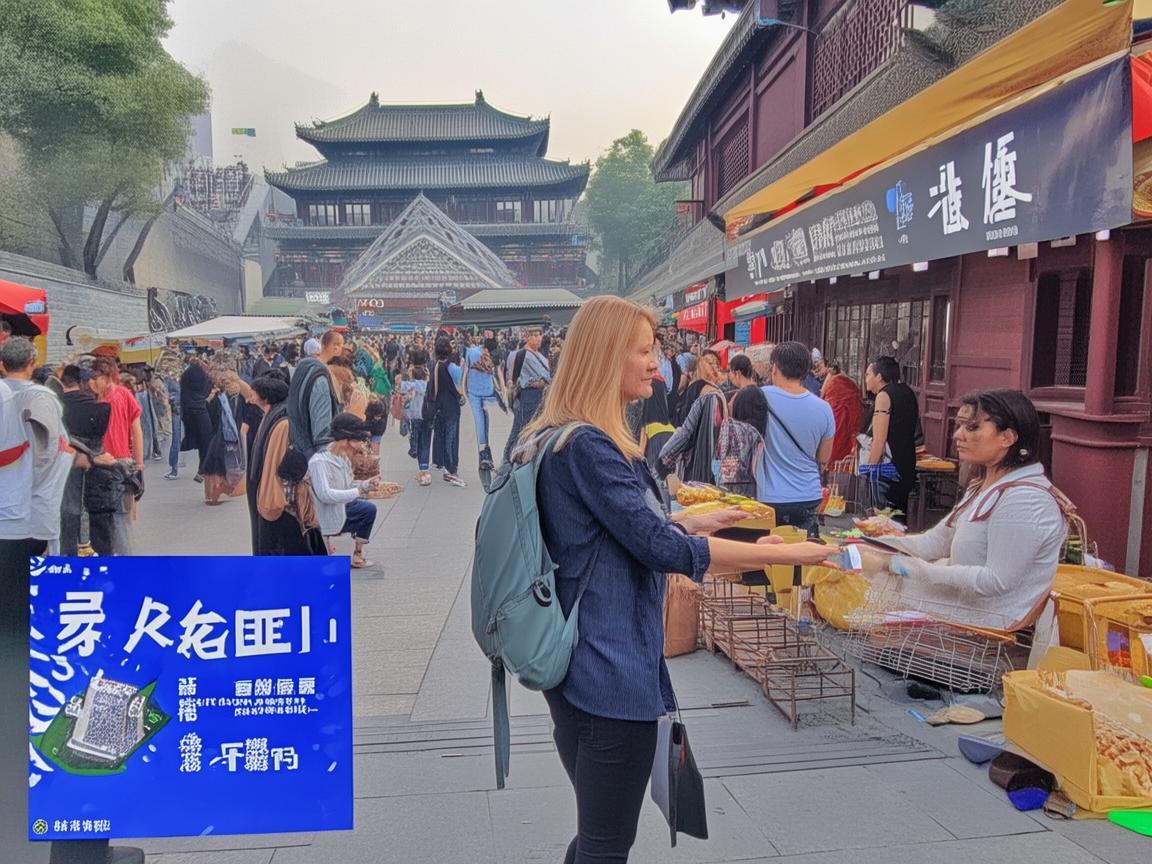
Surviving and Thriving in Xi’an: A Traveler’s Guide to the Payment System
First Things First: Mobile Payments Are King (But You Can’t Just Show Up)
Here’s the truth: in Xi’an, everyone pays with their phone. Street vendors, subway stations, fancy restaurants, even the lady selling chestnuts on the street—she’ll have a QR code. We’re talking WeChat Pay and Alipay, the two giants that dominate daily life.
But here’s the catch: if you’re a foreigner, you can’t just download these apps and start swiping. They’re tied to Chinese bank accounts or, for foreigners, international credit/debit cards with some limitations. So, how do you get set up?
Option 1: Link Your International Card to WeChat Pay or Alipay (Easiest for Short Stays)
Both apps allow you to add foreign Visa, Mastercard, or Amex cards, but there’s a catch: limits. For example, when I linked my Canadian Visa to WeChat Pay, I could only spend ¥1,000 per day (about $140 CAD). That’s fine for buying meals and souvenirs, but if you plan to splurge on a fancy dinner or a hotel stay, you might hit that cap.
How to do it (WeChat Pay example):
- Open WeChat, go to “Me” > “Services” > “Wallet.”
- Tap “Payment Methods” > “Add Bank Card.”
- Enter your card details (foreign cards work!). You’ll need to verify via SMS from your bank (make sure your phone can receive international texts).
- Once added, go to “Wallet” > “Wallet Balance” > “Recharge” to add money from your card (up to the daily limit).
Alipay works similarly: open the app, go to “Me” > “My Alipay” > “Bank Cards,” and add your foreign card. Pro tip: Alipay’s “Scan to Pay” is accepted everywhere, even in tiny villages outside Xi’an, so I relied on this more than WeChat.
Option 2: Use a “Virtual Prepaid Card” (For Higher Limits)
If ¥1,000/day isn’t enough, consider a virtual prepaid card service like Wise (formerly TransferWise) or Revolut. These let you top up your account in your home currency, then get a virtual card (or physical card) that works with Chinese payment apps. I used Wise: I topped up $500 CAD, got a virtual Visa, and linked it to Alipay. No daily limits, and the exchange rate was way better than my bank’s.
Note: This requires a bit of prep before you leave home—you can’t set it up on the go in Xi’an.
When Cash Is King (Don’t Leave Home Without It)
Look, I know I just raved about mobile payments, but there are still places in Xi’an where cash is king. Older vendors, small family-run shops in the Muslim Quarter, or temples that don’t want to deal with app fees (yes, they pay a small percentage per transaction). I learned this the hard way when I tried to buy a hand-painted mask at a stall near the Great Mosque and the owner just shook his head at my Alipay QR code.
How much cash to bring? I’d recommend at least ¥500-1,000 in small bills (¥10, ¥20, ¥50). Why small? Because if you pay with a ¥100 bill for a ¥20 meal, you’ll get a handful of coins and small bills in return—and not every vendor has change for big notes.
Where to exchange money:
- Airports: Xi’an Xianyang International Airport has currency exchange counters. Rates are decent, and it’s convenient if you arrive with no cash.
- Banks: ICBC, Bank of China, and ABC (Agricultural Bank of China) all exchange foreign cash. Head to a downtown branch (like the one near the Bell Tower) for better rates than the airport.
- ATMs: Most ATMs in Xi’an accept foreign cards (look for “Visa/Mastercard” signs). You can withdraw yuan directly, but your bank will charge a withdrawal fee (mine was $5 CAD per transaction). I did this once as a backup, but exchanging cash at a bank was cheaper.
The “Oh Crap” Moments: What to Do When Payments Go Wrong
Even with prep, things can go sideways. Here’s what happened to me—and how I fixed it:
Scenario 1: My phone died, and I had no power bank.
I was exploring the Muslim Quarter at night, phone at 1%, and realized I couldn’t pay for dinner. Solution: I asked a nearby restaurant if they accepted cash (they did), and I’d exchanged ¥200 earlier that day. Pro tip: Always carry a power bank. You can buy cheap ones at convenience stores (7-Eleven sells them for ¥50-100) or at electronics markets like Hightech Plaza.
Scenario 2: A vendor didn’t accept Alipay/WeChat, and I had no cash.
I bought a bottle of water from a street vendor, and she only took cash. I apologized, and she pointed to a nearby 7-Eleven where I could use my phone. Solution: Memorize the locations of convenience stores (7-Eleven, FamilyMart) and supermarkets (RT-Mart, Vanguard)—they always accept mobile payments.
Scenario 3: I hit my daily spending limit.
I was trying to pay for a hotel room with Alipay and got an error: “Daily limit reached.” Solution: I switched to WeChat Pay (which had a separate limit) and paid the deposit. For larger expenses, I used my credit card directly at the hotel (most big hotels accept foreign cards).
Bonus Tips for Smooth Payments
- Download offline maps: Google Maps doesn’t work well in China, so use Baidu Maps or Amap (AutoNavi). They let you download maps for offline use, so you can find ATMs, banks, or convenience stores even without Wi-Fi.
- Learn a few phrases: “Wǒ yòng zhífùbǎo fùkuǎn” (I use Alipay to pay) or “Nǐ shōu xiànjīn ma?” (Do you take cash?) goes a long way.
- Avoid “tourist trap” ATMs: Some ATMs in tourist areas (like near the Terracotta Warriors) charge high fees. Stick to bank ATMs (ICBC, Bank of China) for better rates.
- Keep small change for buses: If you take public buses (most tourists don’t, but if you do), they only take cash—and exact change. Carry ¥1 and ¥5 coins.
Final Thoughts: You’ve Got This
Xi’an’s payment system can feel overwhelming at first, but it’s actually designed to make life easier—once you know the hacks. Mobile payments are your best friend for most things, but a little cash in your pocket is your safety net. By the end of my trip, I was zipping through subway gates with Alipay, haggling over prices in the Muslim Quarter with my phone in hand, and even ordering takeout on WeChat like a local.
So, pack your power bank, exchange some cash, and get ready to fall in love with Xi’an—one (cashless) payment at a time. You’ve got this.
Xi’an Airport Transfer Service
Private English-speaking driver service in Xi’an operated directly by Bruce Zhang. 24/7 airport pickup and hotel transfer for foreign travelers.
Helpful for Your Trip in Xi’an
Navigating Xi’an’s Metro: A Foreigner’s Practical Payment Guide
2026-07-27Navigating Xi’an: A Tourist’s Guide to Mastering Mobile Payments in China
2026-07-27Navigating Xi’an Like a Local: My Digital Pay Survival Guide
2026-07-26Xi’an Travel Tips: Cash vs. QR Codes for Entrance Tickets——A Tourist’s Practical Guide
2026-07-25Alipay for Foreign Travelers in Xi’an: A Practical Setup Guide
2026-07-25How to Survive (and Thrive) in Xi’an: A Tourist’s Guide to Digital Transactions
2026-07-24Navigating Theme Park Payments in Xi’an: A Traveler’s Practical Guide
2026-07-24Xi’an’s Convenience Stores: Your Go-To for Easy Travel Payments
2026-07-23My Cash Backup Strategy for Traveling in China: A Tourist’s Practical Guide
2026-07-22Emergency Payments in Xi’an: A Foreign Traveler’s Practical Guide
2026-07-22