

Surviving China’s Cashless Maze: A Xi’an Tourist’s Payment Fix Guide
Let me tell you, I landed in Xi’an with stars in my eyes—ready to devour biangbiang noodles, marvel at the Terracotta Army, and get lost in the Muslim Quarter’s alleyways. But within an hour of arrival, those stars turned into panic. I tried to pay for a taxi at the airport with my credit card. The driver shook his head, pointed to a QR code, and muttered, “WeChat or Alipay.” I fumbled for cash, but all I had was a $20 bill. He waved it away like it was Monopoly money. “No cash,” he said, before driving off, leaving me stranded with my luggage and a rapidly growing sense of helplessness.
If you’re heading to Xi’an (or really, anywhere in China beyond the major tourist hubs), let me save you that stress. China’s payment system is a cashless wonderland, but it’s a closed wonderland—unless you know the hacks. Here’s exactly how I navigated it, from the “oh no” moments to the “I’ve got this” triumphs.
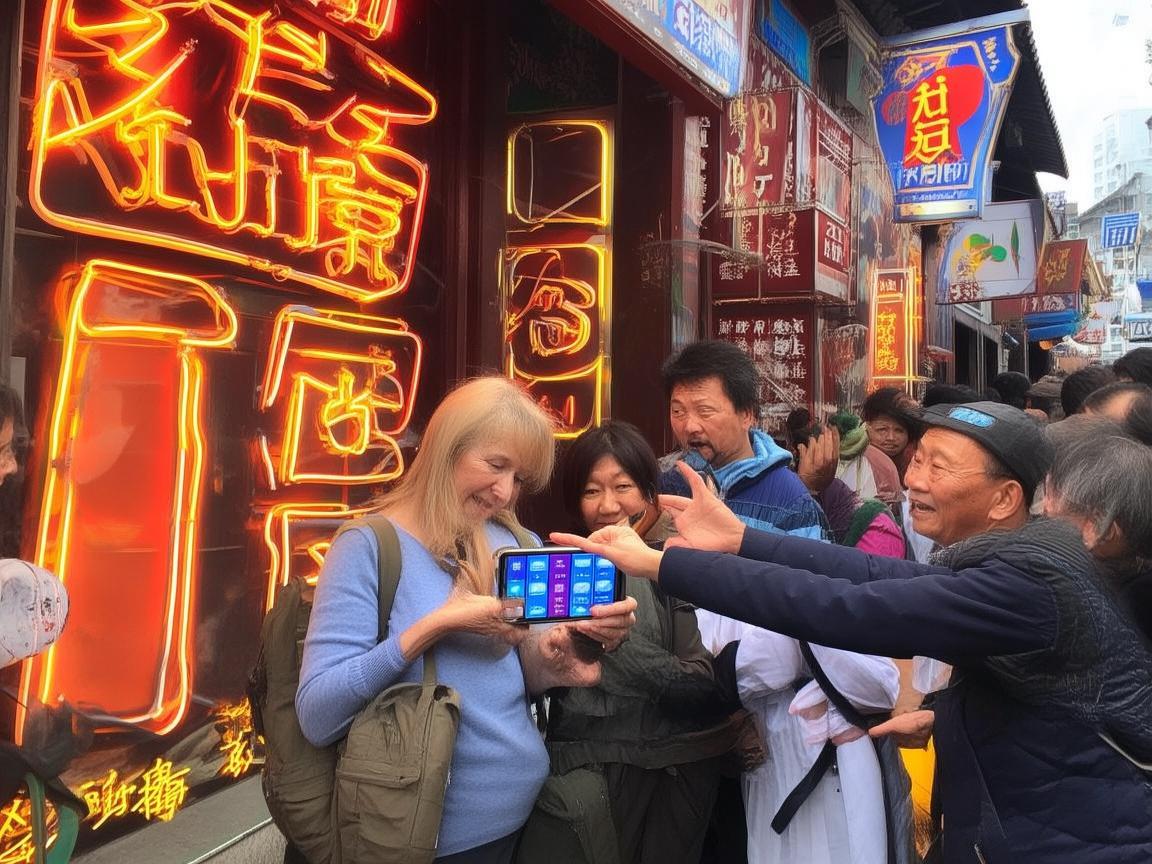
Surviving China’s Cashless Maze: A Xi’an Tourist’s Payment Fix Guide
First, Why Your Usual Payment Methods Might Fail
Before we dive into fixes, let’s quickly unpack why you’ll struggle with standard international options:
- Credit/Debit Cards: Only high-end hotels, big-brand stores (like Apple or Starbucks), and some tourist sites accept international cards (Visa/Mastercard). Even then, many terminals are glitchy or simply not linked to global networks.
- Cash: While China still uses RMB (yuan), small vendors, taxis, and even convenience stores often won’t accept large bills (100+ yuan) or may refuse foreign cash entirely. I once tried to pay for a 15-yuan bubble tea with a 100-yuan note; the shopkeeper looked at me like I’d handed her a rock.
- International PayPal/Google Pay: Forget it. China’s digital ecosystem is isolated—you can’t link foreign bank accounts to WeChat pay or Alipay, the two apps that run 90% of daily transactions here.
Solution 1: Before You Leave—Prep Your Digital Wallet (The “Easy but Takes Time” Fix)
The gold standard? Get WeChat Pay or Alipay set up before you arrive. It’s a bit of a hassle, but it’ll save you headaches later.
Option A: Link Your International Card to WeChat Pay (Recommended for iOS/Android)
WeChat Pay now lets foreign users link international credit/debit cards (Visa, Mastercard, Amex) directly. Here’s how:
- Download WeChat (if you don’t have it) and create an account (you can use your phone number + country code, or ask a friend in China to verify you).
- Go to “Me” > “Services” > “WeChat Pay” > “Wallet” > “Payment Methods.”
- Tap “Add Bank Card” and enter your international card details. You’ll need to verify via SMS (your bank may charge a small fee, ~$1-2, for this).
Pro tip: This works best if you’ve already been to China and have a “China” region set in your App Store/Google Play Store. If not, you might need to switch your region temporarily (but this can log you out of other apps—use a separate device if possible).
Option B: Use Alipay’s “ oversea user” Mode
Alipay also supports international cards, but the process is slightly clunkier. Go to “My” > “Alipay” > “Payment Methods” > “Add Bank Card.” You’ll need to upload a photo of your passport and the card’s front/back for verification.
Why bother? Once set up, you can scan QR codes everywhere—street food stalls, buses, even public toilets. No more fumbling for cash or begging strangers to help.
Solution 2: If You Didn’t Prep—Cash & Local Hacks (The “Survival Mode” Fix)
Okay, let’s be real: you might be reading this after landing, with WeChat Pay still “processing.” Don’t panic—here’s how to survive without it.
Step 1: Get Cash—But Smart
Your first stop: a bank or an ATM that accepts international cards.
- Best Bets: Bank of China (BOC), Industrial and Commercial Bank of China (ICBC), or China Construction Bank (CCB). These have ATMs at Xi’an Xianyang International Airport (terminal 2, arrivals level) and in major city centers (e.g., near the Bell Tower).
- What to Withdraw: Start with small bills (50s and 20s). Many vendors can’t break 100-yuan notes, and taxis often “don’t have change” for large bills.
- My mistake: I withdrew a 500-yuan note at the airport. By day 2, I was stuck with it because no street food stall would take it. Lesson learned: get 50s or 20s.
Step 2: Use “Transfer to WeChat” (The “Friendship Hack”)
If you have a friend in China (or meet a friendly local), this is a lifesaver:
- Ask them to send you money via WeChat Pay (they can use “Red Packets” or “Transfer”).
- Once the money is in your WeChat Wallet, you can use it to pay QR codes—even if your linked card is still pending.
How to ask: “你好,可以微信转我一点钱吗?我回去用支付宝还你!” (Hi, can you send me some money via WeChat? I’ll pay you back on Alipay when I get home!) Most locals are happy to help—just offer to reimburse them via PayPal or cash later.
Step 3: The “Static QR Code” Trick
Here’s a sneaky hack: even if you don’t have WeChat Pay set up, many vendors have static QR codes (not dynamic ones that require real-time scanning). These are just printed images—like a barcode. You can take a photo of the QR code and use an international app to pay it later.
Example: I bought a scarf at the Muslim Quarter. The vendor handed me a static QR code. I took a photo, went back to my hotel that night, and used my international card (linked to WeChat Pay) to scan the photo and pay. It worked!
Note: This only works for static codes. Dynamic codes (that pop up on a screen and change every few seconds) won’t work—you need a linked account for those.
Solution 3: Offline Payment—When Apps Fail (The “Last Resort” Fix)
Sometimes, even WeChat Pay glitches. What then?
Apple Pay/Google Pay to the Rescue
Many modern stores—especially supermarkets (like RT-Mart), convenience stores (7-Eleven), or coffee shops (Manner Coffee)—accept Apple Pay or Google Pay with international cards. I used this to buy a bottle of water at a 7-Eleven near the Terracotta Army when my WeChat Pay was “temporarily unavailable.”
How to check: Look for the Apple Pay/Google Pay logo at the register. If it’s there, try tapping your phone—you might be surprised!
The “Cash + Apology” Method
For small vendors (e.g., a grandma selling steamed buns), if you only have large bills, try this:
- Show them the cash and point to the item (e.g., hold up a 50-yuan note and point to a 10-yuan bun).
- If they hesitate, smile and say, “没零钱,可以吗?” (“No small change, is it okay?”).
- If they still say no, don’t argue—just walk away. There’s always another vendor nearby (Xi’an has a lot of street food).
Solution 4: Local Tips—How to Blend In (The “Pro” Fix)
Once you’ve got the basics down, these tricks will make you feel like a local:
Learn a Few Phrases
Vendors appreciate the effort. Even broken Mandarin helps:
- “微信支付可以吗?” (“Can I use WeChat Pay?”)
- “支付宝可以吗?” (“Can I use Alipay?”)
- “我没现金。” (“I don’t have cash.”)
- “可以换零钱吗?” (“Can you change small bills?”)
Download “外星人支付” (Alien Pay)
This is a game-changer. It’s an app designed for foreigners in China that lets you pay with international cards at WeChat/Alipay QR codes. Here’s how:
- Download “外星人支付” (Alien Pay) from the App Store/Google Play.
- Link your international card.
- Open the app, scan a QR code, and pay. The app handles the currency conversion (usually with a small fee, ~1-2%).
Why it’s great: No need to set up WeChat Pay/Alipay. I used this to pay for a taxi from the Terracotta Army back to the city—scanned the driver’s QR code, paid via Alien Pay, and he didn’t even notice I was a foreigner.
Ask Your Hotel for Help
Most hotels in Xi’an (even mid-range ones) offer “payment assistance.” I stayed at a budget hotel near the Muslim Quarter, and the front desk clerk helped me:
- Set up WeChat Pay (she used her phone number to verify me).
- Gave me 100 yuan in small bills (from the hotel’s safe) in exchange for a $20 bill (she just needed the cash for change).
- Wrote down a “cheat sheet” of useful phrases (e.g., “I want to buy this” + pointing).
Hotels want you to have a good experience—don’t be afraid to ask!
Final Thoughts: You’ve Got This
By day 3 in Xi’an, I was a pro: scanning QR codes for lamb skewers, paying for buses with WeChat Pay, and even haggling at the Great Mosque (okay, maybe not haggling, but I tried). The key is to be flexible—China’s payment system is designed for convenience, but it takes a little effort to unlock that convenience as a foreigner.
My biggest takeaway? Don’t rely on just one method. Have cash, have WeChat Pay, have Alien Pay, and have a friendly hotel clerk on speed dial. And when all else fails? Smile, point, and say, “I’m new here”—most locals will happily help you figure it out.
Now go enjoy those biangbiang noodles. You’ve got this.
Xi’an Airport Transfer Service
Private English-speaking driver service in Xi’an operated directly by Bruce Zhang. 24/7 airport pickup and hotel transfer for foreign travelers.
Helpful for Your Trip in Xi’an
Xi’an Night Markets: A Tourist’s Guide to Navigating QR Code Payments Like a Local
2026-09-08Renting a Car in Xi’an as a Foreigner: A Practical Guide to Payments and More
2026-09-0612-Hour Xi’an Layover: A Foreigner’s Guide to Payments & Must-See Spots
2026-09-03Xi’an Travel Tips for Foreigners: Navigating Payments & Hotel Drop-offs Like a Pro
2026-09-02Your QR Payment Survival Guide for Xi’an: How to Pay Like a Local
2026-09-01Xi’an Travel Tips: Why Cash Still Matters (and Where to Use It!)
2026-08-26Macau Payment Guide for Foreign Travelers: From Cash to Apps
2026-08-19Xi’an Travel: A Tourist’s Guide to Scenic Area Payments & Tips
2026-08-13Navigating Payments in Xi’an Without a Data Plan: A Tourist’s Practical Guide
2026-08-11Smart Savings in Xi’an: A Traveler’s Guide to Education-Friendly Payment Systems
2026-08-10