

Traveling Xi’an Without a Bank Account: A Practical Guide to Cash-Free Payments
When I first planned my trip to Xi’an, the ancient capital of China, I was excited to explore the Terracotta Army, walk along the Muslim Quarter, and taste the famous roujiamo (Chinese hamburger). But one thing nagged at me: I don’t have a Chinese bank account, and I wasn’t sure how I’d pay for daily expenses. Would I need to carry wads of cash? Would vendors refuse foreign cards? As it turned out, navigating Xi’an without a local bank account is totally manageable—if you know the right tools. Here’s my practical, first-hand guide to staying cash-free (or mostly cash-free) in this historic city.
First Things First: Why “No Bank Account” Isn’t a Dealbreaker
I’m a foreign traveler, so I don’t have a Chinese debit card or bank account. My main concerns were: small vendors (like street food stalls or souvenir shops) likely don’t accept international cards, and I didn’t want to risk losing cash or carrying too much of it. But Xi’an is a tourist-friendly city with a modern payment system—even if you’re not plugged into China’s banking network, you’ve got options.
Option 1: Mobile Payments (Alipay & WeChat Pay)—The Local Lifeline
If you’re in Xi’an, mobile payments are king. Nearly every shop, restaurant, taxi, and even street vendor uses either Alipay or WeChat Pay. The good news? You can use both without a Chinese bank account. Here’s how:
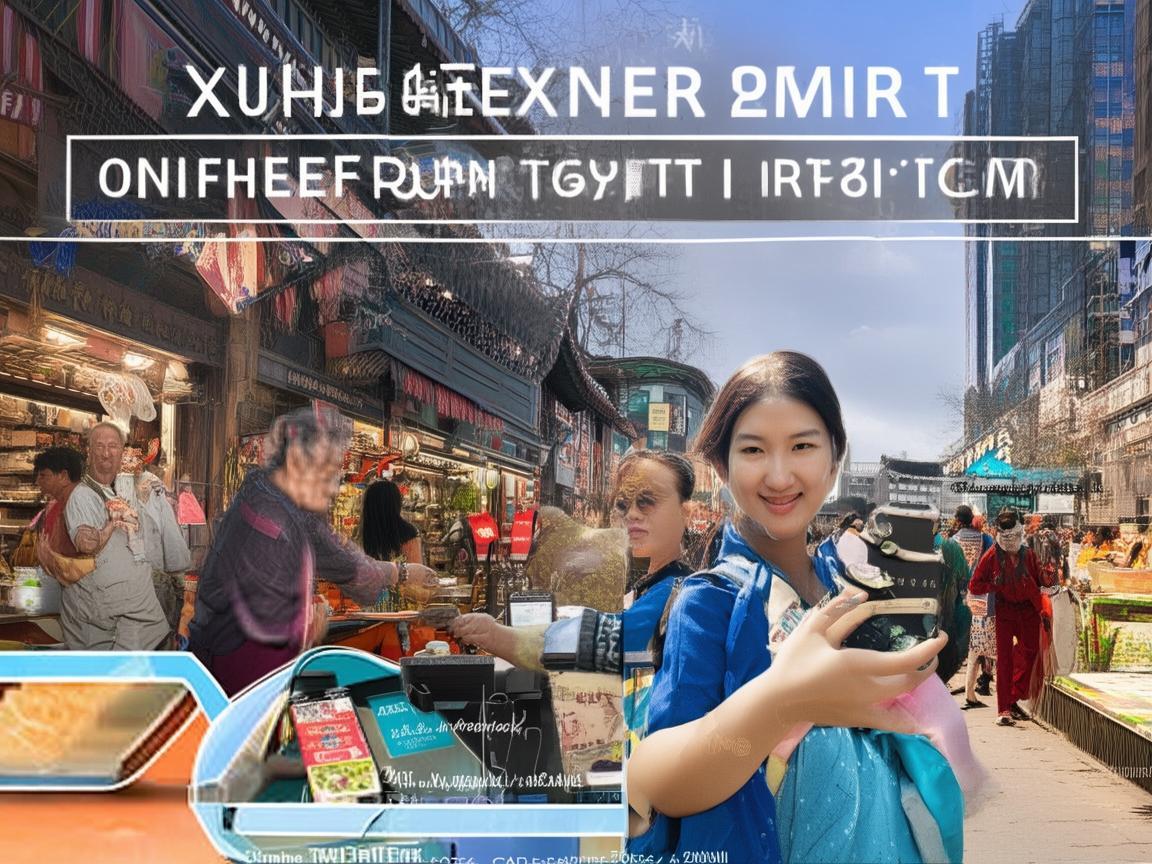
Traveling Xi’an Without a Bank Account: A Practical Guide to Cash-Free Payments
For Alipay: Link Your International Credit/Debit Card
Alipay is like China’s PayPal, but way more widespread. To set it up:
- Download the app: Search for “Alipay” in your app store (it’s available globally).
- Sign up: Use your email or phone number (you can use your international number; Alipay will send a verification code).
- Add a payment method: Go to “Me” > “Payment Methods” > “Add Bank Card.” Enter your international credit/debit card details (Visa, Mastercard, etc.). I used my U.S. Visa, and it worked seamlessly.
- Top up (optional): You can add money to your Alipay balance from your card, but I just paid directly from my card—no need to keep a balance.
Pro tip: Alipay has an “English” language setting (tap your profile > “Settings” > “Language”). This makes navigating menus way easier. I used Alipay to buy train tickets (via the “Travel” section), pay for dumplings at a Muslim Quarter stall, and even rent a bike from a shared bike service. The only hiccup? A few very small vendors (like elderly selling fresh fruit) might not know how to scan a foreign card-linked Alipay code—but that’s rare.
For WeChat Pay: Easiest if You Have a Friend (or a Tour Guide)
WeChat Pay is even more ubiquitous than Alipay, but it’s slightly trickier for foreigners because it’s tightly linked to WeChat’s social features. Here’s how to make it work:
- Download WeChat: If you don’t have it, get it—most locals use it for everything (payments, messaging, even QR codes to enter buildings).
- Set up WeChat Pay: Go to “Me” > “Services” > “Wallet” > “Payment Methods.” Add your international card (same as Alipay).
- The catch: Some vendors prefer “WeChat Pay QR codes” that are tied to a Chinese bank account or WeChat balance. If you try to pay with a foreign card, the vendor might see a “foreign card” prompt and get confused.
My workaround: I met a local traveler on my first day, and she helped me “link” to her WeChat Pay temporarily. Here’s how: She opened her WeChat, went to “Me” > “Wallet” > “Payment Settings” > “Scan QR Code to Pay,” and I scanned her code with my WeChat. Then, when I paid a vendor, I selected “Transfer to Friend” and sent her the money via WeChat (using my linked card). She’d then pay the vendor. It’s a bit clunky, but it worked for small purchases. For bigger things (like restaurants or hotels), I just used Alipay—no fuss.
Option 2: International Credit/Debit Cards—For Big Spenders
If you’re staying in a mid-range or high-end hotel, dining at Western restaurants, or shopping at malls, your international card (Visa, Mastercard, Amex) will likely work. I used my Visa to:
- Pay for my hotel (a 4-star near the Bell Tower—they took it without issue).
- Buy a silk scarf at a upscale shop in the Muslim Quarter.
- Eat at a café chain (like Starbucks or Element Fresh).
But: Don’t rely on cards for small stuff. Street food stalls, small souvenir shops, and local buses rarely take international cards. I tried to pay for a 10 yuan bowl of noodles with my card once—the vendor just laughed and pointed to a “WeChat Pay Only” sign.
Option 3: Cash—The Backup Plan
Even if you want to go cash-free, bring some cash—just in case. I took out 500 yuan (about $70) from an ATM at Xi’an Xianyang International Airport when I arrived. Here’s what to know:
- ATMs: Most ATMs in big areas (Bell Tower, Muslim Quarter, near major hotels) accept international cards. Look for “Visa/Mastercard” signs. I used my debit card and got yuan directly—easy.
- Exchange bureaus: If you don’t want to use ATMs, there are exchange counters at the airport and in downtown areas (like the Bell Tower). Rates are okay, but ATMs are usually better.
- Small bills: Get 10, 20, and 50 yuan notes. Vendors often struggle to change 100 yuan notes for small purchases.
When to use cash:
- Street food vendors who don’t take mobile payments (rare, but some elderly ones do).
- Taxis (most drivers take cash; some take mobile payments, but it’s hit-or-miss).
- Small shops in remote areas (like the countryside near the Terracotta Army).
Option 4: Travel Cards & Prepaid Options—Less Useful, But Worth a Mention
I saw ads for “China Travel Cards” (prepaid cards you load with yuan) at the airport, but they’re mostly for people staying long-term. For a short trip, they’re not worth the hassle—you have to find a place to load them, and they’re not accepted everywhere. Skip these unless you’re staying a month+.
My “No Bank Account” Payment Routine in Xi’an
Here’s how I actually paid for things during my 5-day trip:
- Day 1 (Arrival): Paid for the airport shuttle with cash (I had brought some USD to exchange at the airport). Checked into my hotel—used my Visa.
- Day 2 (Terracotta Army): Bought train tickets to the Terracotta Army via Alipay (super easy—just select “Train Tickets,” enter your ID/passport, and pay with my card). At the site, bought entrance tickets with Alipay. Lunch at a restaurant near the pits—Alipay again.
- Day 3 (Muslim Quarter): Breakfast from a street stall—cash (10 yuan for a steamed bun). Lunch at a famous roujiamo shop—Alipay (scanned the QR code, paid with my Visa). Bought souvenirs (small trinkets)—cash (some vendors didn’t take cards, and I didn’t want to deal with WeChat Pay linking).
- Day 4 (City Wall): Rented a bike on the City Wall—Alipay (scanned the QR code at the rental booth). Dinner at a Western-style restaurant—Visa.
- Day 5 (Departure): Paid for my hotel checkout—Visa. Bought snacks at the airport—Alipay (I had a little balance left).
Top Tips for Smooth Payments
- Download apps early: Get Alipay and WeChat set up before you arrive. Xi’an’s airport has free Wi-Fi, so you can do it while waiting for your luggage.
- Tell your bank: Let your bank know you’re traveling to Xi’an—some cards block “foreign” transactions automatically.
- Keep small bills: For taxis and street vendors, 10-50 yuan notes are your best friend.
- Don’t panic if a vendor says “no”: If a stall doesn’t take Alipay/WeChat, just smile, say “xie xie” (thank you), and walk away—there’s always another vendor nearby that does.
- Use Google Translate for QR codes: If a vendor’s QR code is confusing, take a photo and translate it with Google Translate—most just say “WeChat Pay” or “Alipay.”
Final Thoughts
Xi’an is a city where ancient history meets modern convenience, and that includes payments. You don’t need a Chinese bank account to enjoy everything the city has to offer—just a little prep. Alipay is your best friend for most things, cash is your backup, and international cards work for bigger expenses. I never felt stressed about money during my trip, and I barely carried any cash. So go ahead—book that ticket, and get ready to explore Xi’an without worrying about bank accounts. You’ve got this!
Xi’an Airport Transfer Service
Private English-speaking driver service in Xi’an operated directly by Bruce Zhang. 24/7 airport pickup and hotel transfer for foreign travelers.
Helpful for Your Trip in Xi’an
Navigating Payments in Xi’an: A Group Traveler’s Practical Guide
2026-07-29Ordering and Paying in Xi’an: A Traveler’s No-Stress Guide
2026-07-29Xi’an E-Wallet: How This Little App Made My Trip a Breeze
2026-07-29Xi’an Traveler’s Survival Guide: How to Master China’s Mobile Wallets (WeChat Pay & Alipay)
2026-07-28Xi’an Travel: Your Practical ID Guide to Navigate China’s Real-World Rules
2026-07-28Xi’an Long Stay: How to Handle Payments Like a Local
2026-07-28Paying at Xi’an Clubs: A Foreigner’s No-Fluff Guide
2026-07-28Navigating Xi’an’s Metro: A Foreigner’s Practical Payment Guide
2026-07-27Navigating Xi’an: A Tourist’s Guide to Mastering Mobile Payments in China
2026-07-27Navigating Xi’an Like a Local: My Digital Pay Survival Guide
2026-07-26