

Why Paying for a Guide in Xi’an Was Worth Every Penny: A Traveler’s Honest Guide
I’ll admit it—I’m usually the “do-it-yourself” traveler. I map out routes, download offline translations, and pride myself on “beating the system” to avoid tourist traps. But Xi’an? Oh, Xi’an changed my mind. This city isn’t just a destination; it’s a 3,000-year-old storybook, and without a guide, I was pretty sure I’d only skim the first page. After a week of wandering, eating, and getting hopelessly lost (in the best way possible), I’m here to say: paying for a guide in Xi’an isn’t a luxury—it’s a game-changer. Here’s why, and how to do it right.
First, Why Bother? Xi’an Isn’t Just “Old”—It’s Layers of Old
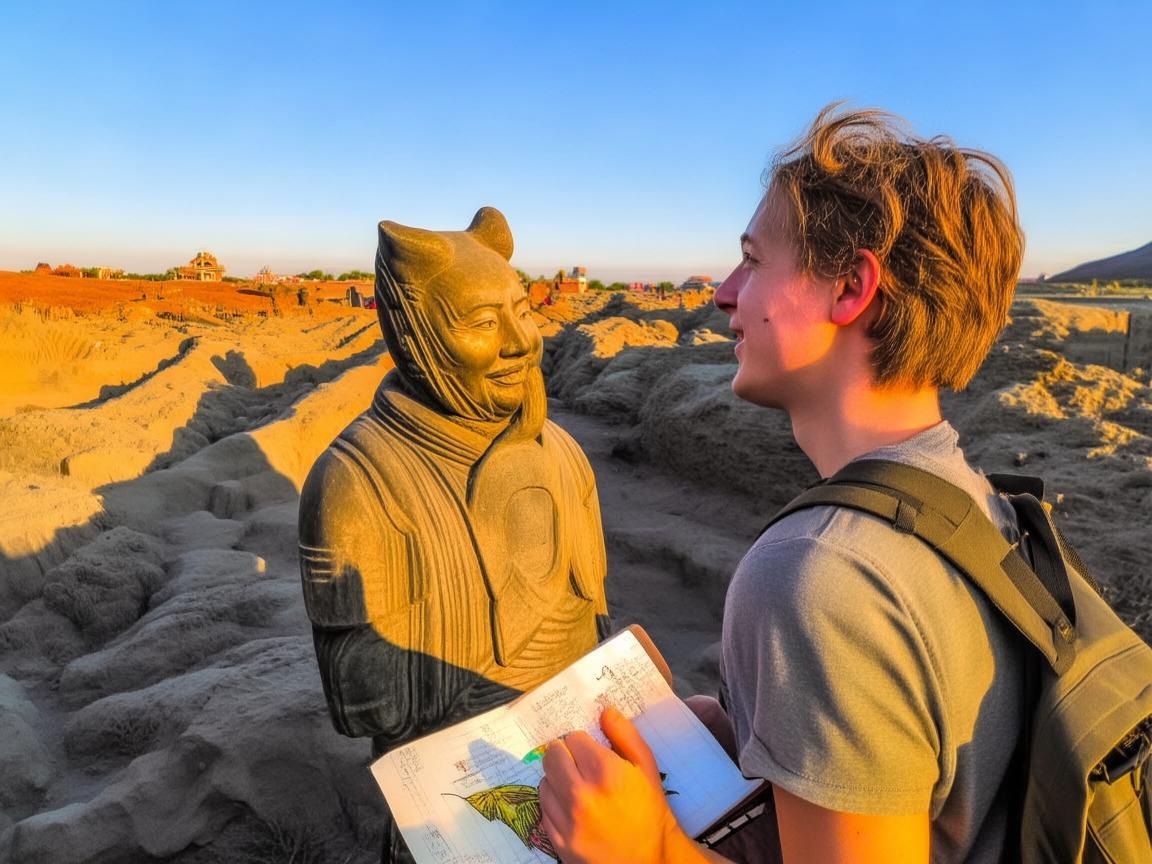
Xi’an isn’t like Beijing, where the Forbidden City and Great Wall are “must-sees” you can kinda-sorta figure out on your own. This city is a palimpsest—a manuscript where each dynasty wrote over the last: Qin dynasty terra-cotta warriors, Tang dynasty pagodas, Ming dynasty walls, Muslim alleyways buzzing with a thousand years of trade. I tried starting at the Terracotta Army alone on my first morning. Big mistake. I stood in front of Pit 1, saw a sea of gray clay figures, and thought, “Cool. Old soldiers.” That’s it. No context. No stories. Just… statues. It wasn’t until my guide, Lisa, pointed out the subtle details—the individualized facial expressions, the bronze swords still buried in the warriors’ hands (kept to prevent oxidation), the fact that each horse’s mane is tied differently—that I got it. These weren’t just statues; they were an emperor’s army, frozen in time to protect him in the afterlife. Suddenly, the 8,000 figures felt less like a museum exhibit and more like a ghost army.
Why Paying for a Guide in Xi’an Was Worth Every Penny: A Traveler’s Honest Guide
Same with the Muslim Quarter. I’d heard it was “great for food,” so I showed up, hungry and overwhelmed. The main street—Muslim Street—was a chaotic mess of skewers, candied hawthorns, and crowds yelling “Cheap! Cheap!” I grabbed a random lamb skewer, took a bite, and immediately regretted it—tough, greasy, and clearly made for tourists. The next day, with Lisa, we turned off the main street into a narrow alley called Beiyuanmen. “This is where Xi’an eats,” she said. We stopped at a tiny stall with just four stools and a wok. The owner, an old man with a white apron, grinned when he saw Lisa. “Ah, Lisa! The girl who likes her paomo extra soupy!” He handed us a bowl of paomo—bread soaked in mutton broth, topped with tender beef and garlic. It was heaven. Lisa explained: Paomo is a Tang dynasty dish, originally soldiers’ “quick bread stew.” The old man’s family had been making it for three generations. I never would have found that place on my own.
How to Find a Good Guide: Don’t Just Google “Xi’an Guide”
Okay, so you’re convinced. But where do you start? There are a lot of “guides” out there—some great, some… not so much. Here’s what I learned from trial (and a little error):
Use Reputable Platforms (But Verify!)
I used two main platforms: Tripadvisor Experiences and China Highlights Private Tours. Both let you read reviews, filter by language (I needed English), and see guides’ specialties (some focus on history, others on food or photography). But don’t just trust the star rating—read the reviews. Look for comments like “knew all the hidden photo spots” or “explained the Tang dynasty dynasty like a storyteller.”
Prioritize Licensed Guides
This is non-negotiable. In China, tour guides must have a National Tour Guide Certificate (国家导游证). Ask your guide to show it—legitimate ones won’t mind. I met one “guide” at my hotel who offered a “cheap” tour of the Terracotta Army for ¥200 (half the price of others). He didn’t have a license, and halfway through the tour, he tried to drag us to a “jade factory” (a common scam where guides get commissions for bringing tourists to shops). I politely left and found Lisa through China Highlights—licensed, friendly, and no detours.
Communicate Your Interests Before You Book
Xi’an has too much to see in one day. Tell your guide what you love. If you’re a foodie, say, “I want to eat like a local, not just tourist traps.” If you’re a history buff, ask, “Can we spend extra time at the Big Wild Goose Pagoda?” I told Lisa I wanted a mix of “big sights” and “hidden gems,” so she tailored our day: Terracotta Army in the morning (before the crowds), a local paomo lunch for ¥15 (not the ¥50 tourist version), and the City Wall in the afternoon (where she taught me how to ride a bike and told me the story of the Ming dynasty general who built it).
What You Actually Get for Your Money (Spoiler: It’s More Than Just Talking)
I’ll be honest—I was nervous about paying ¥600 for a full-day guide (excluding entrance fees). But by the end of the day, I felt like I’d gotten ten times that value in experiences, knowledge, and saved time. Here’s what your fee covers:
Context That Turns “Stuff” into “Stories”
At the Terracotta Army, Lisa didn’t just point out the soldiers—she told me about Emperor Qin’s obsession with immortality, how he sent 700,000 workers to build the tomb, and why the warriors are all different (some based on real soldiers, others on idealized forms). At the Big Wild Goose Pagoda, she explained that it was built by a Tang dynasty monk who brought Buddhist scriptures back from India—and how the pagoda’s architecture reflects the blend of Chinese and Indian styles. Suddenly, these weren’t just “old buildings”—they were living history.
Skip-the-Line (and Skip the Stress)
Xi’an’s top attractions—Terracotta Army, City Wall, Shaanxi History Museum—are crowded. Like, “lines snaking around the block” crowded. Lisa had pre-booked our tickets, so we walked right into the Terracotta Army at 9 AM (before the tour buses arrived). At the Shaanxi History Museum, which requires free tickets (booked weeks in advance), she had a “guide-only” entrance—no waiting, no hassle. Worth it? Absolutely.
Access to “Secret” Spots
My favorite part? The not-in-the-guidebook places. Lisa took us to a quiet corner of the Muslim Quarter where an old woman makes roujiamo (Chinese hamburger) in a clay oven. “She’s been doing this for 50 years,” Lisa said. The roujiamo—juy pork, pickled vegetables, and a spicy sauce stuffed in a freshly baked bun—was the best I’d had in Xi’an. She also showed us a hidden gate in the City Wall, where locals sit in the afternoon drinking tea and playing chess. “Tourists never come here,” she said, grinning.
Translation Help (Even for Simple Things)
I speak a little Mandarin, but ordering food in Xi’an’s dialect is a whole different ballgame. Lisa helped me order “not too spicy” (少辣) and “extra noodles” (多加面) at a local noodle shop. She also taught me basic phrases like “xièxie” (thank you) and “hǎo chī” (delicious), which made interactions with locals so much warmer.
How Much Should You Pay? A Quick Price Guide
Prices vary depending on the guide’s experience, group size, and itinerary. Here’s a rough breakdown (for English-speaking guides):
- Half-day (4-5 hours): ¥300-¥500 per person (if in a group of 2-3); ¥200-¥300 per person (if in a larger group, 4+).
- Full-day (8-9 hours): ¥600-¥800 per person (small group); ¥400-¥600 per person (larger group).
- Extra costs: Entrance fees (Terracotta Army ¥150, City Wall ¥54, Shaanxi History Museum free but requires booking), meals, and transportation (some guides include a car, others you pay for taxis).
Pro tip: Negotiate before you book. Ask, “Does this price include transportation?” or “Can we adjust the itinerary if we want to spend more time at one place?” Lisa was flexible—when I said I wanted to stay an extra hour at the Terracotta Army, she just smiled and said, “No problem!”
Final Thoughts: Pay for a Guide—Your Future Self Will Thank You
By the end of my trip, I wasn’t just seeing Xi’an—I was understanding it. I knew why the City Wall’s bricks are stamped with builders’ names (quality control!), why the Muslim Quarter’s architecture is a mix of Chinese and Islamic styles, and where to get the best biangbiang noodles (not on the main street, obviously).
Paying for a guide isn’t about being “lazy”—it’s about maximizing your time. Xi’an has too much to offer to waste it getting lost, eating bad food, or staring at artifacts without knowing their story. So if you’re planning a trip, skip the DIY route this time. Trust me: a good guide will turn a good trip into an unforgettable one.
And if you go? Ask for Lisa. She’s the reason I’ll be back to Xi’an next year.
Xi’an isn’t just a place—it’s a feeling. And with a guide, that feeling lasts long after you leave.
Xi’an Airport Transfer Service
Private English-speaking driver service in Xi’an operated directly by Bruce Zhang. 24/7 airport pickup and hotel transfer for foreign travelers.
Helpful for Your Trip in Xi’an
Navigating Payments in Xi’an: A Group Traveler’s Practical Guide
2026-07-29Ordering and Paying in Xi’an: A Traveler’s No-Stress Guide
2026-07-29Xi’an E-Wallet: How This Little App Made My Trip a Breeze
2026-07-29Xi’an Traveler’s Survival Guide: How to Master China’s Mobile Wallets (WeChat Pay & Alipay)
2026-07-28Xi’an Travel: Your Practical ID Guide to Navigate China’s Real-World Rules
2026-07-28Xi’an Long Stay: How to Handle Payments Like a Local
2026-07-28Paying at Xi’an Clubs: A Foreigner’s No-Fluff Guide
2026-07-28Navigating Xi’an’s Metro: A Foreigner’s Practical Payment Guide
2026-07-27Navigating Xi’an: A Tourist’s Guide to Mastering Mobile Payments in China
2026-07-27Navigating Xi’an Like a Local: My Digital Pay Survival Guide
2026-07-26