

Xi’an on a Budget: How China’s Payment Revolution Made My Trip Easier—and Cheaper!
I landed in Xi’an with a wallet stuffed with cash and a head full of worries. “Do I need to learn Chinese to pay for things?” “What if I can’t find an ATM?” “Will street vendors refuse my dollars?” I’d heard China was a cashless wonderland, but as a first-time visitor, I braced for chaos. Instead, I stumbled into something amazing: a payment revolution that turned every transaction into a breeze—and even saved me money. Let me break down how this tech-driven shift made my Xi’an trip smoother than I ever imagined.
First Stop: Ditching Cash at the Airport
My first lesson came right at Xi’an Xianyang International Airport. After grabbing my luggage, I spotted a 7-Eleven and decided to buy a water bottle. I fumbled for yuan, only to see the cashier smile and point to a QR code on the counter. “We take Alipay or WeChat Pay,” she said, in perfect English. I panicked—what were those? A nearby student noticed my confusion and offered help. “Download Alipay,” she said. “It’s like PayPal, but better.”
Xi’an on a Budget: How China’s Payment Revolution Made My Trip Easier—and Cheaper!
Within minutes, I’d signed up (just my email and phone number—no bank card needed yet) and linked my international credit card. The cashier scanned my Alipay QR code, and ding!—payment done. No cash, no exchange rates, no waiting. By the time I got a taxi to my hotel, I was a pro: the driver had a QR code on his dashboard, and I paid via Alipay in 10 seconds. Fare: 35 yuan. If I’d paid cash, I’d have needed exact change—and risked getting ripped off (some drivers “forget” to give change). This was already a win.
Getting Around: Buses, Metro, and Shared Bikes
Xi’an’s public transport is a dream, but navigating it used to be a headache for tourists. Not anymore. I bought a transit card at the metro station—only to find out most locals don’t use them anymore. “Just use Alipay’s ‘Transport Card’ feature,” a ticket agent said. I opened Alipay, tapped “Transport,” added Xi’an’s metro card, and voilà—my phone became my metro pass.
At the gate, I held my phone over the scanner, just like a physical card. For buses, same thing: drivers have a QR scanner, and I paid with a single tap. No more hunting for coins or worrying about bus fare prices (which are dirt cheap—2 yuan per ride, vs. $2-3 in my city).
Even shared bikes were seamless. I grabbed a Hello Bike (China’s version of Lime), scanned its QR code with Alipay, and rode 2 kilometers to the Bell Tower for 3 yuan. No app downloads, no credit card hassles—just pay and go. The best part? No cash needed for bike deposits or fines. If I parked in a designated zone, the app automatically deducted the fee. If I parked illegally? A small fine popped up in Alipay, payable in one click. Talk about convenience.
Eating Like a Local: Street Food and Restaurants
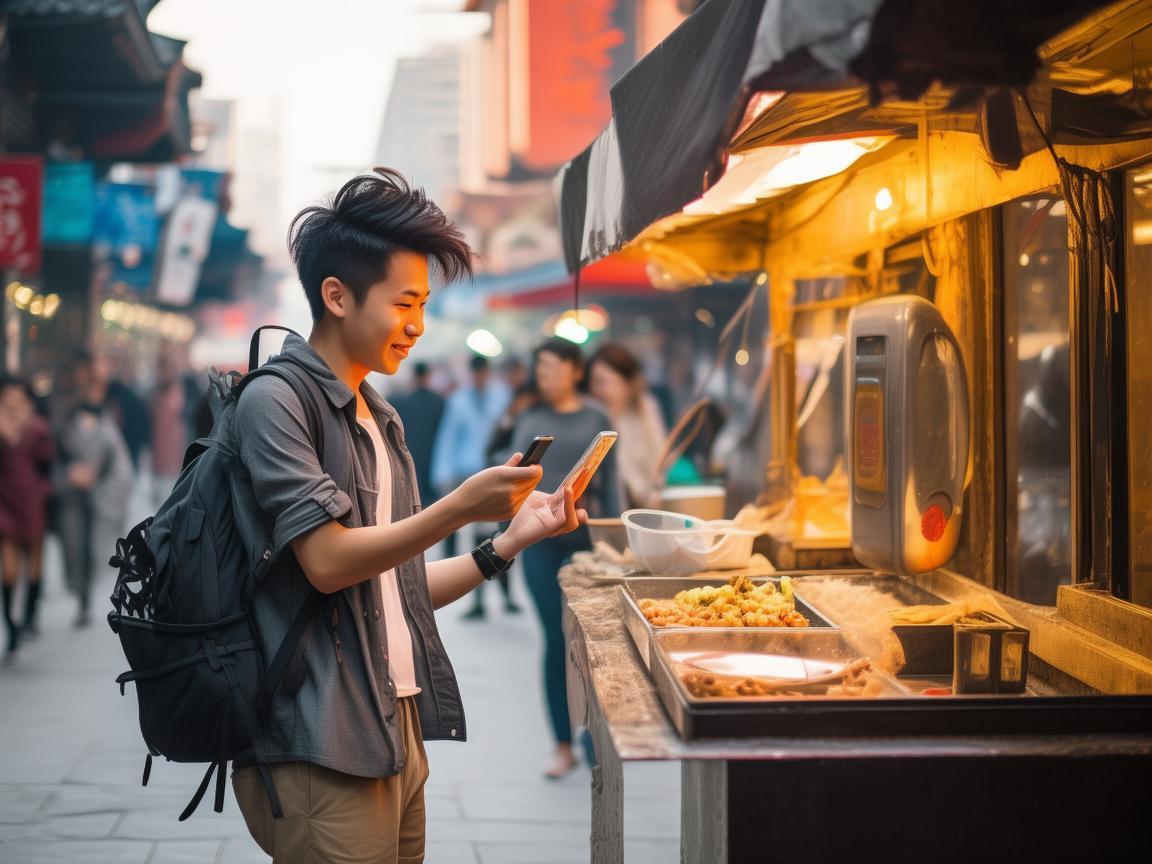
Xi’an is a foodie paradise, but I used to stress about carrying wads of cash for street eats. Not anymore. In the Muslim Quarter, I wandered through lanes lined with stalls selling roujiamo (Chinese hamburgers), yangrou paomo (bread soup), and biangbiang noodles. Every vendor had a laminated QR code stuck to their cart. “Alipay or WeChat?” they’d ask, without missing a beat.
I’d scan, pay 10 yuan for a roujiamo, and the vendor would hand over the food with a smile. No haggling over prices, no fumbling with small bills, and no risk of being overcharged (since the amount is fixed on the screen). Even at sit-down restaurants, payment was effortless. I’d order, eat, and then open Alipay to split the bill with friends—no cash needed, just a few taps.
Here’s a pro tip: Alipay and WeChat often have “coupons” for first-time users at local spots. I once got a 5-yuan discount on a bowl of paomo just for using Alipay at a stall I’d never visited before. Over a week, those little discounts added up—saving me enough for a free bingfeng (ice cream dessert) at the end of my trip.
Shopping: From Markets to Malls
Xi’an’s markets are chaotic in the best way, but paying used to be a nightmare. I remember a friend telling me she spent 20 minutes arguing with a vendor over a jade bracelet because she only had cash. Not me. In the Great Mosque Market, I haggled over a silk scarf (got the vendor down from 150 yuan to 80), then paid via Alipay. The vendor even gave me a digital receipt—no paper, no fuss.
At modern malls like SKP Xi’an, things were even smoother. I bought a pair of sneakers, and the cashier asked, “WeChat or Alipay?” I chose WeChat (which I’d also set up for backup), and the payment went through in seconds. No waiting for credit card machines, no signature needed. For bigger purchases, I could link my international debit card to either app—no need to exchange thousands of yuan upfront.
One thing I loved: no more carrying around a wallet full of receipts. Both Alipay and WeChat store transaction history, so I could track my spending daily. When I got home, I just exported the records to Excel and saw exactly how much I’d spent on food, transport, and souvenirs. So organized.
Sightseeing: Tickets, Tours, and Skip-the-Line
Xi’an’s top attractions—Terracotta Army, Big Wild Goose Pagoda, City Walls—used to require long ticket lines. Not anymore. I bought my Terracotta Army ticket online via Alipay’s “Travel” section the night before. When I arrived, I just scanned my QR code at the gate—no ticket window, no waiting. Saved at least 30 minutes!
For guided tours, I used a local app (linked to WeChat Pay) to book a small-group tour of the Terracotta Army. The tour guide met me at the entrance, and I paid via WeChat before the tour started. No cash, no hassle. Even at smaller spots, like the Shaanxi History Museum, I used Alipay to book a timed entry ticket—skipping the massive crowds of walk-in visitors.
Here’s a game-changer: many attractions offer discounts for online bookings via Alipay or WeChat. I saved 20 yuan on my City Wall bike rental just for paying through the app. Plus, no risk of tickets selling out—especially during peak season.
Safety and Security: No More Cash Worries
Before my trip, I’d heard horror stories about tourists getting robbed in China. But with mobile payments, I barely carried any cash—just 200 yuan in my wallet for emergencies (like a tiny village stall that didn’t take QR codes). Even then, I never felt unsafe. Why?
First, mobile payments are encrypted. Alipay and WeChat use bank-level security, so my card details were safe. Second, if I lost my phone, I could freeze my payments instantly via another device or by calling customer service. Third, no cash meant no risk of theft—I didn’t have to worry about pickpockets targeting my wallet.
I did have one scare: my phone died while exploring the Muslim Quarter. But I just borrowed a power bank from a street vendor (he charged me 5 yuan via Alipay for 2 hours of charging). Crisis averted.
Tips for Travelers: Navigating the Payment Revolution
If you’re heading to Xi’an (or anywhere in China), here’s what you need to know to make the most of the payment revolution:
-
Download Alipay and WeChat Pay first. Both are essential—Alipay for shopping/transport, WeChat for splitting bills/food. Sign up before you go; it’s harder to set up with a Chinese SIM card if you’re not there yet.
-
Link your international card. Go to “My” in Alipay or “Me” in WeChat, tap “Payment Methods,” and add your Visa/Mastercard. Most places accept both, but Alipay is more widely used outside cities.
-
Carry a little cash—just in case. Not every stall or rural shop takes QR codes. 200-300 yuan in small bills (10s and 20s) is enough for emergencies.
-
Use “Transport Card” in Alipay for metro/bus. It’s cheaper than buying single tickets and saves time at gates.
-
Look for “first-time user” coupons. Alipay and WeChat often offer discounts at restaurants, shops, and attractions—just check the “Coupons” section before paying.
-
Freeze your payments if you lose your phone. Alipay: 95188 (China number) or use the “Find My Device” feature. WeChat: go to “Settings” > “Account Security” > “Frozen Payment.”
Final Thoughts: Why This Revolution Matters for Travelers
By the end of my trip, I was amazed at how much China’s payment revolution had simplified my life. No more fumbling with cash, no more language barriers at checkout, no more overspending on exchange fees. I could focus on what mattered: exploring the Terracotta Army, eating paomo at a 50-year-old stall, and biking around the ancient City Wall at sunset—all without worrying about payments.
What’s even cooler is how this tech makes travel more inclusive. A decade ago, I’d have needed to speak Chinese, carry cash, and rely on tour guides to get by. Now? Anyone with a smartphone can navigate Xi’an like a local. The payment revolution isn’t just about convenience—it’s about making China accessible to everyone.
So if you’re planning a trip to Xi’an, leave your cash at home. Download Alipay, embrace the QR codes, and get ready for a trip that’s as smooth as the roujiamo is delicious. Trust me—you’ll never want to go back to the old way of traveling.
Xi’an Airport Transfer Service
Private English-speaking driver service in Xi’an operated directly by Bruce Zhang. 24/7 airport pickup and hotel transfer for foreign travelers.
Helpful for Your Trip in Xi’an
Navigating Xi’an’s Metro: A Foreigner’s Practical Payment Guide
2026-07-27Navigating Xi’an: A Tourist’s Guide to Mastering Mobile Payments in China
2026-07-27Navigating Xi’an Like a Local: My Digital Pay Survival Guide
2026-07-26Xi’an Travel Tips: Cash vs. QR Codes for Entrance Tickets——A Tourist’s Practical Guide
2026-07-25Alipay for Foreign Travelers in Xi’an: A Practical Setup Guide
2026-07-25How to Survive (and Thrive) in Xi’an: A Tourist’s Guide to Digital Transactions
2026-07-24Navigating Theme Park Payments in Xi’an: A Traveler’s Practical Guide
2026-07-24Xi’an’s Convenience Stores: Your Go-To for Easy Travel Payments
2026-07-23My Cash Backup Strategy for Traveling in China: A Tourist’s Practical Guide
2026-07-22Emergency Payments in Xi’an: A Foreign Traveler’s Practical Guide
2026-07-22