

Xi’an Shopping Payment Guide: A Tourist’s Practical Handbook
Hey fellow travelers! Just got back from Xi’an, and let me tell you—this city is a shopper’s dream, from bustling night markets to centuries-old craft shops. But as I wandered through the Muslim Quarter or haggled for souvenirs near the Bell Tower, I quickly realized: figuring out payments here can be almost as tricky as pronouncing "Biang Biang Noodles" (don’t ask). I learned a lot through trial and error (and a few awkward moments), so I’m breaking down everything you need to know about shopping in Xi’an—no jargon, just practical tips from someone who’s been there.
First Things First: Cash vs. Mobile Payment—What Actually Works?
Let’s start with the big question: Should you carry cash, or rely on mobile apps? The short answer: Do both. Here’s why.
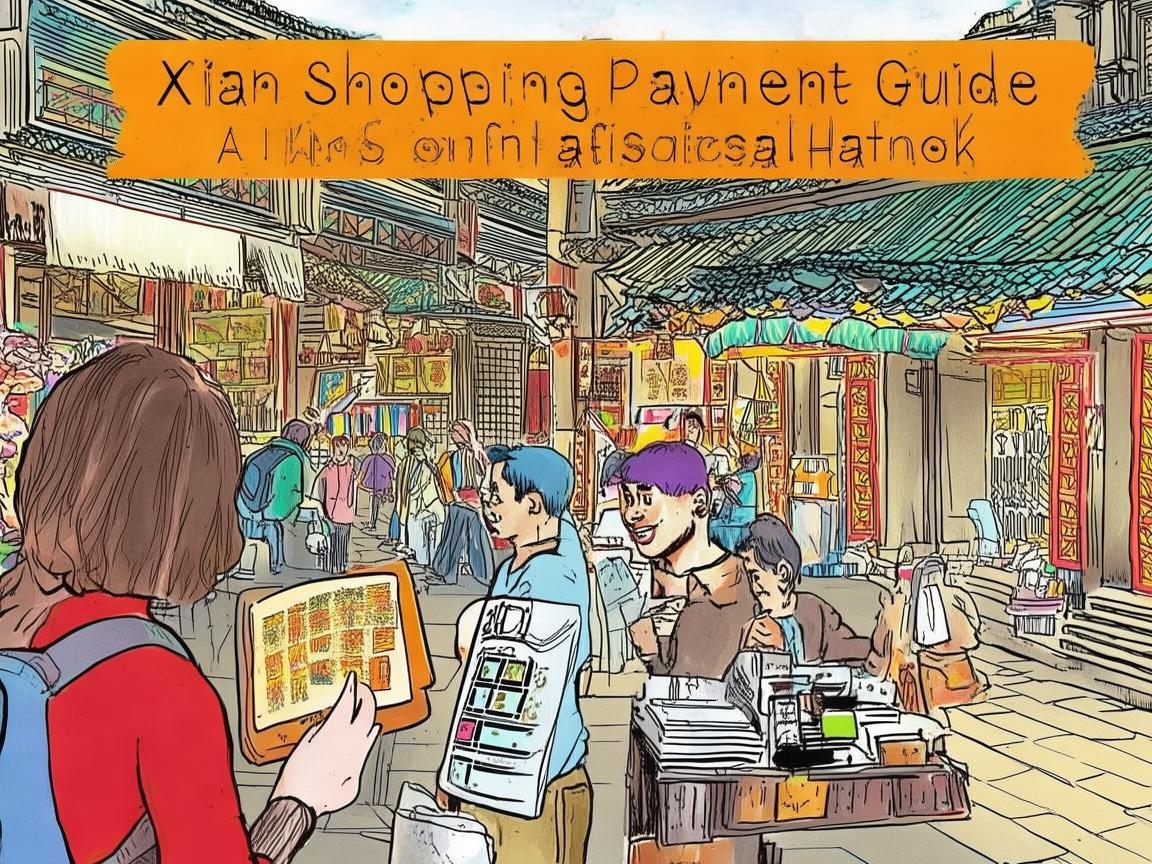
Xi’an Shopping Payment Guide: A Tourist’s Practical Handbook
Cash: Your "Fallback" for Small Vendors and Older Shops
I’ll admit—I thought I could survive on my credit card. Big mistake. My first night in the Muslim Quarter, I craved a roujiamo (that amazing Chinese hamburger) from a street cart. The vendor, a sweet elderly lady, pointed to a sign that said “现金仅” (cash only). I had nothing smaller than a 100 Yuan bill (~$14), and she just shook her head—she couldn’t break it. I ended up trading a granola bar for the roujiamo (worth it, but not ideal).
What you need to know about cash:
- Carry small bills: Stick to 1, 5, 10, and 20 Yuan notes. Vendors at markets, food stalls, and small craft shops often can’t make change for 50 or 100 Yuan bills.
- Where to get cash: ATMs are everywhere—in airports, malls, and even some convenience stores (look for the “银联” UnionPay sign). Most ATMs accept international cards (Visa, Mastercard), but double-check with your bank about foreign transaction fees. I used Bank of China ATMs; they had English menus and reliable service.
- Exchange currency: Avoid airport exchange counters—their rates are terrible. Instead, go to a local bank (like ICBC or Bank of China) or a licensed exchange shop near tourist areas (e.g., South of the Big Wild Goose Pagoda). I exchanged $200 at a bank and got a better rate than at the airport.
Mobile Payment: The "King" of Xi’an Shopping
If you’ve heard China is a “cashless society,” it’s no joke. By my third day, I was using mobile pay for everything—from bubble tea at a mall to a silk scarf at a boutique. Here’s how to set it up as a tourist:
WeChat Pay & Alipay: Your Go-To Apps
These two apps dominate payments in Xi’an. Both work similarly: you scan a QR code (either the vendor’s or yours) to pay. The key difference? WeChat Pay is more common for small purchases (street food, markets), while Alipay is big in malls and restaurants. But honestly, most vendors accept both.
Step 1: Download the Apps
- WeChat Pay: Comes with the WeChat app (already popular for messaging).
- Alipay: Download the Alipay app (similar to PayPal).
Step 2: Link Your International Card
This is the easiest way to use mobile pay without a Chinese bank account. Here’s how:
- For WeChat Pay: Open WeChat → Tap “Me” → “Services” → “Wallet” → “Payment Methods” → “Add Bank Card.” Enter your credit/debit card details (Visa/Mastercard) and verify with a code from your bank.
- For Alipay: Open Alipay → Tap “My” → “Payment Methods” → “Add Bank Card.” Same process—enter your card info and verify.
Pro tip: Some banks (like Citibank or DBS) offer “virtual cards” specifically for China travel—these work with WeChat/Alipay and have lower fees. I used my DBS virtual card and saved on foreign transaction fees!
Step 3: Scan to Pay (or Have Vendors Scan Your Code)
- Vendor’s QR code: Most shops/stalls have a QR code labeled “WeChat Pay” or “Alipay.” Open your app, tap “Scan,” and point your camera at it. Enter the amount, confirm, and done!
- Your QR code: For small purchases, vendors might scan your code instead. In WeChat, go to “Wallet” → “QR Code” (a green square with your photo). In Alipay, it’s “My” → “QR Code.” Vendors will scan this to take money from your account.
When to Use Mobile Pay:
- Markets and street food: Vendors at Muslim Quarter, Yongxingfang, or the Night Market almost always accept WeChat/Alipay. I bought tanghulu (candied hawthorns) and jianbing (savory crepes) with a quick scan—no cash needed!
- Malls and restaurants: High-end spots like SKP Xi’an or local cafes (like% Arabica) love mobile pay. It’s faster than swiping a card.
- Tourist shops: Most souvenir shops near the Terracotta Army or City Wall accept it, but haggling is easier with cash (more on that later).
Credit/Debit Cards: For Big Purchases (But Not Always)
Don’t ditch your credit card entirely—it’s useful for:
- High-end shopping: Malls like Grand City Mall or luxury boutiques may accept Visa/Mastercard, but always ask first (“Do you take credit cards?” in English or “刷卡可以吗?”—shuā kǎ kě yǐ ma?).
- Hotels and train tickets: If you book a hotel or high-speed train (D-series trains) online, you’ll likely need a credit card.
- ATM withdrawals: As mentioned earlier, ATMs take international cards, but fees add up (I paid ~$5 per withdrawal).
When to Avoid Cards:
- Small street vendors, night market stalls, or family-run restaurants. They rarely have card machines, and even if they do, the machine might be broken (I saw this at a dumpling shop—vendor just shrugged and said “cash only”).
Scenario Guide: What to Use Where
To make it simple, here’s a breakdown of common shopping spots and the best payment method:
| Shopping Spot | Best Payment Method | Why? |
|---|---|---|
| Muslim Night Market | Cash + Mobile Pay | Small vendors prefer cash; larger stalls (e.g., lantern shops) take WeChat/Alipay. |
| Yongxingfang Food Street | Mobile Pay > Cash | Most food stalls have QR codes; cash is backup for no-change situations. |
| Terracotta Army Souvenir Shops | Cash > Mobile Pay | Haggling is easier with cash; some shops add a “convenience fee” for card payments. |
| Malls (SKP, Grand City) | Credit Card + Mobile Pay | High-end stores take cards; smaller shops use mobile pay. |
| Local Markets (e.g., Huimin Street) | Cash | Older vendors and small shops rarely accept cards or mobile pay. |
Common Payment Problems (and How to Fix Them)
Even with the best prep, things can go wrong. Here are the hiccups I faced—and how to solve them:
Problem 1: “No Signal” When Trying to Mobile Pay
I was in a crowded alley in the Muslim Quarter, ready to buy a silk painting, but my WeChat wouldn’t load (no Wi-Fi, and my SIM card data was spotty). The vendor waited patiently, but I panicked.
Fix: Buy a Chinese SIM card as soon as you arrive! I got one at Xi’an Xianyang International Airport for 100 Yuan (~$14) with 10GB of data (valid for 30 days). Carriers like China Unicom or China Mobile have tourist SIMs at the airport—look for the “SIM Card” counter. If you don’t want a SIM, most malls and cafes have free Wi-Fi (you’ll need to scan a QR code to log in, but vendors can help).
Problem 2: Vendor Says “WeChat/Alipay Only” But You Don’t Have It
This happened to me at a tea shop near the Bell Tower. The owner showed me a WeChat Pay QR code, but I hadn’t set up my account yet.
Fix: Most tourist-friendly vendors will let you use cash if you explain (“I don’t have WeChat/Alipay”—wǒ méi yǒu Wēixìn/ Zhīfùbǎo). If they insist, ask a nearby shopkeeper for help—they often speak basic English and can set it up for you (I did this, and a kind shop owner helped me link my card in 2 minutes).
Problem 3: Getting Ripped Off with Fake Bills
One night, I got a 50 Yuan bill in change that was fake (the paper felt weird, and the watermark was blurry). I didn’t notice until later.
Fix: Always check your change! Look for:
- Watermarks that match the face value.
- Raised printing—you should feel the texture of the numbers.
- Color-changing ink (on newer bills, the number changes color when you tilt it).
If you’re unsure, use a small bill for small purchases—less risk of getting stuck with fake change.
Problem 4: Haggling—How to Do It Without Cash
Haggling is expected at markets like the Muslim Quarter or the Curio Market, but it’s harder with mobile pay (since the vendor can see your balance on the screen).
Fix: Use cash for haggling! Here’s my strategy:
- Start by offering 50-70% of the asking price. For example, if a lantern is 100 Yuan, offer 50 Yuan.
- If they refuse, meet in the middle (e.g., 70 Yuan).
- If they still say no, walk away—they’ll often call you back with a better price. I bought a silk scarf for 80 Yuan this way (originally 150 Yuan)—cash made it easier to negotiate!
Final Tips: Payment Must-Dos Before You Shop
- Download WeChat/Alipay before you leave home. Setting them up at a crowded market is stressful (trust me).
- Carry at least 300 Yuan in small bills. This covers emergencies (like when your mobile pay fails) or small purchases.
- Tell your bank you’re traveling. Nothing worse than having your card declined because “suspicious activity” (I learned this the hard way in a taxi—call your bank and say “I’m in Xi’an from [date] to [date]”).
- Keep a payment “backup.” I had a mix of cash, mobile pay, and a credit card—never rely on just one.
Wrapping Up
Xi’an is one of the most welcoming cities I’ve visited, and shopping here is a blast once you’ve got the payment sorted. Remember: Cash for small vendors and haggling, mobile pay for convenience, and cards for big buys. Don’t stress if you make a mistake—most locals are happy to help, and a smile goes a long way (even if you’re struggling with “xiànfù” or “xiànjīn”).
Now go forth and shop—those Terracotta Army souvenirs, roujiamo, and silk scarves won’t buy themselves! Happy travels! 🛍️✨
Xi’an Airport Transfer Service
Private English-speaking driver service in Xi’an operated directly by Bruce Zhang. 24/7 airport pickup and hotel transfer for foreign travelers.
Helpful for Your Trip in Xi’an
Navigating Xi’an’s Metro: A Foreigner’s Practical Payment Guide
2026-07-27Navigating Xi’an: A Tourist’s Guide to Mastering Mobile Payments in China
2026-07-27Navigating Xi’an Like a Local: My Digital Pay Survival Guide
2026-07-26Xi’an Travel Tips: Cash vs. QR Codes for Entrance Tickets——A Tourist’s Practical Guide
2026-07-25Alipay for Foreign Travelers in Xi’an: A Practical Setup Guide
2026-07-25How to Survive (and Thrive) in Xi’an: A Tourist’s Guide to Digital Transactions
2026-07-24Navigating Theme Park Payments in Xi’an: A Traveler’s Practical Guide
2026-07-24Xi’an’s Convenience Stores: Your Go-To for Easy Travel Payments
2026-07-23My Cash Backup Strategy for Traveling in China: A Tourist’s Practical Guide
2026-07-22Emergency Payments in Xi’an: A Foreign Traveler’s Practical Guide
2026-07-22