

Xi’an Travel Tips: Navigating Large Cash Payments in China
As a first-time visitor to Xi’an last fall, I was beyond excited to explore the Terracotta Army, stroll along the Muslim Quarter, and lose myself in the ancient city walls. But like many travelers, I’d heard China was a “cashless society” and assumed my credit card would cover everything. Spoiler: It didn’t. I ended up in a few sticky situations—from a street food vendor refusing my card to a small guesthouse demanding cash for a deposit—because I’d underestimated how much large cash payments still matter here, especially in a city where tradition blends with modernity. If you’re heading to Xi’an, let me save you the hassle with practical, no-fluff tips about handling cash, straight from someone who learned the hard way.
First, Why Do You Even Need Cash in Xi’an?
I’ll admit, I arrived smug. I’d linked my international Visa to Alipay and WeChat Pay (after a friend helped me register) and thought I was set. But within 24 hours, that illusion shattered. At the Muslim Quarter, I craved a roujiamo (Xi’an’s famous “hamburger”) from a tiny stall where the vendor just pointed to a worn-out “现金支付” (cash payment only) sign. Later, when I hired a private guide to take me to the Big Wild Goose Pagoda, she insisted on cash for her fee—she said her Alipay account was linked to her rural bank, which couldn’t accept foreign cards. Even my hotel, a mid-range place near the Bell Tower, asked for a 500 RMB cash deposit (refundable) when I checked in, saying their card machine was “temporarily down.”
Xi’an is a city of contrasts: you’ll find 5G-powered malls in the city center and centuries-old alleyways where grandpas still tally bills on abacuses. While mobile payments dominate in big malls, international hotels, and chain restaurants, small businesses, local markets, rural outskirts, and traditional services often run on cash. And “large cash payments” here aren’t just for luxury buys—they’re for everyday stuff like tour guides, market souvenirs, or even just a big group dinner at a family-run restaurant.
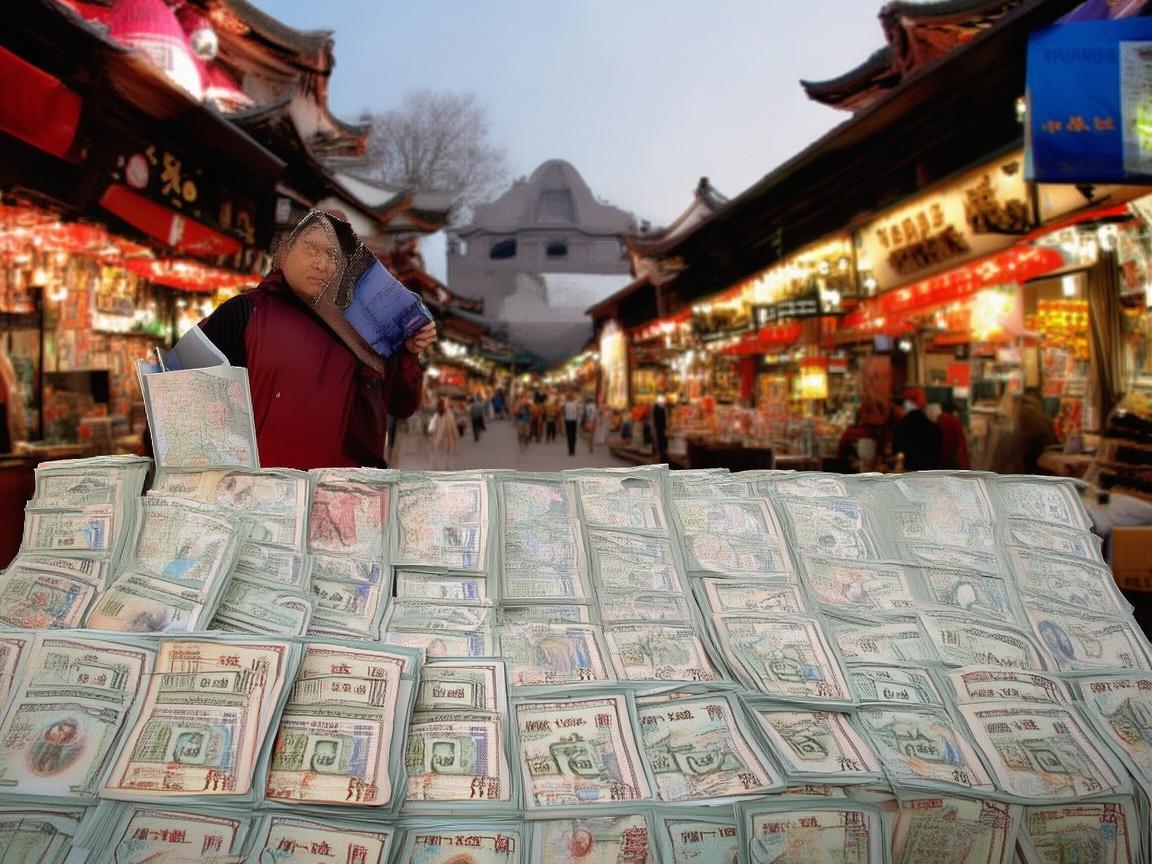
Xi’an Travel Tips: Navigating Large Cash Payments in China
Where Exactly Will You Need Cash? (Specific Examples!)
Let’s get practical. Here are the places in Xi’an where I almost always needed cash, often in larger denominations (100 or 50 RMB notes):
Street Food and Night Markets
The Muslim Quarter (Huimin Jie) and Shuyuan Men are food paradises, but most stalls are tiny, family-run operations. I tried paying for a biangbiang noodle bowl with my phone, and the vendor just laughed and shook his head. Cash only. Same for the tanghulu (candied hawthorns) seller, the grilled skewer carts, and even the auntie making suanpanzi (cold skin noodles). Pro tip: Bring small bills (10s, 20s) here—vendors rarely have change for 100 RMB, and you don’t want to hold up a line while they scramble for coins.
Local Tour Guides and Small Group Tours
If you’re like me and prefer a personal touch, hiring a local guide is worth it. But most independent guides (the ones you meet at tourist sites or through small agencies) don’t take cards. My guide for the Terracotta Army, a friendly guy named Li, charged 800 RMB for a half-day tour (including transport). He said he’d only accept cash because his Alipay “couldn’t handle foreign transactions.” Same for the bike rental place near the city wall—they wanted a 200 RMB cash deposit.
Rural and Suburban Attractions
Xi’an’s outskirts have hidden gems, like the Famen Temple (a Buddhist site with ancient relics) or the Huaqing Hot Springs. I took a minivan to Famen Temple from the city bus station, and the driver only took cash—50 RMB per person. The ticket booth at the hot springs also refused cards, asking for 120 RMB in cash. Even small guesthouses in places like Huashan Mountain (a day trip from Xi’an) often require cash payments for rooms.
Markets for Souvenirs
I wanted to buy some silk scrolls and terracotta miniatures as gifts. At the Big Wild Goose Pagoda’s souvenir market, the big shops took cards, but the tiny, family-run stalls? Cash only. One seller quoted me 300 RMB for a hand-painted silk scroll and wouldn’t budge when I offered my phone. I had to walk to a nearby bank (more on that later) to withdraw cash and come back.
How to Prepare for Large Cash Payments (Step-by-Step)
Okay, so cash is king in some places. But how do you get it without getting ripped off? Here’s what worked for me:
Exchange Money at the Airport or Bank (Not the Hotel!)
I arrived at Xi’an Xianyang International Airport and immediately went to the Bank of China counter. They exchanged my US dollars for RMB at a fair rate (way better than the airport exchange desks in my home country). I asked for 100 RMB and 50 RMB notes—smaller bills are easier for daily use, but larger ones are handy for guides or big purchases. Pro tip: Avoid exchanging money at hotels—their rates are usually terrible. If you run out of cash, head to a Bank of China, ICBC, or ABC (Agricultural Bank of China)—they all have ATMs that accept international cards.
Use International ATMs (But Watch the Fees)
My backup plan was using my debit card at Bank of China ATMs. Most international cards (Visa, Mastercard, UnionPay) work here, but there’s a catch: you’ll be charged a withdrawal fee (usually 3-5% of the amount) by your bank back home. I withdrew 2000 RMB at once to minimize fees—enough for 3-4 days of meals, guides, and souvenirs. Pro tip: Check your bank’s foreign withdrawal limit before you go. Mine had a daily limit of 300 USD, which was perfect.
Carry a Mix of Bills (No 20s or 10s for Big Payments)
Here’s a mistake I made early on: I exchanged all my money for 20 RMB bills. Then, when I needed to pay my guide 800 RMB, I had to hand her 40 bills—awkward and time-consuming. After that, I made sure to have at least five 100 RMB notes on hand for large payments (guides, deposits, big souvenir buys). Keep 10s and 20s for street food and small shops, but stash the big bills in a separate place (more on that later).
Get a “Cash Stash” Pouch (Not a Wallet!)
I learned this the hard way: carrying all your cash in a wallet makes you a target for pickpockets, especially in crowded places like the Muslim Quarter or the city wall. Instead, I bought a small, zippered pouch that I wore under my shirt (a “money belt”). I kept 500 RMB in it for emergencies, and just took out what I needed for the day. Pro tip: Never flash large amounts of cash—if a vendor sees you have a thick wad of 100s, they might “forget” to give you change.
Cash Payment Etiquette and Pitfalls to Avoid
Using cash in China isn’t just about having the right bills—it’s about how you use them. Here are a few things I wish I’d known:
Always Check for Counterfeit Bills
Chinese banknotes have cool anti-counterfeit features (watermarks, security lines, color-changing ink), but fake bills still circulate, especially in tourist areas. I got a fake 50 RMB once from a street vendor (didn’t check the watermark—oops). Now, I always hold bills up to the light: you should see a clear portrait of Mao Zedong and a faint line running through the bill. If it looks blurry or the ink smudges, refuse it.
Don’t Haggle Over Small Amounts
In markets, haggling is expected—but only for big-ticket items (like silk rugs or jade jewelry). For small stuff (a 10 RMB bowl of noodles or a 20 RMB keychain), don’t bother. I tried bargaining with a vendor over a 5 RMB difference on a terracotta figurine, and he just gave me a dirty look and walked away. Lesson learned: save the haggling for things over 100 RMB.
Have Exact Change for Small Payments
This is a small thing, but it makes a big difference. If you’re buying a 30 RMB snack and hand over a 50 RMB bill, the vendor might not have change, especially in the evening. I started keeping a small “coin purse” with 1s, 5s, and 10s for exact payments. Vendors will love you for it—you’ll get a smile instead of a sigh.
If a Vendor Refuses Cash, Don’t Panic
I ran into this once at a small tea house near the Muslim Quarter. The owner said they only took Alipay, but I had no Chinese bank account. I politely explained (using Google Translate) that I only had cash, and he finally agreed—turns out, he just didn’t want to deal with the hassle of counting bills. If this happens, stay calm, smile, and show them the cash in your hand. Most people will make an exception if you’re polite.
My “Cash Safety” Routine (What Worked for Me)
By day three in Xi’an, I had a system for keeping my cash safe—and it made the rest of my trip stress-free. Every morning, I’d take out 300-500 RMB for the day: 100 RMB in a wallet for small stuff, and 200-400 RMB in the hidden pouch for big payments. I’d leave the rest (about 1500 RMB) in the hotel safe—most hotels in Xi’an have them, and you can ask the front desk to help you set the password.
At night, I’d count my cash to make sure nothing was missing. I never carried more than I needed for the day—if I was going to a big market, I’d take extra, but for a casual day of sightseeing, I kept it light. And I always had a backup plan: if I ran out of cash, I knew there was a Bank of China ATM near the Bell Tower, just a 10-minute walk from my hotel.
Final Thoughts: Cash Is Your Friend in Xi’an
Look, I’m not saying you need to carry a briefcase full of RMB. But if you’re traveling to Xi’an, especially if you want to experience the real local life—street food, small markets, private guides—you need cash. Mobile payments are great for big malls and hotels, but they can’t replace the convenience of handing over a 100 RMB note for a bowl of noodles or a tour guide’s fee.
So, before you go, hit the ATM at the airport, exchange some money for 100s and 50s, and get a hidden pouch. Trust me, you’ll thank me when you’re biting into a roujiamo without worrying about whether your phone will connect to the Wi-Fi. Xi’an is an incredible city, full of history, flavor, and warmth—and with a little cash prep, you can focus on enjoying it, not stressing about payments.
Safe travels, and enjoy the bingfeng (冰峰, Xi’an’s local soda—you’ll need it after all that spicy food)!
Xi’an Airport Transfer Service
Private English-speaking driver service in Xi’an operated directly by Bruce Zhang. 24/7 airport pickup and hotel transfer for foreign travelers.
Helpful for Your Trip in Xi’an
Navigating Payments in Xi’an: A Group Traveler’s Practical Guide
2026-07-29Ordering and Paying in Xi’an: A Traveler’s No-Stress Guide
2026-07-29Xi’an E-Wallet: How This Little App Made My Trip a Breeze
2026-07-29Xi’an Traveler’s Survival Guide: How to Master China’s Mobile Wallets (WeChat Pay & Alipay)
2026-07-28Xi’an Travel: Your Practical ID Guide to Navigate China’s Real-World Rules
2026-07-28Xi’an Long Stay: How to Handle Payments Like a Local
2026-07-28Paying at Xi’an Clubs: A Foreigner’s No-Fluff Guide
2026-07-28Navigating Xi’an’s Metro: A Foreigner’s Practical Payment Guide
2026-07-27Navigating Xi’an: A Tourist’s Guide to Mastering Mobile Payments in China
2026-07-27Navigating Xi’an Like a Local: My Digital Pay Survival Guide
2026-07-26