

China SIM Card: My Lifeline for Exploring Xi’an
Landing in Xi’an at 6 AM, I was buzzing with excitement—this was my first time in China, and I’d spent months dreaming of walking the ancient city walls, biting into a roujiamo (meat burger) in the Muslim Quarter, and marveling at the Terracotta Warriors. But within an hour of arriving, my excitement hit a wall: my phone, which I’d relied on for everything from maps to translation, was useless. I hadn’t bought a Chinese SIM card, and international roaming was a rip-off ($10 per GB? No, thanks). For a moment, I felt stranded—until a friendly airport staff pointed me to the China Mobile counter. That little SIM card? It became my lifeline for the next 10 days. Here’s everything I learned about using a China SIM card as a traveler, so you can avoid my early panic and make the most of your trip.
Why a China SIM Card Non-Negotiable (Unless You Love Stress)
Before I dive into the “how,” let’s talk “why.” If you’re used to traveling in Europe or North America, where free Wi-Fi is everywhere and eSIMs are easy, China might surprise you. Public Wi-Fi exists, but it’s often a hassle: you need a Chinese phone number to register, and even then, it’s slow, unreliable, or requires scanning your passport at every hotspot (which, trust me, gets old fast).
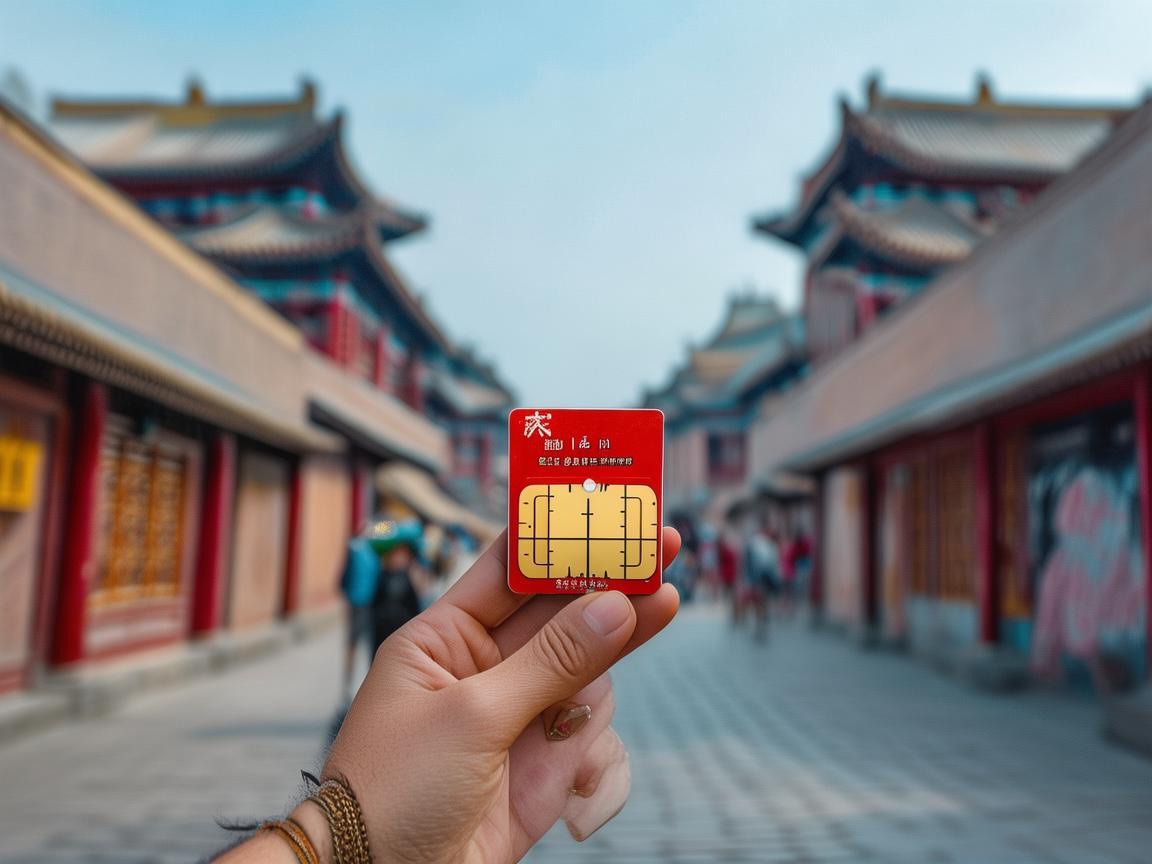
China SIM Card: My Lifeline for Exploring Xi’an
I learned this the hard way. On my first day, I tried to use my hotel’s Wi-Fi to book a taxi to the Terracotta Warriors. After 10 minutes of entering my passport details and getting a “verification failed” error, I gave up and walked to the subway—only to get lost because Google Maps doesn’t work well on Wi-Fi alone. That’s when I realized: a local SIM card isn’t just “convenient,” it’s essential for navigating, paying, and even talking to people.
Plus, China’s mobile network is fast. 4G is everywhere, and 5G is common in cities. With a SIM card, I could stream music on Spotify (yes, it works!) while walking the city walls, video-call my family without buffering, and instantly check bus times on apps like Baidu Maps. It turned stress-free travel from a dream into a reality.
How to Buy a China SIM Card: 3 Easy Ways
Okay, you’re convinced. Now, how do you actually get one? I tried three methods—airport, local store, and online—and each has pros and cons. Here’s the breakdown:
At the Airport: Quick but a Bit Pricey
This is what I did, and it’s perfect if you’re tired after a long flight. Xi’an Xianyang International Airport (XIY) has counters for all three major carriers: China Mobile, China Unicom, and China Telecom. They’re easy to spot—look for signs in English (and maybe a long line of tourists).
What you need: Your passport. That’s it. No forms, no hassle. The staff speak basic English and will help you pick a plan.
I went with China Mobile because it has the best coverage in rural areas (I planned a day trip to the Terracotta Warriors, which are outside the city). For ¥99 (about $14), I got a 7-day “Travel SIM” with 20GB of 4G data, unlimited calls within China, and 1GB of 5G data. The best part? It was activated immediately—no waiting.
Downside: Airport prices are higher than buying elsewhere. The same plan cost me ¥30 less at a local store. But if convenience is your priority, it’s worth it.
At a Local Carrier Store: Cheaper, But Need Mandarin (or a Translator)
A day after arriving, I wandered to a China Mobile store near my hotel (there’s one on almost every street in Xi’an). This time, I got a 30-day plan for ¥69 ($10) with 30GB of data—way better value!
But here’s the catch: the staff spoke almost no English. I had to use Google Translate to ask, “Do you have plans for tourists?” and “How much data is included?” They were patient, but it took 20 minutes to sort out. If you don’t speak Mandarin, bring a friend who does, or use a translation app (more on that later!).
Pro tip: Go to a big, official store (not a tiny kiosk) for better service and more options. Also, bring your passport—they’ll register your SIM card to your name (it’s required by law).
Online: Cheapest, But Plan Ahead
If you’re organized, buy a SIM card before you leave home. Sites like AliExpress or Taobao sell “tourist SIM cards” that ship to your home country. I saw a 15-day plan with 20GB data for ¥20 ($3)—unbeatable!
But there’s a catch: delivery can take 1-2 weeks, so order at least a week before your trip. Also, you’ll need to activate it yourself (usually via a QR code and an app), which can be tricky if you’re not tech-savvy.
Who should do this? Travelers who plan months ahead and don’t mind waiting. For last-minute trips, stick to the airport or local store.
SIM Card Types: Which One is Right for You?
Not all SIM cards are created equal. Here’s what to look for, based on your travel style:
Data-Heavy Plans (Best for Most Tourists)
If you’re like me, you’ll use your phone for maps, social media, translation, and maybe streaming. Prioritize data.
- China Mobile: Best coverage in rural areas (great if you’re visiting places like the Terracotta Warriors or Mount Hua).
- China Unicom: Cheaper data plans, and good coverage in cities.
- China Telecom: Fastest 5G in urban areas, but weaker signal outside cities.
I recommend at least 20GB of data per week—Xi’an’s streets are huge, and you’ll be using maps nonstop.
Call + Data Plans (If You Need to Make Calls)
If you’re traveling with a group and need to coordinate, or if you want to call your hotel, get a plan with unlimited local calls. Most tourist plans include this, but double-check.
Note: International calls are not included. If you need to call home, use WhatsApp or WeChat (they work fine with data).
eSIM vs. Physical SIM
Some newer phones support eSIM (a digital SIM card). China Mobile and Unicom offer eSIM plans for tourists—you can buy them online and activate them in minutes. I didn’t try this (my phone is old), but it’s a great option if you want to avoid carrying a physical SIM.
Using Your SIM Card: Tips and Tricks
Once you have your SIM card, here’s how to make it work for you:
Download These Apps Before You Arrive
Google and Facebook don’t work in China (yes, really). You’ll need local alternatives. Download these before you land, while you’re still on Wi-Fi:
- Baidu Maps: For navigation (it’s like Google Maps, but with better local data).
- WeChat: For messaging, calling, and paying (more on that later).
- Alipay: For paying at restaurants, shops, and even the subway.
- Didi: China’s version of Uber (for taxis).
- Pleco: A lifesaver for translating Chinese menus (just point your camera at a dish, and it tells you what it is!).
Activate Your SIM Card
If you bought a physical SIM at the store, the staff will activate it for you. If you bought it online, you’ll need to activate it yourself:
- Insert the SIM card into your phone.
- Open the carrier’s app (e.g., “China Mobile” for China Mobile SIMs).
- Scan the QR code on the package or enter your phone number.
- Follow the prompts to register your passport (you’ll need to upload a photo).
It takes 10-15 minutes, so do it as soon as you get to your hotel.
Manage Your Data
Running out of data in the middle of the Muslim Quarter is no fun. Most carrier apps let you check your data usage and buy more if you need it. I bought an extra 10GB for ¥30 ($4) when I was running low—way cheaper than international roaming!
Use WeChat and Alipay for Everything
Cash is still king in some places, but in Xi’an, almost everyone uses mobile payments. To set up WeChat Pay or Alipay:
- WeChat: Go to “Me” → “Services” → “Wallet” → “Payment Settings” → “Add Bank Card.” Link your international credit/debit card (Visa/Mastercard work most of the time).
- Alipay: Similar process—go to “Me” → “Payment” → “Add Bank Card.”
Once set up, you can pay for everything from a ¥5 bowl of noodles to a ¥200 taxi ride. Just scan the QR code at the register—so easy!
My Xi’an Experience: How the SIM Card Made the Trip
Let me tell you a story: On my third day, I wanted to visit the Big Wild Goose Pagoda, a famous Buddhist temple. I didn’t have a map, and my Chinese is terrible. But with my China Mobile SIM, I opened Baidu Maps, typed in the name, and got step-by-step directions (in English!). When I got hungry, I used Didi to find a nearby restaurant—scanned the QR code with WeChat Pay, and ate like a local (the biangbiang noodles were life-changing).
Later that day, I got lost in the Muslim Quarter (it’s easy to do—there are so many tiny streets!). I used WeChat to call my friend, who was at the hotel, and she sent me a voice note with directions. Without my SIM card, I’d have been panicking—instead, I was eating tanghulu (candied hawthorns) and laughing.
Even the Terracotta Warriors were easier. I downloaded the official museum app (which works offline with data) and listened to the audio guide while walking around. No renting a device, no struggling with paper maps—just me, my phone, and 2,000-year-old history.
Final Tips: Don’t Forget These!
- Bring a Power Bank: Using maps and apps drains your battery fast. I carried a 10,000mAh power bank everywhere—lifesaver.
- Lock Your SIM Card: If you’re switching between your Chinese SIM and home SIM, make sure your phone doesn’t auto-switch (you can do this in settings). Nothing worse than being in Xi’an and suddenly using international roaming.
- Be Patient: Carrier apps can be slow, and sometimes you’ll need to enter a verification code (sent to your Chinese number). Keep your passport handy—some apps ask for it when you log in.
Conclusion: A Small SIM Card, Big Impact
By the end of my trip, that little China Mobile SIM card felt like part of my family. It turned a potentially stressful trip into an adventure—no getting lost, no overpaying for roaming, no missing out on great food or sights. If you’re planning a trip to Xi’an (or anywhere in China), don’t make my mistake—buy a SIM card as soon as you land. It’s cheap, easy, and will make your trip 100 times better.
Now go—explore the city walls, eat all the roujiamo, and take too many photos. With a local SIM card, you’ll be ready for anything.
Xi’an waits—and with a SIM card, so will you.
Xi’an Airport Transfer Service
Private English-speaking driver service in Xi’an operated directly by Bruce Zhang. 24/7 airport pickup and hotel transfer for foreign travelers.
Helpful for Your Trip in Xi’an
Your Ultimate China SIM App Guide: Navigating Xi’an Like a Local
2026-07-27China SIM: My Lifeline for Seamless Travel in Xi’an
2026-07-27Xi’an Travel Guide: Staying Connected with China SIM for a Hassle-Free Trip
2026-07-27Navigating Xi’an: A Traveler’s SIM Card Troubleshooting Guide
2026-07-27Xi’an Travel Tips: Staying Connected with China SIM & Offline Maps
2026-07-27Why a China 5G SIM Made My Xi’an Trip Effortless (and How to Get One)
2026-07-27Your Essential Guide to Getting a SIM Card in Xi’an: A Traveler’s Handbook
2026-07-27Xi’an Hotspot Access: A Traveler’s No-Nonsense Guide to China’s Ancient Capital
2026-07-27Xi’an Travel Tips: My Hassle-Free China SIM Activation Experience
2026-07-26Your Xi’an SIM Card Survival Guide: Skip the Roaming Rip-offs with China SIM Kiosks
2026-07-26