

Slow Down in Xi’an: A Traveler’s Guide to China’s Speed Reduction
You know, when I first told my friends I was heading to Xi’an, their reaction was pretty predictable: "Oh, the Terracotta Army! Gotta go, tick it off the list!" And yeah, I wanted to see those clay warriors—they’re on everyone’s radar. But what I didn’t expect was how much I’d learn about slowing down here. It started as a happy accident—getting lost in alleyways, skipping the "must-see" crowds, and chatting with locals over steaming bowls of paomo (bread soaked in lamb soup). By the end of my trip, I realized this "slow travel" vibe isn’t just a trend; it’s part of something bigger China’s been calling "speed reduction."
At first, "speed reduction" sounded a bit vague to me. Was it about skipping bullet trains? Avoiding skyscrapers? Nope. It’s more like a mindset shift—from rushing to experience to taking time to connect. Xi’an, with its 3,000-year history, is the perfect place to practice this. Here’s how I did it, and how you can too—without missing a thing.
Ditch the "Tourist Checklist" for a "Morning Routine"
My first mistake in Xi’an? Trying to cram the Terracotta Army, the Muslim Quarter, and the City Wall into one day. By 3 PM, I was exhausted, cranky, and had taken so many photos I couldn’t remember which temple was which. The next day, I tried something else: I woke up at 6 AM and headed straight to Sajinqiao Morning Market.
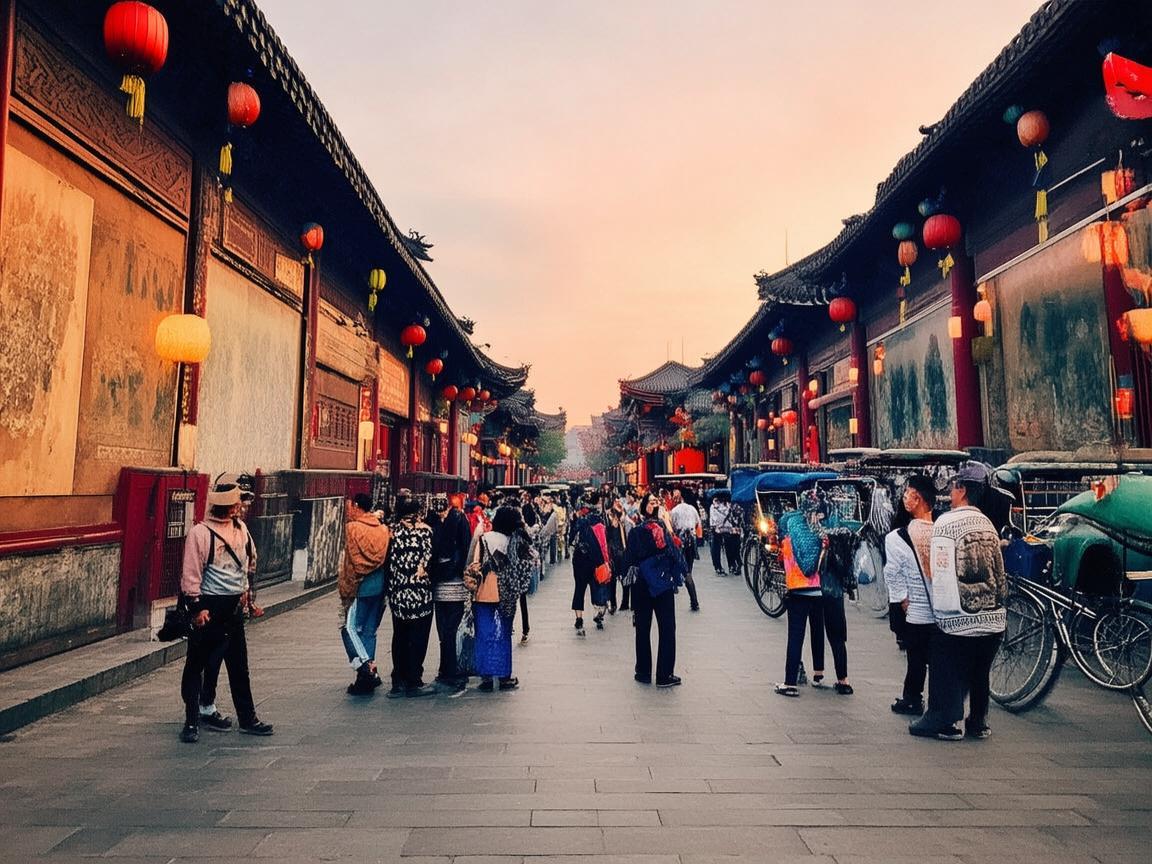
Slow Down in Xi’an: A Traveler’s Guide to China’s Speed Reduction
I know, "market" sounds boring, but this place is alive. Old ladies in aprons rolled out dough for jianbing (savory crepes), men steamed roujiamo (Chinese hamburgers) in bamboo baskets, and grandmas haggled over fresh lychees like they were negotiating a peace treaty. No one was in a hurry. I stood at a stall run by a couple in their 70s, the husband flipping jianbing on a griddle while his wife chopped scallions. They didn’t speak English, but when I pointed to a jianbing and mimed "egg," he laughed, cracked one right into the batter, and showed me how to fold it so the edges stayed crispy. I ate it leaning against a brick wall, watching the sun rise over the rooftops, and thought, This is way better than rushing to a tourist cafe for a $5 latte.
Tip: Skip the hotel breakfast. Wake up early, wander to a nearby neighborhood market, and point at whatever looks fresh. Locals will smile if you try to speak Mandarin—even if it’s just "duōshao qián?" (how much?). You’ll eat better, pay less, and feel like you’re part of the city.
Walk the City Wall—But Don’t Just "Do" It
Everyone says you have to ride the bike or scooter on Xi’an’s City Wall. It’s 14 kilometers long, encircles the old town, and offers views of the city’s mix of ancient temples and modern skyscrapers. But here’s the thing: most people rush it. They hop on a bike, speed around in an hour, and tick "City Wall" off their list. I did that my first day—saw the views, took some selfies, and left feeling meh.
The next day, I went back. This time, I walked. And I took my time. I started at the South Gate at 8 AM (before the crowds hit) and moved clockwise. I stopped at every other watchtower, read the little plaques (with my phone translator—don’t worry, it works), and sat on the steps to watch the city wake up. At one tower, I met an old man named Grandpa Li. He’d been sitting there for 20 years, he told me (via a mix of slow Mandarin and hand gestures), watching the seasons change. He pointed to a distant hill and said, "In spring, the apricot trees bloom there. In autumn, the leaves turn red. I’ve seen couples get engaged, kids fly kites, tourists cry when they see the wall for the first time."
He didn’t rush. He just sat there, sipping tea from a thermos, and sharing bits of his life. By the time I finished walking the wall three hours later, I didn’t just see a historical landmark—I saw a living part of Xi’an.
Tip: If you bike, go slow. Stop often. The wall isn’t a race; it’s a chance to see how old and new Xi’an fit together together. And if you meet Grandpa Li, say hi for me.
Skip the "Instagram-Famous" Food—Follow the Locals
Xi’an’s food is legendary. The Muslim Quarter is packed with stalls selling roujiamo, biangbiang noodles, and tanghulu (candied hawthorns). But here’s the secret: the best food isn’t in the crowded main streets. It’s in the alleyways, where only locals eat.
My first night in the Muslim Quarter, I followed the crowds to a famous tanghulu stall. The line was 30 people long, and the candy was so hard it cracked my teeth. Not great. The next day, I asked Mrs. Li—my guesthouse owner—where she ate. She laughed and said, "Follow me." She led me through a tiny alley, past a laundry line and a cat napping on a windowsill, to a stall with no sign, just a steaming pot of paomo. The owner, Auntie Wang, has been making it for 40 years. She tears the bread by hand, ladles rich lamb broth over it, and adds tender chunks of beef. "My recipe," she said, "is from my grandmother. She learned it from her mother."
We sat on tiny plastic stools, dipping paomo in chili oil, and Auntie Wang told me about her son, who studies in Beijing. "He calls me every week," she said. "He misses my paomo more than anything." I ate three bowls that day. It wasn’t just food—it was a story.
Tip: Look for stalls with no English menus, plastic stools, and a line of locals (not tourists). If the owner is smiling and wiping counters between customers, it’s probably good. And don’t be afraid to point—even if you don’t speak the language, food is a universal language.
"Speed Reduction" Isn’t About Skipping—It’s About Savoring
I’ll admit, I was worried at first. "Slow travel" sounds like doing less, right? But it’s the opposite. It’s about doing more—just more slowly. When I slowed down, I noticed things I’d missed before: the way the light hits the Big Wild Goose Pagoda at dusk, the sound of kids playing in the hutongs, the smell of jasmine tea from a street vendor’s cart.
One afternoon, I was sitting in a park near the Bell Tower, watching old men play chess. A man in his 80s with a white beard invited me to watch. He didn’t speak English, but he moved the pieces and pointed to the board, and I nodded when he smiled. We sat there for an hour, just watching the game, no rush. Later, he handed me a persimmon from his bag—sweet, a little soft, and the best I’d ever had.
That’s "speed reduction" to me. It’s not about avoiding the fast parts of China (the bullet trains are amazing, by the way). It’s about choosing when to slow down. It’s about letting a city—its food, its people, its history—sink in instead of just skimming the surface.
Final Thought: You’ll Leave with More Than Photos
By the end of my week in Xi’an, I hadn’t "done" every tourist spot. I still haven’t seen the Shaanxi History Museum (it’s on my list for next time). But I’d had 10 cups of paomo with Auntie Wang, walked the City Wall twice, and learned to say "xièxie" (thank you) with a local accent. I’d made friends with a chess grandpa and a jianbing vendor. I’d slowed down.
Xi’an taught me that "China speed reduction" isn’t a policy—it’s a way of living. It’s about finding joy in the small things, in the conversations, in the moments when you’re not rushing to the next "must-see." So if you go, don’t just tick the boxes. Sit down. Talk to someone. Eat slowly. You’ll leave with more than photos—you’ll leave with stories. And that’s the best souvenir of all.
Xi’an Airport Transfer Service
Private English-speaking driver service in Xi’an operated directly by Bruce Zhang. 24/7 airport pickup and hotel transfer for foreign travelers.
Helpful for Your Trip in Xi’an
Your Ultimate China SIM App Guide: Navigating Xi’an Like a Local
2026-07-27China SIM: My Lifeline for Seamless Travel in Xi’an
2026-07-27Xi’an Travel Guide: Staying Connected with China SIM for a Hassle-Free Trip
2026-07-27Navigating Xi’an: A Traveler’s SIM Card Troubleshooting Guide
2026-07-27Xi’an Travel Tips: Staying Connected with China SIM & Offline Maps
2026-07-27Why a China 5G SIM Made My Xi’an Trip Effortless (and How to Get One)
2026-07-27Your Essential Guide to Getting a SIM Card in Xi’an: A Traveler’s Handbook
2026-07-27Xi’an Hotspot Access: A Traveler’s No-Nonsense Guide to China’s Ancient Capital
2026-07-27Xi’an Travel Tips: My Hassle-Free China SIM Activation Experience
2026-07-26Your Xi’an SIM Card Survival Guide: Skip the Roaming Rip-offs with China SIM Kiosks
2026-07-26