

Why a China SIM Card Made My Xi’an Trip Smooth: A Traveler’s Honest Guide
Landing in Xi’an at 6 AM, I was buzzing with excitement—the Terracotta Army, the Muslim Quarter, the ancient city walls… but within an hour, reality hit. My phone, stuck on international roaming, couldn’t load a map, my hotel’s confirmation email was “offline,” and I couldn’t text my driver to pick me up. Panicked, I spotted a China Mobile counter at the airport, and by 7 AM, I’d swapped my SIM card. That small decision turned my chaotic start into a seamless adventure. If you’re traveling to Xi’an (or anywhere in China), let me break down why a local SIM card isn’t just “helpful”—it’s essential.
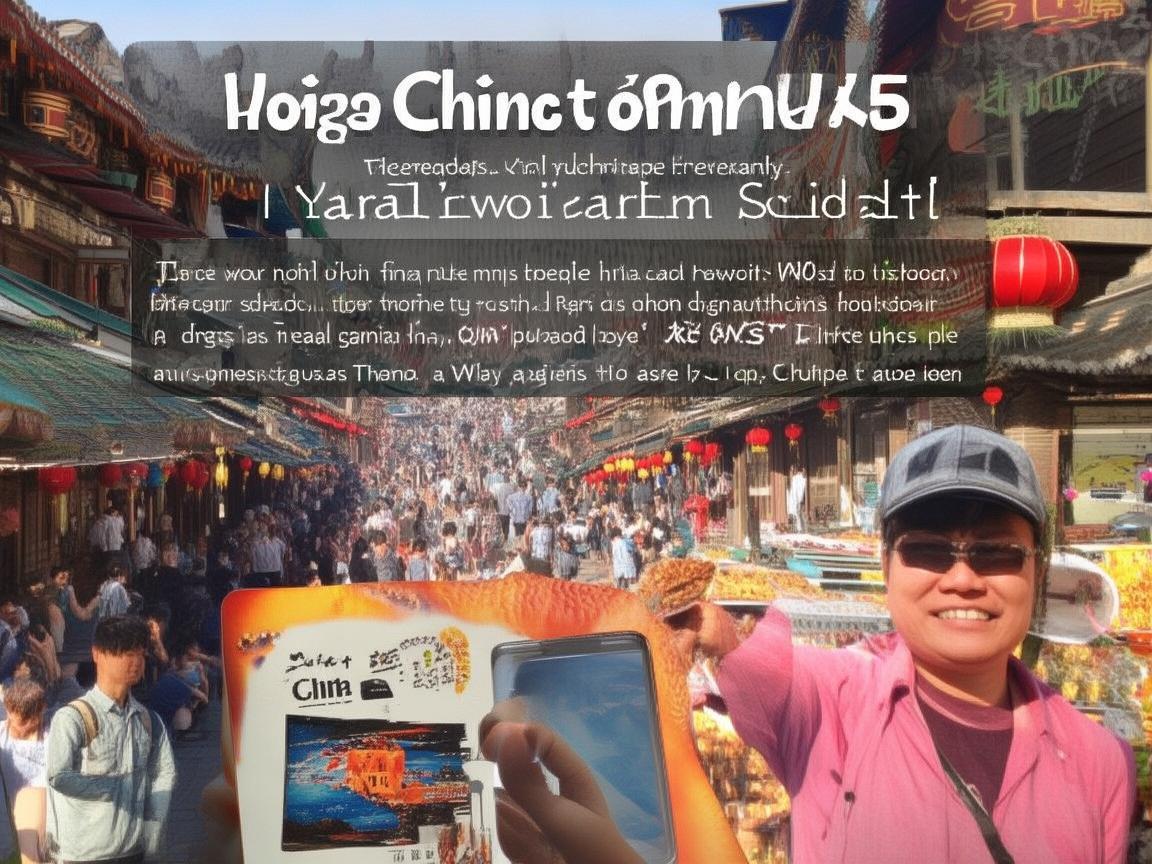
Why a China SIM Card Made My Xi’an Trip Smooth: A Traveler’s Honest Guide
First Things First: How to Get a China SIM Card (No Stress!)
Before diving into the perks, let’s sort the logistics. China requires real-name registration for SIM cards, so bring your passport—you can’t buy one otherwise. I arrived at Xiian Xianyang International Airport (XIY), and the China Mobile counter was right in the arrivals hall (look for the red logo). There’s also China Unicom and China Telecom, but China Mobile has the best coverage, especially in rural areas like the Terracotta Army site.
I picked the “Tourist Package” for ¥50 (~$7). It included 20GB of high-speed data (valid for 30 days), unlimited domestic calls, and 1GB of global data (handy for airport Wi-Fi or keeping apps like WhatsApp working). Activation took 5 minutes—they scanned my passport, set a PIN, and I was good to go. You can also buy SIMs at major train stations (like Xi’an North Railway Station) or convenience stores (7-Eleven, FamilyMart), but the airport is easiest if you’re jet-lagged.
Advantage 1: Never Get Lost—Navigation That Actually Works
Xi’an is a city of layers: modern skyscrapers next to Tang Dynasty ruins, narrow hutongs winding around bustling markets. Without a local SIM, navigating is a nightmare. I learned this the hard way on my first day.
I’d pre-booked a hotel near the Bell Tower, but my international roaming data was too slow to load Google Maps. I tried asking for directions, but most shopkeepers spoke only Mandarin. “Dongmen?” I’d say, pointing at my map. They’d smile and shrug. Finally, I popped in my new SIM, downloaded Baidu Maps (China’s most reliable navigation app), and suddenly, everything clicked. Baidu showed real-time bus locations, subway exits with photos, and even estimated wait times for taxis.
One standout moment: visiting the Terracotta Army. It’s a 40-minute drive from downtown, and I wasn’t sure which bus to take. Baidu Maps told me exactly which stop (兵马俑博物馆站), which exit to use, and even warned me that Line 5 buses get crowded on weekends. When I got off, a sign in English pointed the way—no wandering, no stress. Later, when I rented a bike to ride the City Wall, Baidu’s GPS tracked my route, so I never missed a viewpoint.
Pro tip: Download offline maps before you leave home (Google Maps lets you do this for China), but Baidu Maps works better with a local SIM—it updates traffic in real time, which is crucial in a city with 12 million people!
Advantage 2: Pay for Everything—Even a ¥5 Roujiamo
Cash is king in some places, but in Xi’an, it’s a hassle. I learned this fast when I tried to buy a roujiamo (Xi’an’s famous “hamburger”) from a street vendor. She pointed to a QR code and said, “Weixin!” (WeChat Pay) or “Alipay!” I had neither. My international credit card? Useless—most small vendors don’t accept them.
With a local SIM, I linked my bank account to WeChat Pay in 10 minutes (just scan your ID and set a password). Suddenly, I could buy roujiamo from a grandma’s cart, grab a bingfeng (ice cream) from a street vendor, or pay for a taxi with a single scan. Even the subway and buses use “QR code payments”—no need to buy a transit card.
One night, I got lost near the Muslim Quarter and stumbled into a tiny dumpling shop. The owner, an elderly man, didn’t speak English, but when I showed him my WeChat Pay QR code, he laughed and handed me a plate of liangpi (cold noodles). It cost ¥12, and I paid in 2 seconds. Without a local SIM, I would’ve either starved or spent 20 minutes trying to explain “I want to pay” with hand gestures.
Biggest perk: Splitting bills with friends. If you’re traveling with others, WeChat Pay lets you send money instantly—no fumbling with cash or converting currencies.
Advantage 3: Translate Anything—Even a Menu with 50 Characters
Xi’an’s food is incredible, but the menus? Intimidating. I once stared at a menu for 10 minutes, trying to decipher characters like “饸饹面” (hele noodles) or “葫芦头” (hulutou soup). Without a SIM, I’d have guessed—and maybe ordered something weird.
With my local data, I downloaded iFly Translate (a free app that works offline) and used it to scan menus. Point my camera at “羊肉泡馍” (yangrou paomo), and it popped up: “Lamb Burger with Steamed Bread”—a local specialty! When I ordered, the waiter even explained how to eat it: “Break the bread into pieces, then pour the soup over it.” Delicious.
Translation apps also saved me when I got sick. One morning, I woke up with a sore throat and went to a pharmacy. The pharmacist spoke no English, but I typed “sore throat” into iFly Translate, and it showed her the Chinese characters: “喉咙痛.” She handed me cough medicine and explained the dosage. Without a SIM, I’d have either suffered in silence or paid double at a tourist-friendly pharmacy.
Pro tip: Download offline translation packs for apps like iFly or Google Translate before you arrive. That way, even if you’re in a remote area with no signal, you can still communicate.
Advantage 4: Stay Connected—Safety First
Traveling alone, safety was my top priority. A local SIM card gave me peace of mind in ways I didn’t expect.
One evening, I was walking back to my hotel from the Muslim Quarter and took a wrong turn. The streets were dark, and I had no idea where I was. I opened WeChat, called my mom (who was back home—WeChat lets you make international calls cheaply), and she helped me use Baidu Maps to find my way. Without a SIM, I would’ve been stuck, scared, and alone.
Another time, I lost my wallet. I immediately called my bank (using the local SIM—international roaming calls are expensive!) to freeze my cards, then went to the police station. The officers spoke little English, but I used Google Translate to explain what happened. They helped me file a report, and even though I never got my wallet back, I felt safe knowing I could reach for help.
For solo travelers, this is huge. A local SIM means you can call emergency services (110 for police, 120 for ambulance), contact your hotel if you’re lost, or share your location with friends. It’s not just convenient—it’s a safety net.
Advantage 5: Save Money—No More “Roaming Shock”
Let’s talk numbers. International roaming is a rip-off. I checked with my carrier before leaving—they wanted $10 per day for 1GB of data. In Xi’an, I used 5GB of data in the first week (maps, translation, social media). With roaming, that would’ve cost $70. With my local SIM? ¥50 total. For the whole month.
Even small things add up. Sending a WhatsApp message with roaming costs $0.50 per message. With a local SIM, I used WeChat (free with data) to text my family every day. Downloading photos to my phone? Free. Streaming a travel vlog while waiting for the bus? Free.
Xi’an is a budget-friendly city—you can eat for ¥20 a day, stay in a hostel for ¥50, and take buses for ¥2. Don’t let roaming fees ruin that. A local SIM card costs less than a fancy dinner but saves you hundreds.
Final Thoughts: Don’t Travel Xi’an Without It
By the end of my trip, my local SIM card felt like a lifeline. It helped me navigate ancient streets, taste local food, stay safe, and save money. I met travelers who skipped getting one—they relied on hotel Wi-Fi (slow, and not always available) and international roaming (expensive, and patchy). Every single one regretted it.
If you’re heading to Xi’an, stop by the airport SIM counter first. It’s the best ¥50 you’ll spend. With a local SIM, you can focus on what matters: marveling at the Terracotta Army, eating biangbiang noodles until you burst, and getting lost in the magic of this ancient city. No stress, no confusion—just adventure.
Trust me, your future self will thank you.
Xi’an Airport Transfer Service
Private English-speaking driver service in Xi’an operated directly by Bruce Zhang. 24/7 airport pickup and hotel transfer for foreign travelers.
Helpful for Your Trip in Xi’an
Your Ultimate China SIM App Guide: Navigating Xi’an Like a Local
2026-07-27China SIM: My Lifeline for Seamless Travel in Xi’an
2026-07-27Xi’an Travel Guide: Staying Connected with China SIM for a Hassle-Free Trip
2026-07-27Navigating Xi’an: A Traveler’s SIM Card Troubleshooting Guide
2026-07-27Xi’an Travel Tips: Staying Connected with China SIM & Offline Maps
2026-07-27Why a China 5G SIM Made My Xi’an Trip Effortless (and How to Get One)
2026-07-27Your Essential Guide to Getting a SIM Card in Xi’an: A Traveler’s Handbook
2026-07-27Xi’an Hotspot Access: A Traveler’s No-Nonsense Guide to China’s Ancient Capital
2026-07-27Xi’an Travel Tips: My Hassle-Free China SIM Activation Experience
2026-07-26Your Xi’an SIM Card Survival Guide: Skip the Roaming Rip-offs with China SIM Kiosks
2026-07-26